Despotiko Sanctuary: An Ancient Greek Place of Worship
Site at a Glance
- Popularity
- Very Low
- Country
- Greece
- Primary era
- Iron Age
- Eras represented
- Iron Age, Classical
- Civilizations
- Ancient Greek
- Site type
- Religious
- Remains
- Sanctuary
On this page14 sections
History
Origins and Archaic flourishing
The Despotiko Sanctuary is an ancient Greek place of worship at Mándra on the northeastern coast of Despotiko, Greece. It began in the eighth century BCE, during the Geometric period of Greek history, and flourished from the late sixth to the early fifth century BCE, in the Archaic period.
Apollo was worshipped there, and Artemis was probably honored as well. Their names appear on pottery fragments from the site.
Island networks and destruction
Finds suggest the sanctuary stood at a crossroads of ancient maritime routes. One interpretation is that Paros established it while competing with Naxos for influence in the Cyclades, and that it rivaled Delos, an important center of worship for Apollo and Artemis. Another view places it within a wider Delian network, like the Delion, a sanctuary of the Delian gods on Paros.
The sanctuary was destroyed in the second century BCE, either during the Hellenistic period of Greek history or the early Roman era, when Roman political dominance was beginning to shape the Greek world. Suggested causes include an Athenian attack because the sanctuary competed with Delos, or a pirate raid.
Excavation and restoration
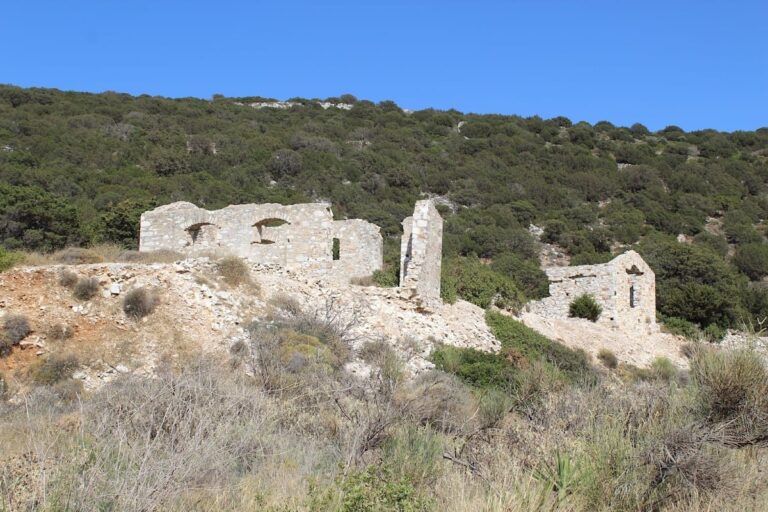
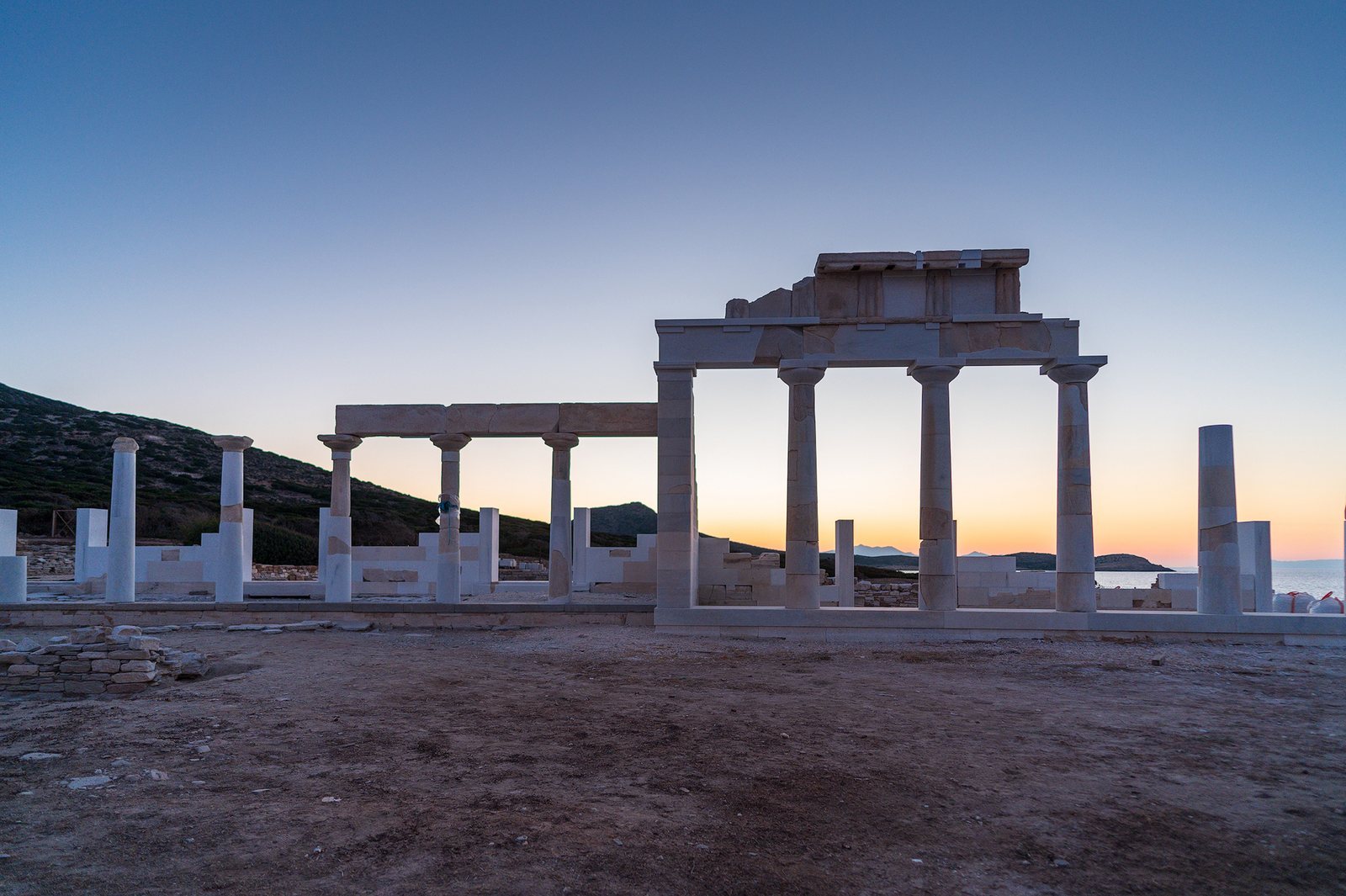
Excavations began in 1959 under the Greek archaeologist Níkos Zafeirópoulos, revealing parts of the temple. Work resumed in 1997 under Giánnos Kourágios. Excavations in 2017 and 2018 brought the excavated area to about 200 square metres. The sanctuary’s buildings have since been restored, and several columns have been re-erected.
Remains
Setting and layout
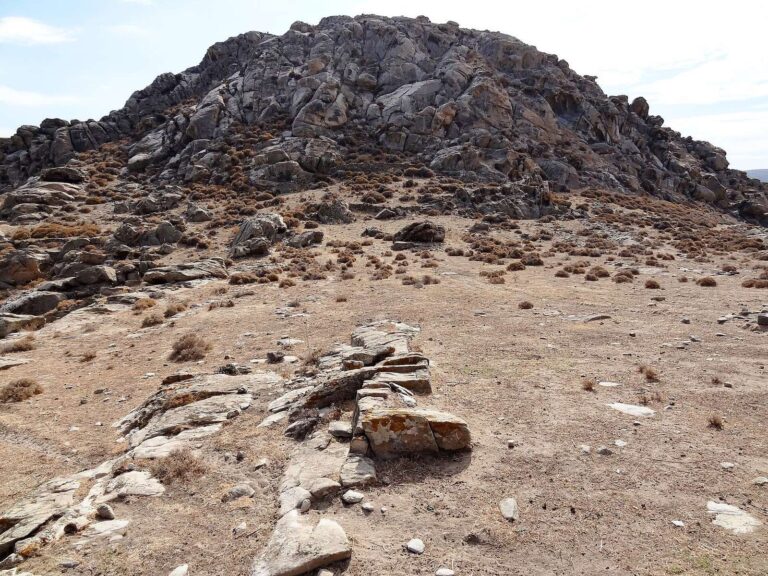
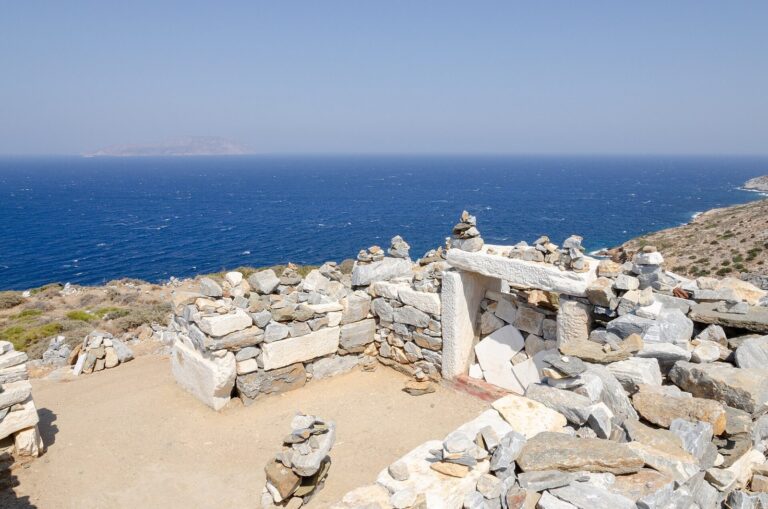
The sanctuary occupies the coastal site of Mándra on Despotiko, known in antiquity as Prepesintos. Nearby Antíparos was then called Oliaros. The islands are closest at this point, where an isthmus connected them in antiquity. Related buildings have also been found on Tsimintíri, the small island between Despotiko and Antíparos. At least 20 buildings have been identified across the sanctuary. Its principal buildings date to the Archaic period, while others belong to the Classical and Hellenistic periods.
Principal buildings
Temple of Apollo
The Temple of Apollo stood in the sanctuary’s northern part. Built around 550 BCE from Parian marble, it followed the Doric style, an architectural style of ancient Greece. The temple had two rooms, probably dedicated separately to Apollo and Artemis. A semicircular altar stood in front of it.
Doric dining hall
Southeast of the temple stood a Doric stoa, a roofed colonnade or hall, used as a dining hall for ceremonial meals. A surviving stretch of its wall is about 35 metres long and reaches roughly 1.7 metres high.
Other sanctuary features
Eastern Complex
The Eastern Complex is among the other structures identified within the sanctuary.
Altar of Hestia Isthmia
A separate altar was dedicated to Hestia Isthmia. Hestia was the Greek goddess of the hearth, and Isthmia was an epithet associated with an isthmus.
Harbor
The sanctuary also had its own harbor.
Finds
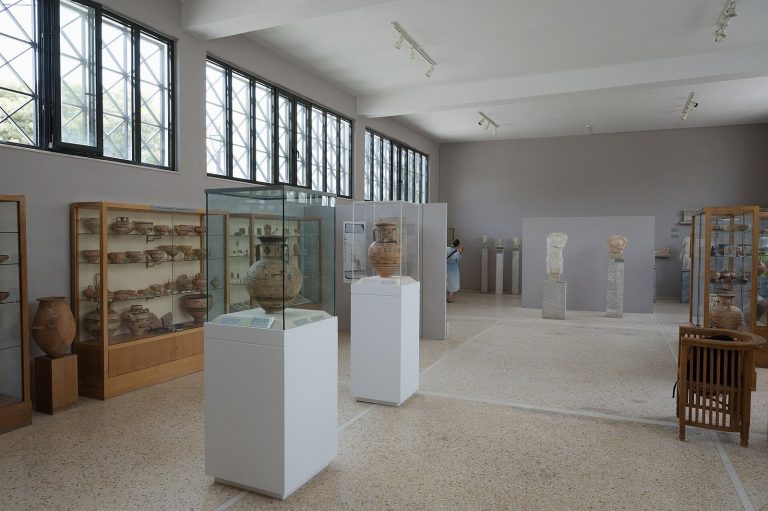
Finds include fragments of marble statues of young men, Protocorinthian and Corinthian pottery, small vessels, amphorae, large storage jars, and other pottery. The assemblage also includes figurines, lamps, bottles, seal rings, gold and silver jewelry, other objects, and metal weapons, tools, and household utensils. These finds are on display at the Archaeological Museum of Paros.