Orgoyton: A Xiongnu Cemetery and Bronze Age Archaeological Site
Site at a Glance
- Popularity
- Low
- Country
- Russia
- Primary era
- Iron Age
- Eras represented
- Bronze Age, Iron Age
- Civilizations
- Xiongnu
- Site type
- Burial
- Remains
- Necropolis
On this page8 sections
History
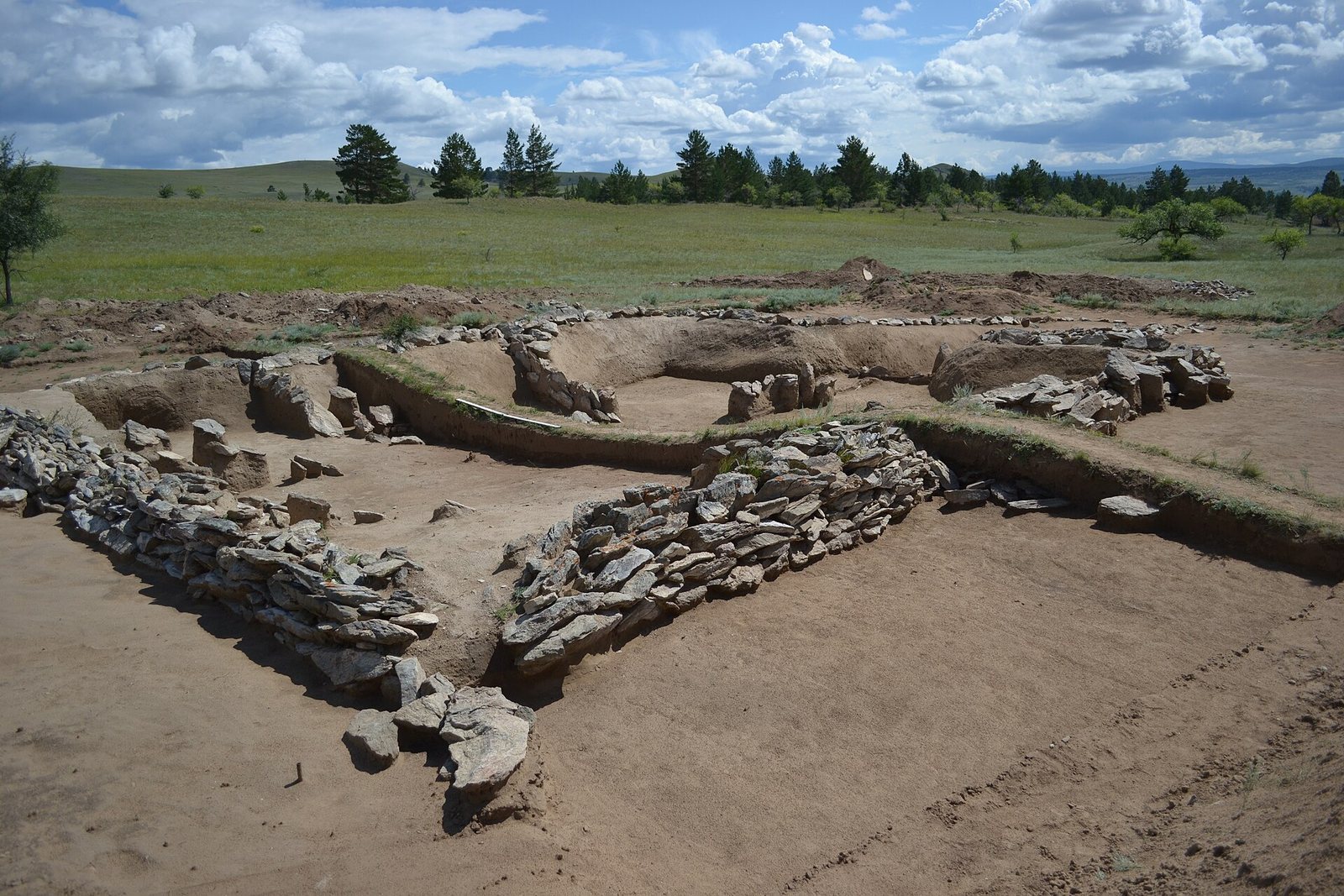
Orgoyton is an archaeological locality in a mountain ravine in Buryatia, a republic in southeastern Siberia, Russia. Its three groups comprise an Iron Age Xiongnu cemetery and Bronze Age burial and rock-art sites. The Xiongnu were an ancient nomadic confederation of Inner Asia. Orgoyton I contains princely burial mounds, making it one of the few such cemeteries in Buryatia, and has federal cultural-heritage status.
Early investigations and local tradition
Physician and archaeologist Yuri D. Talko-Gryntsevich first investigated Orgoyton in 1897. He and Yakov E. Smolev began excavations the following year, recording and excavating four burial mounds. They described the burial practices at Orgoyton as identical to those at another Xiongnu cemetery in Buryatia.
In 1898, residents of a nearby Buryat settlement told Talko-Gryntsevich that a shaman had lived at Orgoyton before the Buryat resettlement of the early nineteenth century. They associated this memory with the place-name, which literally means “crowned with a shamanic crown.” In Buryat shamanism, the seventh initiation rank belonged to shamans authorized to initiate others. A shaman of this rank could wear an iron crown with antlers and a cloak with iron covering, and could possess as many as three drums.
Later archaeological research
Further study involved archaeologists A. P. Okladnikov, P. B. Konovalov, and S. V. Danilov. Okladnikov identified rock carvings at Orgoyton in 1949, and Danilov led the team that recorded Orgoyton II in 1992.
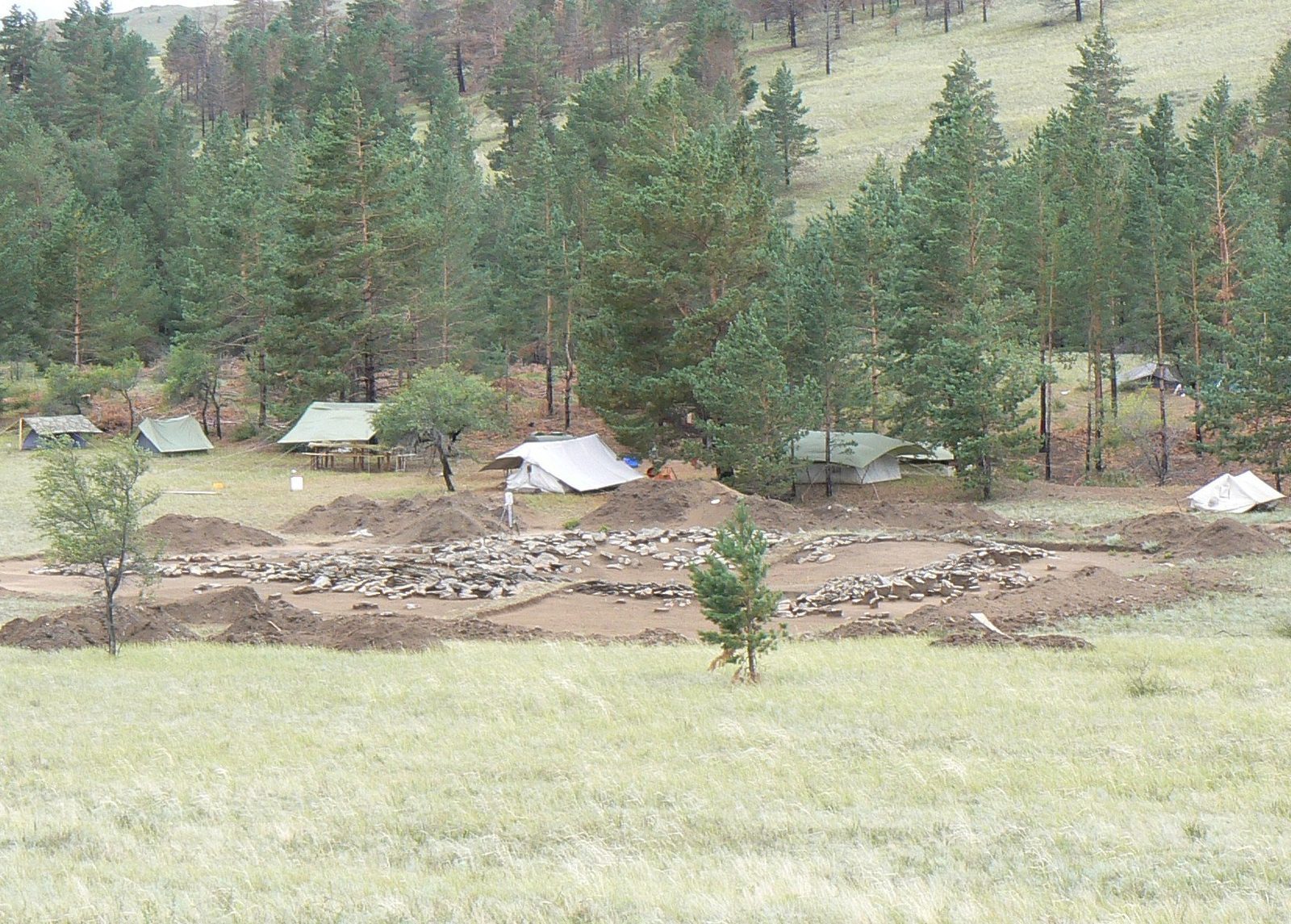
Excavations resumed in 2009, when archaeologists from the State Hermitage, the Institute for the History of Material Culture of the Russian Academy of Sciences, and the Kyakhta Museum of Local Lore investigated a mound. They interpreted the burial as having been looted in antiquity. In 2010, the team fully cleared the burial structure, and work on the mound continued in 2011, 2012, 2013, and 2015.
Remains
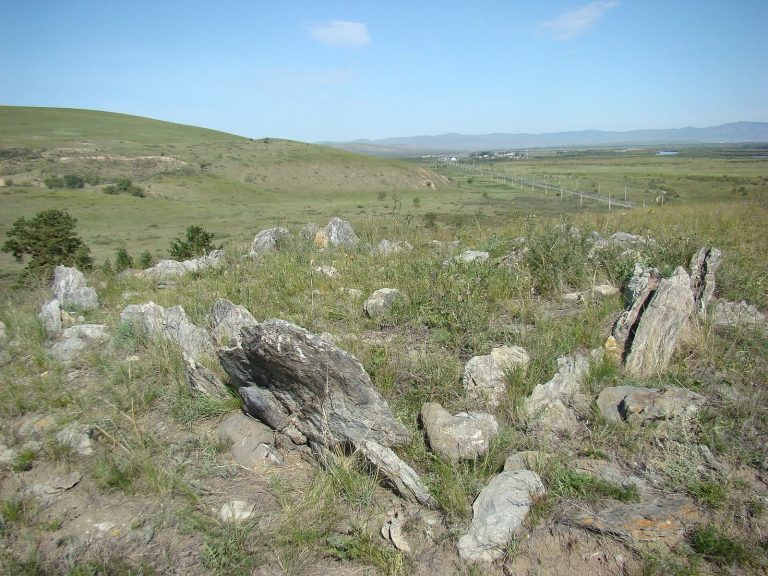
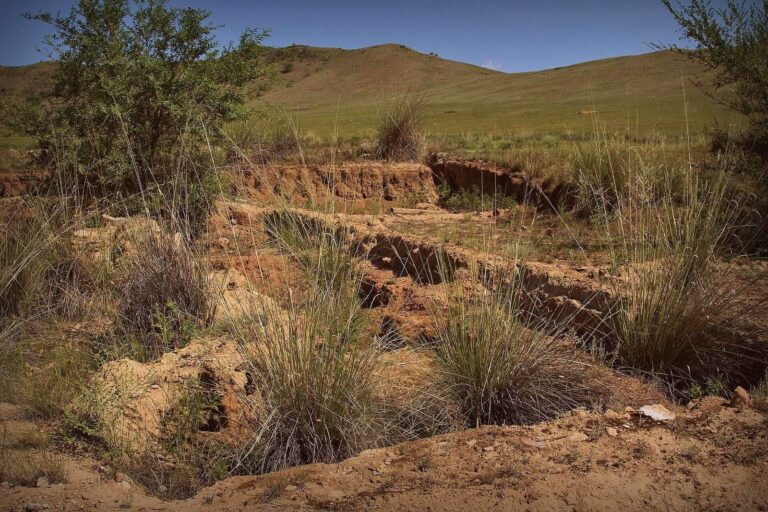
The archaeological remains are spread through a ravine about two kilometres long, running north to south. Pine-covered ridges meet its northern end, while the southern end descends toward the Selenga River. Low ridges border the ravine to the east and partly to the west. Its sandy soil consists of river-deposited sediment, and pines and elms grow there. The three groups include burial mounds and stone settings, a separate burial site farther north, and rock images on the river-side cliffs and nearby mountain.
Burial sites and rock art
Orgoyton I
The Xiongnu cemetery lies on the left bank of the Selenga, near the point where the ravine opens toward the river. Its recorded remains include four large burial mounds with entrance passages leading south into burial chambers, along with 14 smaller stone settings, circular or roughly square in outline. Finds include bone fittings from the central and end sections of bows, fragments of decayed red cloth, irregular pieces of iron objects, and red-clay pottery with circular holes. A fragment of a mirror was recovered during the 2009 excavation. Excavated materials are held at the Kyakhta Museum of Local Lore named for Academician V. A. Obruchev.
Orgoyton II
About a kilometre north-northeast of Orgoyton I, Orgoyton II occupies a rocky hill. A mound monument on the summit has a circular enclosure and rosette-shaped features on its eastern side. Farther down the slope is a grave marked by stone slabs. The site is a Bronze Age burial place.
Orgoyton III and nearby rock carvings
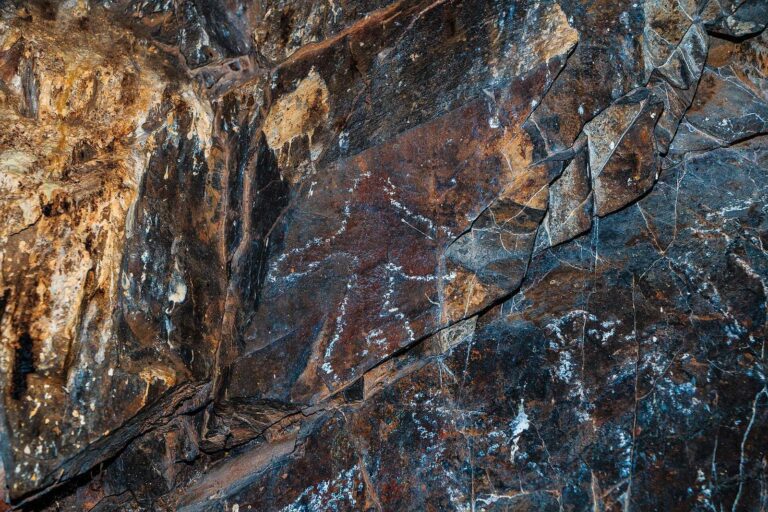
Orgoyton III lies on the left bank of the Selenga, on a sheer cliff about a kilometre upstream from the railway bridge. Its red-painted designs, positioned three metres above the cliff base, survive as indistinct patches. On a mountain a few hundred metres from Orgoyton, carved images on rock blocks include a human figure with phallic features and two arched horns resembling a shamanic headdress. Its possible connection to the shaman remembered in local tradition remains an interpretation.