Temnik Rock Art: Bronze Age and Early Iron Age Cave Paintings
Site at a Glance
- Popularity
- Very Low
- Country
- Russia
- Primary era
- Bronze Age
- Eras represented
- Bronze Age, Iron Age
- Civilizations
- Unclassified
- Site type
- Civic
- Remains
- Rock Art
On this page6 sections
History
Temnik Rock Art is a group of painted images in a cave in Russia, dating to the Bronze Age and Early Iron Age. It belongs to the Selenga group of Transbaikalian rock art and is among the region’s largest sites by number of images. The name Selenga petroglyphs was introduced by archaeologists A. P. Okladnikov and V. D. Zaporozhskaya for Bronze Age and Early Iron Age rock art in Buryatia, found mainly in the Selenga River basin. Although petroglyphs conventionally are images carved or pecked into stone, the regional term also covers painted images such as those at Temnik.
Early written references and study
In 1735, naturalist G. F. Miller visited the area during the first Great Academic Expedition, an eighteenth-century Russian scholarly expedition. He became the first European researcher to mention the images in writing, but his information came from a trusted informant, and he did not record seeing them himself. Miller later returned to the subject and hoped that archaeologist I. E. Fischer would investigate, but Fischer did not pursue the study.
On April 27, 1888, naturalist V. V. Ptitsyn carried out the first detailed study of the cave.
Rediscovery and protection
An expedition led by local historian A. V. Tivanenko located the rock art in 1977. The team was associated with the Ethnographic Museum of the Buryat Autonomous Soviet Socialist Republic, then an autonomous republic within the Soviet Union.
The site came under state protection in 1971. The cave became a regional geological natural monument on October 14, 1980, with a protected area of 0.9 hectares, and the site entered Russia’s register of cultural heritage sites of federal significance in 2015. These protections have not ensured effective protection.
Remains
Cave and painted panels
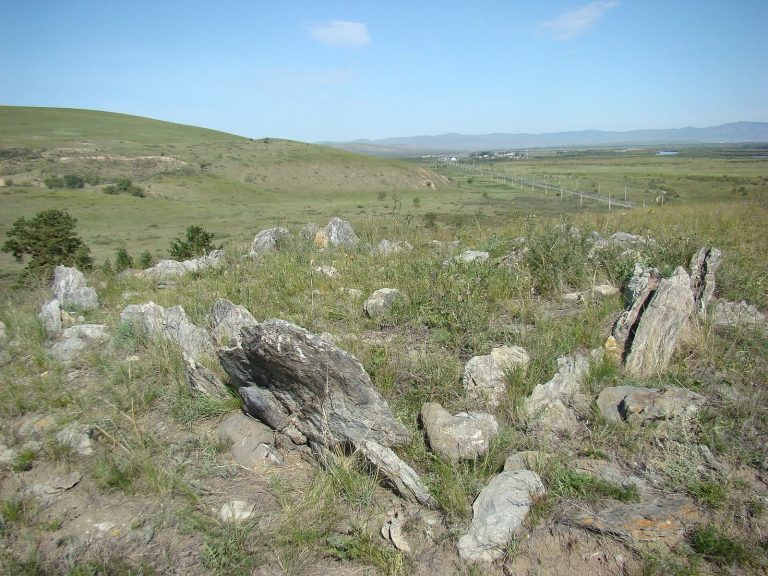
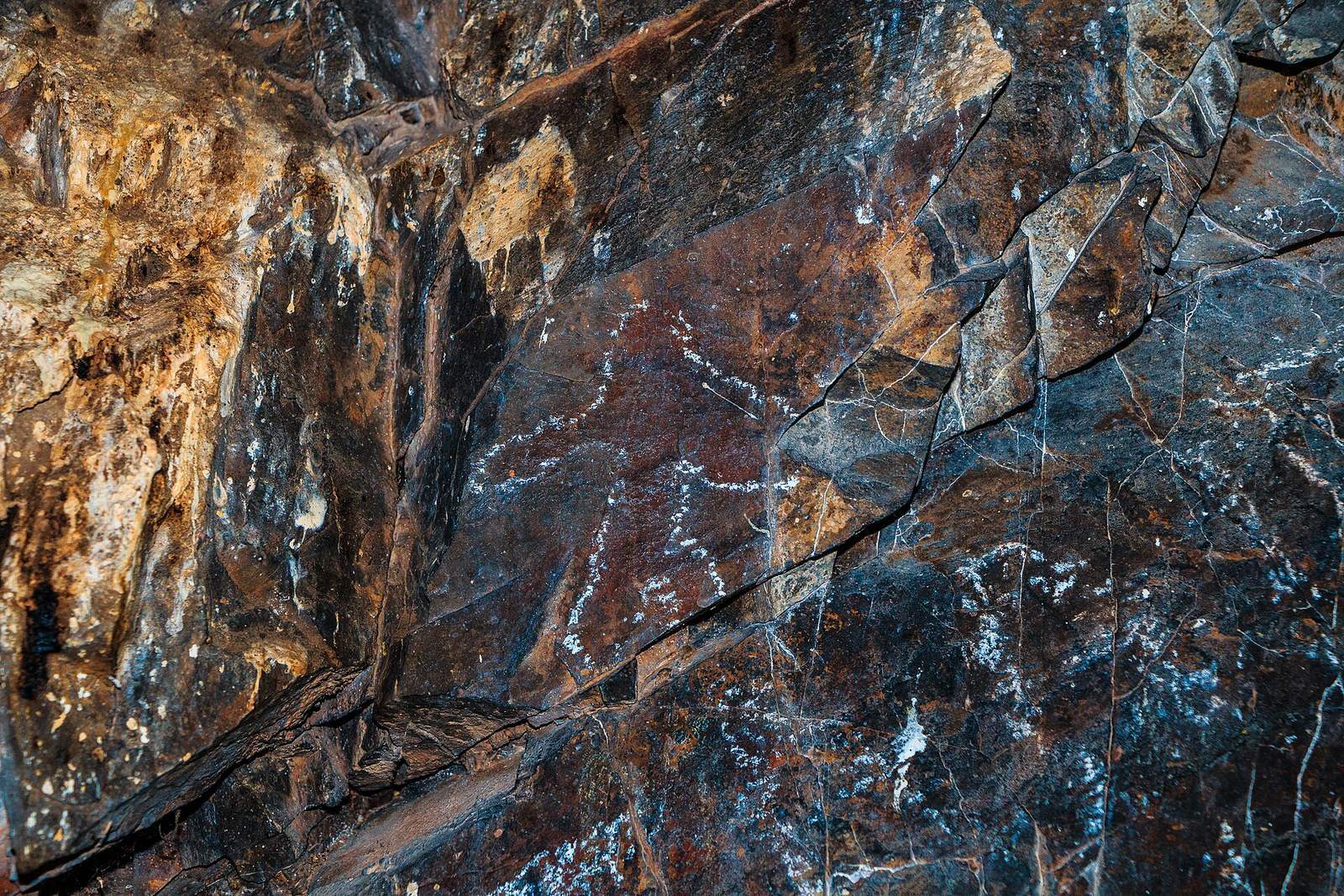
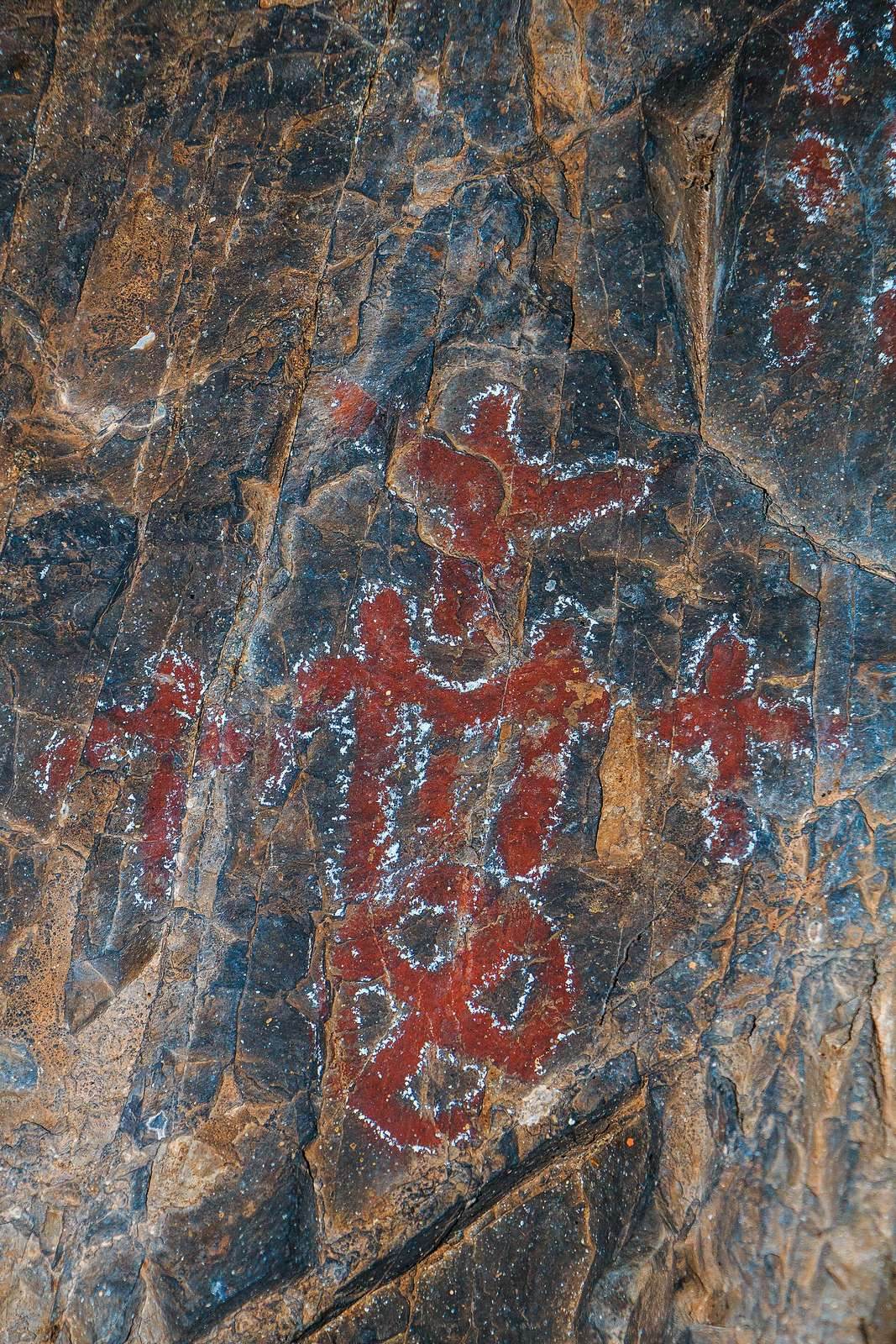
The cave lies at about 600 metres above sea level in the Atsula area, on the southwestern slope of the Khambin Range. It occupies the left bank of a Temnik channel of the Tsagan-Gol River, west of Goose Lake, and its entrance is on the river side. Temnik settlement is 6 kilometres to the southeast, while the village of Goose Lake is 14 kilometres to the northeast. Weathering has broken down the cave’s slate walls into numerous flat surfaces bearing red-ochre paintings, made with a natural earth pigment. Eight images are on the left side, including birds, human figures, and pigment patches. The right side bears 56 images, among them birds, people, crosses, oval enclosures with dots, and pigment patches. A further 14 images on the rear wall include birds, human figures, patches, and arrow-shaped signs. The paintings are in satisfactory condition, although non-specialists have outlined some of them.
Objects and inscriptions
Finds from the cave include a partly decayed book in a deep crevice and a copper coin from before Soviet rule in a corner. Fragments of wooden Buddhist scriptures lay among fallen stones. An oval tablet, excavated about 10 centimetres below the surface, bears initials and the date 1941. Buddhist inscriptions occur in crevices. Near the base of the rock, a symbolic inscription reads Om mani padme hum, a widely used Buddhist mantra commonly rendered as “the jewel in the lotus”; rain has almost washed it away.