Koufonisi (Ancient Leuke): An Ancient City on a Greek Island
Site at a Glance
- Popularity
- Very Low
- Country
- Greece
- Primary era
- Classical
- Eras represented
- Bronze Age, Classical, Modern
- Civilizations
- Ancient Greek, Minoan, Roman
- Site type
- City
On this page11 sections
History
Early settlement and ancient Leuke
Koufonisi (ancient Leuke) is an island archaeological site in Greece, about 5.5 km south of Crete’s coast, where an ancient city occupied the northern shore. The island was settled by the Early Minoan period, around 3000 to 2200 BCE. The Minoan period was the Bronze Age civilization of Crete. The city of Leuke developed later, from the Hellenistic period, which followed Alexander the Great’s conquests, into Late Antiquity, the later centuries of the Roman world and its transition.
Leuke means “white,” a reference to the island’s limestone cliffs. During the Hellenistic period, the Cretan cities of Itanos and Hierapytna disputed control of the island, which eventually came under Itanos. Leuke flourished especially during the Roman period, when Roman political and cultural influence extended across the Mediterranean.
Abandonment and later use
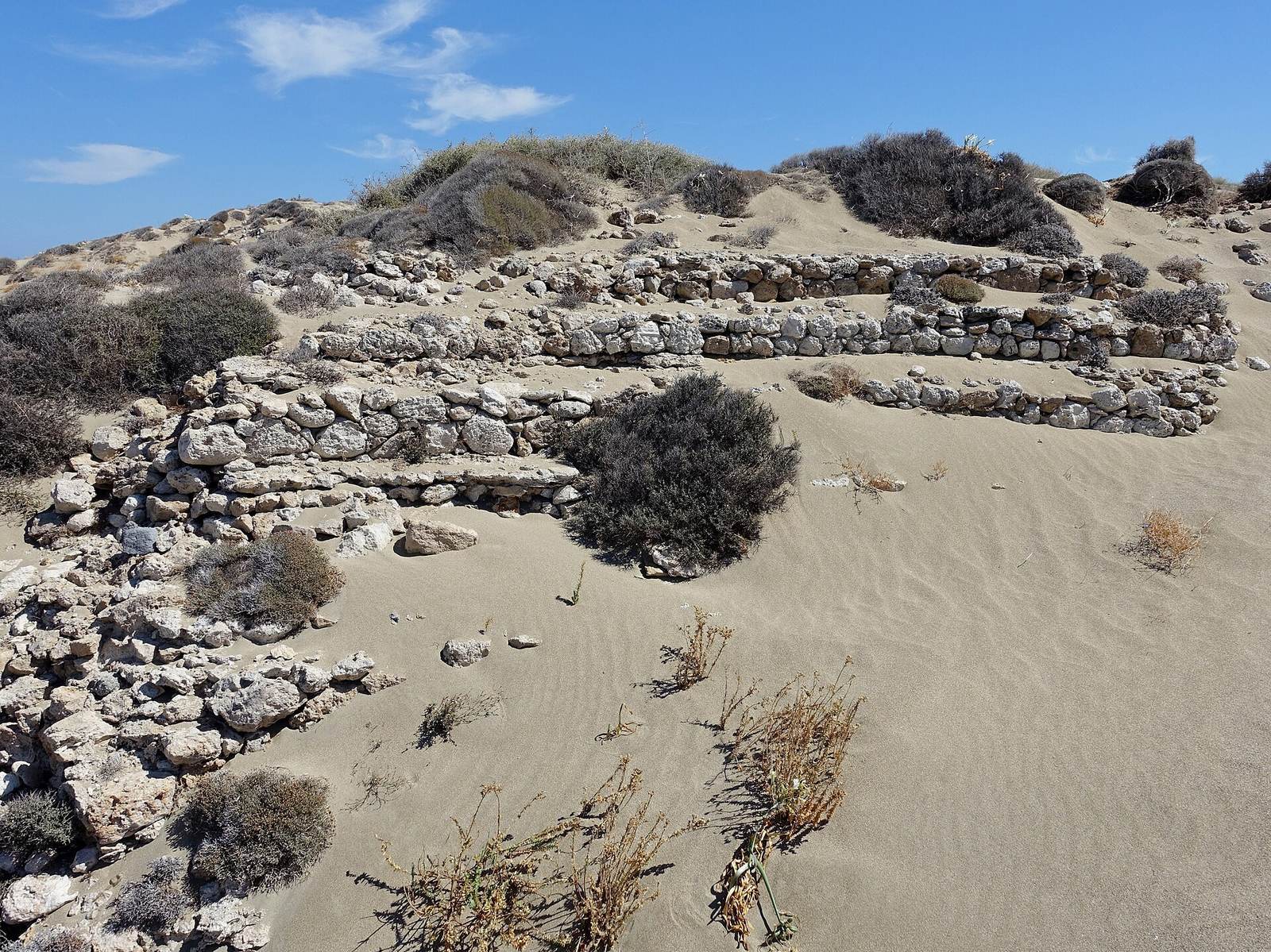
The city was abandoned in the fourth century CE. The island was then used mainly for grazing and also became a home for hermit monks. These later uses helped preserve the city’s remains, although sand gradually covered much of the site.
Exploration and excavation
English vice-admiral Thomas Spratt first recorded observations of the ancient remains in the nineteenth century. R. C. Bosanquet and C. T. Currelly investigated the island in 1903, followed by Albert Leonard Jr. in 1971. Systematic archaeological excavations began in 1976 under Níkos Papadákis.
Remains
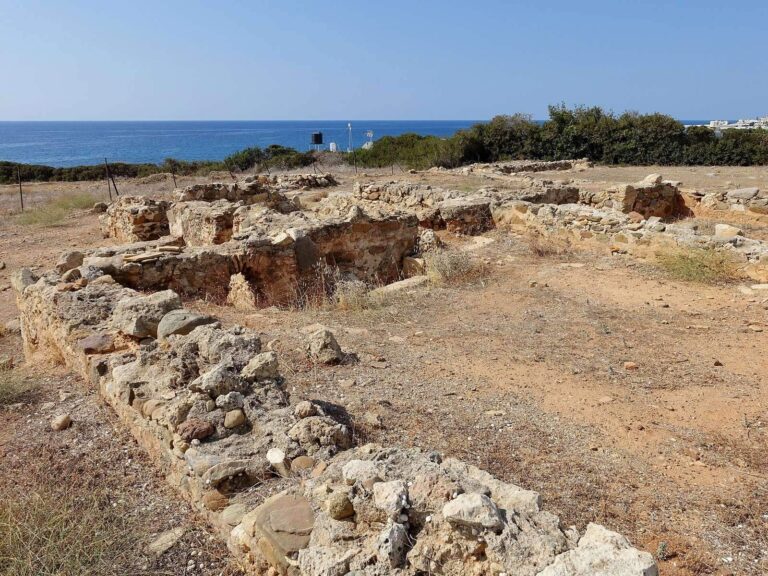
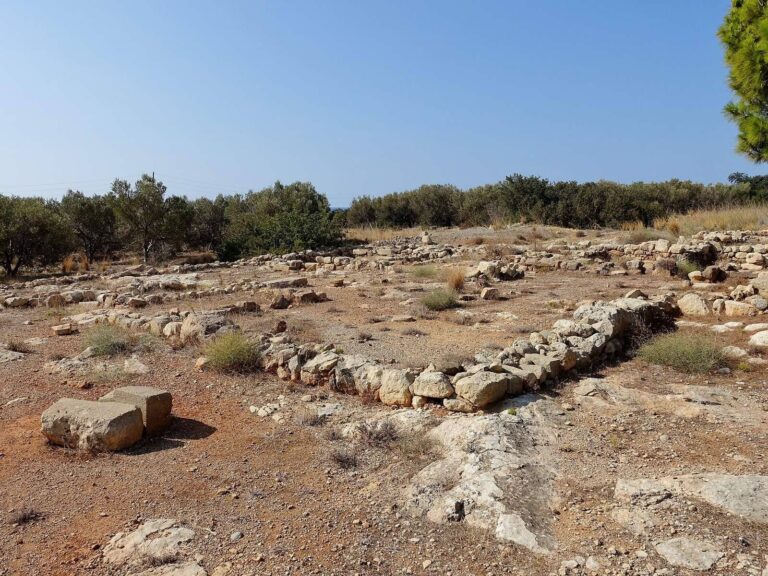
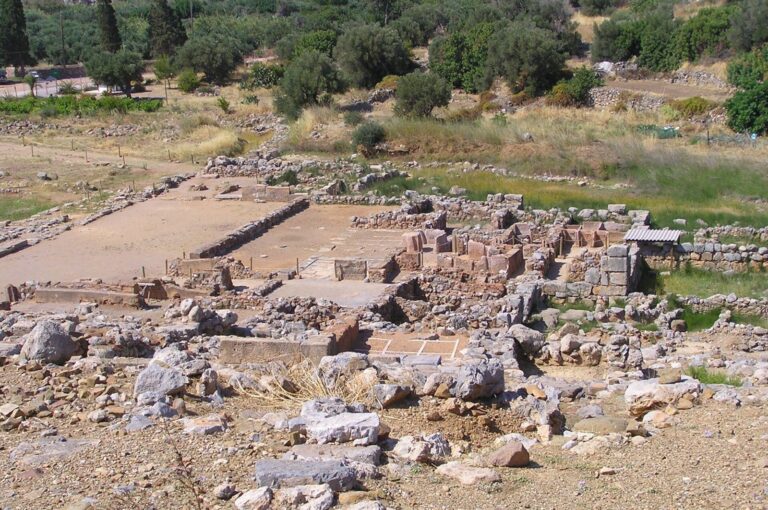
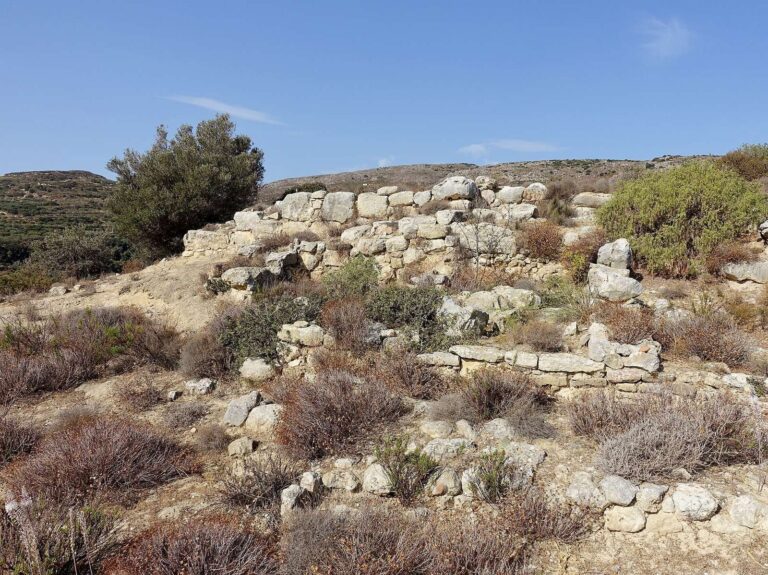
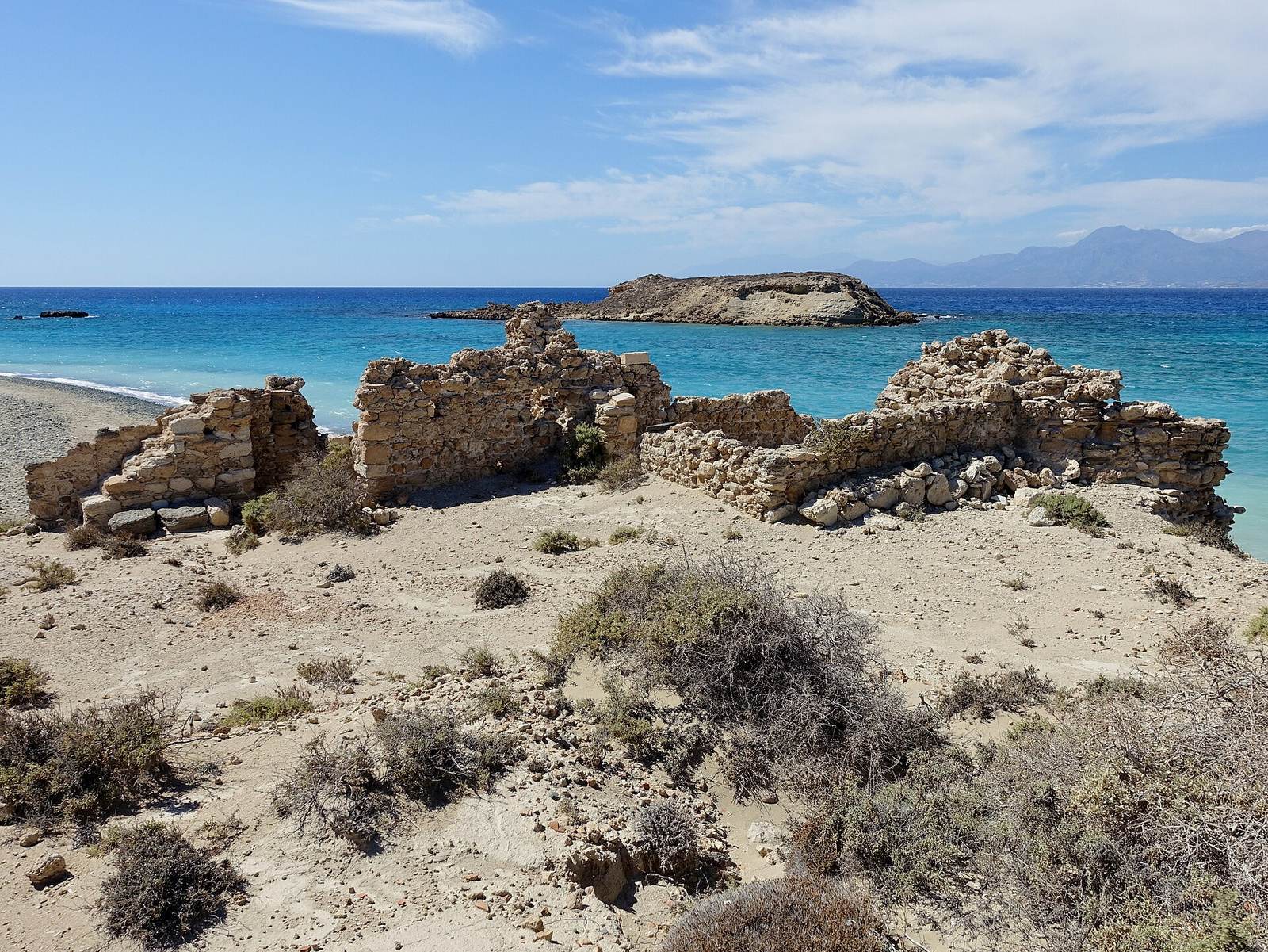
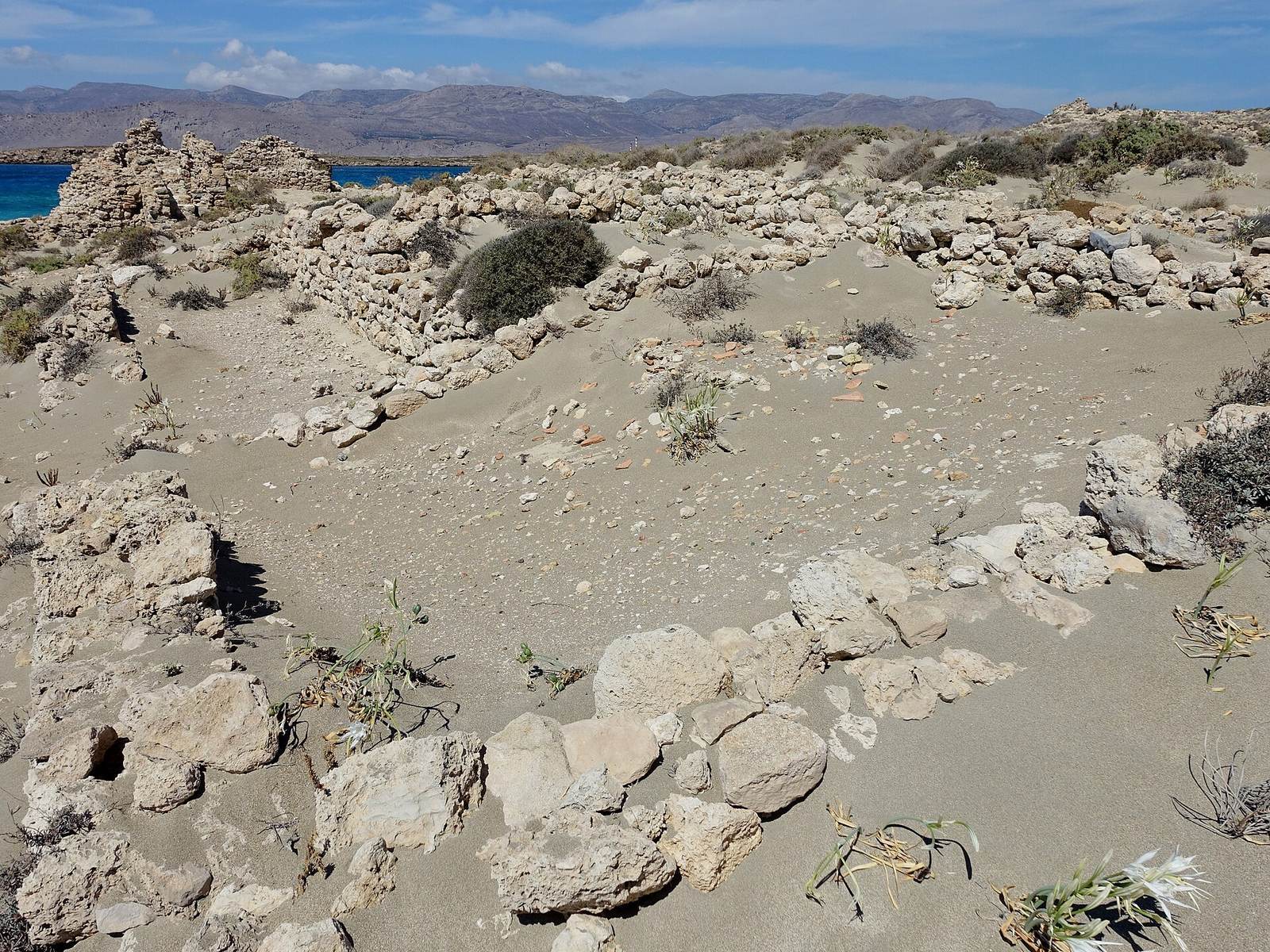
Leuke occupied the island’s northern shore, around the present-day beaches of Kamaréles, Anemertía, and Káto Papaloúkas, opposite Mármaros. Its remains include a Roman theatre, a bath building, a large private house, a southern temple site, central water cisterns, and caves along the western coast.
Theatre
The Roman theatre had a semicircular seating area with 12 rows and room for about 1,000 people. The seating is poorly preserved. Its nearly semicircular orchestra, the performance area, lay before a stage building measuring approximately 20 by 19 m. The stage building’s eastern end is best preserved, including the paraskenion (side section), logeion (raised speaking platform), hyposkenion (space beneath the platform), and eastern parodos (entrance passage).
Bath building
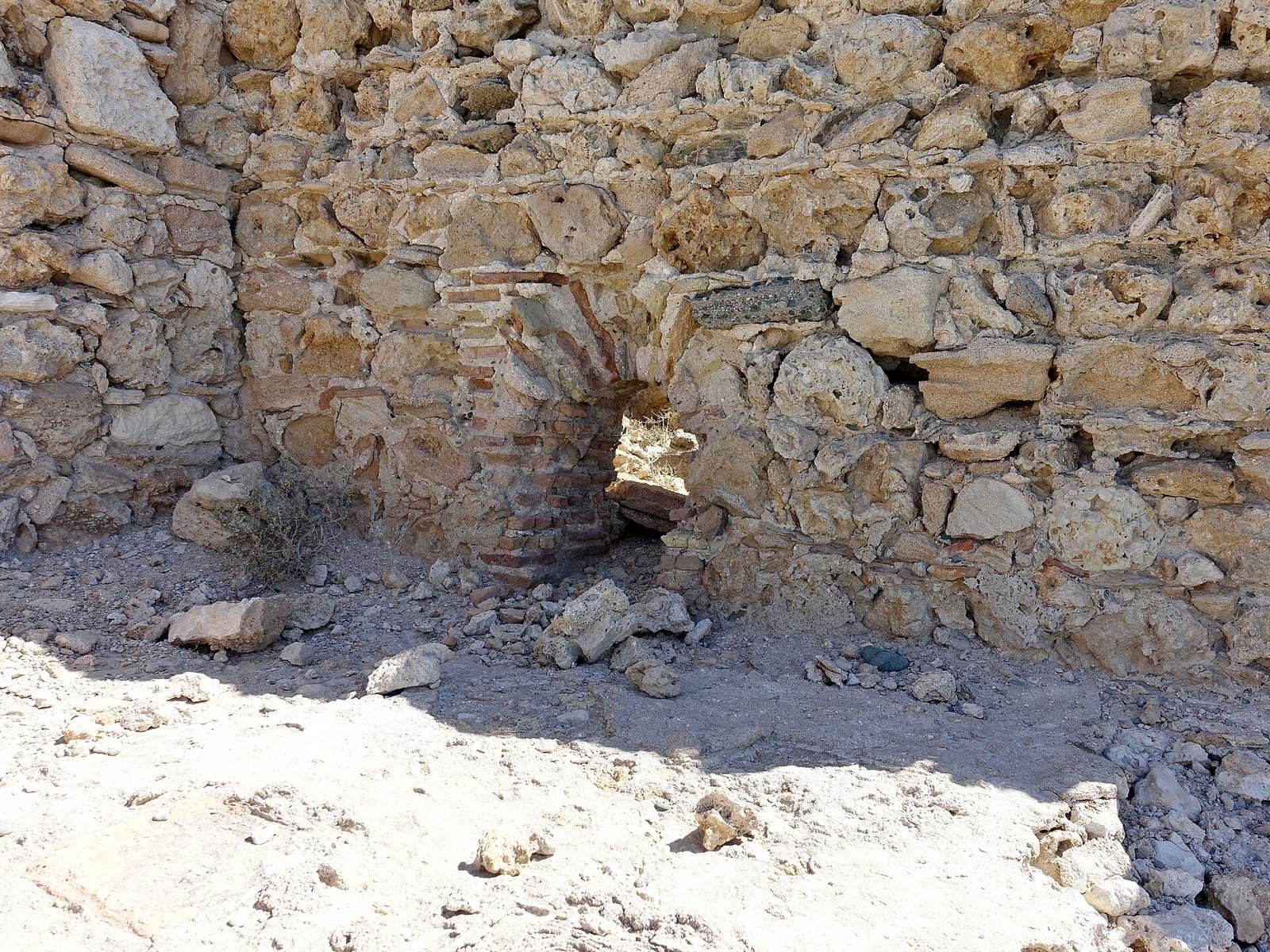
The bath building was used from the first through the fourth century CE and survives in places to a height of about 4 m. Its facilities included hot rooms and changing rooms, heated by hypocausts, an underfloor heating system.
Private house
A large private house known as the villa contained at least eight rooms, a colonnade, kitchens, and a workshop for producing purple dye. Floors in two rooms had geometric patterns made from black and white stones.
Temple site
The temple in the island’s southern part measured approximately 18 by 15.7 m. Its surviving remains consist mainly of the krepidoma, the stepped base of a temple. A lighthouse built on the temple site in 1920 incorporated some temple stones into its walls. Fragments found there belonged to a cult image of a seated deity on a throne; the image stood more than 2.5 m high.
Cisterns
Several large cisterns in the island’s central part collected spring water delivered through pipes.
Western coastal caves
Several caves on the western coast served as chapels and as dwellings for hermit monks. One contains a Latin inscription that gives the year 1638.