Church of Saint John the Baptist: A Roman Catholic Church in San Giovanni in Persiceto
Site at a Glance
- Popularity
- Low
- Country
- Italy
- Primary era
- Early Modern
- Eras represented
- Medieval, Early Modern, Modern
- Civilizations
- Holy Roman Empire, Papal States
- Site type
- Religious
- Remains
- Church
On this page11 sections
History
Early tradition and medieval growth
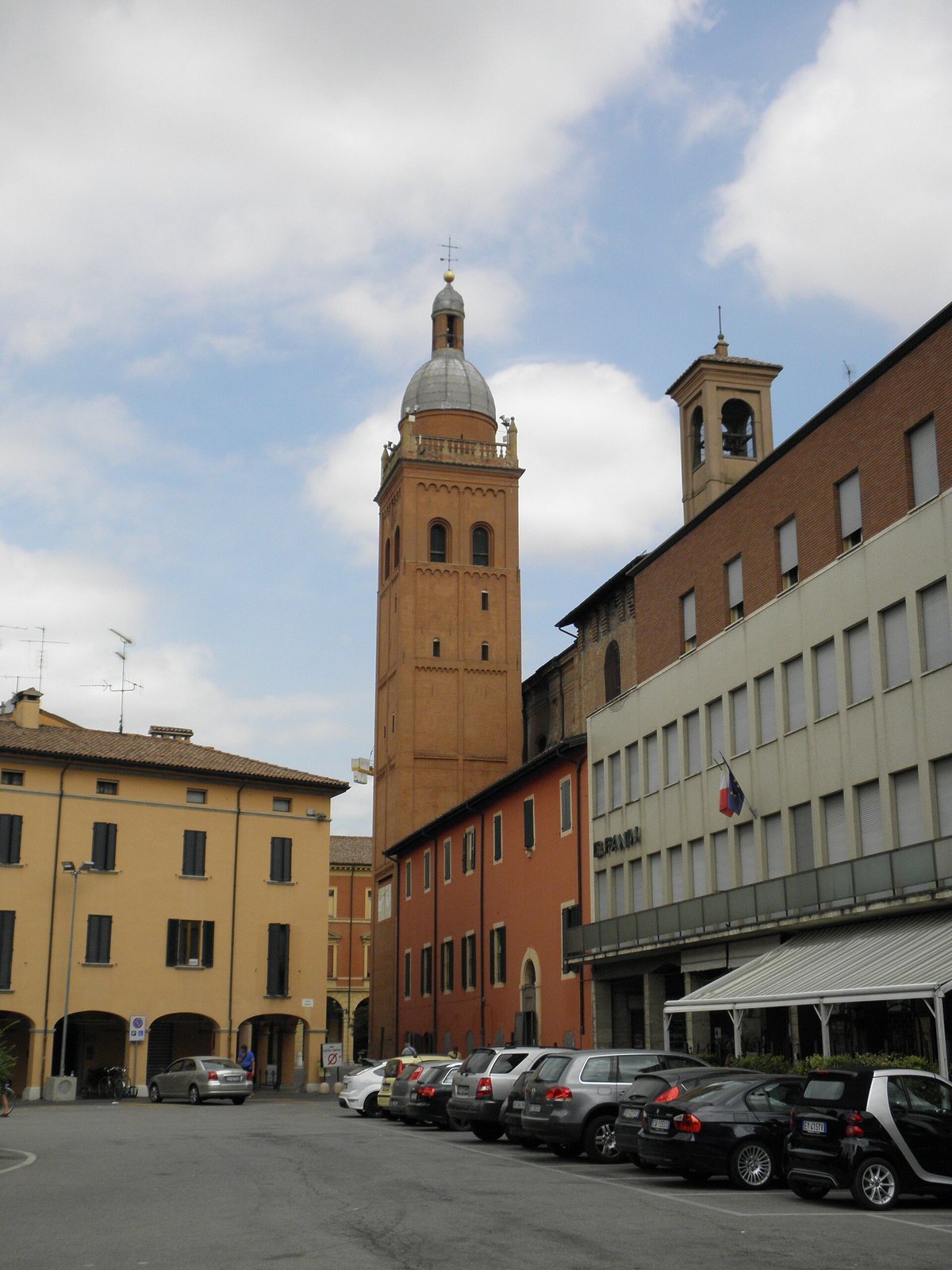
The Church of Saint John the Baptist is a Roman Catholic church in central San Giovanni in Persiceto, Italy, traditionally founded in 310 and enlarged in the Romanesque style around 1000. It follows the Roman rite, the Catholic Church’s Latin liturgical tradition, and is dedicated to John the Baptist, whom the Gospels present as Jesus’ forerunner.
A local tradition says that a deacon and two priests sent by Saint Zama, Bologna’s first bishop, established the church. By 312, it appears to have had an archpriest, a senior priest with leadership responsibilities. Papal bulls, formal documents issued by popes, described it as a “distinguished basilica.” Its history around the ninth century may be connected with the Lombards, a Germanic people who ruled much of Italy in the early Middle Ages and dedicated many churches to John the Baptist. Around 1000, the church was enlarged in the Romanesque style, traditionally at the initiative of Matilda of Canossa, an influential Italian ruler and landholder.
Seventeenth-century reconstruction
During the severe plague of 1630, the community commissioned an altarpiece for the Partecipanza Chapel as a votive offering. Francesco Gonzaga, son of Ferrante II Gonzaga, Duke of Guastalla, and Vittoria Doria, was buried in the church in 1643.
By the seventeenth century, the building had deteriorated and was considered outdated in architectural terms. In 1671, Archpriest Casalini and a community body had its plan redrawn. Paolo Maria Canali was appointed architect, and reconstruction was completed in 1698. A blessing act dated 26 October records the completion.
Consecration and civic change
Prospero Lambertini, later Pope Benedict XIV, consecrated the church in 1739. Its later facade was built to celebrate Pope Gregory XVI’s elevation of the territory to city status.
Remains
Plan and facade
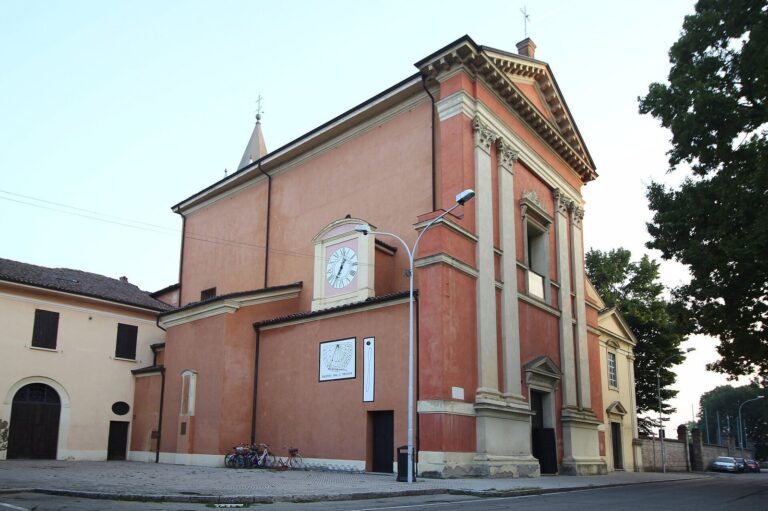
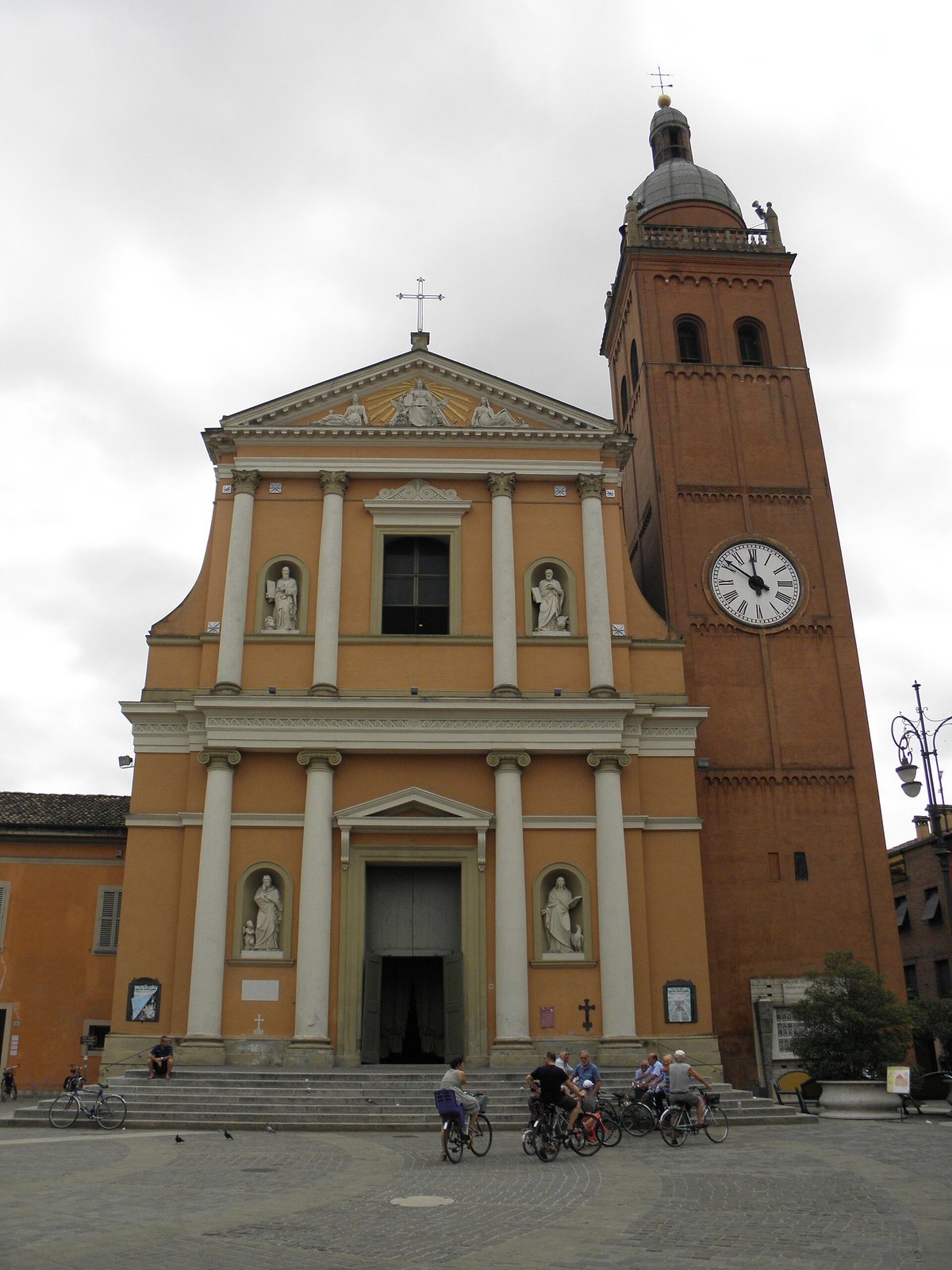
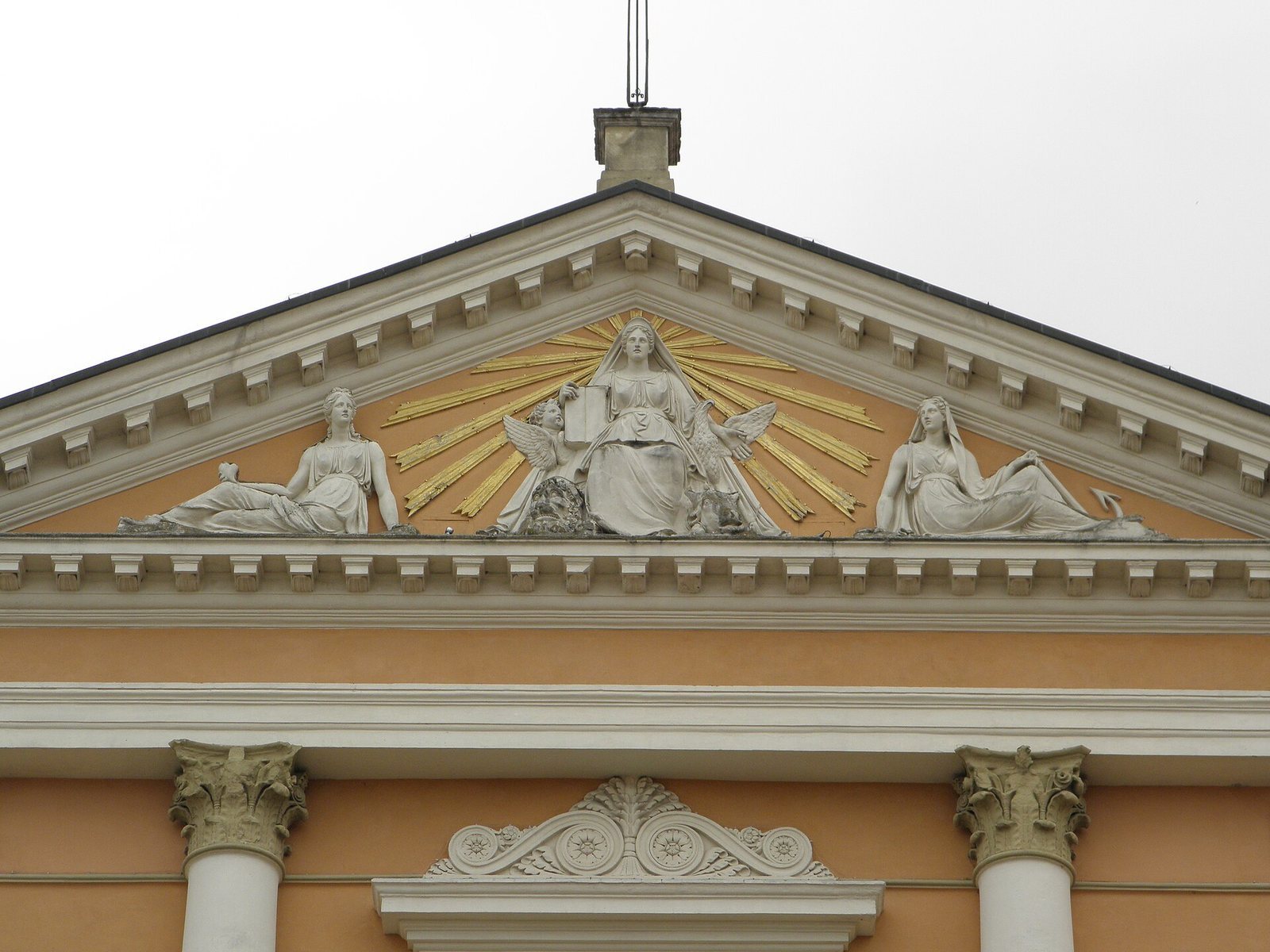
The church has a Latin-cross plan, with a long main axis crossed by a shorter transept. Before the seventeenth-century reconstruction, its interior included three aisles and two side chapels. The neoclassical facade, a design drawing on classical Greek and Roman forms, was built in 1834 to designs by engineer Luigi Gamberini and architect Leandro Marconi. Bernardino Bernardi made its Evangelist statues and pediment; Archpriest Don Sacchetti donated the pediment.
Interior and artworks
Interior decoration
Giovanni Battista Baldi painted the church’s interior decorations toward the end of the nineteenth century.
First altar on the left
The first altar on the left holds Saint Anthony of Padua with the Christ Child, a painting by Guercino, the artistic name of Giovanni Francesco Barbieri.
Next chapel
The next chapel contains Ubaldo Gandolfi’s Saint Anne, the Virgin as a Child, and Saint Joachim. Gandolfi was an eighteenth-century painter from San Giovanni in Persiceto.
Partecipanza Chapel
The Partecipanza Chapel, named for a communal landholding institution, contains a seventeenth-century altarpiece by Bolognese painter Francesco Albani. It depicts the Madonna and Child with angels and Saints Sebastian and Roch.