Cathedral of the Nativity of Christ in Alexandrov: Seat of the Alexandrov Diocese
Site at a Glance
- Popularity
- Medium
- Country
- Russia
- Primary era
- Early Modern
- Eras represented
- Early Modern, Modern
- Civilizations
- Russian
- Site type
- Religious
- Remains
- Cathedral
On this page11 sections
History
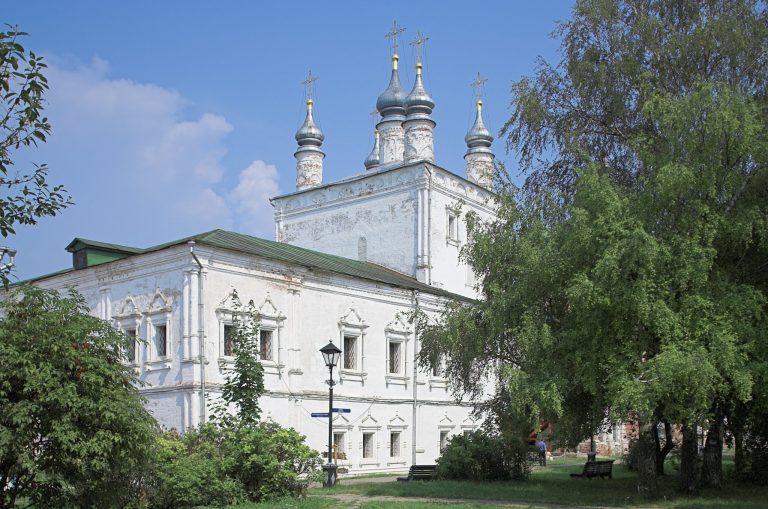
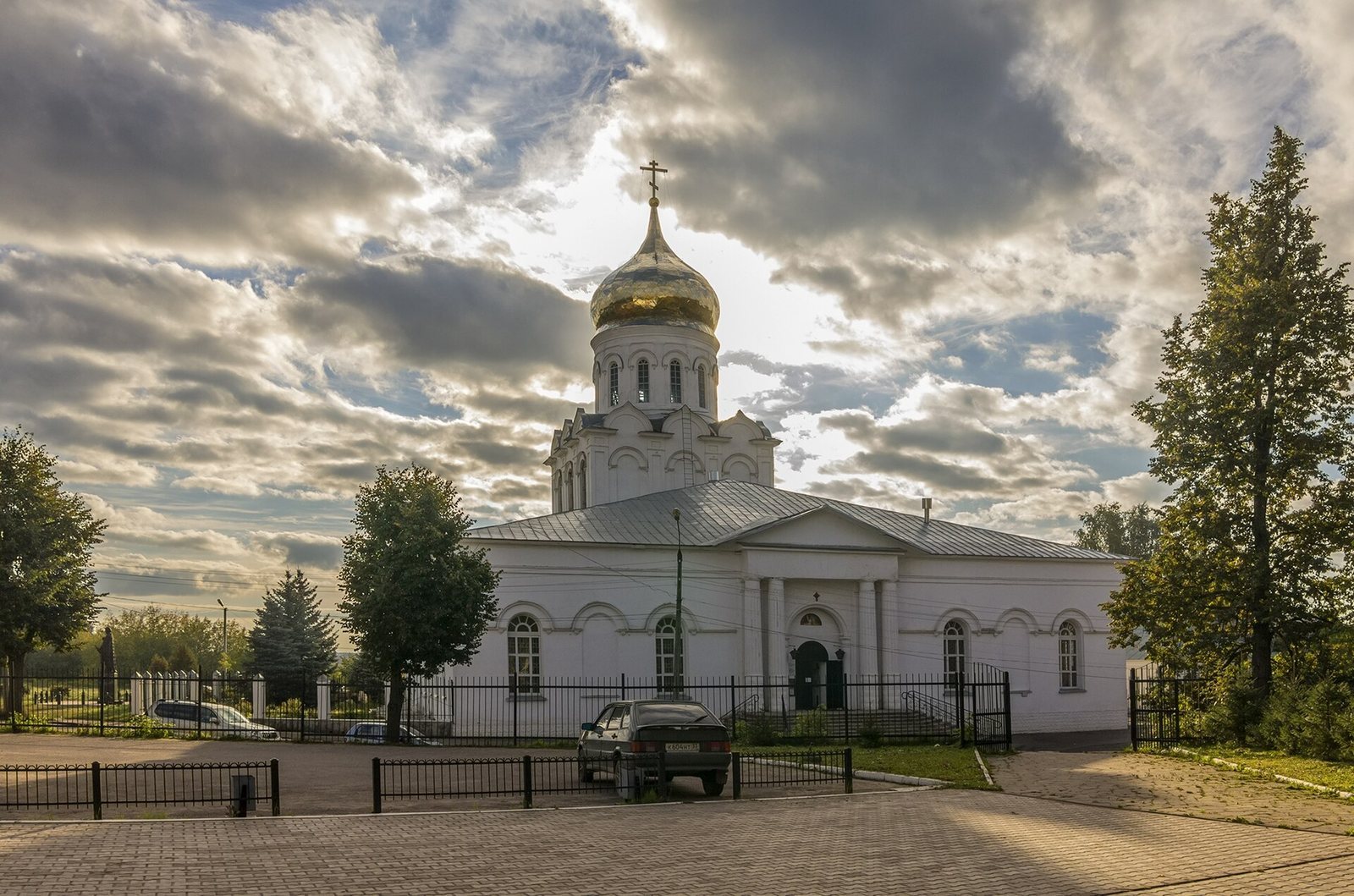
The Cathedral of the Nativity of Christ is an active Russian Orthodox church in Alexandrov, Russia, whose stone building dates to 1696. After nineteenth-century alterations, it took on an Empire-style design, a monumental form of neoclassical architecture. Today it serves as the cathedral of the Alexandrov Diocese, a Russian Orthodox Church district overseen by a bishop.
Wooden churches and early records
A wooden church dedicated to St Nicholas the Wonderworker was established in 990 at a settlement named for the saint, near the present cathedral. As Christianity spread during the second half of the eleventh century, a wooden Church of the Nativity was founded east of the settlement.
An inventory made by royal scribes from 1627 to 1630, during a period of devastation in Russia, listed both churches on the posad, a town’s settlement or commercial quarter. One was dedicated to the Nativity and the other to St Nicholas.
Stone church and royal associations
Tsars Ivan V and Peter I attended services at both churches in 1687. With Peter’s support, a single stone Church of the Nativity replaced the two wooden buildings in 1696.
Before 1741, during the reign of Empress Anna Ioannovna, Peter I’s daughter Elizabeth Petrovna, later empress, spent extended periods in Alexandrovskaya Sloboda, a historic Russian settlement. She had been sent away from the royal court, and her palace stood 100 metres south of the church.
Nineteenth-century enlargement
In 1829, merchant Fyodor Baranov replaced the wooden bell tower with a stone one. The Archangel Michael chapel was rebuilt in 1831. In 1847, Baranov’s son Ivan funded an enlargement of the church, including the rebuilding and consecration of the St Nicholas chapel. These changes made the cathedral large enough to serve almost all Orthodox residents of Alexandrov and nearby villages.
Closure and revival
Nikita (Delektorsky), later honored as a hieromartyr, served as rector from 14 June 1922 to 1 February 1924. Pimen Kiselev became rector on 16 April 1924 and remained in the post until the cathedral closed. Soviet authorities shut the church and desecrated it in 1929. Until 1990, the building was used at different times as an opera theatre, club, bread factory, arts centre, and cultural centre of VNIISIMS, the All-Russian Scientific Research Institute for the Synthesis of Mineral Raw Materials.
The cathedral’s revival began in 1991. Its first service after the closure took place in the Archangel Michael chapel at Christmas in 1992, and Archbishop Eulogius of Vladimir and Suzdal consecrated the altar in 1993. Restoration of the drum, dome, and cross was complete by early 2002. Work on the bell tower followed, with finishing work continuing after its dome had been erected.
Remains
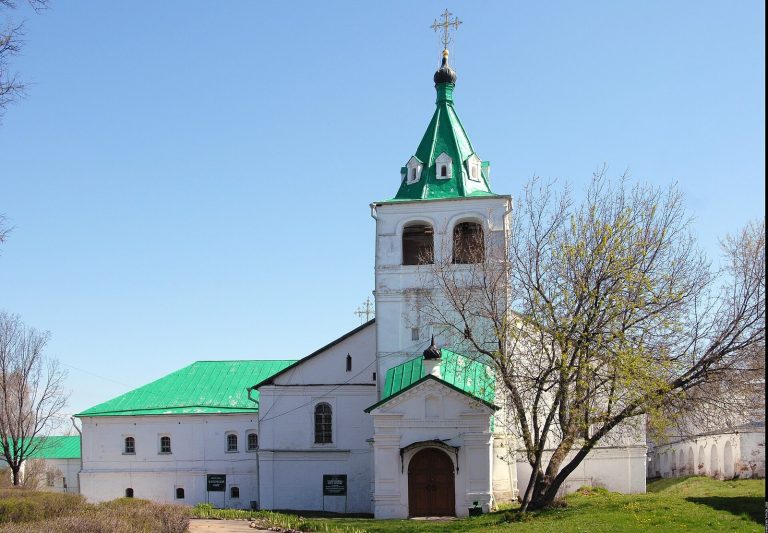
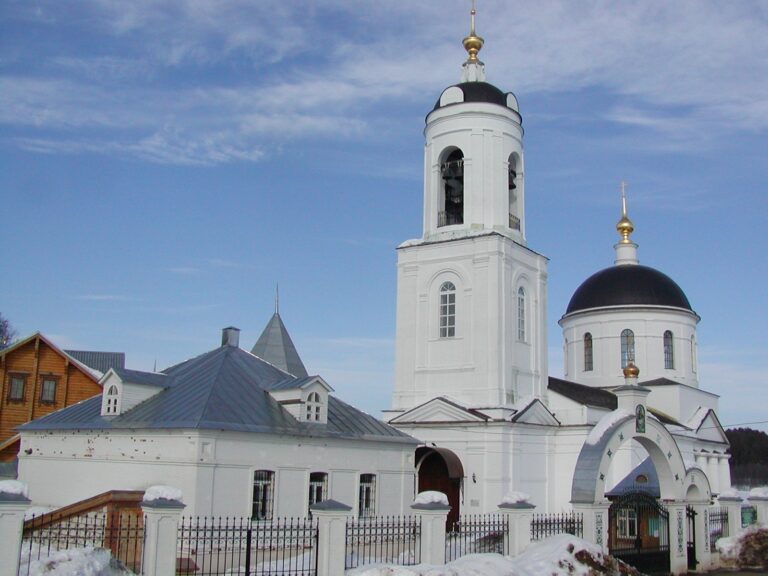
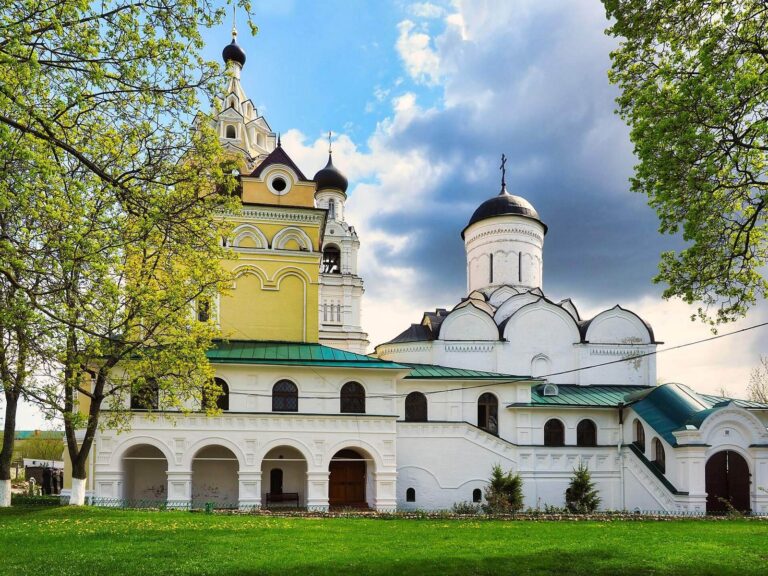
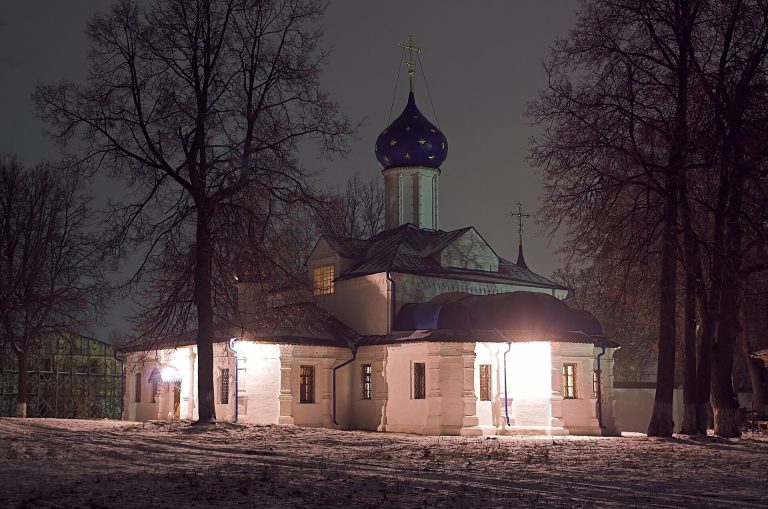
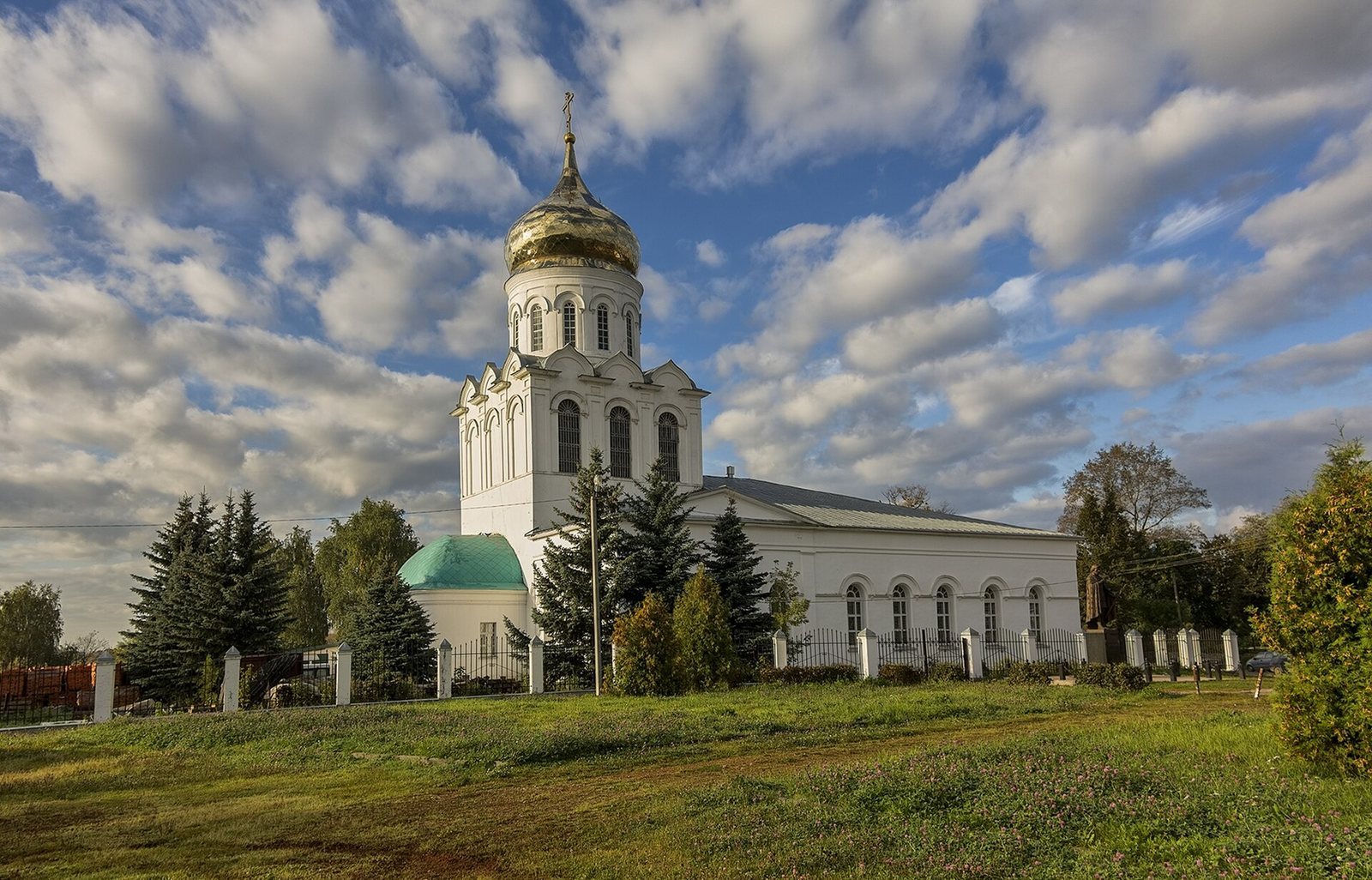
The site comprises a stone church with chapels and a bell tower, enclosed by a fence. Religious and educational buildings also occupy the grounds.
Church and bell tower
Stone church
The church has chapels dedicated to the Archangel Michael and, in an earlier phase, St Nicholas. Its restored drum supports an onion-shaped dome topped by a cross.
Bell tower
The bell tower is built of stone and topped by a dome.
Grounds and interior
The grounds contain a building for making prosphora, small loaves used in Orthodox liturgy, as well as a Sunday school and a library. A baptismal room has also been fitted out. Inside the cathedral, the iconostasis, an icon screen separating the sanctuary from the main worship space, has been renewed, and the central part of the building has been painted.
Alexander Nevsky monument
A monument to Alexander Nevsky stands beside the cathedral. Nevsky was a medieval Russian prince and military leader who was later revered as a saint in the Russian Orthodox Church.