Madonna della Pace: A Renaissance Marian Sanctuary in Umbria
Site at a Glance
- Popularity
- Low
- Country
- Italy
- Primary era
- Early Modern
- Eras represented
- Medieval, Early Modern
- Civilizations
- Papal States
- Site type
- Religious
- Remains
- Sanctuary
On this page8 sections
History
Foundation and Franciscan community
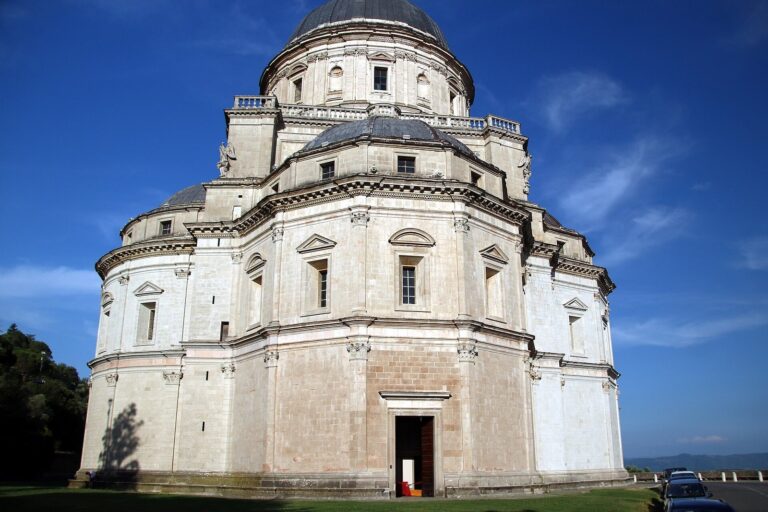
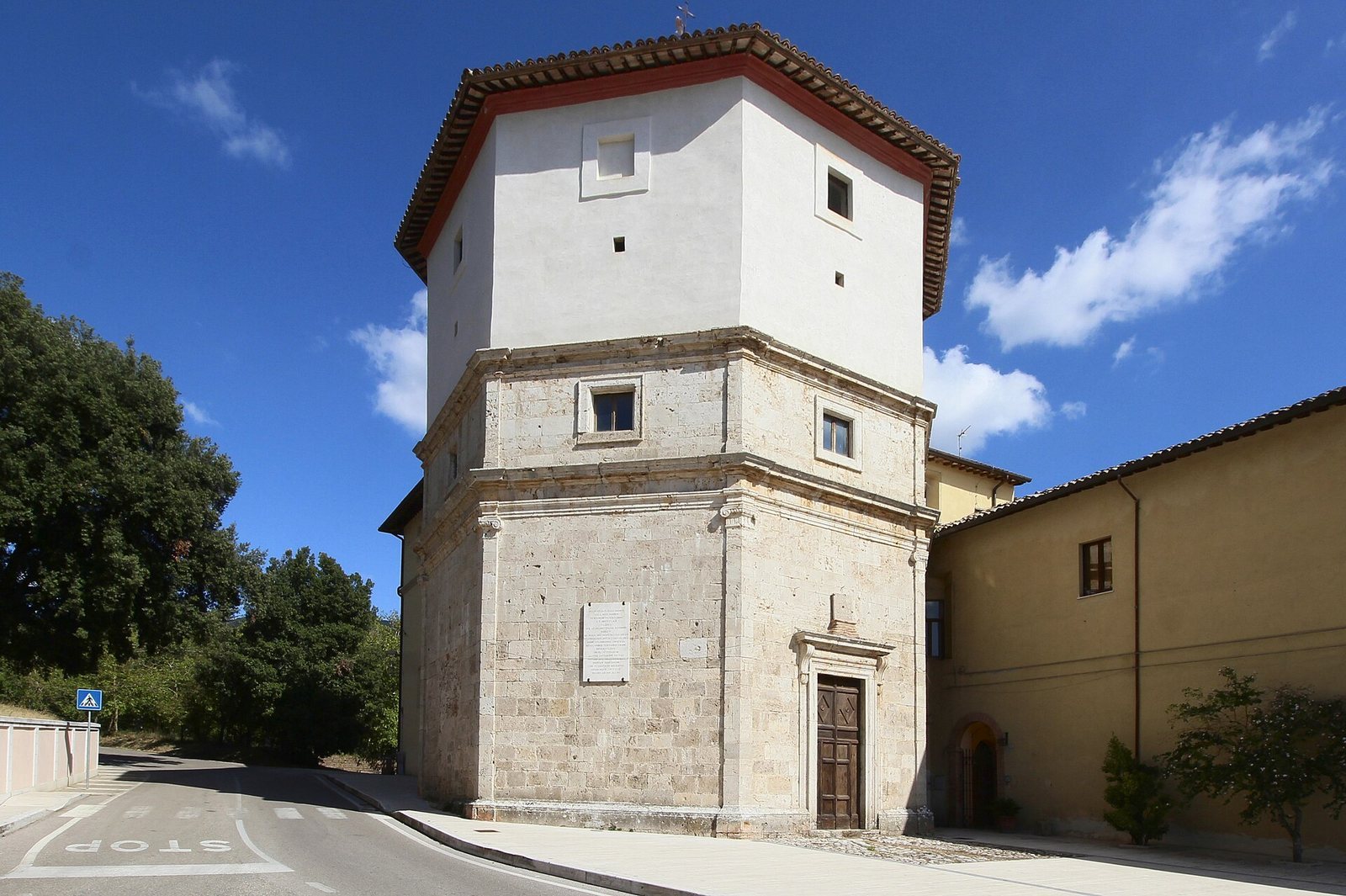
Madonna della Pace is a Roman Catholic Marian sanctuary in Massa Martana, Umbria, Italy. Built in Renaissance style, the church was begun on 8 March 1521 and consecrated in 1589. It stands along the Via Flaminia, an ancient Roman road across central Italy that also served pilgrims. The sanctuary grew around a roadside shrine containing an image of the Virgin Mary nursing the Child, between St John the Baptist and St James.
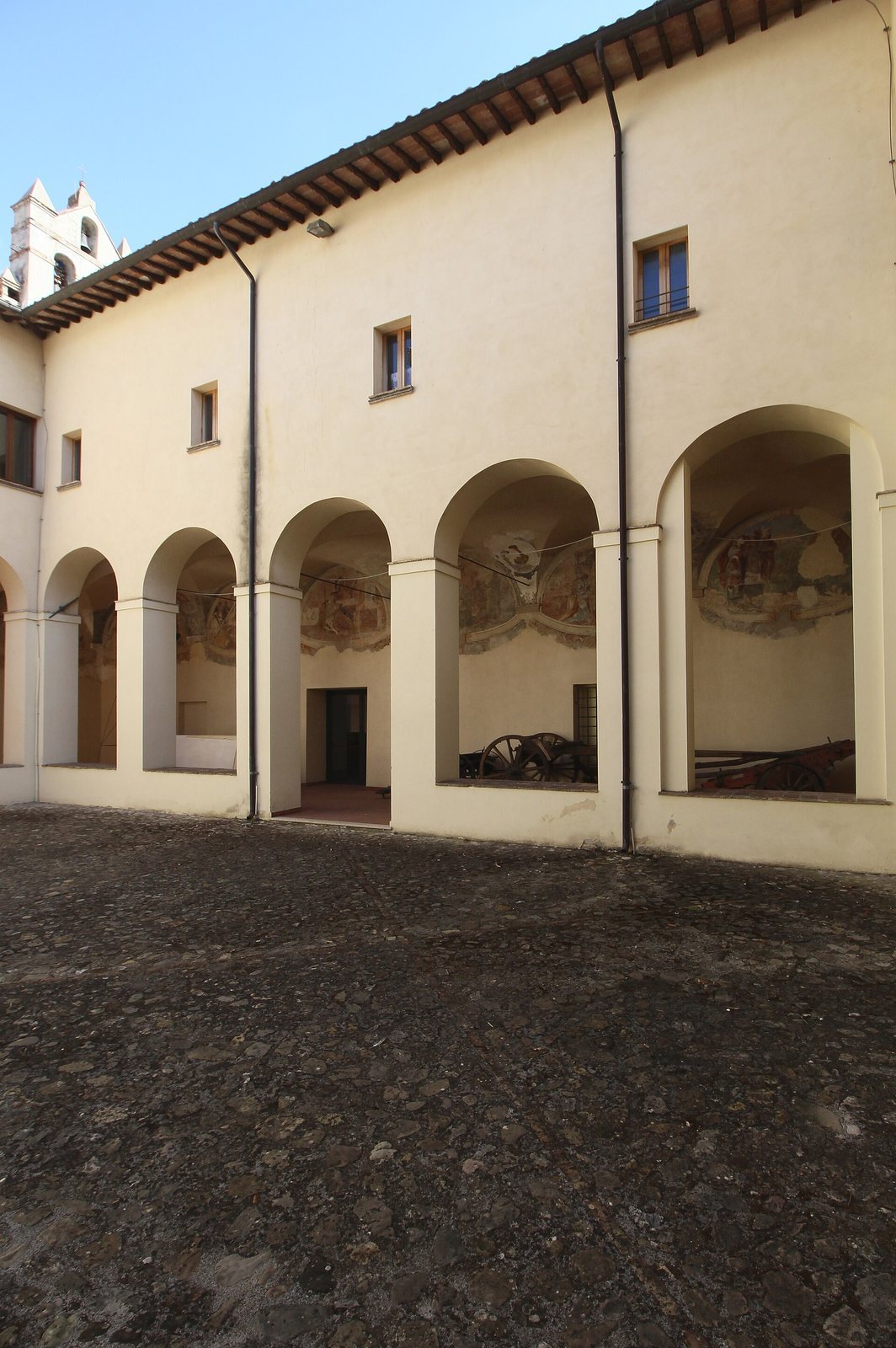
From the church’s foundation, its care was entrusted to the Third Order Regular of St Francis, a Franciscan order whose members live in community under a formal rule. The friars already lived in the area at the nearby convent of Sant’Antonio di Busseto. They built an adjoining convent at Madonna della Pace between 1604 and 1647. The building later housed Massa Martana’s municipal library and historical archive. The sanctuary is associated with the Diocese of Orvieto-Todi.
Seventeenth-century development
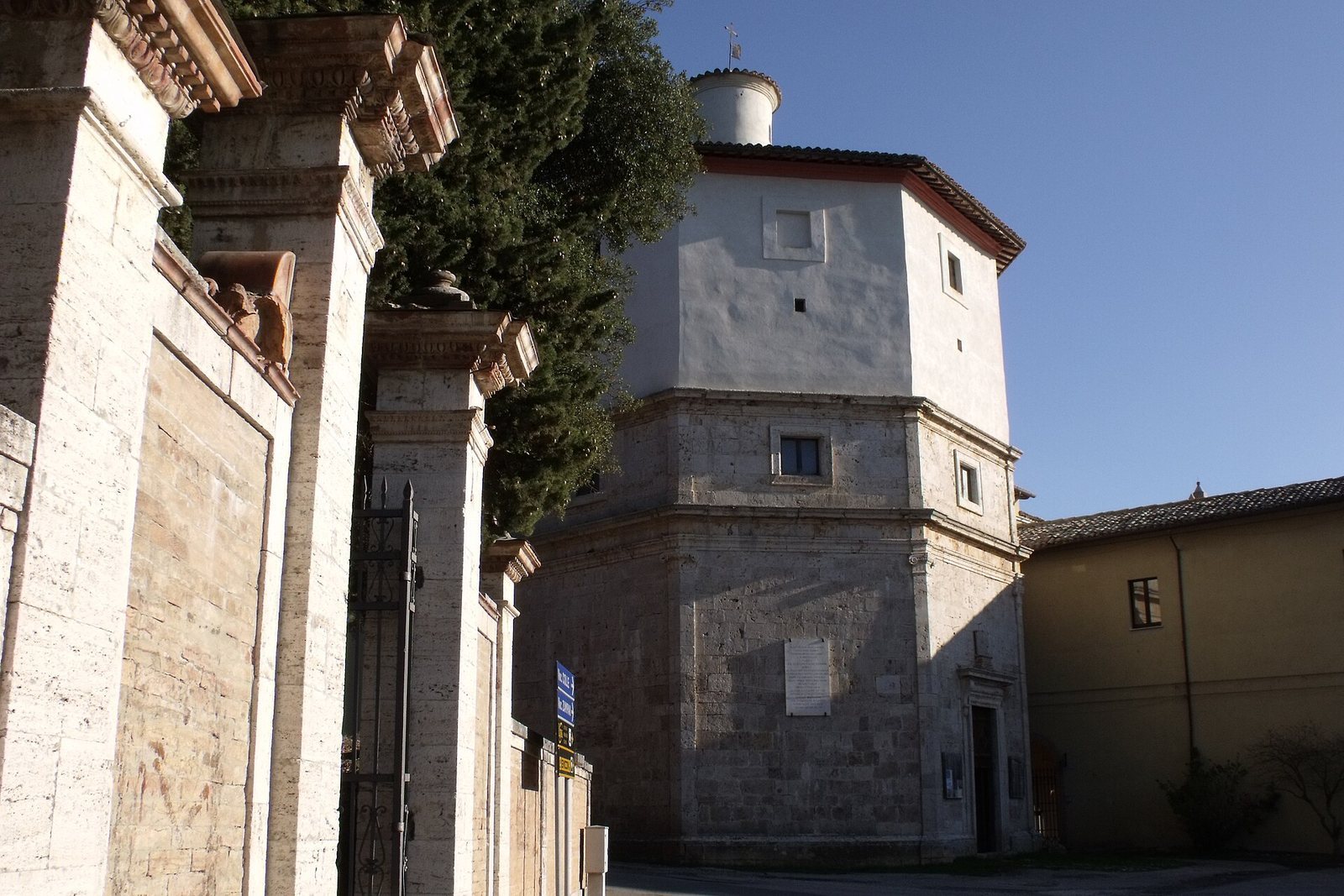
The church’s interior arrangement took shape around 1600. One side of its octagonal plan was opened to create the main chapel, and work on the chapel and choir was completed in 1630. A cupola replaced the original pitched roof, then was superseded in 1623 by a raised structure over the central space. Giovanni Antonio Polinori painted its interior between 1647 and 1649.
Remains
The church retains its centralized octagonal plan and a complex interior, with the main chapel formed by opening one side of the original plan. Its surviving artworks include a fifteenth-century Marian image, painted decoration above the central space, and paintings and decorated altar frontals.
The Marian fresco
A fresco of the Virgin Mary nursing the Child, flanked by St John the Baptist and St James, survives in the church. Attributed to Bartolomeo da Miranda, it dates to the mid-fifteenth century and is in the Late Gothic style. The image belonged to the roadside shrine around which the sanctuary developed.
Painted decoration above the central space
The interior of the tiburio, a raised structure built above a church’s central space, carries frescoes arranged in concentric bands. Their sequence extends from the Creation of Adam to Christ shown as judge at the Last Judgment, with scenes from the Old and New Testaments, apostles, saints, musical angels, cherubim, and seraphim. Painted architectural screens and landscapes suggest space beyond the structure’s actual limits, while the figures vary in pose, gesture, and expression. A recent restoration recovered the frescoes’ vivid original color tones.
Paintings and devotional images
Works inside the church include Palminio Alvi’s St Charles Borromeo in Adoration of the Crucifix (1612), behind the main altar facing the choir, and his St Francis Giving the Cord to the Third Order (1613), at the second altar on the right. The church also holds a St Francis Praying before a Skull, attributed to Pietro Paolo Sensini, and a Virgin in Prayer in the style of Andrea Barbiani. Part of the interior design is tentatively attributed to Andrea Polinori, a painter from Todi.
Altar frontals
The side altars have frontals made with scagliola, decorative plasterwork used to imitate marble. The material combines plaster with selenite, a mineral that occurs in flakes or plates. The frontals display varied colors and detailed patterns of arabesques, flowers, and birds. Comparable workmanship and decoration appear on altar frontals in the Church of San Francesco at Giano dell’Umbria.