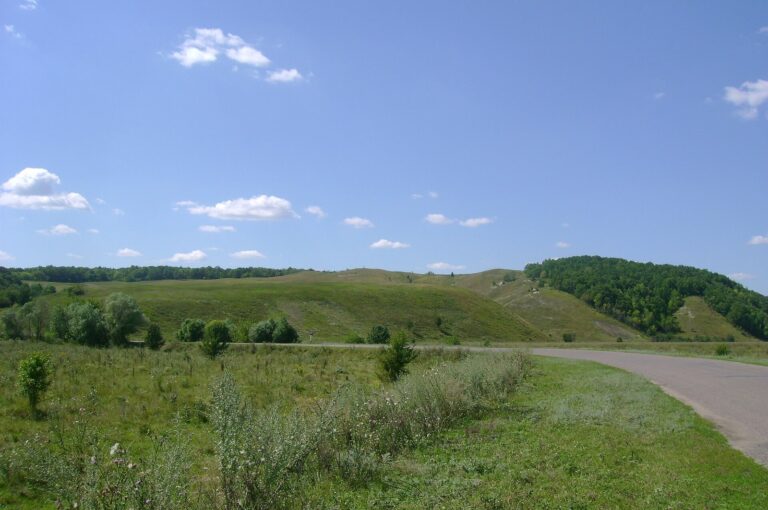
Semiluki Hillfort: A Medieval Fortified Settlement in Russia
Site at a Glance
- Popularity
- Very Low
- Country
- Russia
- Primary era
- Iron Age
- Eras represented
- Iron Age, Medieval
- Civilizations
- Scythian
- Site type
- Military
- Remains
- Citadel
On this page11 sections
History
Semiluki Hillfort is a fortified East Slavic settlement in Russia, with its principal medieval phase dating from the late twelfth to the first half of the thirteenth century.
Bronze Age and Scythian-period activity
The earliest evidence of human activity belongs to the Bronze Age, an archaeological period named for the metal technology predominant at the time, with dates that vary by region. A settlement from the Scythian period dates to the fourth to third centuries BCE. The Scythians were peoples of the ancient Eurasian steppe associated with the first millennium BCE.
Old Rus settlement
The medieval settlement belonged to Old Rus, the medieval East Slavic political and cultural world. Its political affiliation may have been either the Ryazan Principality or the Chernigov lands, both medieval East Slavic territories. A fortified center served as the settlement’s inner stronghold, with an unfortified outer settlement beyond it. Residents made pottery, worked wood and metal, practiced blacksmithing and jewelry making, and also engaged in fishing, forest beekeeping, agriculture, livestock raising, and hunting.
About 70 people’s remains were found in five buildings and nine pits. Their unusual placement may reflect a military defeat, and traces of at least two attacks have been identified. Another interpretation connects the burials with local ritual practice. The Mongol invasion did not interrupt settlement, but the site was abandoned in the middle or later part of the thirteenth century. During the Horde period, the era of Mongol-led rule in the region, descendants of its residents may have settled on Chernyshova Hill, about eight kilometers upstream along the Don.
A. D. Pryakhin and M. V. Tsybin proposed that the hillfort was the town of Voronezh mentioned in a chronicle in 1177; A. Z. Vinnikov disputed that identification. Tsybin later considered it unlikely that the medieval settlement continued beyond the first half of the thirteenth century.
Archaeological investigation and protection
Staff of the Voronezh Regional Museum discovered the site in the 1920s, and limited excavations followed in 1927. A. D. Savrasov made regular surface collections in the 1970s. Voronezh State University expeditions led by A. D. Pryakhin, M. V. Tsybin, and A. D. Savrasov investigated the hillfort from 1984 to 1993 and in 2000. A Voronezh State Pedagogical University team led by Yu. D. Razuvaev worked there in 2012 and 2014. The site is a cultural heritage site of federal significance in Russia.
Remains
Setting and defenses
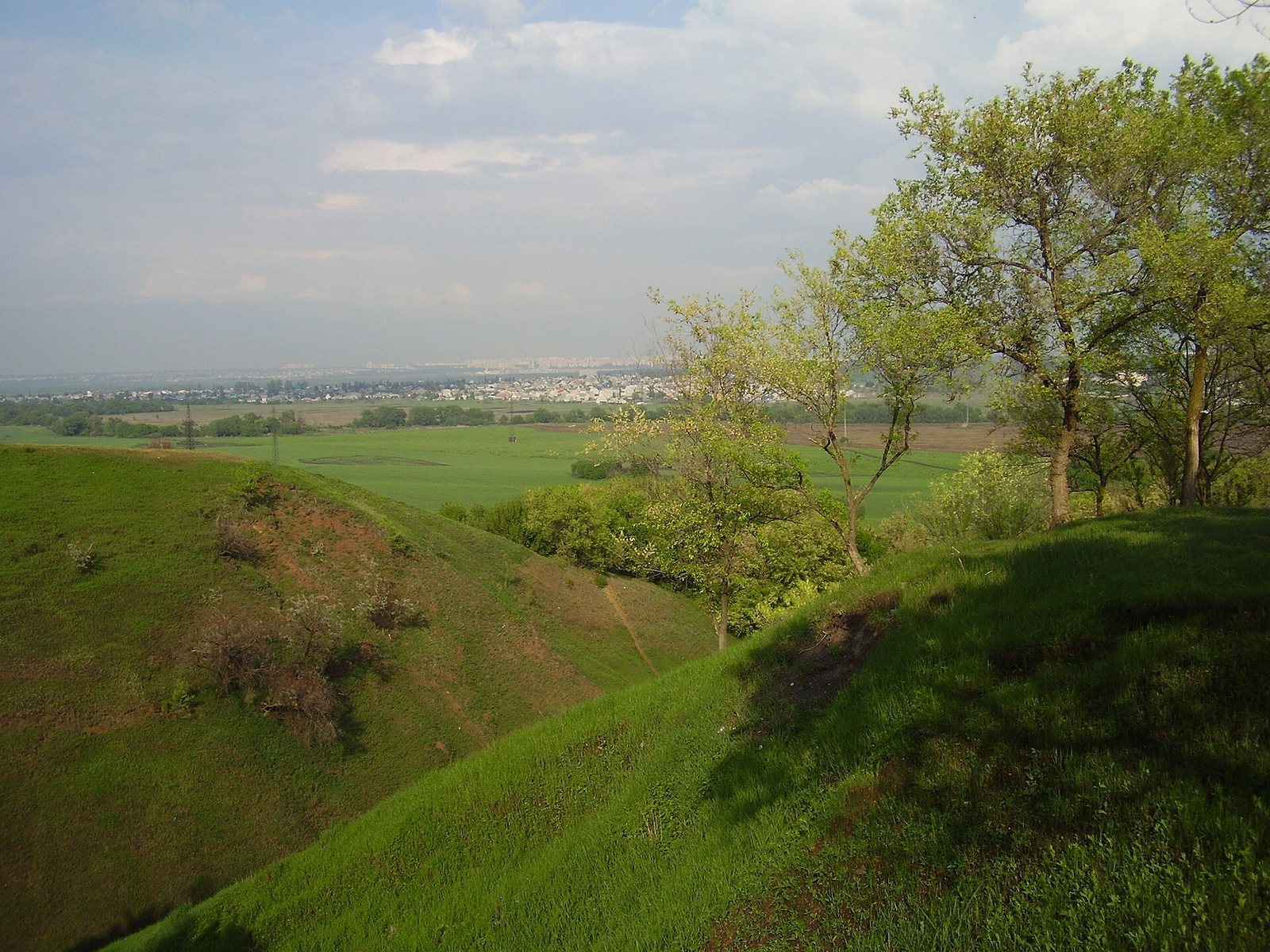
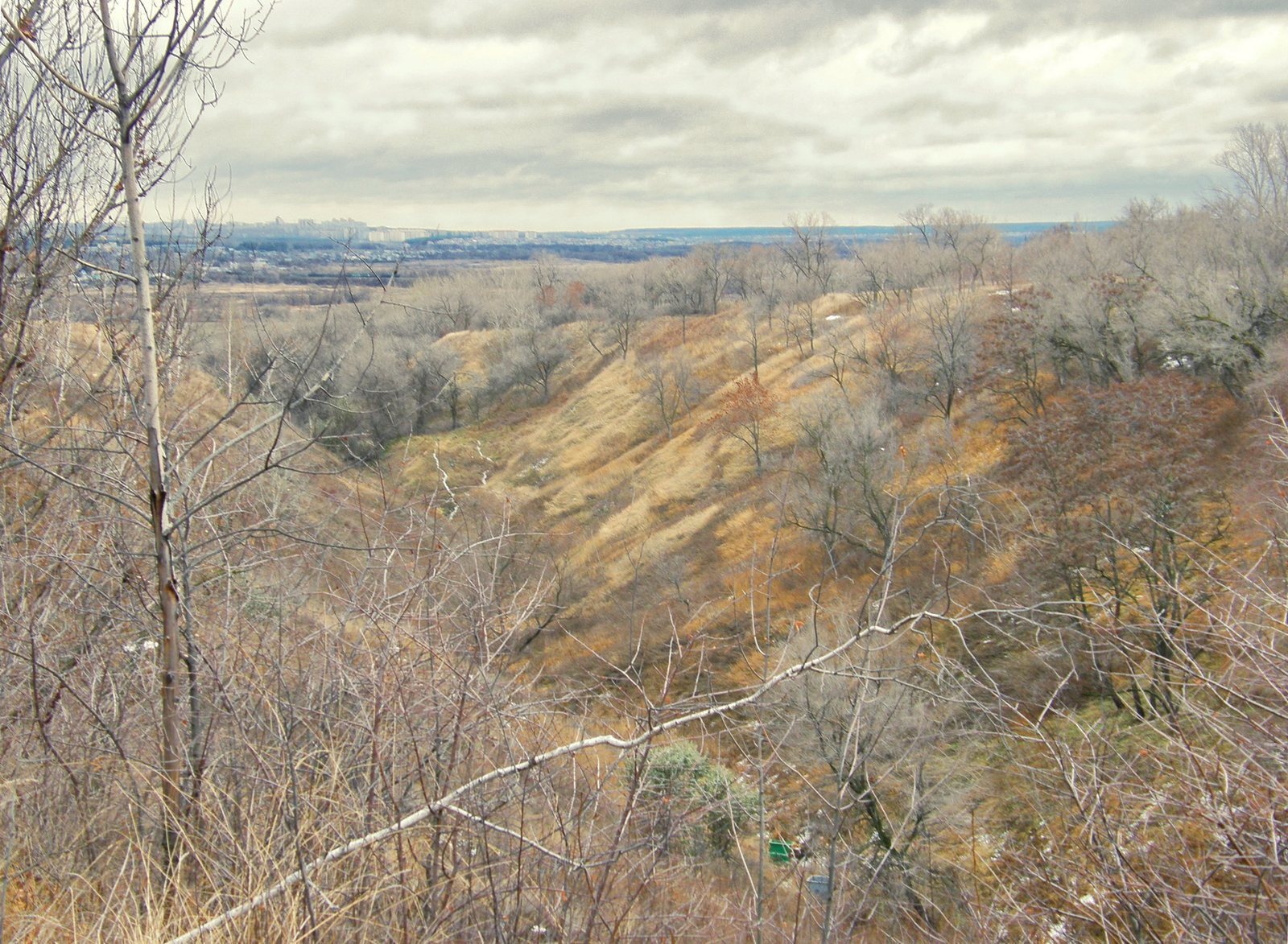
The hillfort occupies a cape on the right bank of the Don that rises more than 45 meters. The fortified area is about 200 meters long and 65 to 70 meters wide, covering more than one hectare. On its landward side, a ditch up to 3 meters deep and 10 meters wide and a rampart up to 1.2 meters high and 5 to 7 meters wide bounded the enclosure. A larger settlement extended beyond it across neighboring capes, covering about 4 to 5 hectares.
Early Iron Age remains
The Early Iron Age, an archaeological period defined by the metal technology predominant at the time and dated differently by region, is represented by two defensive lines, seven partly underground and above-ground buildings, and more than 100 utility pits.
Medieval settlement remains
Residential layout
The upper archaeological horizon contains remains of 16 residential buildings and about 20 utility pits. A street followed the cape’s length, with household yards arranged beside it. Lock fittings, ornaments, and weapons, including some imported objects, point to the settlement’s urban character.
Pottery and kilns
A small quantity of ninth- to tenth-century pottery belongs to the Borshevo culture, an archaeological culture associated with early medieval communities in the Don region. Pottery-firing kilns stood outside the fortress. Remains of one kiln, identified in 1981, were later investigated by archaeologists.
Burial building
Outside the hillfort are the remains of an above-ground log-built structure. A woman was buried inside it, and the building may have served as the entrance hall of a church.