Basilica of Saint Bartholomew and Saint Jerome Emiliani: Parish Church and Sanctuary of Somasca
Site at a Glance
- Popularity
- Medium
- Country
- Italy
- Primary era
- Modern
- Eras represented
- Early Modern, Modern
- Civilizations
- Duchy of Milan, Habsburg, Italian, Spanish
- Site type
- Religious
- Remains
- Basilica
On this page13 sections
History
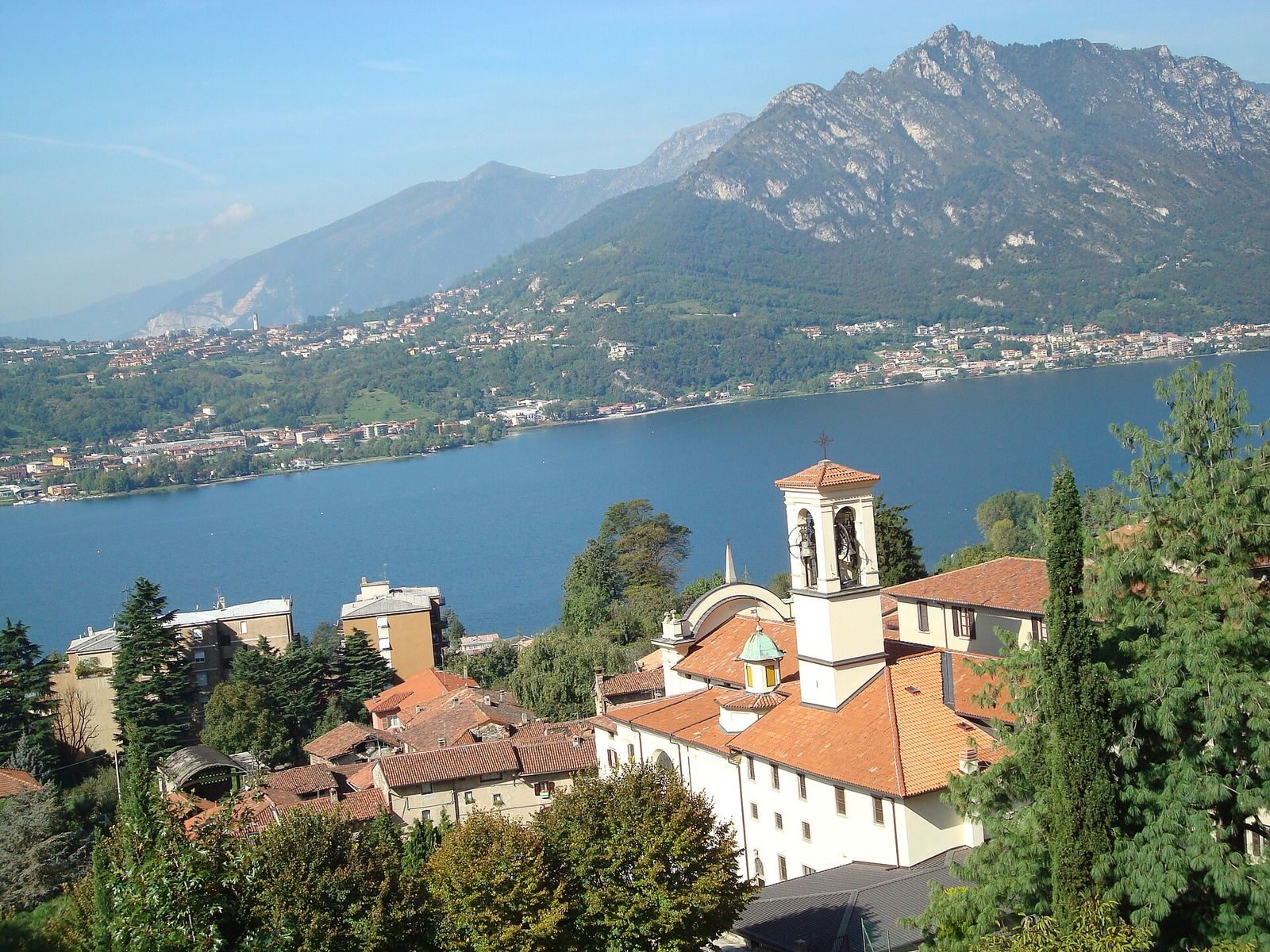
The Basilica of Saint Bartholomew and Saint Jerome Emiliani, also known as the Sanctuary of San Girolamo Emiliani, is the parish church of Somasca, Italy. It took shape during the sixteenth century on the site of an earlier church. Dedicated to the Apostle Bartholomew and Jerome Emiliani, a religious founder associated with care for orphans and the poor, it is linked to the Clerics Regular of Somasca, or Somaschi, the congregation he founded. The church follows the Ambrosian rite, a Catholic liturgical tradition associated especially with Milan and parts of Lombardy.
Origins and parish foundation
The earlier church of Saint Bartholomew was a small consecrated building maintained as a family church. A chaplain served it with payments from the Benaglio and Ondei families. Its furnishings included a central altar, a baptismal font, and two side altars dedicated to the Pietà and the Virgin Mary. A wooden container held the consecrated hosts. Above the entrance was an arched panel, with a door and a window on either side of the building. An arch supported by pillars marked the altar area, and an iron cross stood above it. Each of two pillars beside the facade carried a bell, while a small cemetery lay behind the church.
Jerome Emiliani died on 8 February 1537. After his death, the Somaschi sought a church worthy of their founder and established their base at the existing church, where they also created an orphanage, a school, and a seminary. In 1566, Cardinal Carlo Borromeo, Archbishop of Milan, visited Somasca and established a parish there at the congregation’s request, separating it from the parish of Calolzio. When Borromeo visited the San Martino valley in 1575, the church was still described as small. The Benaglio and Ondei families stopped supporting the parish priest and gave the church to the Somaschi in 1589; ownership formally passed to the congregation in 1592.
Expansion and devotion to Jerome
After taking possession, the Somaschi brought Jerome’s body into the church and began improving the building. The bell tower was completed in 1615, and a pipe organ followed in 1620. Between 1620 and 1650 the church was extended and given a new facade. Jerome became patron of Somasca and nearby municipalities in 1626. In 1641, as preparations for his beatification advanced, his body was transferred to a burial chamber decorated with gold and closed by a black stone slab. The church was extended again, and a chapel was dedicated to him.
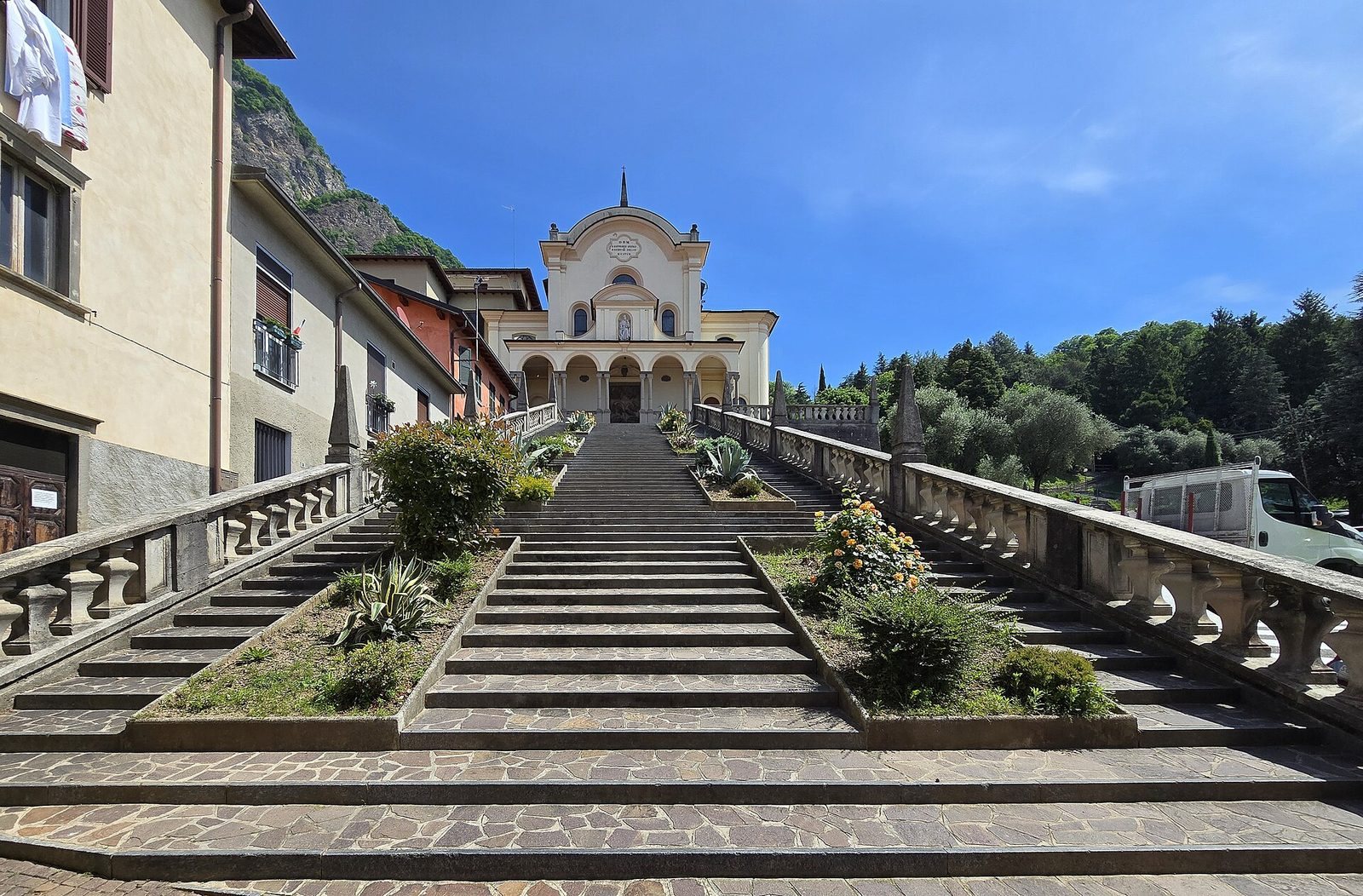
Pope Benedict XIV beatified Jerome in 1747. The bells increased from two to five in 1751, when the organ was also renewed. The Somaschi rebuilt Jerome’s chapel between 1754 and 1757, and it was consecrated on 8 February 1757. As pilgrimages increased, work began in 1761 on a staircase bordered by two walls to provide access to the church.
On 13 May 1766, Pope Clement XIII recognized two miracles attributed to Jerome. He was canonized on 12 October 1767, and his feast was assigned to 20 July, although the Somaschi continued to mark 8 February, the date of his death. In 1767, his urn was placed permanently in his chapel, opposite the altar of the Rosary. The facade and entrance porch were altered that year. In 1778, the bell tower was raised because the lengthened church obscured it, and the three bells then remaining were replaced. The church passed to the Diocese of Bergamo in 1786.
Suppression and nineteenth-century rebuilding
The Somaschi order was suppressed in 1798, when the Cisalpine Republic was established, and reconstituted in 1804. The organ underwent several repairs between 1823 and 1850, then was replaced in 1857 by an instrument made by Giuseppe Alchisio. Jerome’s feast celebration, including banquets and fireworks near the Castle of the Unnamed, was revived in 1826. In 1828, Bishop of Bergamo Pietro Mola rejected parishioners’ request to adopt the Roman rite.
A plan to renovate the church was approved on 24 April 1892, and a Mass on 1 May marked the start of work. The rebuilding was completed in 1893, when the church was consecrated on 14 October. Pope Leo XIII formally named Jerome co-patron of Somasca that year. The project extended the church, rebuilt its facade, and lowered the floor by 40 centimetres, while retaining the old porch. Excavations for new foundations revealed numerous seventeenth-century graves belonging to Somaschi fathers. Six painted shrines showing episodes from Jerome’s life were also erected beside the staircase.
Twentieth-century changes
Pope John XXIII issued a papal document on 10 December 1958 to raise the sanctuary to the rank of minor basilica, an honorary title granted to a church by the pope. The process was completed on 5 February 1959. Jerome’s chapel was repaired in 1962, and the staircase was rebuilt the following year, when the six painted shrines were removed.
A major alteration in 1967 incorporated the chapels of Saint Jerome and Our Lady of the Rosary into the church and widened the building to create two side aisles. Later work expanded the porch, adding a fourth front arch and, in 1982, a fifth front arch and two corner arches. Renovations from 1981 to 1983 also raised the approach staircase. Access routes were adapted in 2002 and 2003. Work in 2013 restored the earlier liturgical arrangement and renewed the interior paving.
Remains
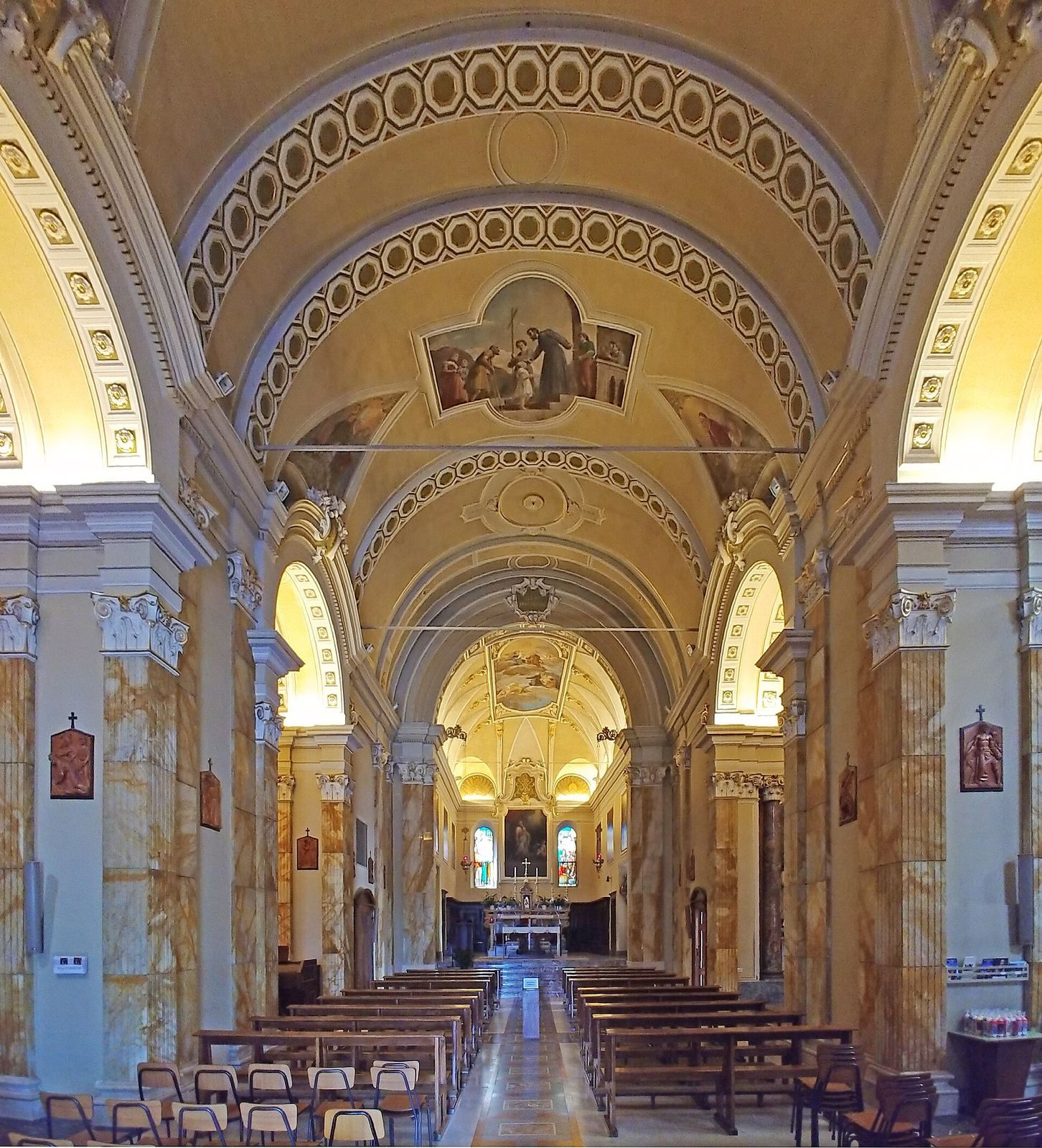
The basilica has a rectangular plan, an east-facing apse (the rounded end behind the altar), and four bays, or structural sections, divided among three aisles. A barrel vault, a continuous curved ceiling, covers the central aisle; the side aisles have cross vaults formed by intersecting curved sections. Pillars support the central vault, and each pier has four pilasters, shallow columns attached to a wall, topped with Corinthian capitals, ornate column tops.
Exterior and approach
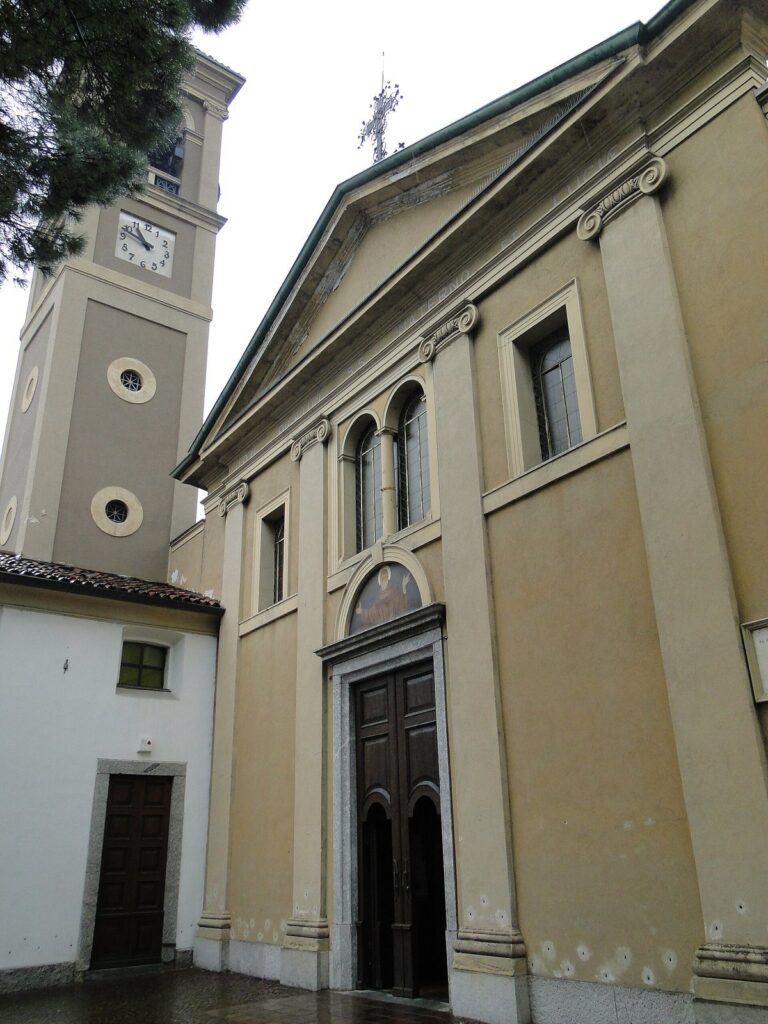
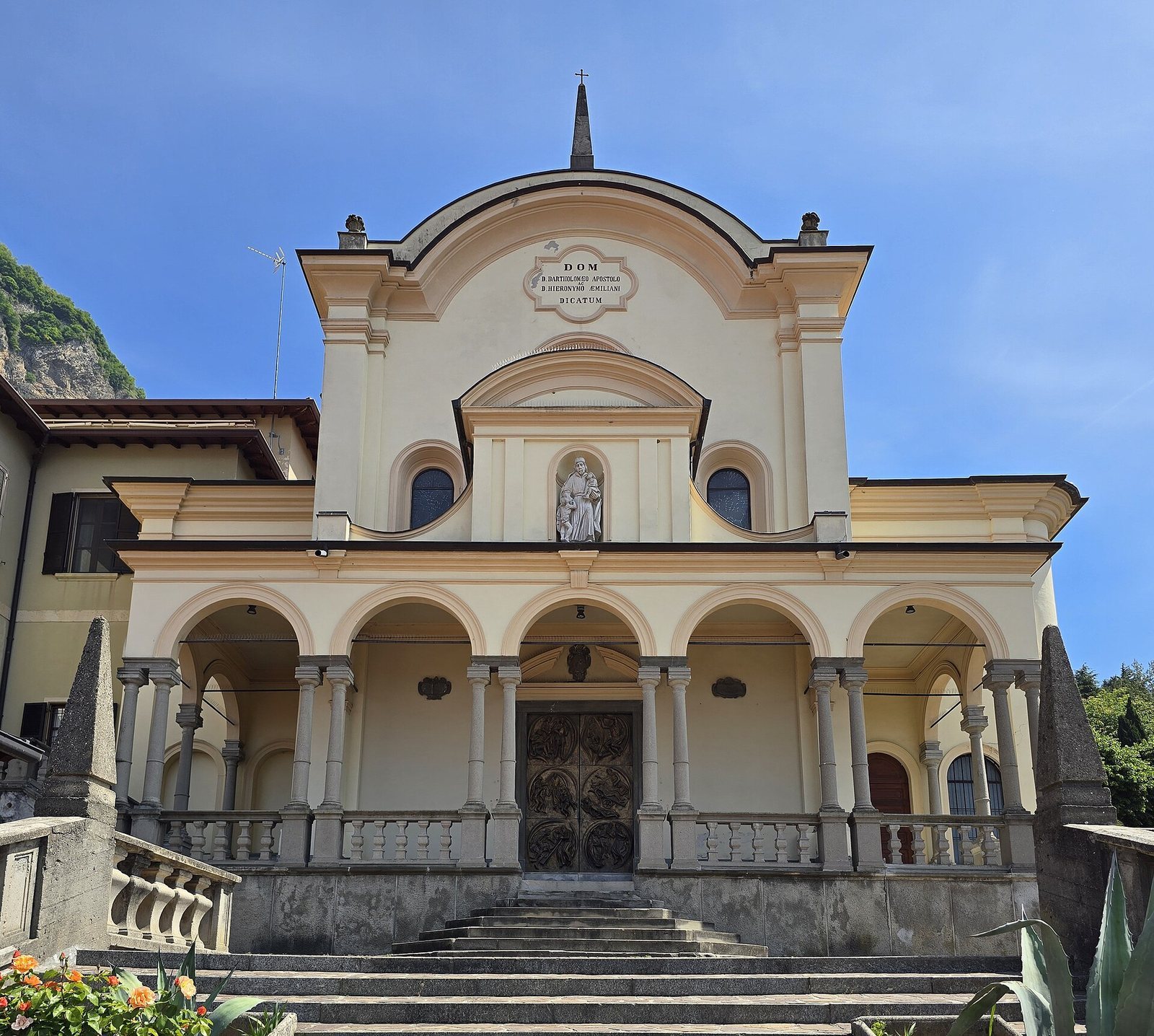
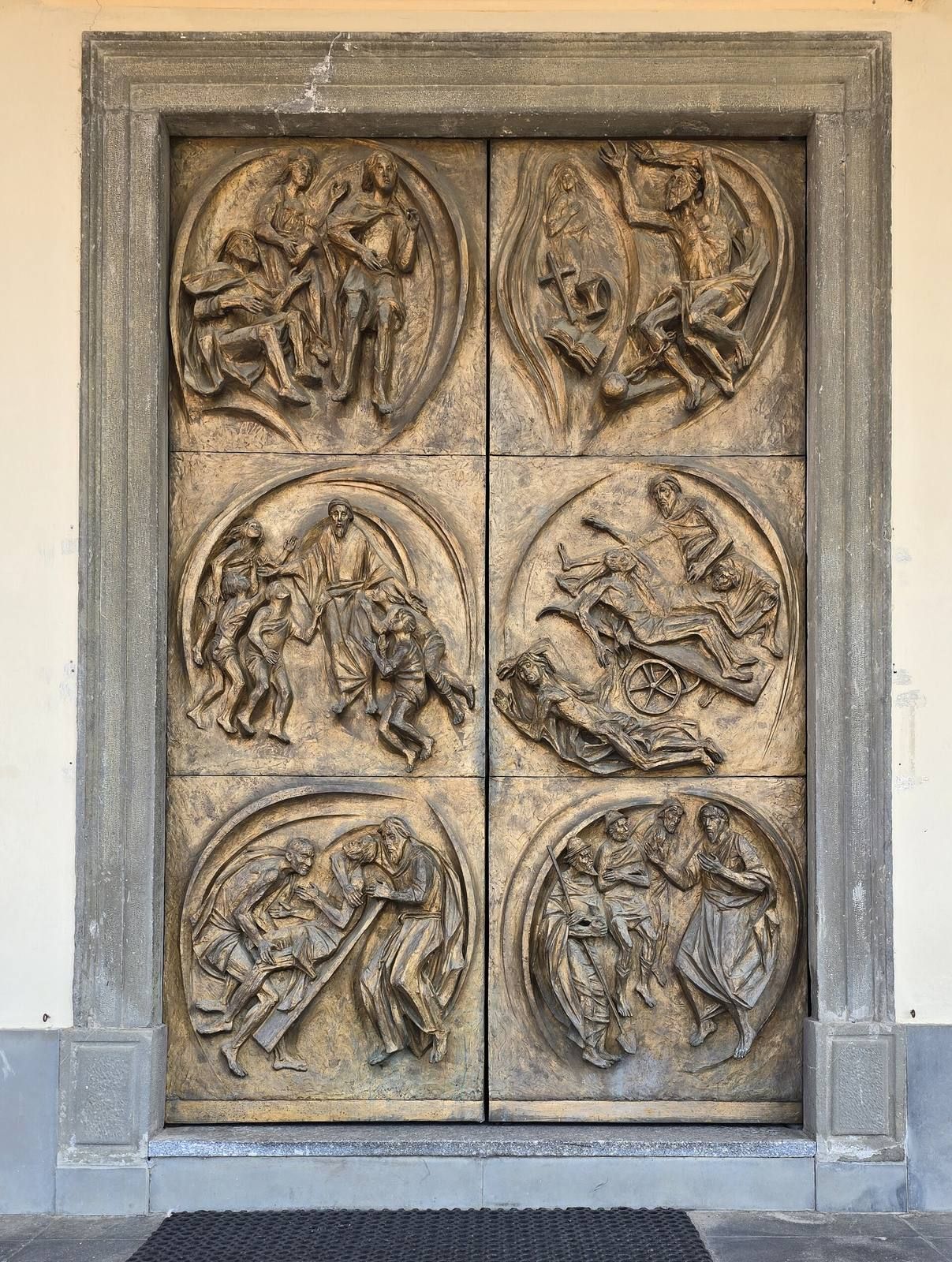
Gardens and broad open spaces surround the building. A long, wide staircase of porphyry stone rises to the forecourt. The Baroque facade stands behind a porch with five arches across the front and two at the sides, carried by paired columns on a raised base. Its shaped, semicircular upper section contains a niche with a statue of Saint Jerome. The central part of the facade rises above the side sections, which finish in horizontal cornices. A bronze-covered entrance door by sculptor Mario Toffetti has panels depicting episodes from Jerome’s life. High on the facade are two narrow arched windows and a central rose window. Pilasters at its outer edges support a curved cornice. The pitched roof has a timber frame and tiled covering.
Interior
Vaults and painted scenes
Three scenes from Jerome’s life decorate the central aisle’s vaulted ceiling: Jerome with two companions and a guardian angel, the Glory of Saint Jerome, and Jerome among the poor. These paintings form part of a wider group of works by Carlo Ceresa in the church.
The Rosary altar
In the third bay, the altar on the left is dedicated to Our Lady of the Rosary. A statue stands in a niche above it, surrounded by 15 oval panels depicting the mysteries of the Rosary, painted by Carlo Ceresa.
The altar of Saint Jerome
Opposite the Rosary altar, the right-hand altar in the third bay is dedicated to Jerome. His relics rest behind a grille in a silver urn dating to 1867, decorated by the Martinitt of Milan, boys cared for in the city’s historic orphanage system. Above the urn is Alberto Ceppi’s bronze relief of Jerome embracing two orphans; a bronze statue of the saint stands beneath the altar. His relics were placed here in 1767.
Presbytery and burial chamber
The fourth bay contains two entrances and leads to a rectangular altar area raised by six steps and covered by a barrel vault. Its Baroque high altar is made of marble in several colors and carries a painting dated 1619 of Jerome in prayer. Beside it is Jerome’s former burial chamber, called a scurolo, a shrine-like burial chamber. It contains the bones of Vincenzo Gambarana, one of Jerome’s companions, and Evangelista Dorati, one of the Somaschi’s first superiors general, as well as one of the oldest portraits of Jerome. The choir has a semi-dome, paintings by Ceresa, and two niches containing relics.
Other paintings and the organ
Other paintings by Ceresa include The Mysteries of the Rosary, Saint Jerome Invoking Mary Magdalene, The Virgin Invoked by Saint Philip Neri and Saint Anthony of Padua, Saint Bartholomew in Ecstasy and the Doctors of the Church, and The Holy Family with the Young Saint John. A twentieth-century Pirola pipe organ stands on the choir loft above the entrance. It has electric action, 22 stops, or groups of pipes controlled together, two manuals, or keyboards, and a pedal operated by the feet.