Groedel Palace: A Neo-Baroque Estate in Ukraine
Site at a Glance
- Popularity
- Medium
- Country
- Ukraine
- Primary era
- Modern
- Eras represented
- Modern
- Civilizations
- Austria-Hungary, Austrian Empire, Habsburg
- Site type
- Domestic
- Remains
- Elite Residence
On this page8 sections
History
Foundation and the Groedel family
Groedel Palace is a two-storey Neo-Baroque residence in Skole, Ukraine, established in the mid-19th century by Baron Eugeniusz Kinski. Kinski acquired land there from Count Potocki and created the palace estate and its park. The Jewish Groedel family rebuilt the palace in the late 19th century and received baronial status in 1903.
The estate’s later development was associated with brothers Arthur (1887–1917), Richard (1890–1964), and Albert (born 1898), who controlled the local wood-processing industry.
Interwar years and wartime occupation
After the First World War, Richard Groedel worked to restore the estate’s activity. He re-roofed and substantially enlarged the palace, attended to the wine cellars and a nearby hunting lodge, and supported feeding game animals to keep the surrounding forests rich in game. Aristocrats visited for hunting in 1937 and 1938.
After Soviet forces occupied Skole in late September 1939, an NKVD department operated in the palace. The NKVD was the Soviet Union’s internal security and political-police agency. It returned in August 1944 and remained at the palace until 1948.
School and later plans
A boarding school for 260 children began using the palace in 1956. The upper floor served as sleeping quarters, while the ground floor contained primary classrooms, a library, and a food-service area.
In 2020, the palace was leased for 49 years to Skole Beskids National Nature Park. The park planned to use the building for a visitor center, offices, and museum and exhibition spaces.
Remains
Palace
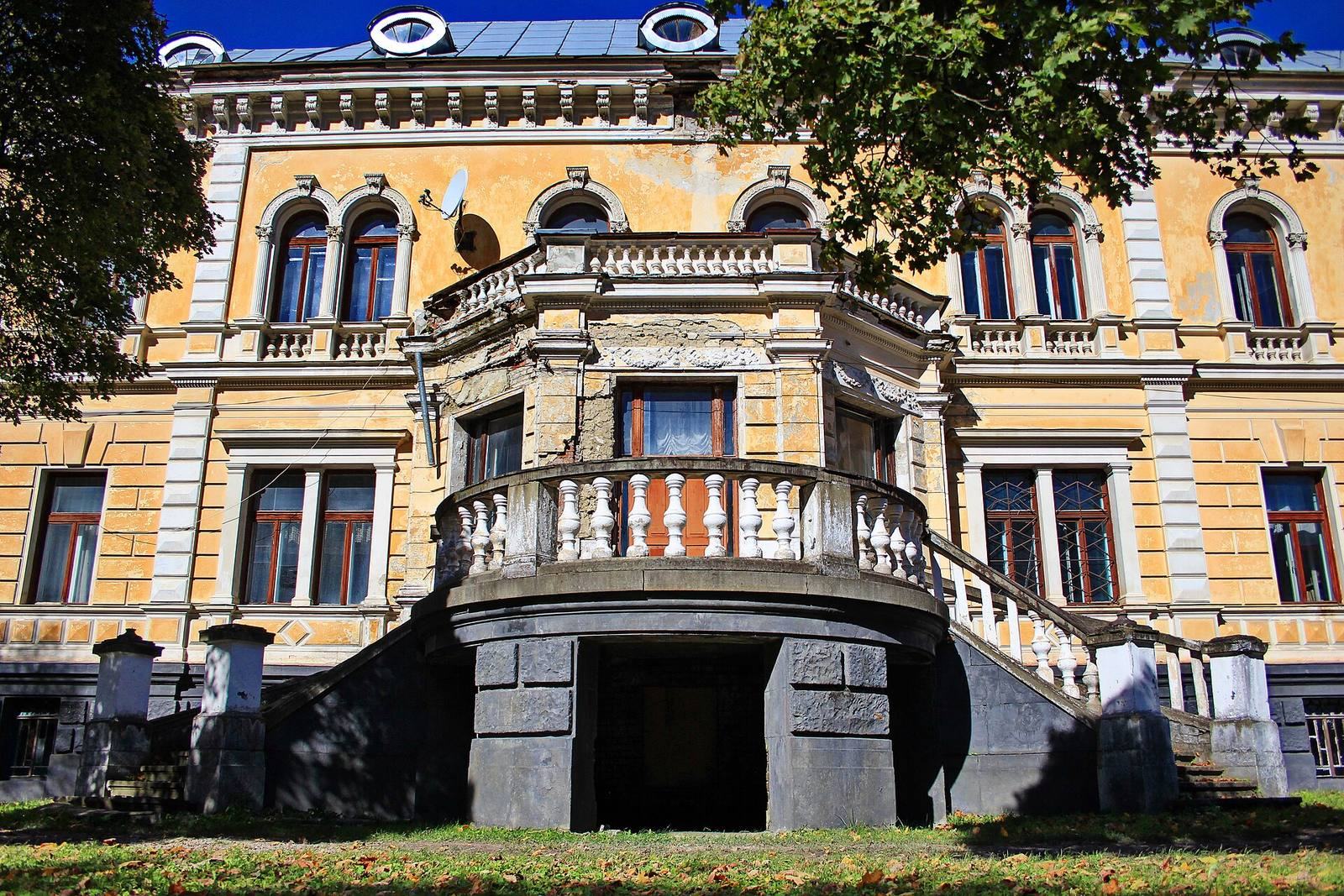
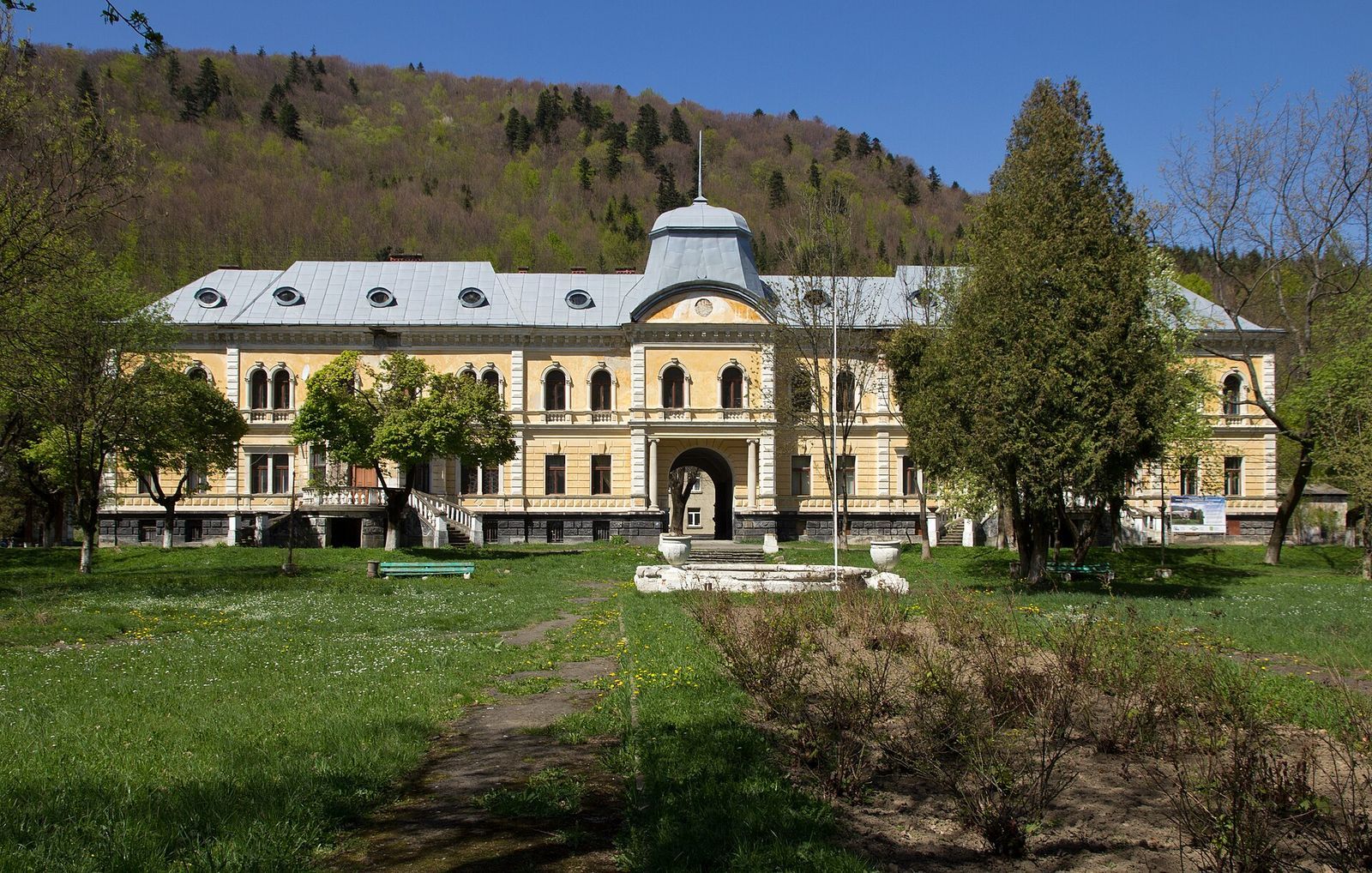
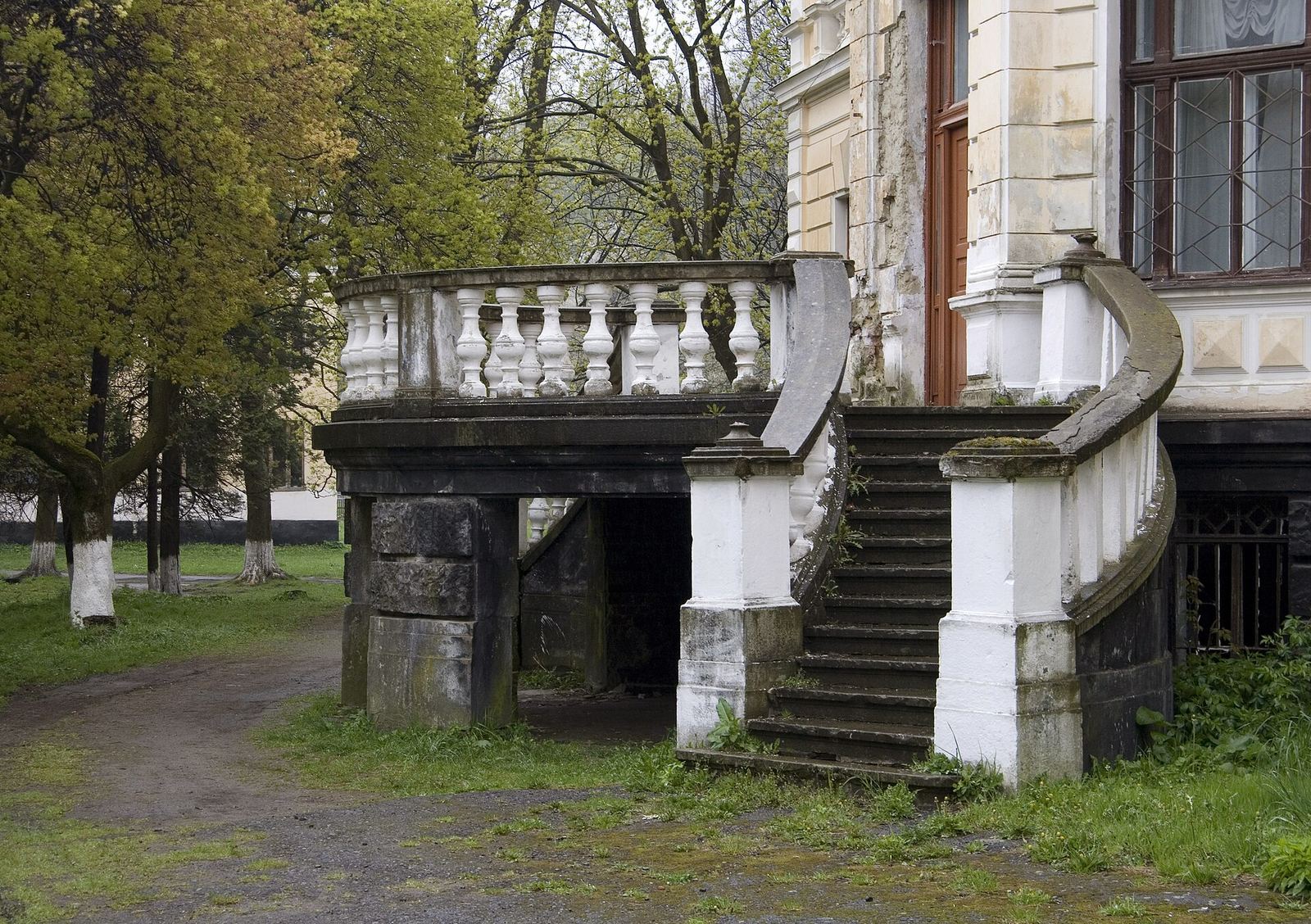
The two-storey Neo-Baroque palace stands within a surrounding park. Some photographs show two domes on the sides of the building but none over its central section; domes may have been destroyed during the First World War.
Park and grounds
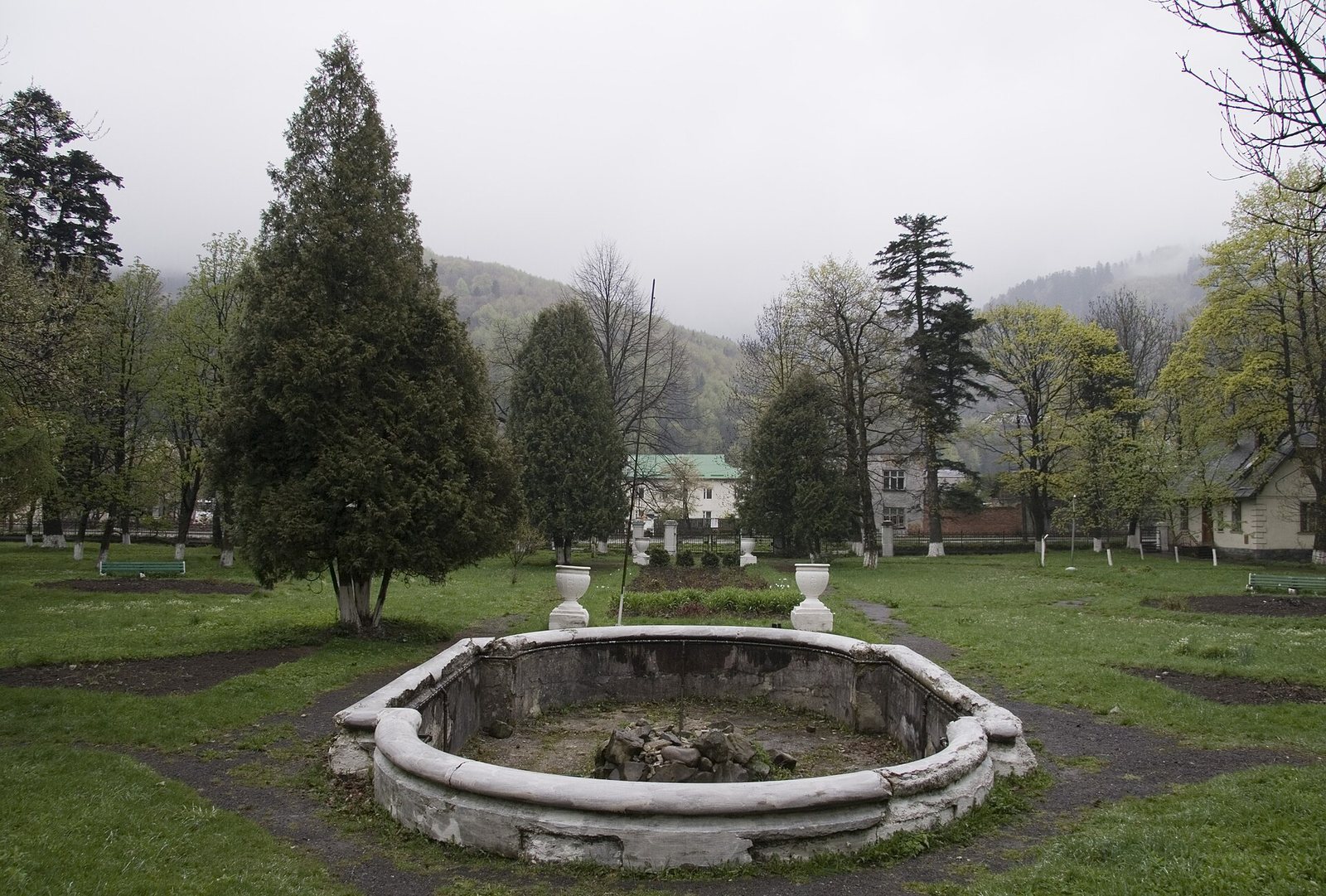
The park included numerous exotic plantings. A fountain stands in front of the palace, while wrought-iron gates and fences remain fairly well preserved.
Wine cellars and hunting lodge
The wine cellars and a hunting lodge are located near one another.