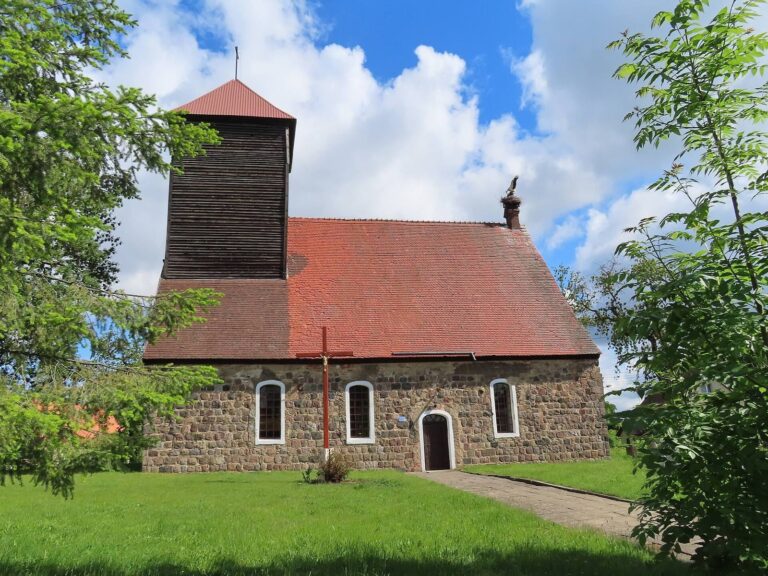
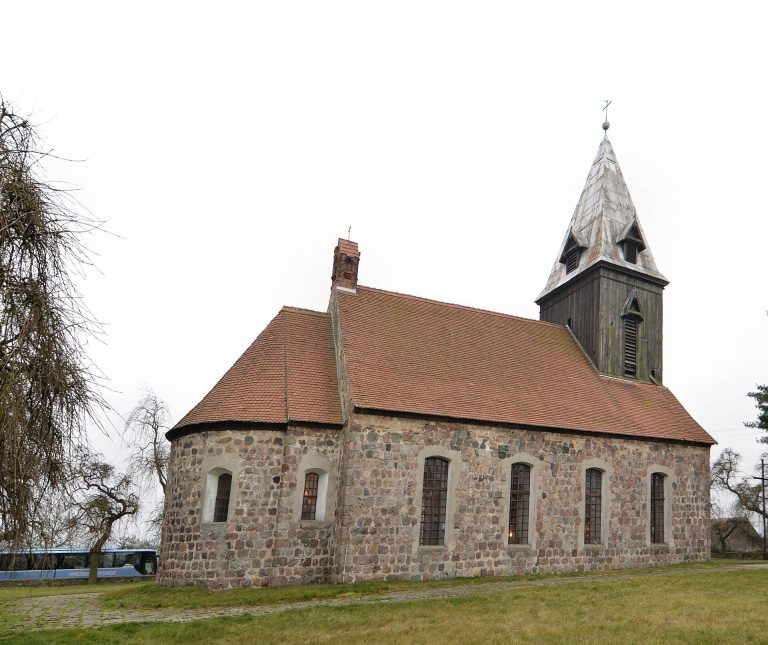
Church of the Annunciation of the Blessed Virgin Mary in Mętno: A Medieval Church in Poland
Site at a Glance
- Popularity
- Very Low
- Country
- Poland
- Primary era
- Medieval
- Eras represented
- Medieval, Modern
- Civilizations
- Holy Roman Empire, Kingdom of Prussia
- Site type
- Religious
- Remains
- Church
On this page5 sections
History
The Church of the Annunciation of the Blessed Virgin Mary in Mętno, Poland, dates to the 13th century and serves as a Catholic filial church. It belongs to the Parish of the Blessed Virgin Mary, Mother of the Church, in Chojna. Its dedication refers to the Annunciation, the Christian event in which the angel Gabriel tells Mary that she will bear Jesus. The church’s earliest recorded mention dates to 1350.
After the Second World War, the church was reconsecrated for Catholic worship on 30 March 1946.
Remains
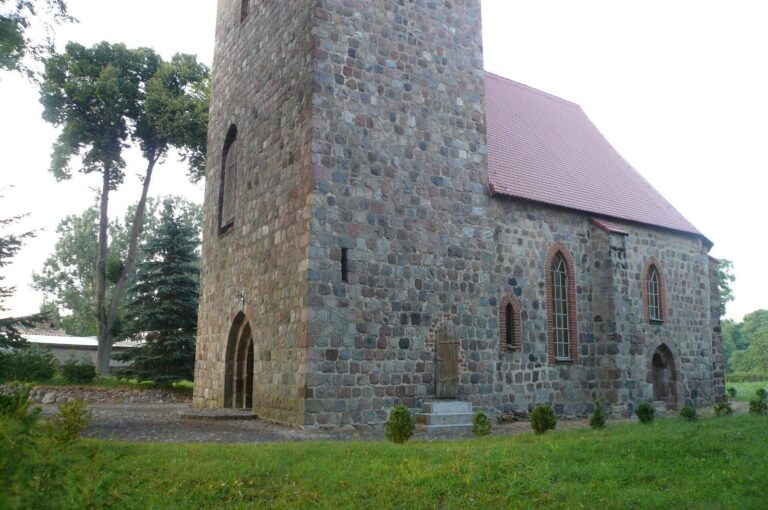
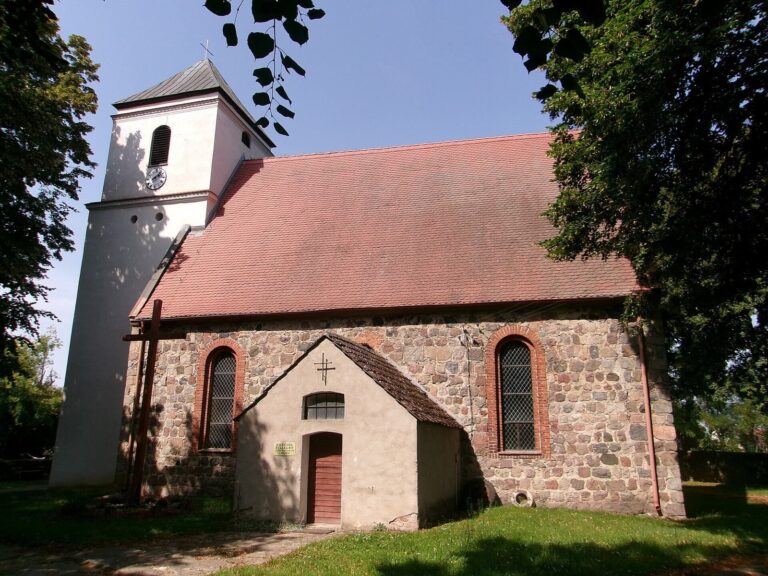
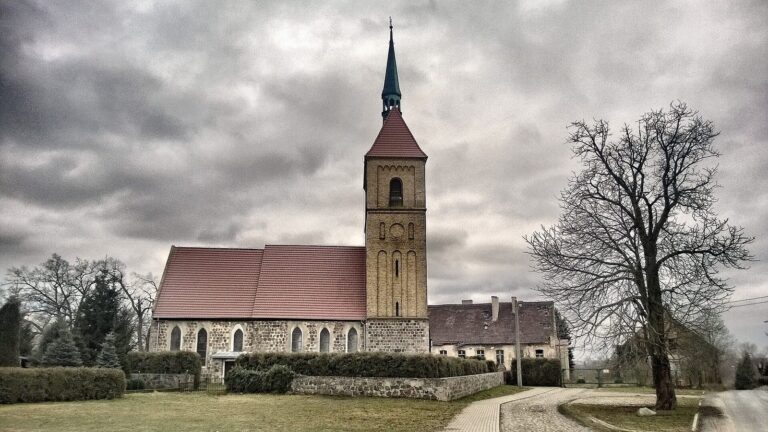
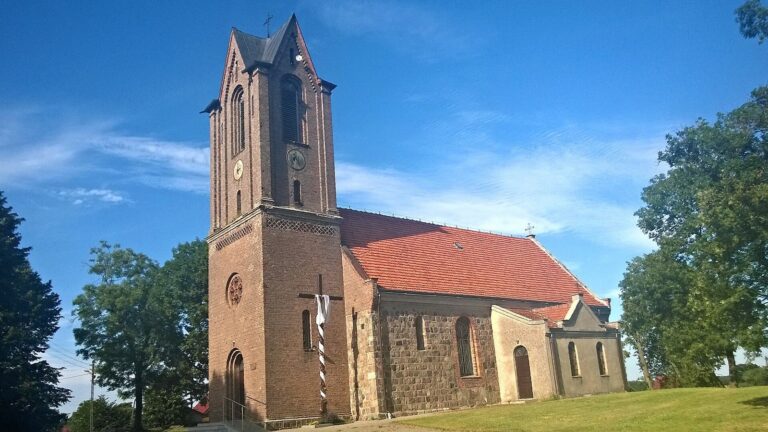
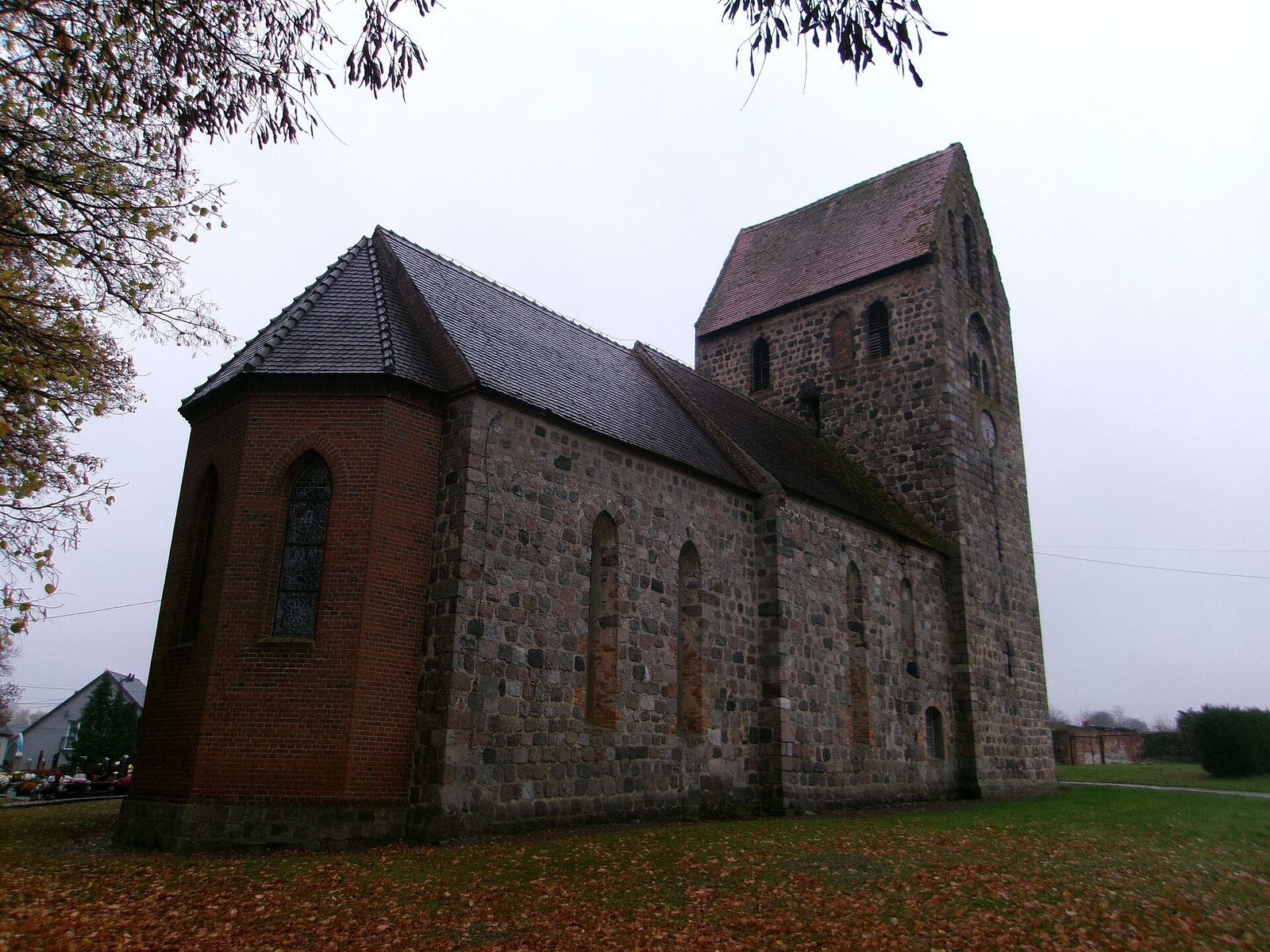
Built from carefully cut granite blocks, the church has a rectangular nave measuring 8 by 6.85 metres and a distinct chancel, the area around the altar, measuring 9 by 5.5 metres. The nave forms one main worship space without side aisles. A sacristy, a room for items used in worship, stands on the south side.
West tower
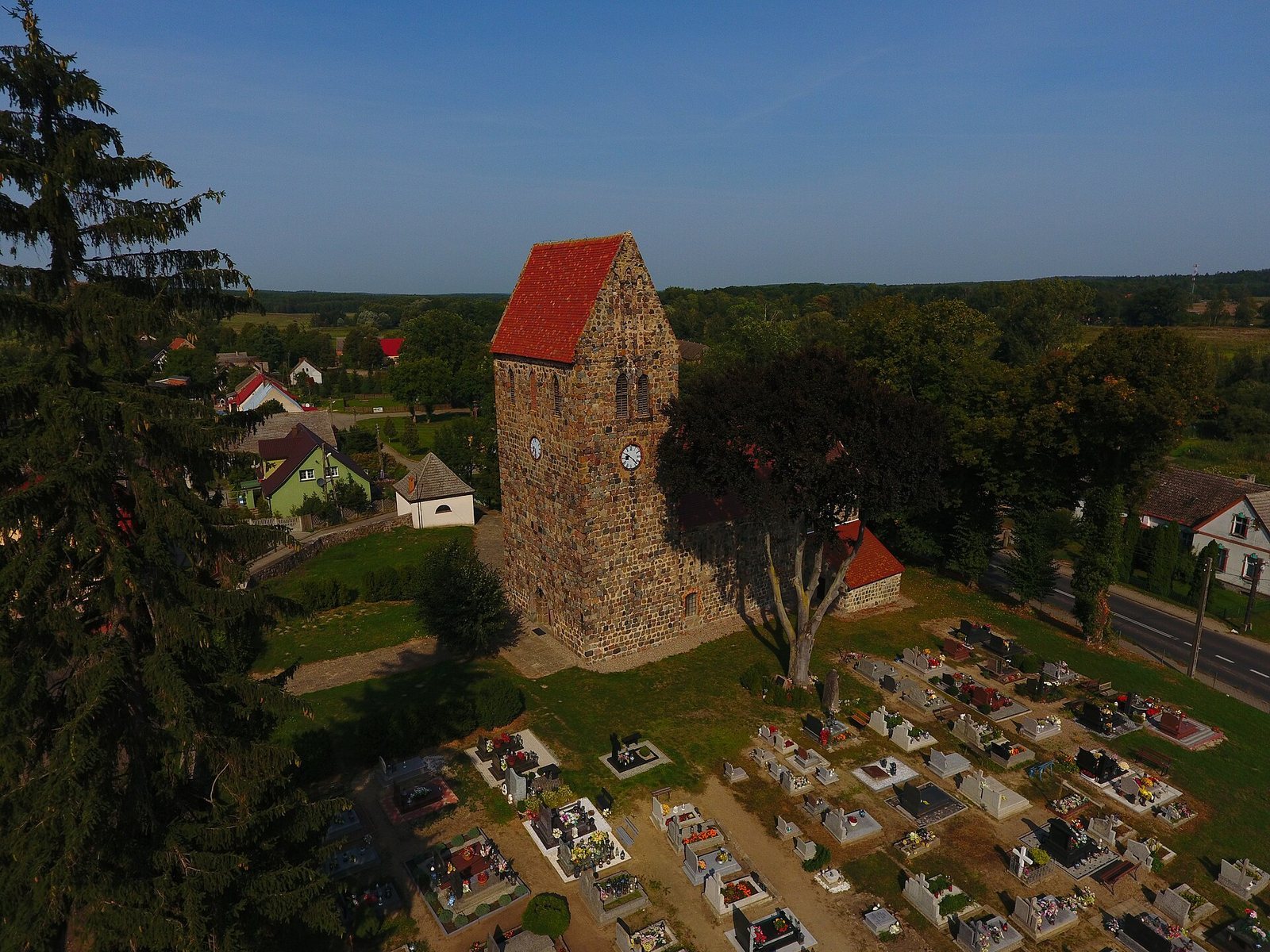
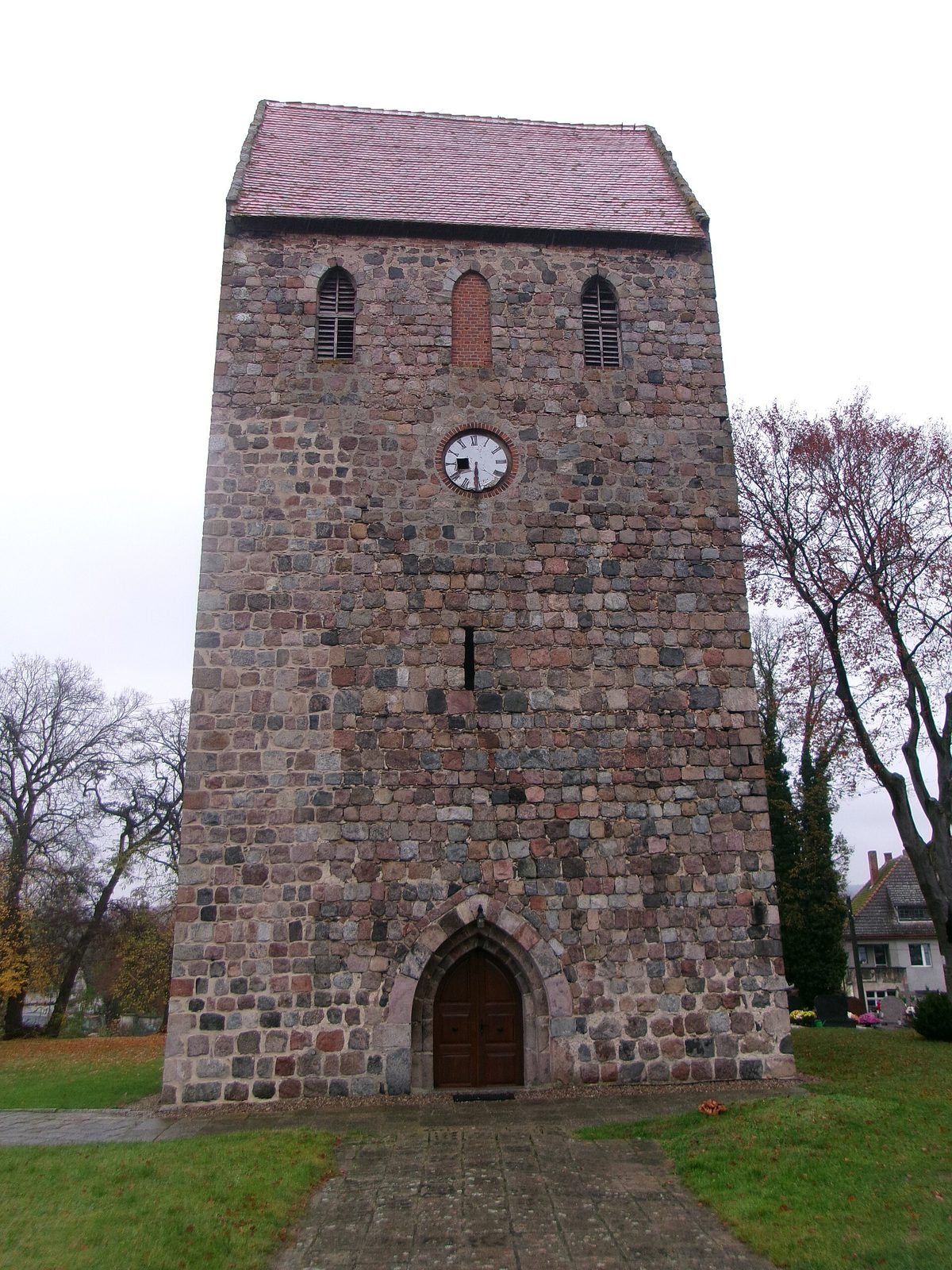
A massive stone tower, wider than the nave, rises at the west end beneath a double-pitched roof. Its upper storey has small pointed-arch windows, three each on the north, west, and east sides and two on the south. The south gable has three slender blind niches, recessed panels without openings. On the north gable are two such niches and a window.
Apse, windows, and portals
A five-sided brick apse, a projecting polygonal part of the church, was added to the chancel in 1866 in Neo-Gothic style, a 19th-century revival of medieval Gothic forms. The nave windows, except on its east side, and the chancel windows retain their elongated pointed-arch shapes. Traces of pointed-arch doorways remain in the north and south walls; windows were later fitted into the blocked openings.
Interior and churchyard
Inside, timber beams form the ceiling, and a choir gallery, an elevated platform for singers, stands above the entrance. The furnishings include a Neo-Gothic wooden pulpit supported by one leg and an old baptismal font. A historic cemetery beside the church is enclosed by a stone wall.