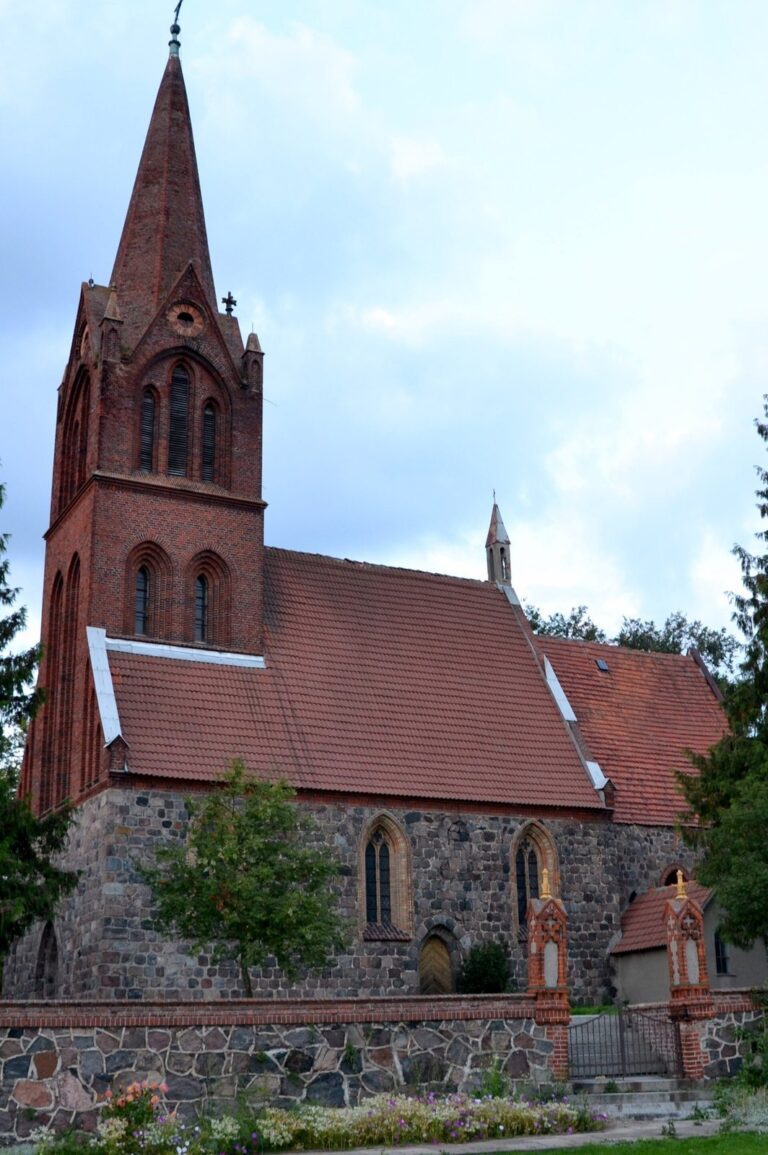
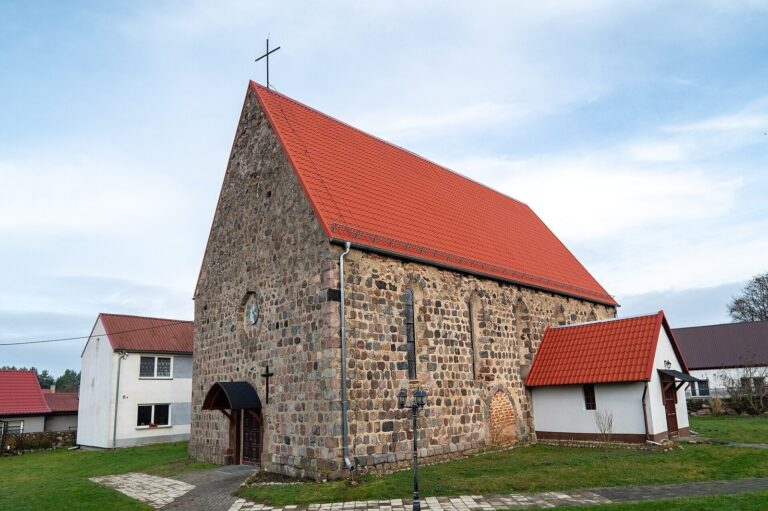
Church of St. Adalbert in Mirowo: A 13th-Century Roman Catholic Filial Church
Site at a Glance
- Popularity
- Very Low
- Country
- Poland
- Primary era
- Medieval
- Eras represented
- Medieval, Early Modern, Modern
- Civilizations
- Brandenburg-Prussia, German, Holy Roman Empire, Margraviate of Brandenburg
- Site type
- Religious
- Remains
- Church
On this page6 sections
History
Medieval foundation
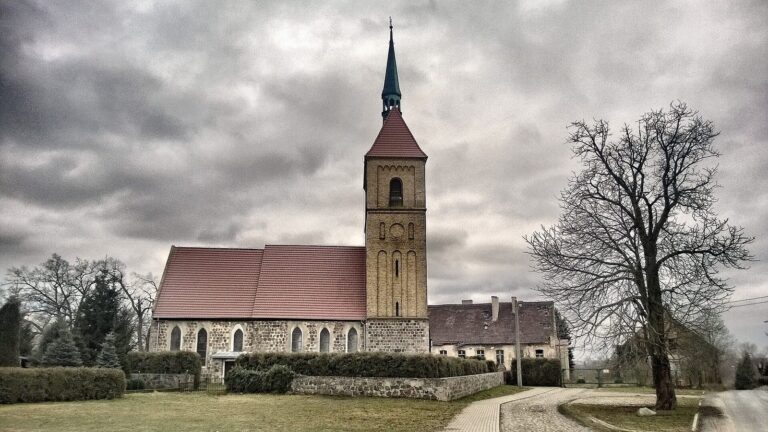
The Church of St. Adalbert in Mirowo, Poland, is a Roman Catholic filial church completed in the second half of the 13th century. It is dedicated to St. Adalbert of Prague, a 10th-century bishop and missionary venerated as a martyr, whose liturgical commemoration falls on April 23. The church is affiliated with the Parish of St. Maximilian Maria Kolbe in Godków, named for a Polish Franciscan priest later canonized as a saint.
Later changes and Catholic worship
A tower in the Baroque style, a European artistic style that flourished mainly in the 17th and 18th centuries, was added in the 17th century. After the Second World War, the church was consecrated for Catholic worship on September 25, 1946.
Remains
Plan and exterior
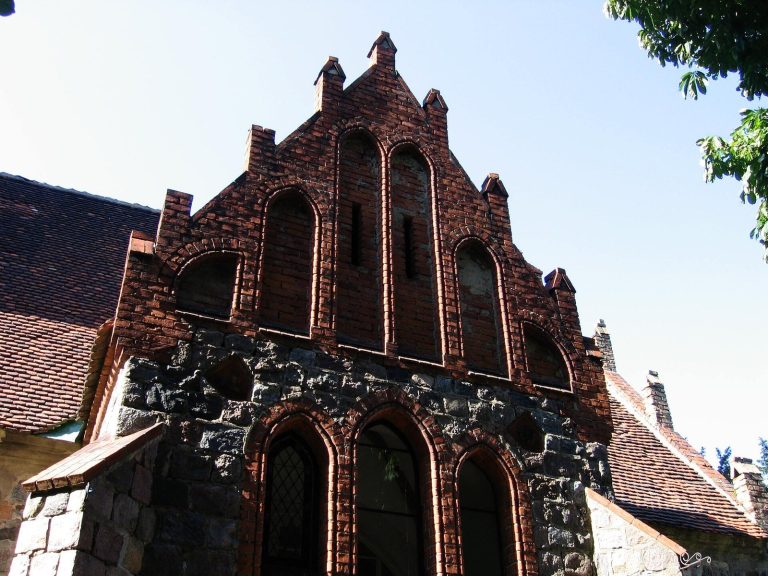
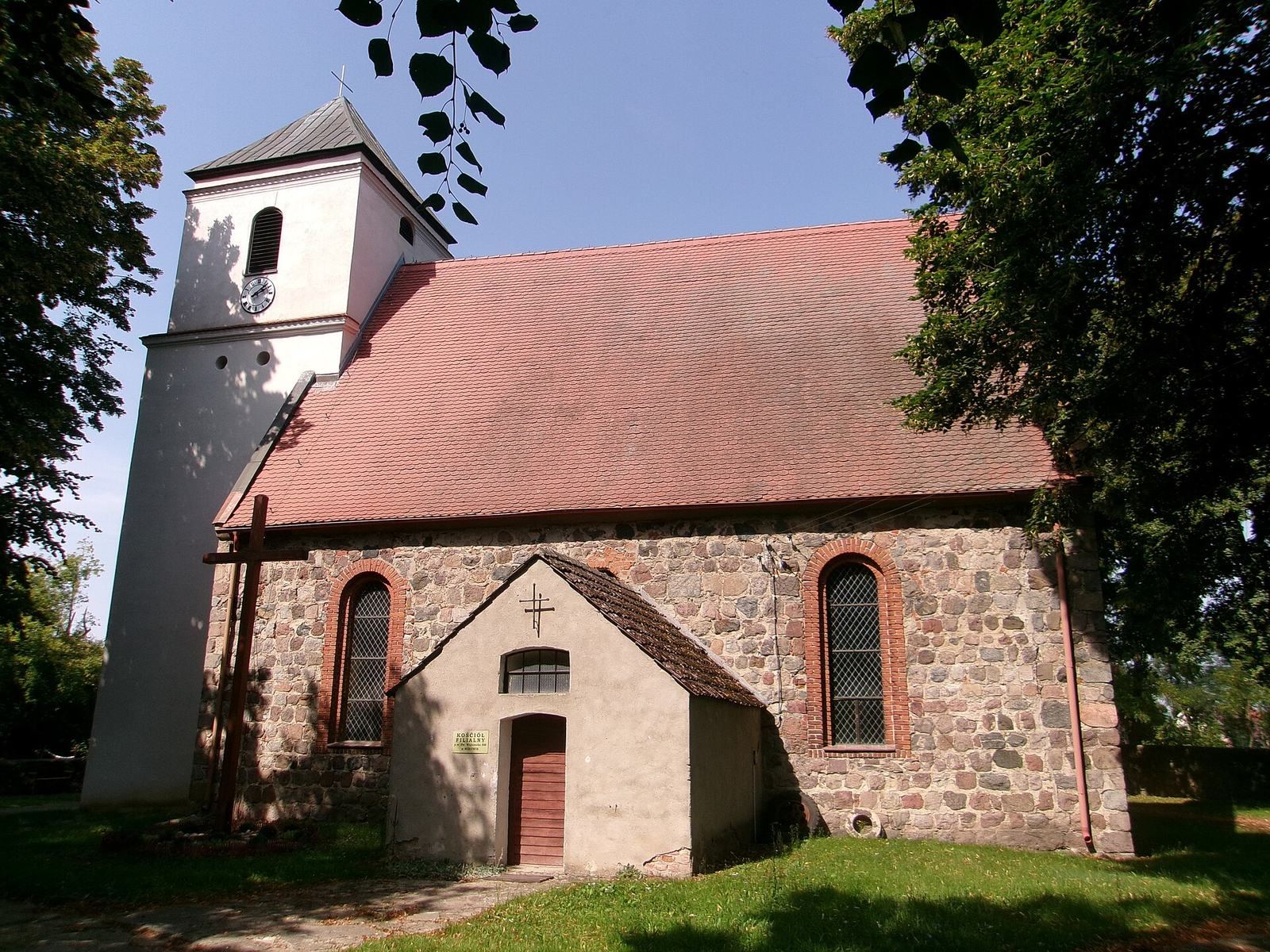
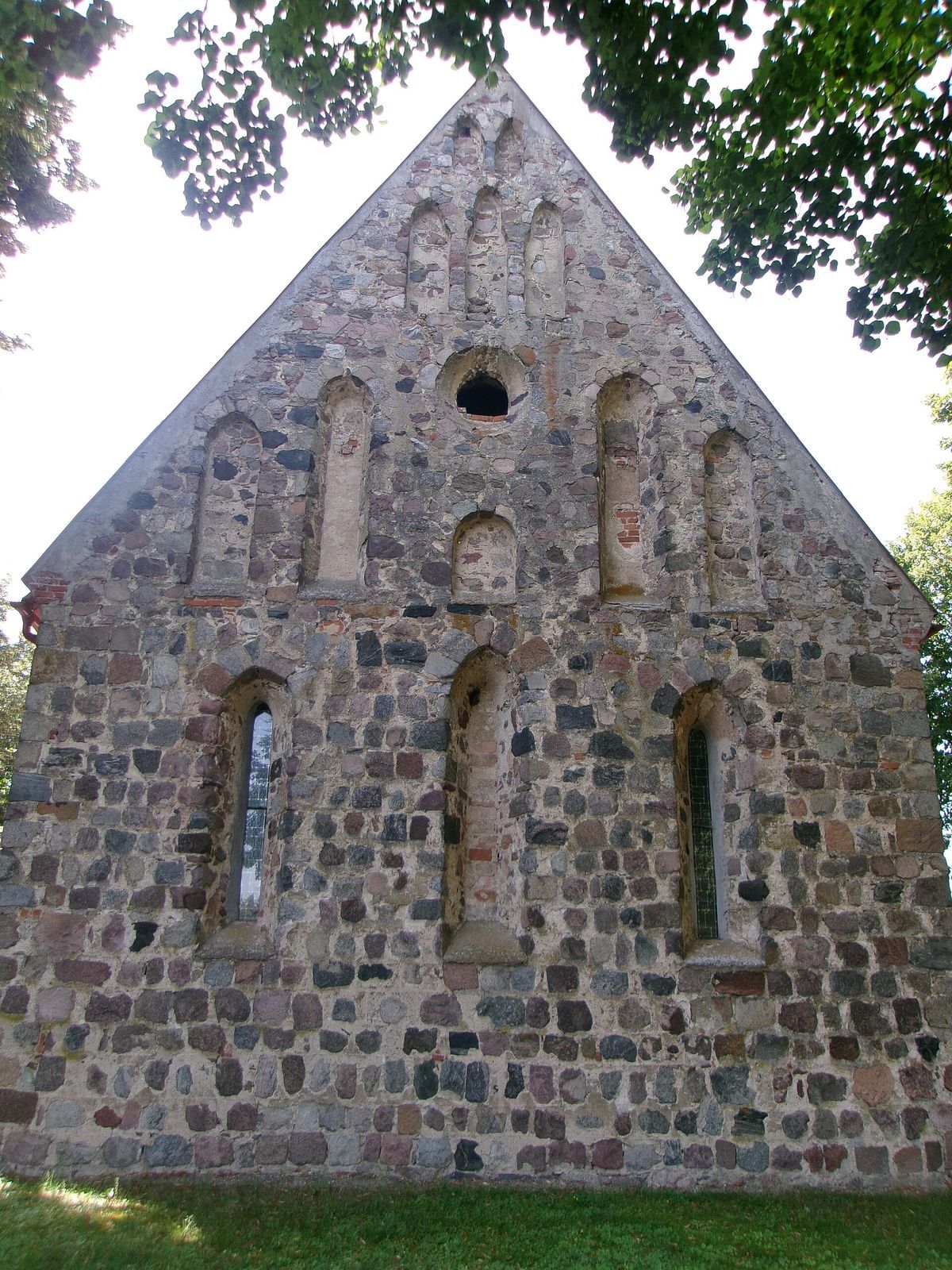
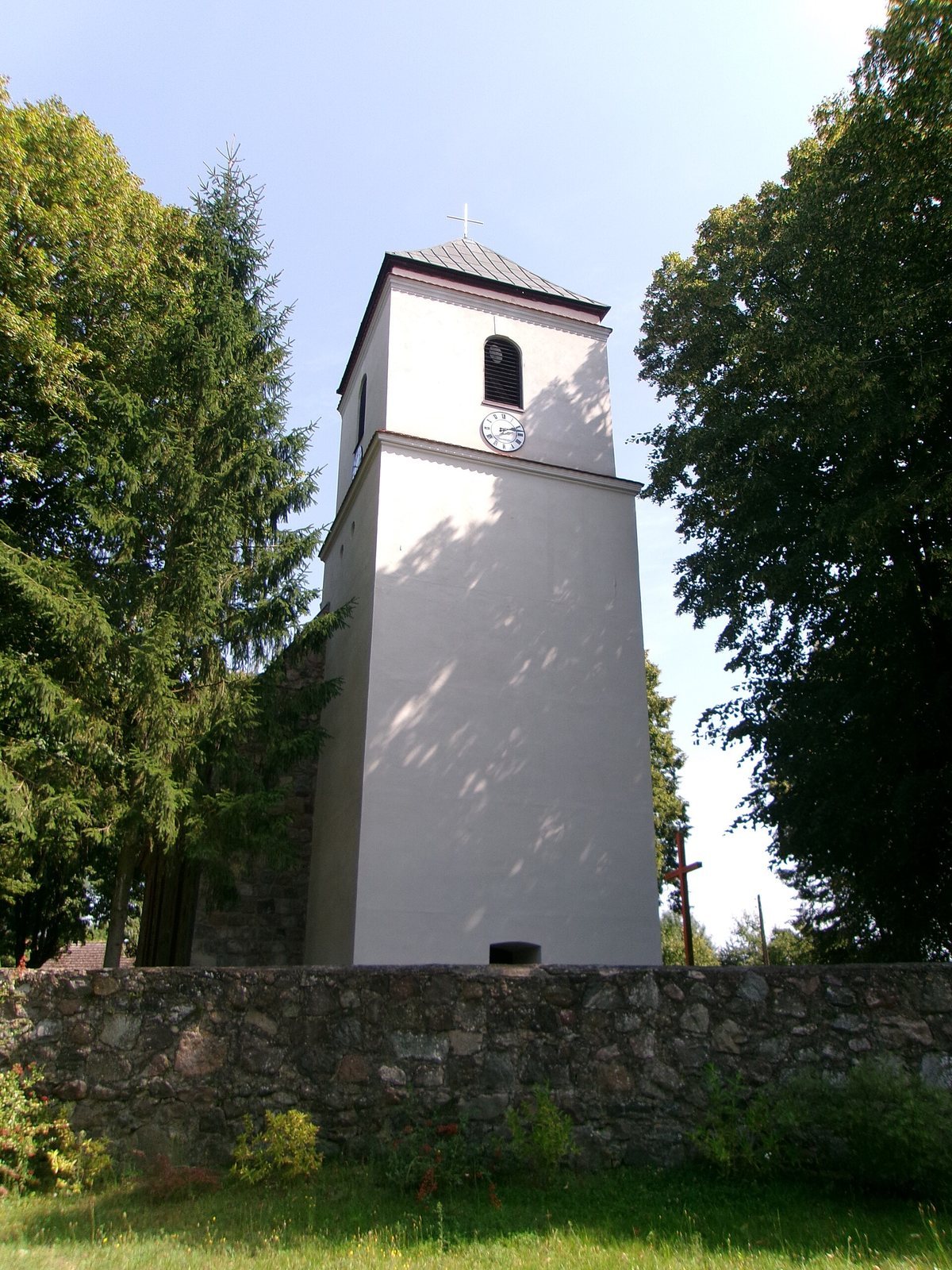
Granite blocks form the rectangular church, a hall without a distinct chancel, with a gabled roof over the nave. At the west end stands a square-plan tower with a plastered exterior and a three-stepped portal at ground level. A porch adjoins the south wall and has a two-stepped portal. The former cemetery around the building is enclosed by a stone wall with two gates. Three pointed-arch windows on the east wall are arranged in a pyramid pattern. Above them, the gable has pointed-arch blind niches, shallow recesses that do not open through the wall, set in three rows around a circular recess. The side windows have semicircular heads and have been rebuilt with surrounding brickwork.
Interior
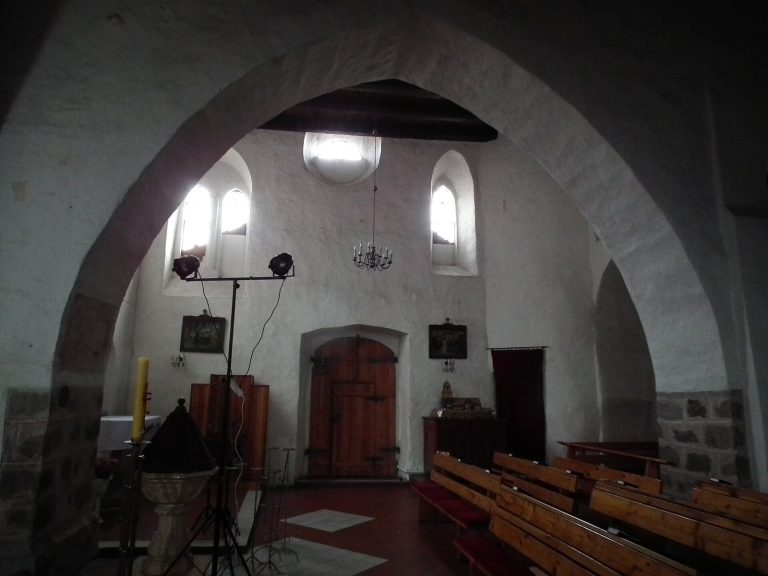
A wooden barrel-shaped vaulted ceiling spans the interior. Its multicolored painting was executed in 1915 by Hans Capher. The walls are plastered and painted white, and a choir gallery stands against the west wall. A plant-decorated Baroque altar dating to 1713 is preserved in the chancel.