Theater of Elis: An Ancient Greek Performance Venue
Site at a Glance
- Popularity
- Low
- Country
- Greece
- Primary era
- Classical
- Eras represented
- Classical
- Civilizations
- Ancient Greek, Roman
- Site type
- Entertainment
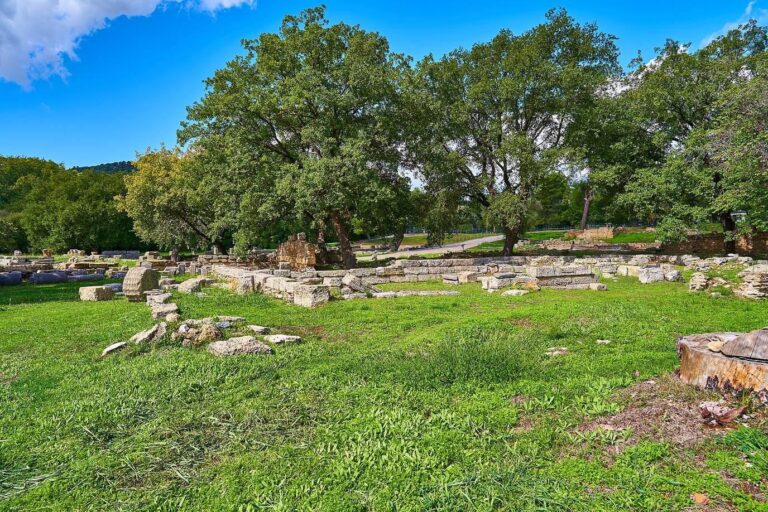
- Remains
- Theatre
On this page12 sections
History
Construction and use
The Theater of Elis was an ancient Greek theater in Elis, Greece, first built in the fourth century BCE during the later Classical period of Greek history. Its initial construction may date to around 400–350 BCE or to a later point in the century. Late in the Hellenistic period, an earthquake probably damaged the theater, which was subsequently restored.
An extensive residential complex developed within the theater area during the Hellenistic period, the era that followed the Classical period, and Roman rule. The theater itself was later altered, although the date and nature of those changes are not specified here.
Abandonment and burial use
Pausanias, a Greek travel writer, referred to the theater during his visit to Elis in the second century CE. By then, it had been abandoned. In the third century CE, the theater area became a cemetery. This change has been linked to the Heruli invasion of 267, when the Heruli, a Germanic people, raided parts of the Roman Empire. Burials from the late Roman period indicate that the theater’s use had ended as the city was declining.
Remains
Theater layout and performance spaces
Setting and overall plan
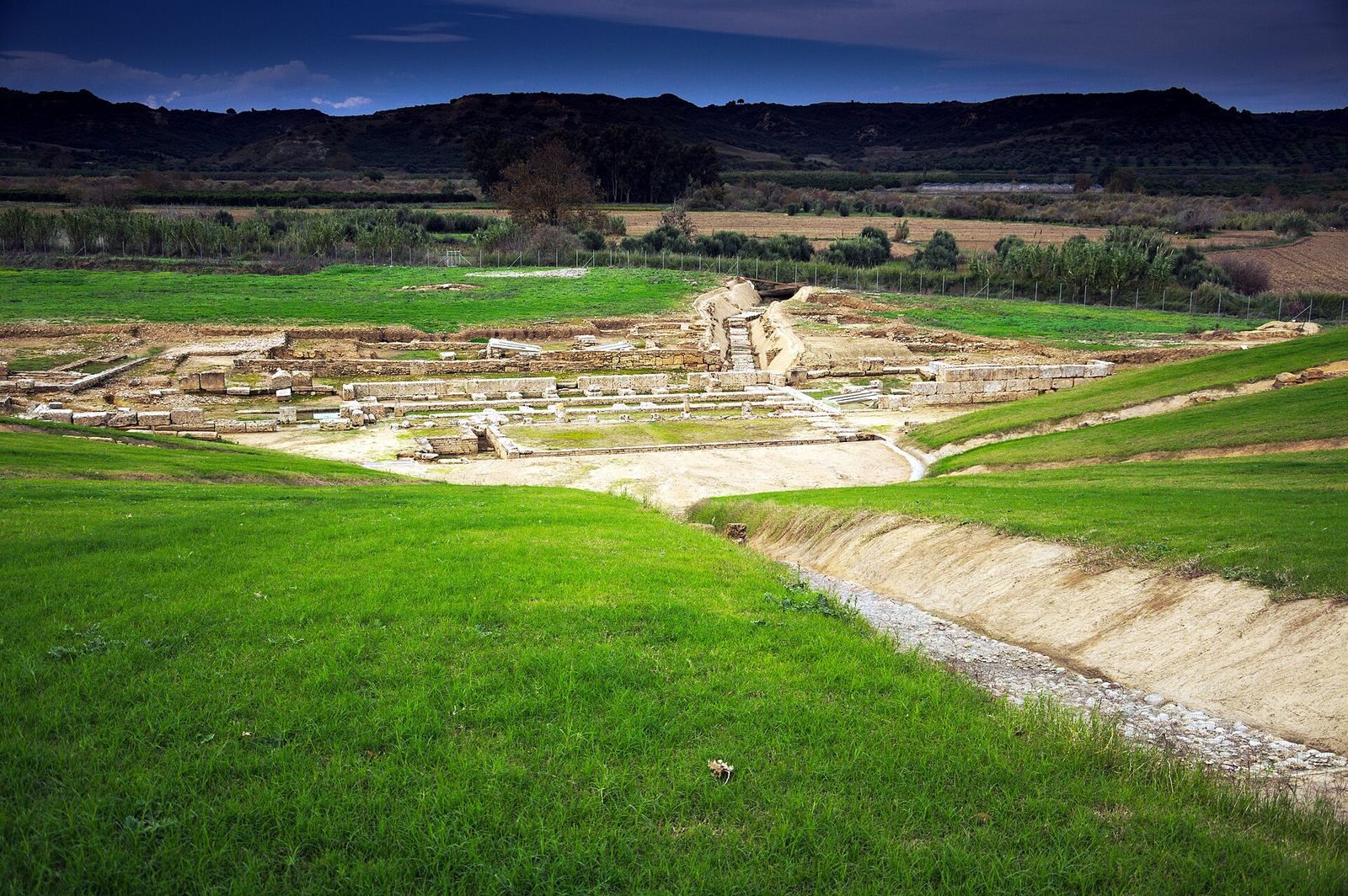
The theater stood north of the ancient agora, the city’s central public space, and a short distance from the city. It occupied a terrace beside the Peneios River that had been formed to help accommodate its construction. Its semicircular seating area was made from an earth embankment rather than stone tiers. The irregular plan probably followed the terrain, and the seating area measured about 92–104 meters across, with an estimated capacity of approximately 8,000.
Seating and orchestra
Six stone stairways, each about one meter wide, ran from the orchestra, the central performance space, up through the seating area, dividing it into seven sections. Stone seats lined the lower part beside the side entrances, which the chorus used to enter the stage. The orchestra at the center of the theater was circular and measured about 21 meters across.
Stage building and proscenium
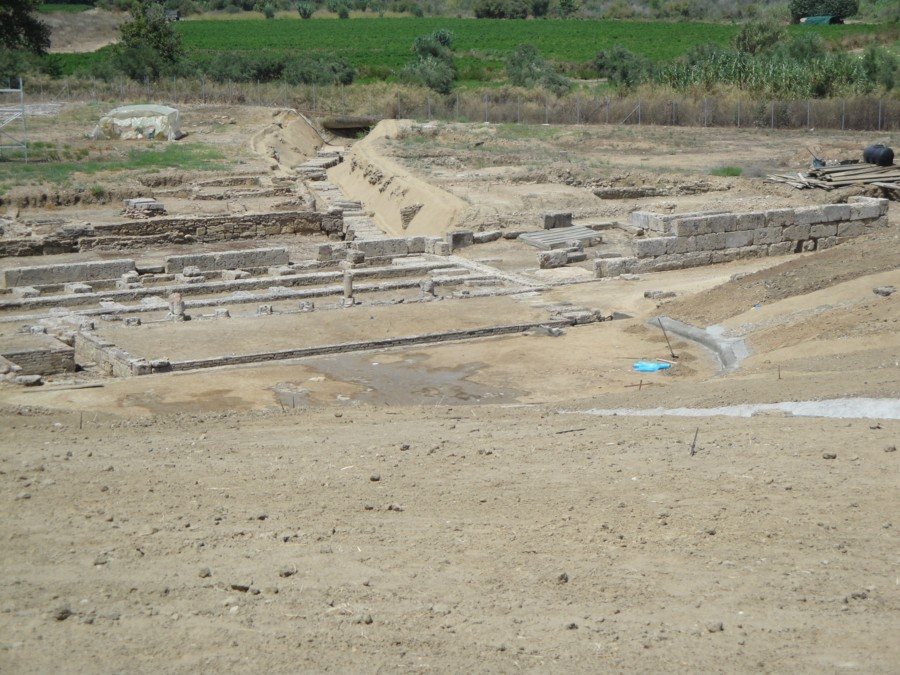
The rectangular stage building was constructed of stone and probably rose two storeys. Its stone structure, the proscenium (the front part of the stage building), and the flanking side structures belong among the earliest known examples of their kind in ancient Greece. They are comparable to features of the Lycurgian Theater in Athens, associated with the statesman Lycurgus. The proscenium dates to the early second century BCE, and half-columns decorated its front. Trenches and holes of varying sizes cut irregularly into it; their purpose is uncertain.
Water management
A drainage system, chiefly serving the orchestra and stage, carried water away to help prevent flooding. An underground channel ran from the orchestra to the eastern end of the stage, then north toward the Peneios River. In the Roman period, changes to the western stage and the adjacent side entrance were accompanied by another channel in front of the proscenium and a long, narrow cistern to the west for collecting water.
Western area and burial ground
Foundation platform
Near the western side entrance, toward the agora, a semicircular foundation platform dating to the late fourth century BCE belonged, according to the available evidence, to a roofed building. It has been tentatively connected with a proposed sanctuary of Dionysus, the Greek god associated with theater and wine. The sanctuary has also been proposed as the setting for a statue by Praxiteles, a leading Greek sculptor of the fourth century BCE.
Late Roman graves
Late Roman tombs lay in clusters at a higher level, including cist graves, box-like burials made from stone slabs, and graves covered with roof tiles. Further groups were found in the stage area, the side entrances, and the surrounding ground, extending west toward the agora.