San Carlo Borromeo, Ferrara: A Baroque Catholic Church
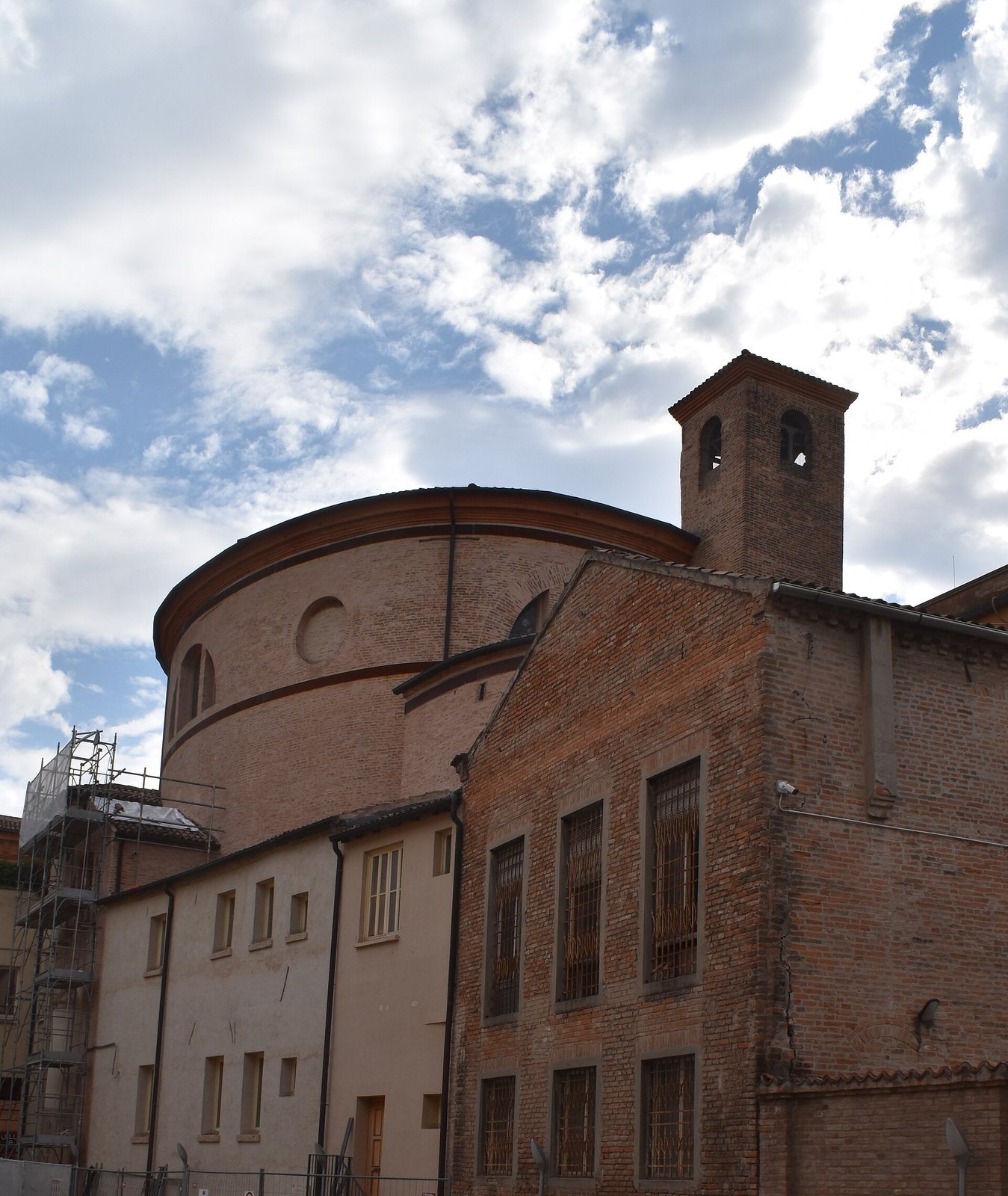
Site at a Glance
- Popularity
- Low
- Country
- Italy
- Primary era
- Early Modern
- Eras represented
- Early Modern
- Civilizations
- Papal States
- Site type
- Religious
- Remains
- Church
On this page10 sections
History
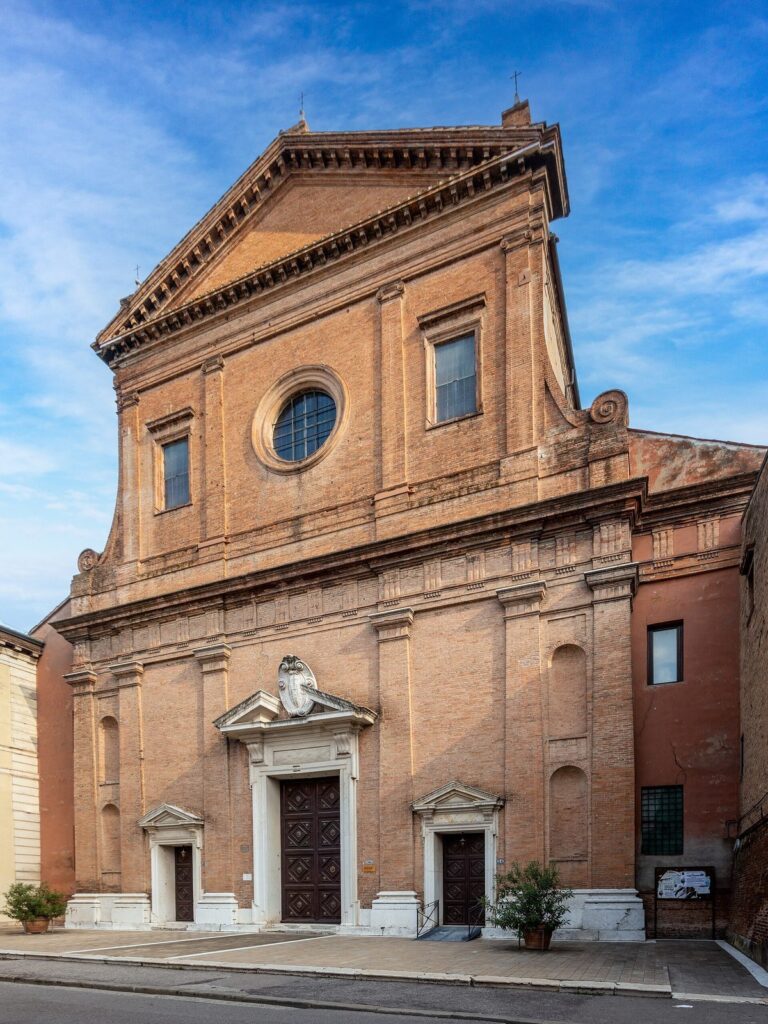
San Carlo Borromeo, also called the Sanctuary of San Carlo Borromeo, is a Roman Catholic church in Ferrara, Italy, dedicated to Saint Carlo Borromeo, known in English as Charles Borromeo. Built between 1612 and 1623 in the Baroque style, it is Ferrara’s only wholly Baroque church and belongs to the Archdiocese of Ferrara-Comacchio.
Hospital and convent origins
Bishop Giovanni Tavelli da Tossignano founded Sant’Anna hospital, for which Alberto Schiatti designed an oratory dedicated to Saints Philip and James. The oratory preceded the present church.
Church construction and hospital use
Giovan Battista Aleotti designed the church that replaced Schiatti’s oratory. Cardinal Carlo Emanuele Pio di Savoia, a senior Catholic Church dignitary, was involved in its construction.
On 4 August 1808, during Napoleon’s rule, the church was assigned to Sant’Anna hospital. The hospital remains its owner, and the church is also the property of the Ferrara Local Health Authority.
Earthquake damage and repair
The 2012 Emilia earthquake damaged the church and led to its closure. The façade statues were taken down for safety, and roof reinforcement was completed by 2013. A further intervention, completed in April 2022, included structural work and restoration of the full painted ceiling cycle.
Remains
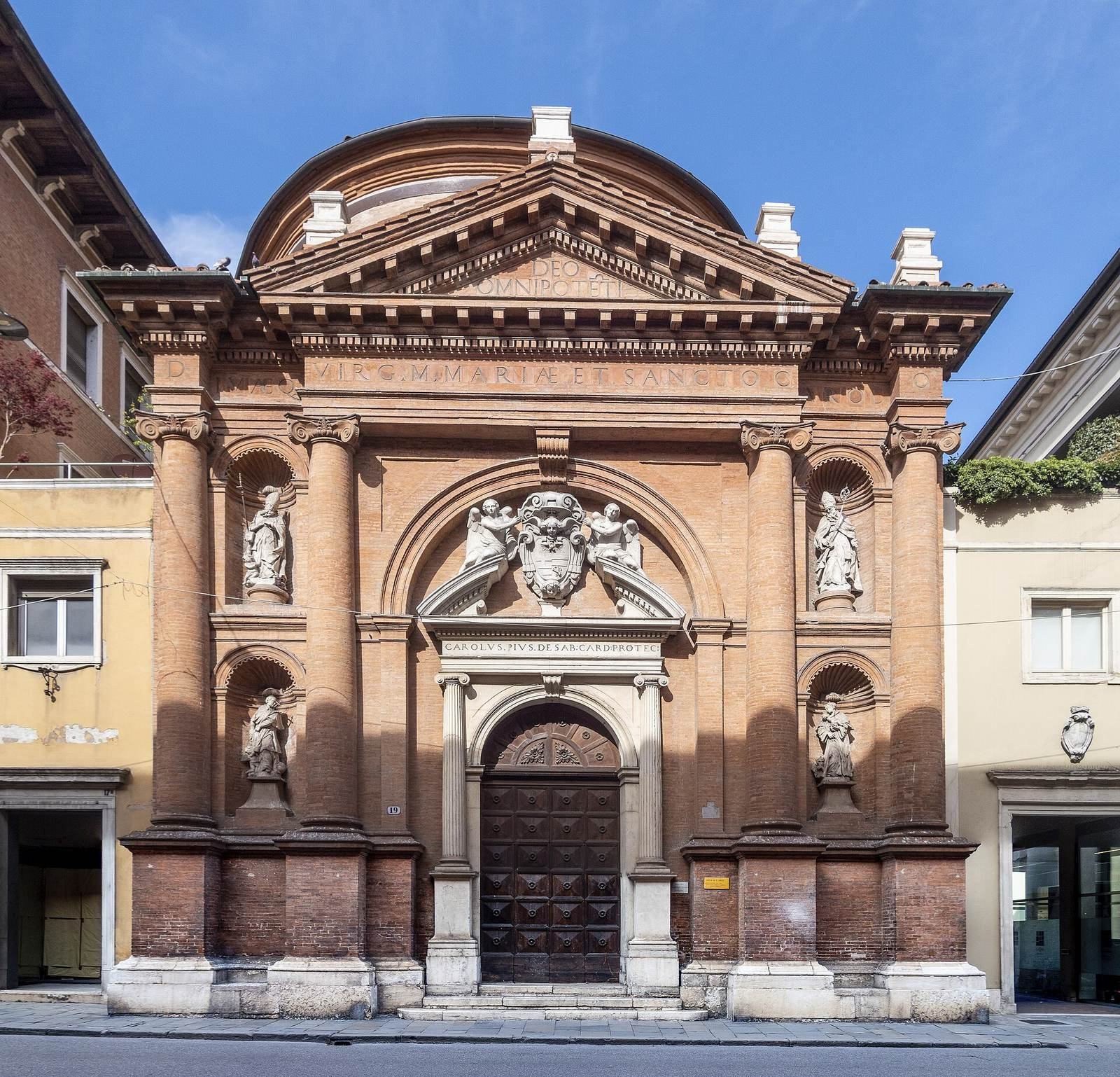
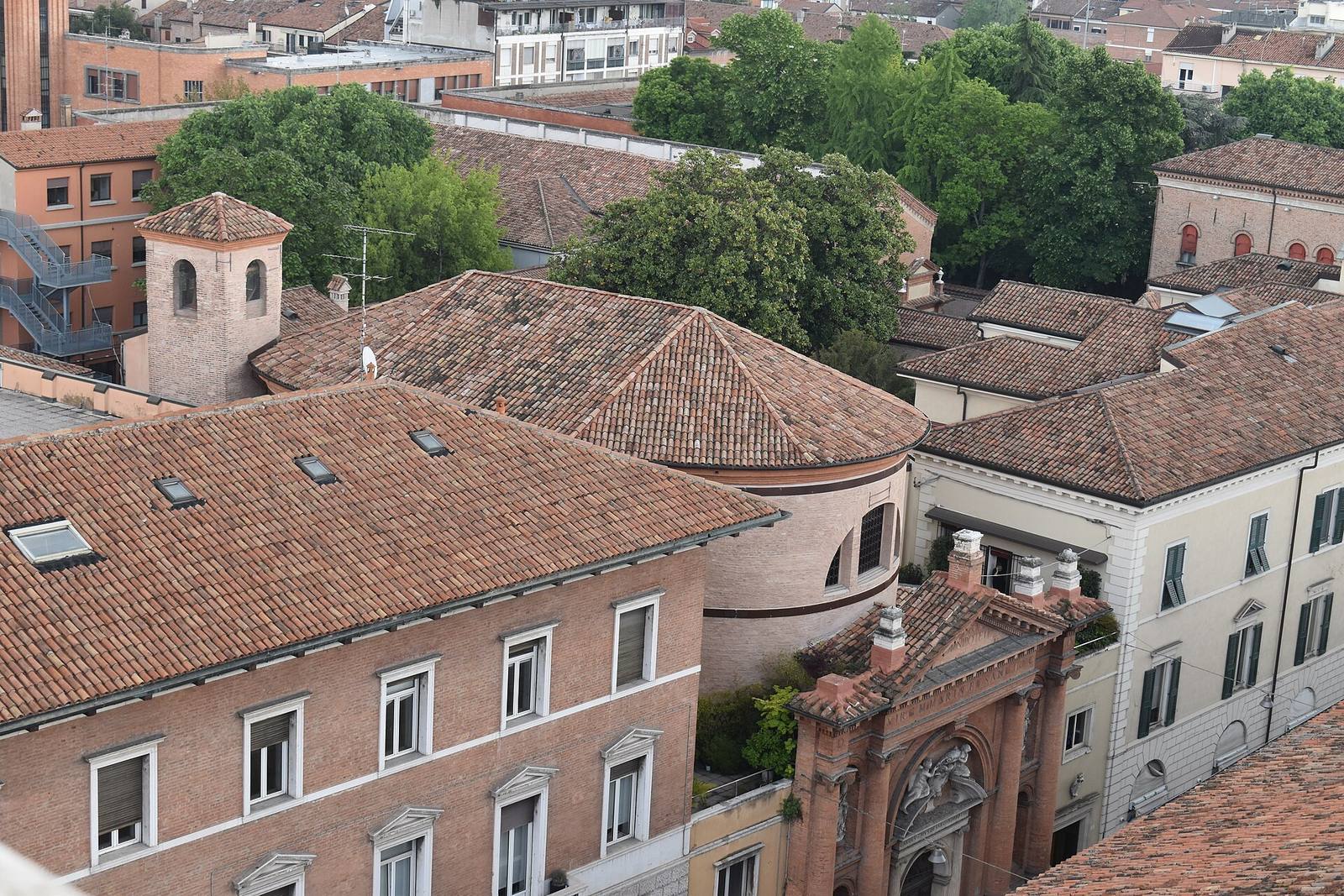
The church has an oval plan, two side chapels, and wooden choir stalls at the sanctuary end. A columned façade fronts an interior whose painted decoration creates an illusion of architectural depth.
Earlier cloister
The fifteenth-century cloister predates the church and formed part of Sant’Anna’s first hospital complex. It had belonged to a convent of Armenian friars dedicated to Saint Basil the Great.
Façade
Two red columns, with capitals combining Ionic and Corinthian forms, frame the entrance. They support a horizontal beam and a broken pediment, whose outline is interrupted at the top. At the façade’s center, two angels hold the heraldic shield of Cardinal Carlo Pio di Savoia. Four niches in two tiers contain marble statues of Saint Carlo Borromeo, Saint Anthony of Padua, Saint Ambrose, and Saint Augustine. The statues, dated to around 1725, are attributed to the Venetian sculptor Angelo De Putti, who is also credited with the angels, although attribution of the entire sculptural group to him is not universally accepted.
Interior decoration
Painted ceiling and entrance
Giuseppe Menegatti’s painted perspective covers the vault (the church’s curved ceiling), giving the surface the appearance of built architecture. At its center is Giuseppe Avanzi’s 1674 painting The Virgin in Glory with Saints Maurelius and Carlo Borromeo. A semicircular panel above the entrance contains Antonio Bonfanti’s scene of the attempted assassination of Saint Carlo Borromeo. The painting is dated to around 1630 to 1635 by comparison with two similar drawings by Guercino, a prominent Italian Baroque painter and draftsman, now in the Royal Collection at Windsor Castle. Bonfanti, also known as Torricella, was active in Ferrara by 1661 and collaborated with Guercino.
Altars and sculpture
A niche at the left altar holds a painted terracotta statue of Saint Sebastian, made in the second half of the sixteenth century by Orazio Grillenzoni. It came from an altar in the former church of Sant’Anna dell’Ospedale, which was later demolished. Along the main body of the church are stucco figures, made by eighteenth-century sculptors of the Venetian school, of Augustine, Gregory the Great, Jerome, and Ambrose. These four Doctors of the Church are saints recognized for the importance of their theological teaching. An inventory from 1773 lists an altarpiece to the right of the main altar showing the Virgin with Saints George, Maurelius, and Dominic, by Domenico, son of the Venetian Renaissance painter Tintoretto. It also records four paintings by Carlo Borfatti depicting episodes from the life of Saint Carlo Borromeo.