Ancient Maroneia: A Greek City-State of Thrace
Site at a Glance
- Popularity
- Medium
- Country
- Greece
- Primary era
- Classical
- Eras represented
- Iron Age, Classical, Medieval
- Civilizations
- Ancient Greek, Byzantine, Roman, Thracian, Venetian
- Site type
- City
On this page13 sections
History
Ancient Maroneia was a Greek colony and Thracian city-state in Greece, with its ancient urban center at present-day Agios Charalambos, about three kilometres south of the modern village of Maroneia. Greek settlers from Chios are generally thought to have founded it around 540 BCE, although traditions also associate the site with an earlier Ciconian city.
Origins and early growth
Stories of Maroneia’s beginnings reach further back than its Greek colonial foundation. Some name Maron, an elderly Ciconian priest of Apollo, the Greek god associated with prophecy and the arts, as its founder at Ismaros. Other traditions say the Cicones established the city after Maron’s death, or connect its founding to a companion of Osiris, an Egyptian god associated with death and renewal. One genealogy makes Maron the son of Euanthe and grandson of Dionysus, the Greek god of wine and festivity. Maroneia stood near the Homeric Thracian city of Ismaros, which some scholars identify with Maroneia itself. Strabo counted the city among those of the Cicones. Pliny the Elder gave an earlier name as Orthagurea or Ortagures, though these names may instead refer to the separate city of Orthagoria.
In the seventh century BCE, Maroneia contested control of Stryme with Thasos. It developed into a powerful local center and was regarded as the largest and most important Greek colony on the coast of Western Thrace. Its territory was estimated at more than 500 square kilometres, extending from Mount Ismaros toward Lake Ismaris in the east and the Lissos River in the west. At times, it may have reached Stryme. The territory included the plain around present-day Komotini and Ismaros, pastureland, and deposits of gold and silver. Its harbor supported shipping between the Troad, the region around ancient Troy in northwestern Asia Minor, and Macedonia. The city’s position also gave it control of the nearby straits of Korpiloi, crossed by an ancient route later followed by the Via Egnatia, a major Roman road across the Balkans, and of the mountain pass at present-day Nymphaia, which linked the Aegean region with the Evros valleys and lands farther north toward the Danube.
Persian and Athenian rule
Maroneia, like the rest of Thrace, was under Persian rule during the first half of the fifth century BCE. Later in that century it joined the Delian League, an alliance led by Athens, and appears in the league’s tribute lists from 454/453 to 415/414 BCE. In the fourth century BCE it belonged to the Second Athenian League, a later alliance organized under Athenian leadership; its contribution at one point reached 21 talents, an ancient unit used to reckon payments. Maroneia also maintained close relations with the Odrysian kingdom, a major Thracian kingdom.
The city issued silver coins from the sixth century BCE and gold coins in the fourth. Estimates of its Classical-period population range from about 12,000 to 15,000–20,000. A representative of Maroneia achieved at least one victory at the Olympic Games in 476 BCE. The city was also celebrated for its strong wine, whose aroma was praised as nectar-like and which was said to tolerate dilution with twenty or more parts water. In the Odyssey, the Greek epic attributed to Homer, Maron gives wine to Odysseus, the poem’s hero, who uses it to intoxicate Polyphemus, the Cyclops he later blinds. Maron’s legendary connection to the wine helped link the city’s foundation traditions with its reputation. Pliny the Elder, a Roman author and naturalist, described a test by Mucianus, a Roman statesman and writer, in which the wine was diluted with even more water.
Macedonian and Roman rule
Maroneia came under the Macedonian kingdom of Philip II around 350 BCE. In 200 BCE, Philip V captured it. When Rome ordered him to withdraw from the Thracian cities, he retaliated by killing many of Maroneia’s inhabitants. Rome first granted the city to Attalus, king of Pergamon, a Hellenistic kingdom in Asia Minor, but soon reversed that decision and declared Maroneia a free city. Roman favor brought privileges and an enlarged territory containing many rural settlements.
In the Roman period, the port sustained prosperity and active trade. Maroneian coins have been found across the Balkans and as far away as Syria. The city’s devotion to Dionysus was expressed in its principal sanctuary and coin imagery, while the Homeric story of Maron’s wine remained closely associated with its identity.
Late antiquity and later history
Maroneia became a bishopric, a district overseen by a bishop, in the fourth century CE. Pirate raids in the sixth and seventh centuries reduced its population. It was elevated to an archbishopric, overseen by an archbishop, in the eleventh century and continued to flourish until the thirteenth. A Byzantine center, belonging to the medieval Eastern Roman Empire, occupied the harbor at Agios Charalambos, also known as Paliokhora. In the seventeenth century, pirate attacks prompted the present village of Maroneia to move to a slope of Mount Ismaros.
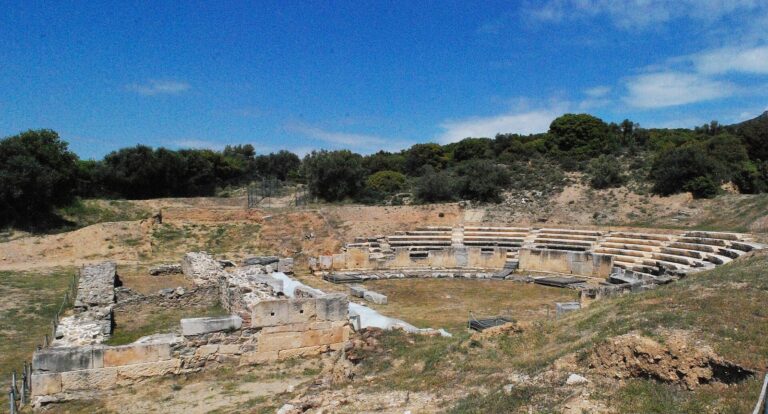
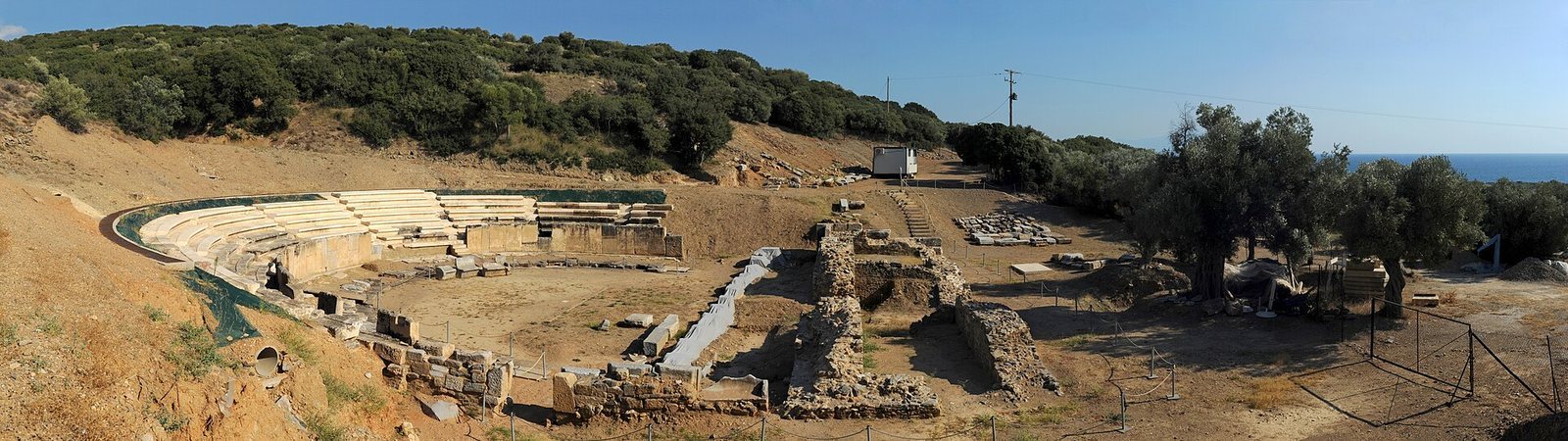
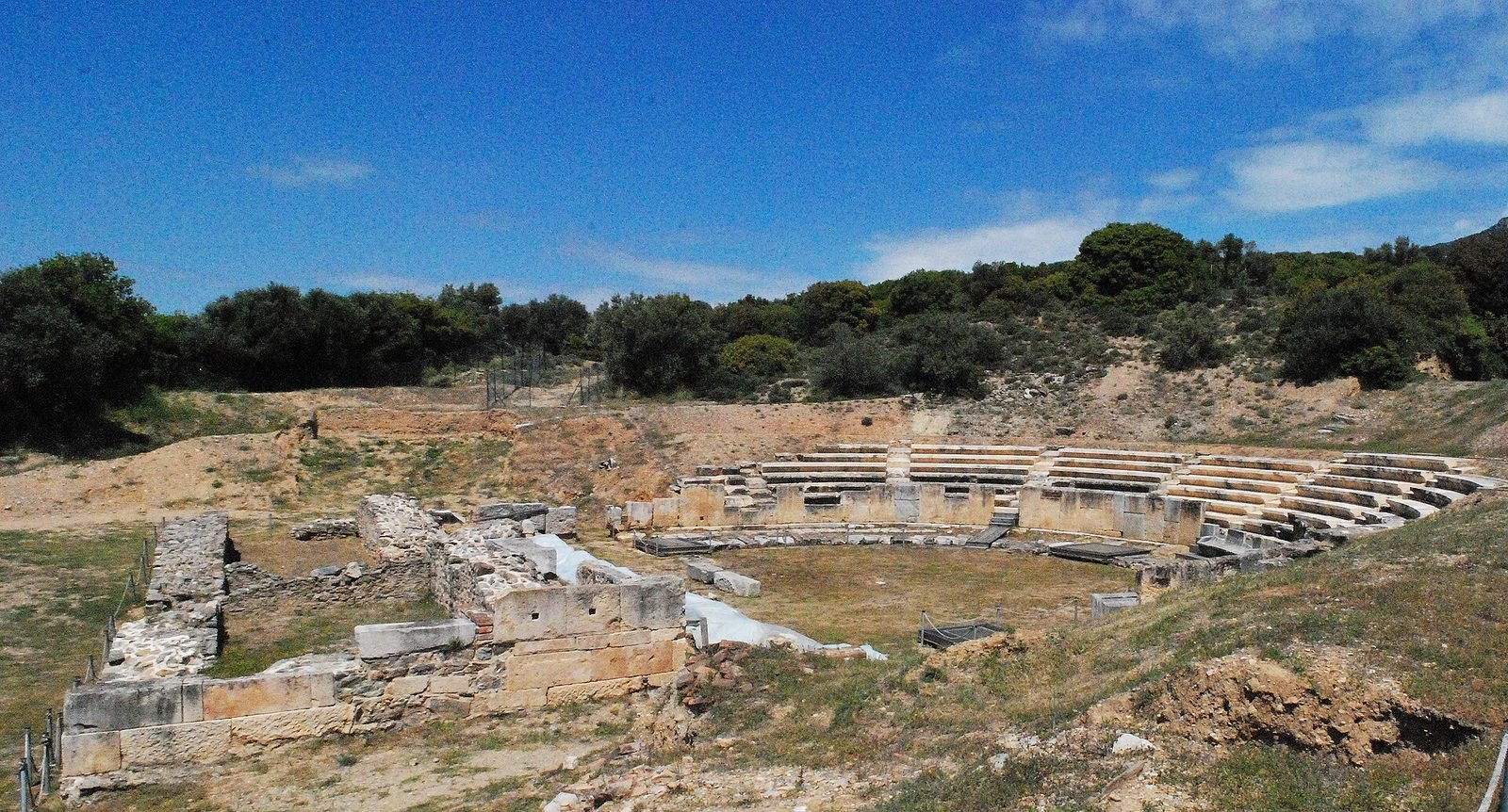
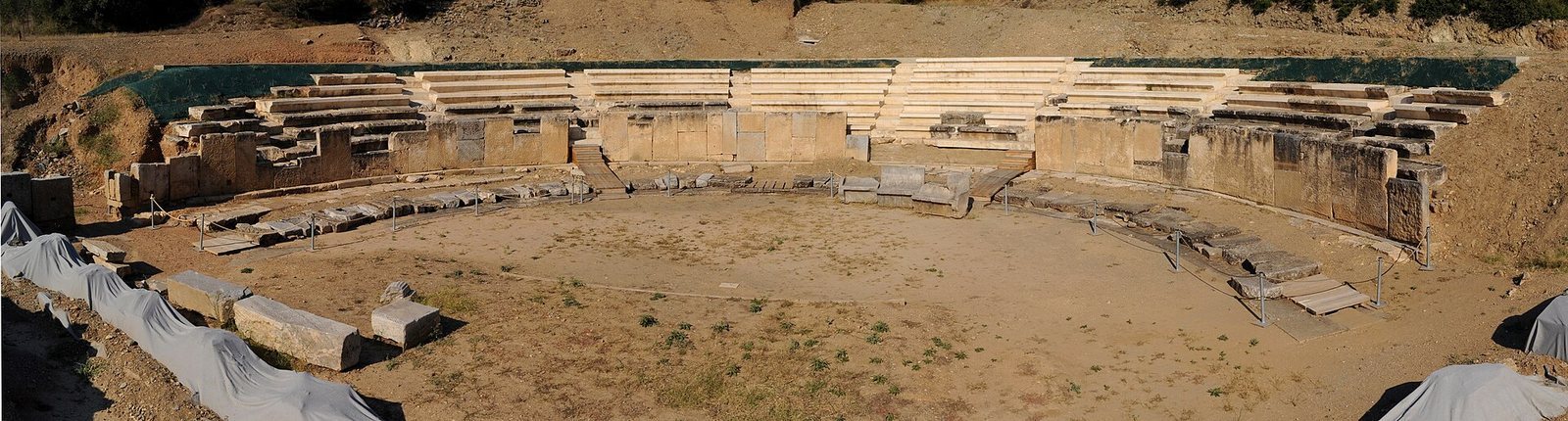
Archaeological excavations at Maroneia began in the 1960s. Work toward the end of that decade exposed the ancient theatre, which has also undergone restoration.
Remains
The ancient urban center covered about 4.25 square kilometres within its walls. This made it one of the largest known Greek city-state centers and roughly twice the size of Athens’ walled urban area, excluding Piraeus. Its walls extended for approximately 10.5 kilometres, climbing Mount Ismaros from the coast on either side of the city and following the mountain ridge. The harbor occupied the cove at present-day Agios Charalambos, where the lower slopes of Ismaros meet the sea. The city’s principal surviving features include its defenses, harbor, theatre, sanctuaries, and remains from later periods.
City walls
The wall circuit ran from the coast up Mount Ismaros and along its ridge. Its towers included both rectangular and semicircular forms, traces of a long defensive boundary around the urban center.
Harbor
The cove at Agios Charalambos formed a natural harbor between the sea and the lower slopes of Mount Ismaros. Engineering works made the harbor safer for ships.
Theatre
The theatre had a Hellenistic building phase, from the period following Alexander the Great’s conquests, and was later adapted as an arena during the Roman period. Its orchestra, the central performance area, had a packed-earth surface and a channel to carry away rainwater. Three rows of seating and the Roman-period stage building survive.
Sanctuaries
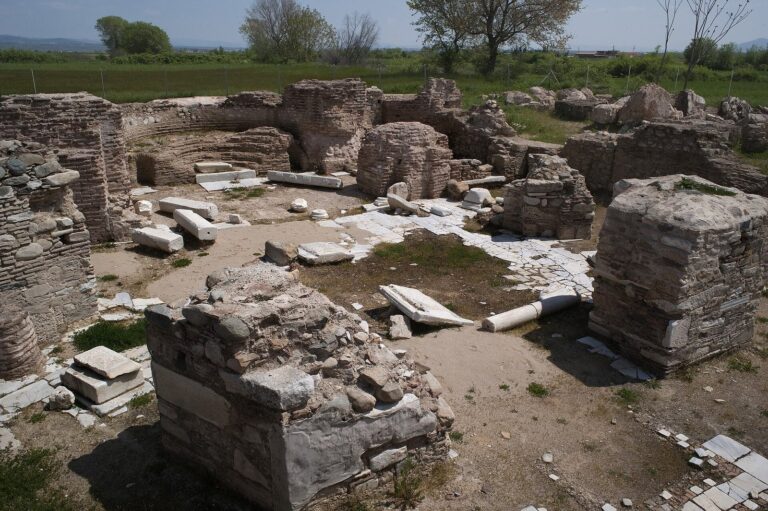
Ruins identified as Maroneia’s principal sanctuary, dedicated to Dionysus, date to the fourth century BCE, and its foundations were visible. Public documents were displayed there. A separate sanctuary dedicated to Egyptian gods has also been found. The cult of Zeus is attested, and a sanctuary to Zeus is considered likely.
House
A private house dating to the third or second century BCE included an andron, a room for male guests often used for dining and entertainment. Its floor was decorated with a mosaic.
Roman gateway
A monumental gateway, or propylon, dates to the Roman period under the second-century emperor Hadrian.
Later remains and inscriptions
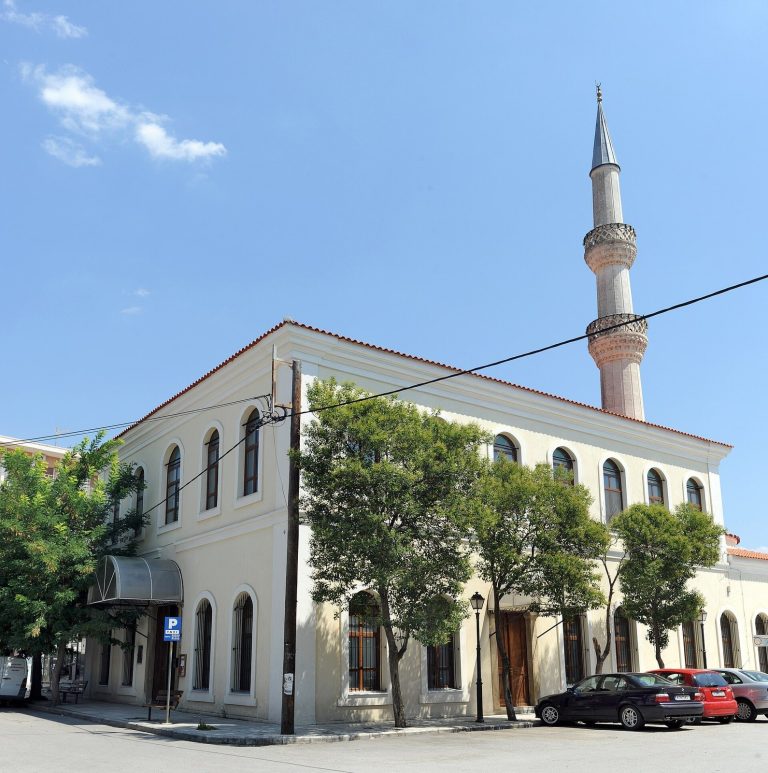
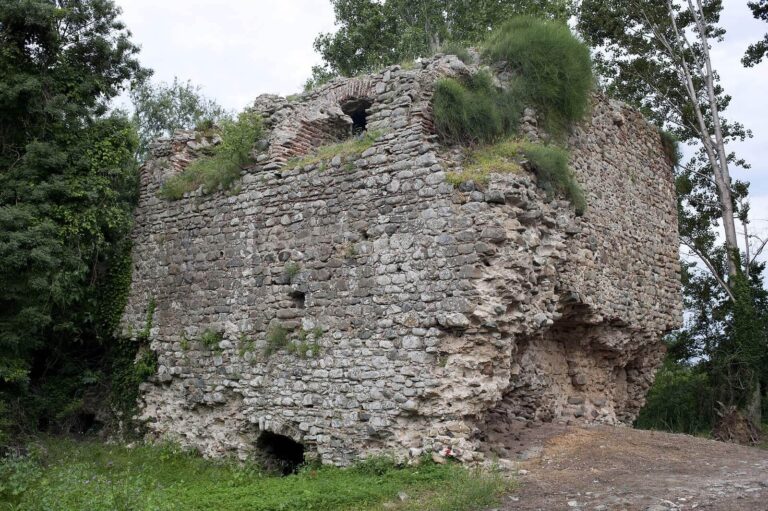
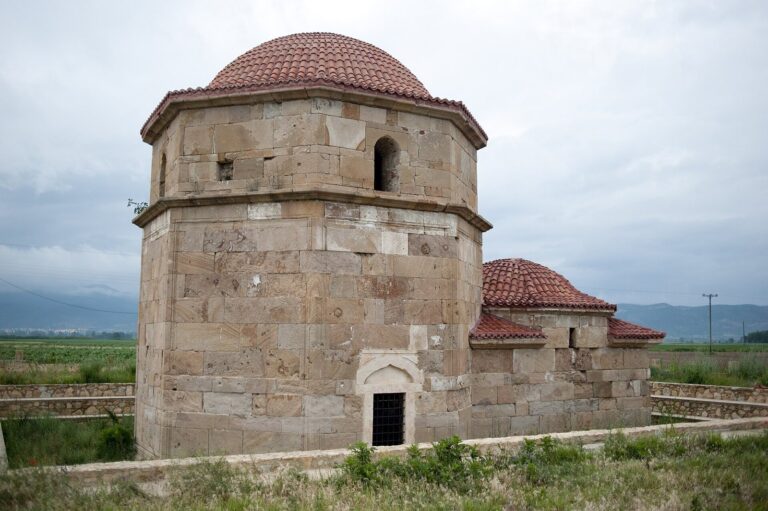
Buildings from the Byzantine and Venetian periods survive at the city site. Venetian rule and political presence extended into parts of the eastern Mediterranean. Inscriptions found in the area provide material evidence for a Jewish presence there.