Church of Saint Augustine (Alcamo): An Augustinian Catholic Church
Site at a Glance
- Popularity
- Very Low
- Country
- Italy
- Primary era
- Modern
- Eras represented
- Early Modern, Modern
- Civilizations
- Kingdom of Sicily, Kingdom of the Two Sicilies, Spanish
- Site type
- Religious
- Remains
- Church
On this page8 sections
History
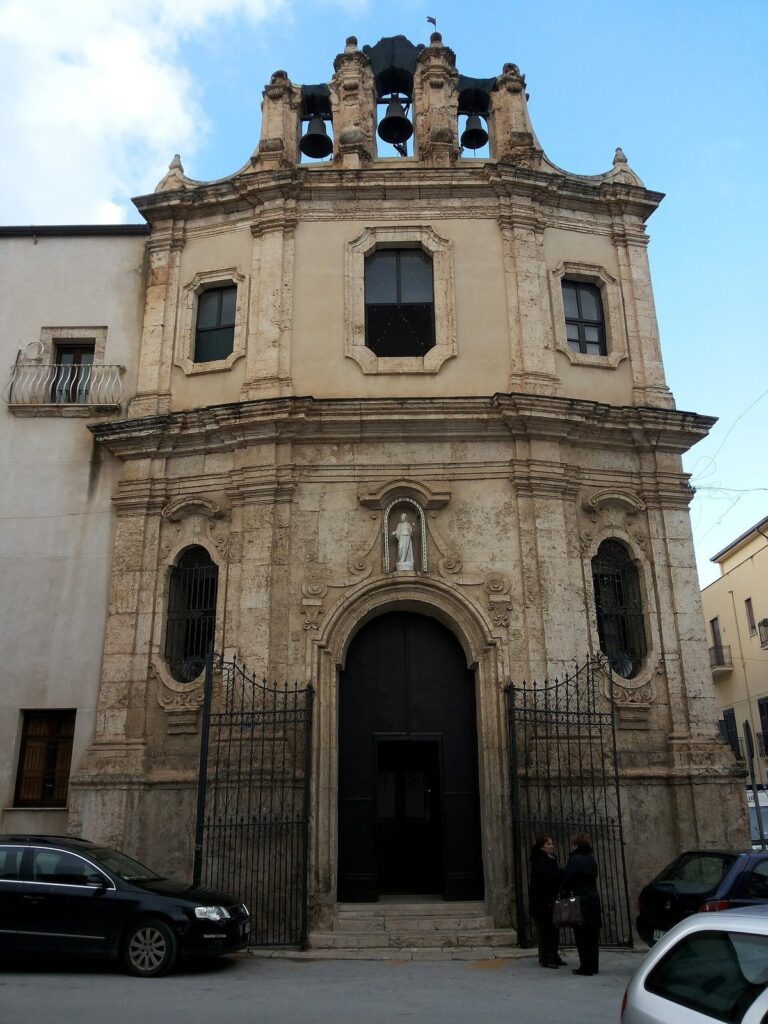
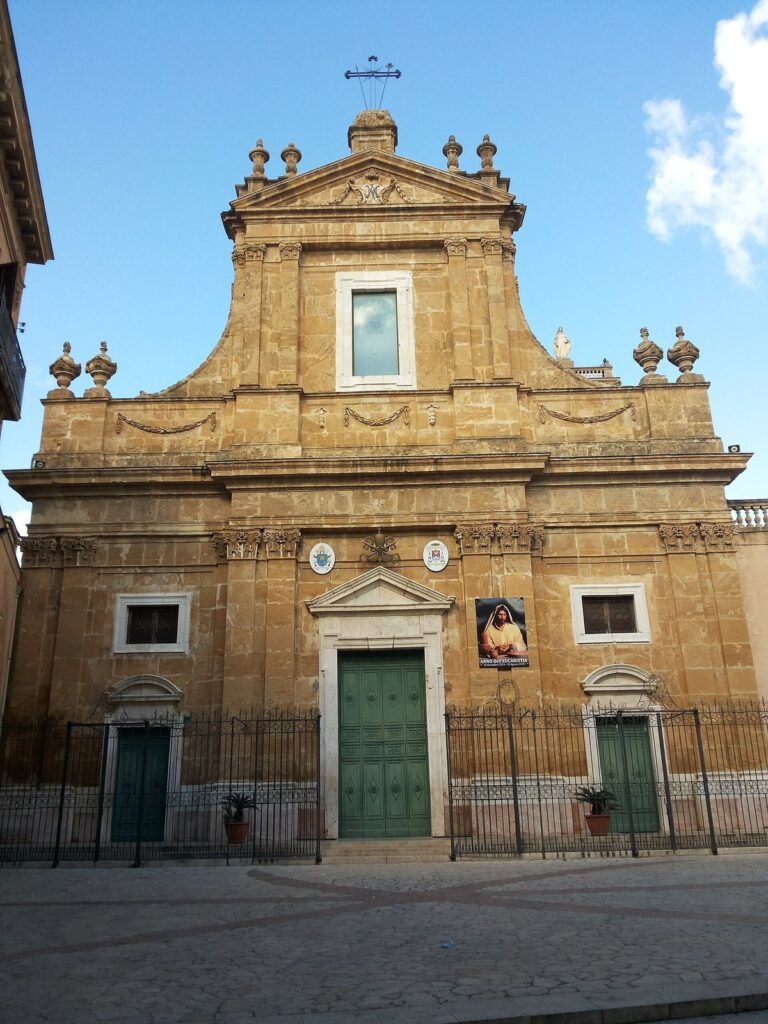
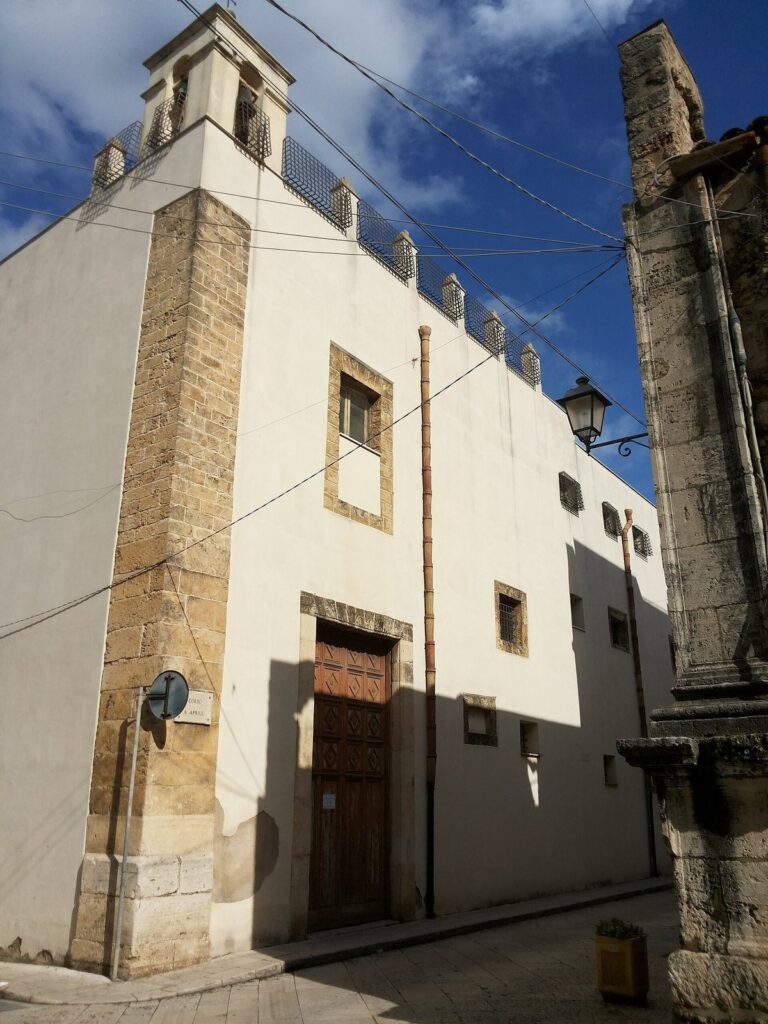
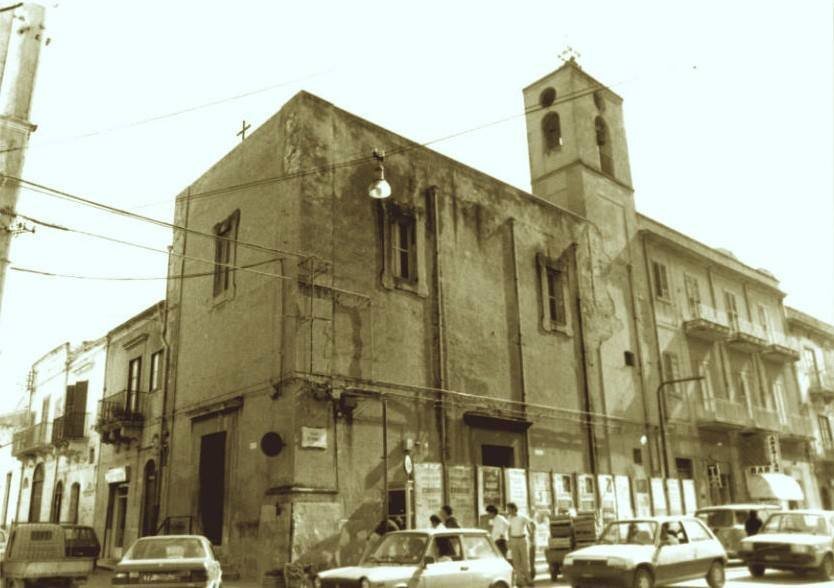
The Church of Saint Augustine is a Catholic church in Alcamo, Italy, founded by Augustinian friars in 1589 and rebuilt in 1849–1850. It is dedicated to Augustine, a late-antique Christian bishop and theologian, and is affiliated with the Augustinian friars, members of a Catholic religious order shaped by his rule and spiritual tradition.
Augustinian foundation and transfer
By 1506, Augustinian friars had a friary opposite Porta Saccari, near present-day Via San Nicolò. In 1589, in response to their resentment at being subject to the bishop’s authority, they established a separate friary and church on the church’s present site.
Work was still underway in 1650, while the friars lived in poverty and depended on alms in kind. In 1660, they handed the church and friary to the episcopal curia, the administrative office of the bishop’s diocese. From 1713, the complex was administered by the parish of Saint Paul. The church is now a rectory, a church entrusted to a rector for its care, in the Diocese of Trapani, a church district overseen by a bishop. Its rector is the parish priest of the Church of Saints Paul and Bartholomew.
Rebuilding and religious association
The church was rebuilt in 1849–1850 and later underwent several restorations. The former friary grounds were put to residential use.
In 1876, priest Antonio Barbuscia Santoro established the Women’s Pious Union of Jesus, Mary, and Joseph at the church. He said his mother had told him that, when his birth endangered both their lives, he had been consecrated to the Holy Family, meaning Jesus, Mary, and Joseph. The parish priest of Saints Paul and Bartholomew gave him an altar bearing an image of the Holy Family. The union sought to address evils affecting the town, honor the Holy Family, encourage members’ sanctification, and promote moral and religious education within their families.
Remains
Plan and interior
The church has a rectangular plan and five altars. Its single central hall is covered by a barrel vault, a continuous arched ceiling. The chapels have pilasters, shallow column-like projections from the walls, topped with Corinthian capitals, ornamented tops traditionally decorated with acanthus leaves. Twenty-four built-in pillars with Corinthian capitals are also part of the interior.
High altar
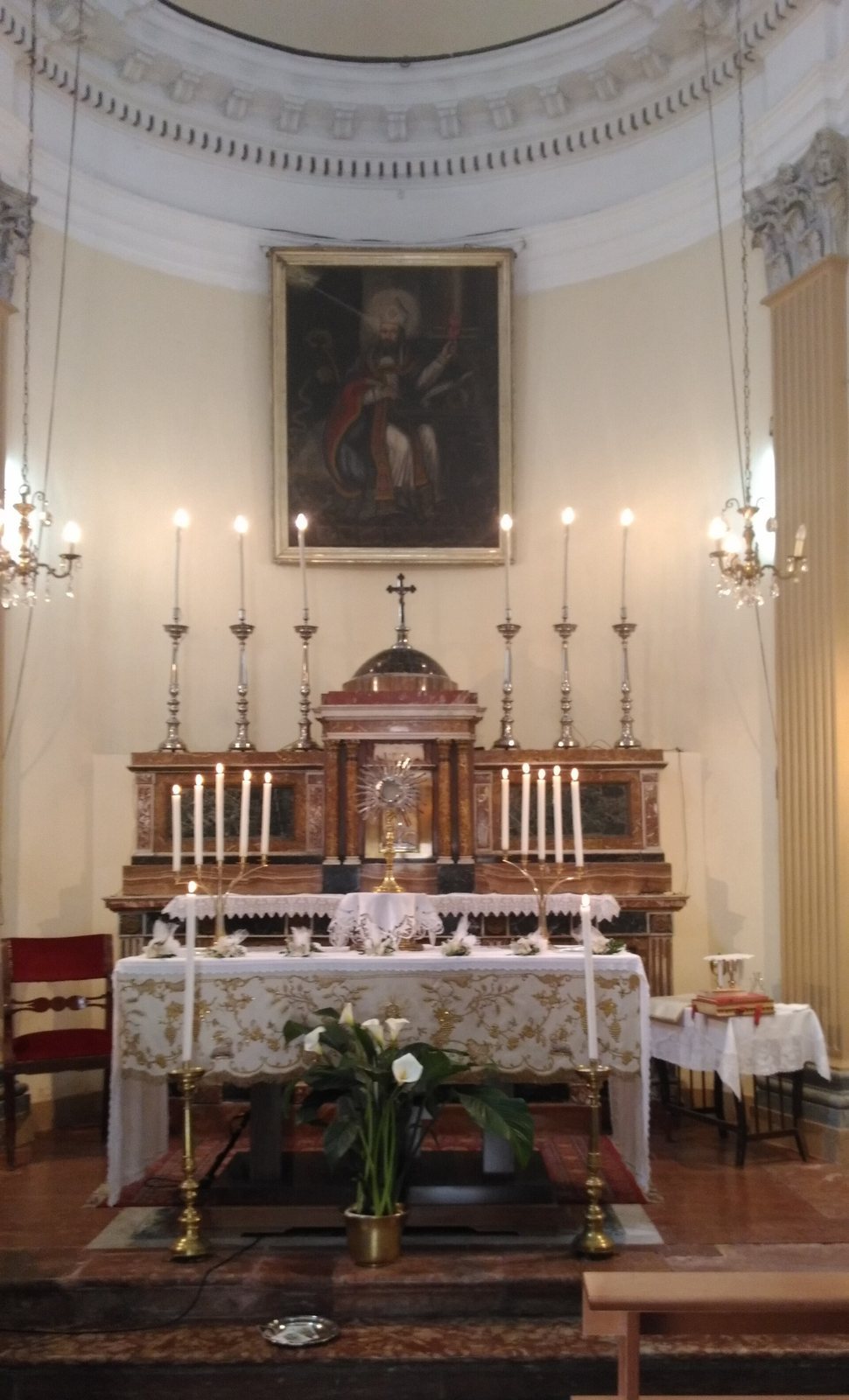
The high altar has a painting of Saint Augustine and a brass tabernacle, a receptacle for the consecrated Eucharist, with inlay and a Gothic style. Until 1835, the altar was dedicated to Saint Nicholas of Tolentino, a thirteenth-century Augustinian friar. Its canvas of the saint, painted by Giuseppe Carrera in 1610, is now in an anteroom to the sacristy, the room used to prepare for worship and store liturgical objects, at the Church of Saints Paul and Bartholomew.
Canvases beside the high altar
On the right of the high altar are canvases of Augustine and his mother, Saint Monica. On the left are works depicting Saint Rosalia, a Christian saint especially venerated in Sicily, and Our Lady of the Dying, a devotional title for Mary.
Right-hand chapels
The first chapel on the right contains a wooden statue of Saint Nicholas of Bari, an early Christian bishop, made by L. Santifaller. The second has a painting of the Holy Family dating to the second half of the nineteenth century.