Saint Lawrence Church in Cynków: A 17th-Century Timber Subsidiary Church
Site at a Glance
- Popularity
- Low
- Country
- Poland
- Primary era
- Early Modern
- Eras represented
- Early Modern, Modern
- Civilizations
- Unclassified
- Site type
- Religious
- Remains
- Church
On this page7 sections
History
Saint Lawrence Church in Cynków is a Roman Catholic subsidiary church in Poland, belonging to the parish of Saint Lawrence. Built in 1631 by master carpenter Walenty Ruraj of Pyskowice, it falls within the Koziegłowy deanery of the Archdiocese of Częstochowa. Carved inscriptions on the door lintels identify Ruraj as the builder.
Nineteenth-century addition
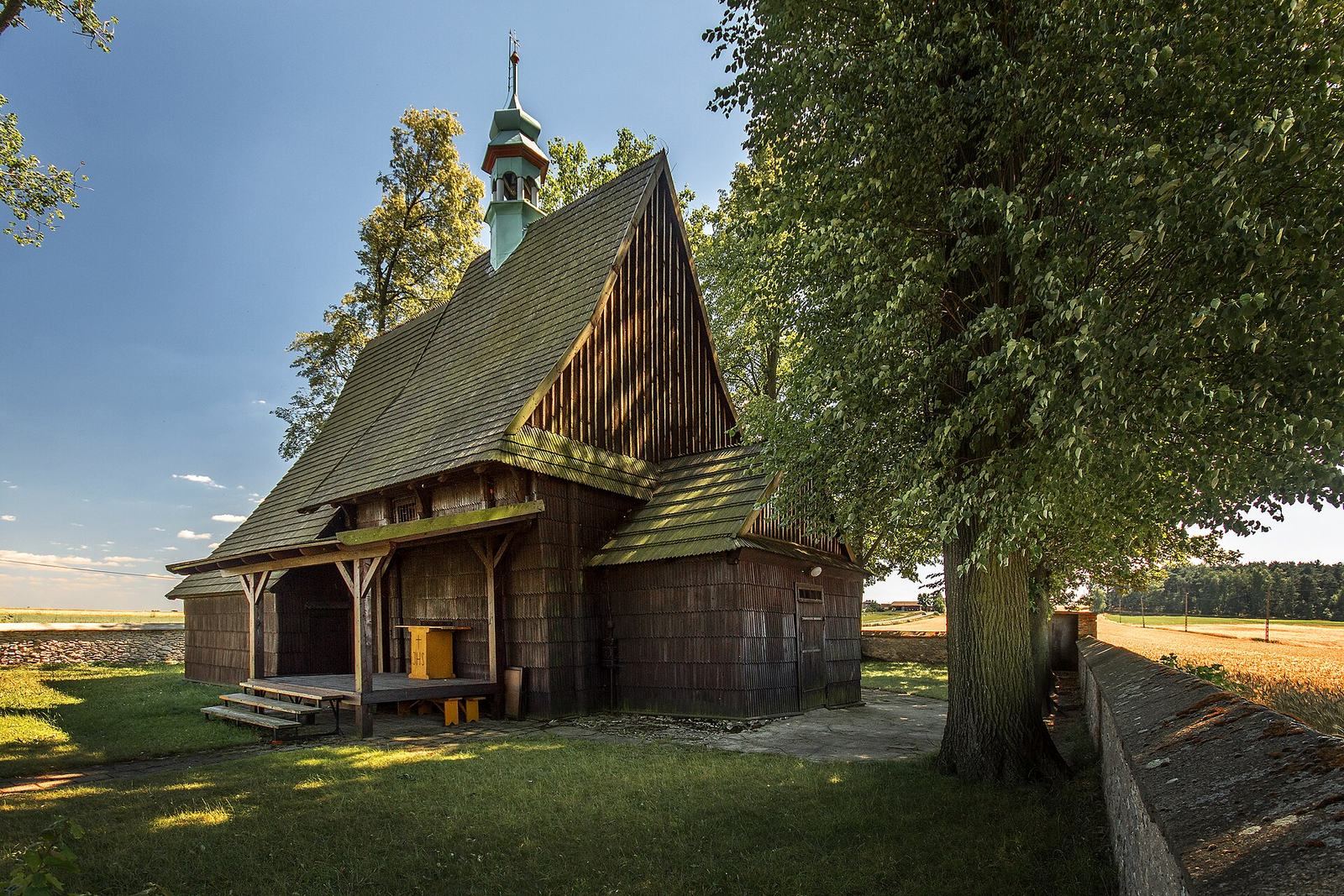
A porch at the west end was probably added during the 19th century.
Restoration in the 1950s
The church underwent extensive restoration from 1951 to 1958. The work included installing a lightning conductor and replacing the shingle roof and damaged rafters. In 1957, workers renewed the main and side altars and the choir gallery.
Remains
Plan and timber construction
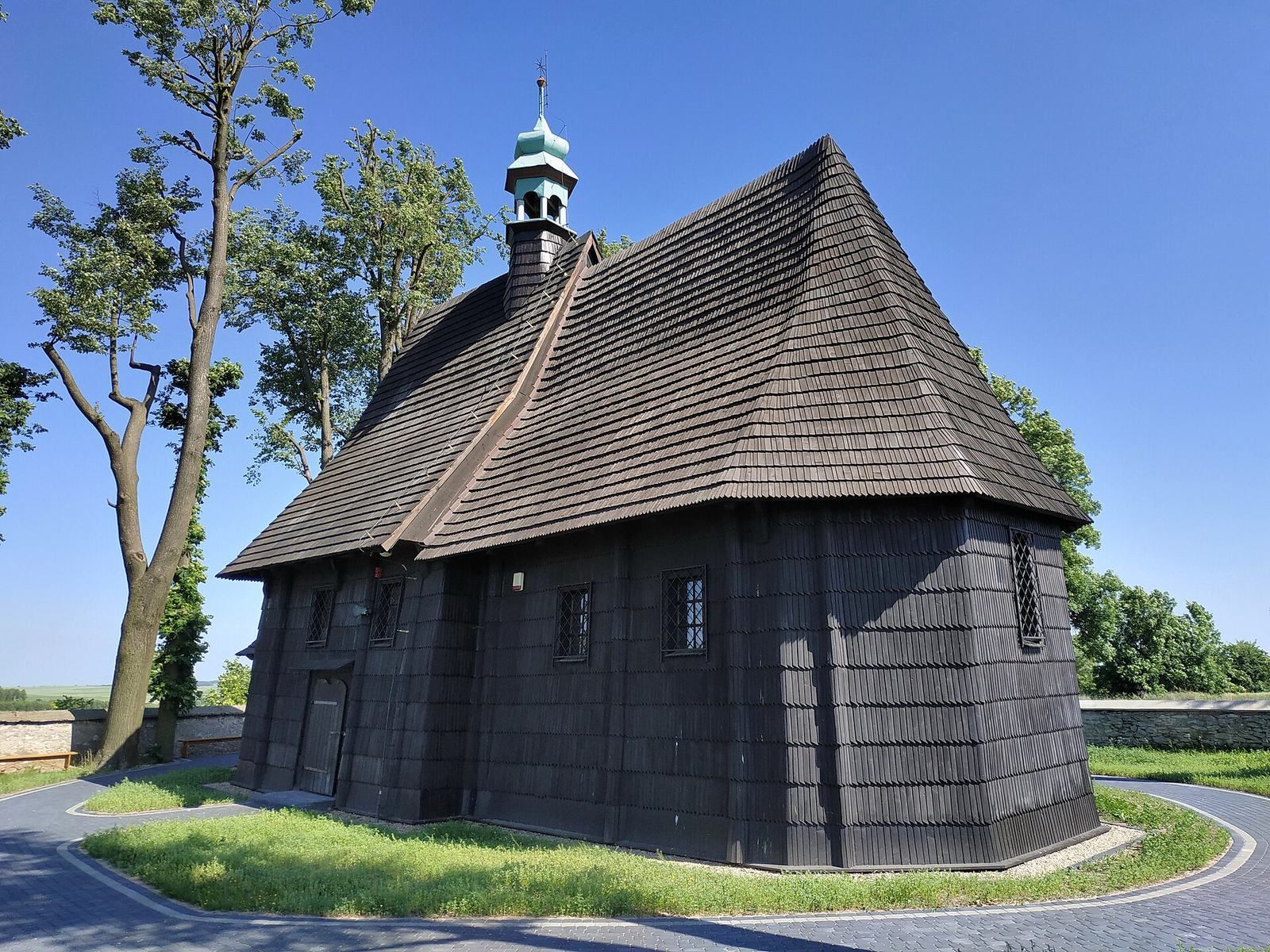
The church stands about 1 km north of Cynków and has a single nave, the main area for the congregation, with its chancel at the east end. The nearly square nave leads to a narrower chancel, the area around the main altar, which has a three-sided end. A sacristy, a room for preparing and storing liturgical items, adjoins it on the north, while a porch stands at the west end. The larch walls rest on a stone plinth, the base supporting the walls, and are made of horizontal boards fitted between upright posts. Shingles cover the exterior walls.
Roof and bell turret
A shingled gabled roof with two ridge lines covers the building. Above the nave, a hexagonal bell turret, a small roof tower that houses a bell, rises to a lantern, an open upper stage, and an onion-shaped roof.
Interior and furnishings
Flat ceilings cover the interior, and a rectangular opening leads into the chancel. At the west end of the nave, a choir gallery rests on two columns. Above the chancel opening, a carved crucifix is fixed to a tie beam, the horizontal beam joining opposing roof supports. Statues of Saint Lawrence, an early Christian deacon and martyr, and Saint Sebastian, traditionally remembered as a Roman soldier and Christian martyr, flank it. The main altar is in the Renaissance style, which revived classical forms in European art and architecture, and dates to the first half of the 17th century. The side altars date to the middle of that century. The church also contains a late-Renaissance ambo, a raised stand for readings.