Theatre of Dodona: A Greek Sanctuary Theatre for Games and Drama
Site at a Glance
- Popularity
- High
- Country
- Greece
- Primary era
- Classical
- Eras represented
- Classical
- Civilizations
- Ancient Greek
- Site type
- Entertainment
- Remains
- Theatre
On this page9 sections
History
The Theatre of Dodona is an ancient Greek performance venue in Epirus, Greece, commissioned by Pyrrhus, king of Epirus, in the early third century BC as an extension of Dodona’s sanctuary. The sanctuary was renowned for the oracle of Zeus, regarded as the oldest in Greece.
The oracle and its traditions
Dodona was an ancient center in Thesprotia, a district of Epirus, associated in Greek tradition with the Pelasgians, a people regarded as pre-Greek. Its oracle’s prominence declined as Delphi grew in influence, partly because Dodona was distant from Greece’s major states. It continued to serve neighboring Aetolians, Acarnanians, and Epirotes, however, and was later counted among Greece’s three leading oracles, alongside Delphi and the oracle of Zeus Ammon in Libya.
Visitors understood the oracle’s responses as expressions of Zeus’s will, interpreted by priests through signs from a sacred oak. The sound of wind in its branches may have been one such sign. Homer called the male priests Selloi, while Pindar used the name Helloi; the names may have referred to a tribe. Priestesses also served by the time of Herodotus and Sophocles. Herodotus mentions three, while Sophocles refers to two. They may have taken the place of male priests as worship of Dione, a goddess, became associated with Zeus. A tradition held that doves directed the founding of the oracle. The priestesses were called peleiades, a title linked to that dove tradition, while the Boeotians were said to be the only people who continued consulting male priests.
Dodona appears in the Iliad and the Odyssey. Epic tradition says Achilles praised Zeus there before the Trojan War and that Odysseus visited to consult the oracle. Other stories placed an early Greek homeland and the flood of Deucalion, a figure associated with a great flood, near Dodona and the Achelous River. The surrounding region, called Helopia, was described as fertile pastureland. Herodotus also preserved an Egyptian-origin tradition linking Dodona’s oracle with a temple at Thebes and with Zeus Ammon’s oracle in Libya. Aristotle connected Dodona’s early inhabitants with the Selloi and with people then called Greeks, later known as Hellenes.
Traditions named Croesus of Lydia, the Spartans, and the Athenians among those who sought the oracle’s advice. Athens may have turned to Dodona during the Peloponnesian War, the conflict between Athens and Sparta and their allies from 431 to 404 BC, because Athenians suspected Delphi’s oracle. Another response from Dodona was said to have directed the Athenians to establish a colony in Sicily.
Pyrrhus and the theatre
Dodona probably regained importance as the Molossian kings extended their power across Epirus. The theatre was used especially for the Naia, games held every four years in honor of Zeus.
Destruction and later use
Aetolian forces destroyed the theatre in 219 BC, and it was rebuilt by 218 BC. Roman troops destroyed it again in 167 BC. Under Augustus, the first Roman emperor, the theatre was converted into an arena for gladiatorial and animal combats. This use continued until the fourth century AD.
Greek archaeologists excavated the theatre between 1875 and 1878, with further excavations in the twentieth century. Parts were restored from 1961 to 1975 to recover its classical appearance and theatrical function. The site is again used for theatre and music performances.
Remains
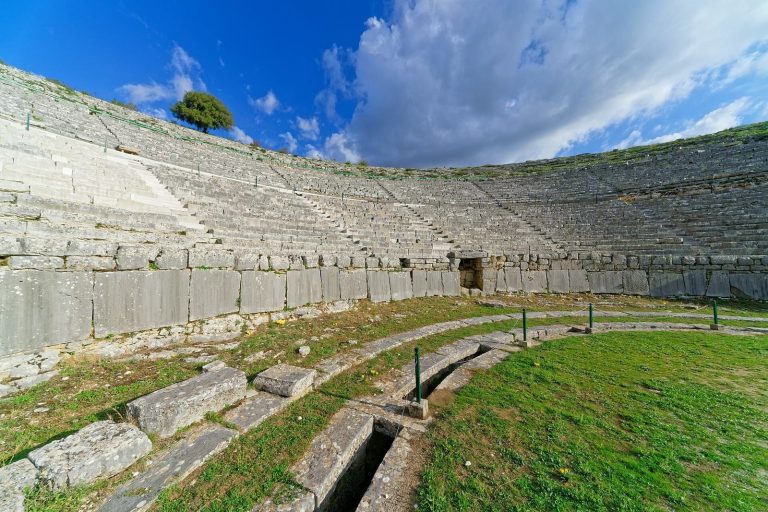
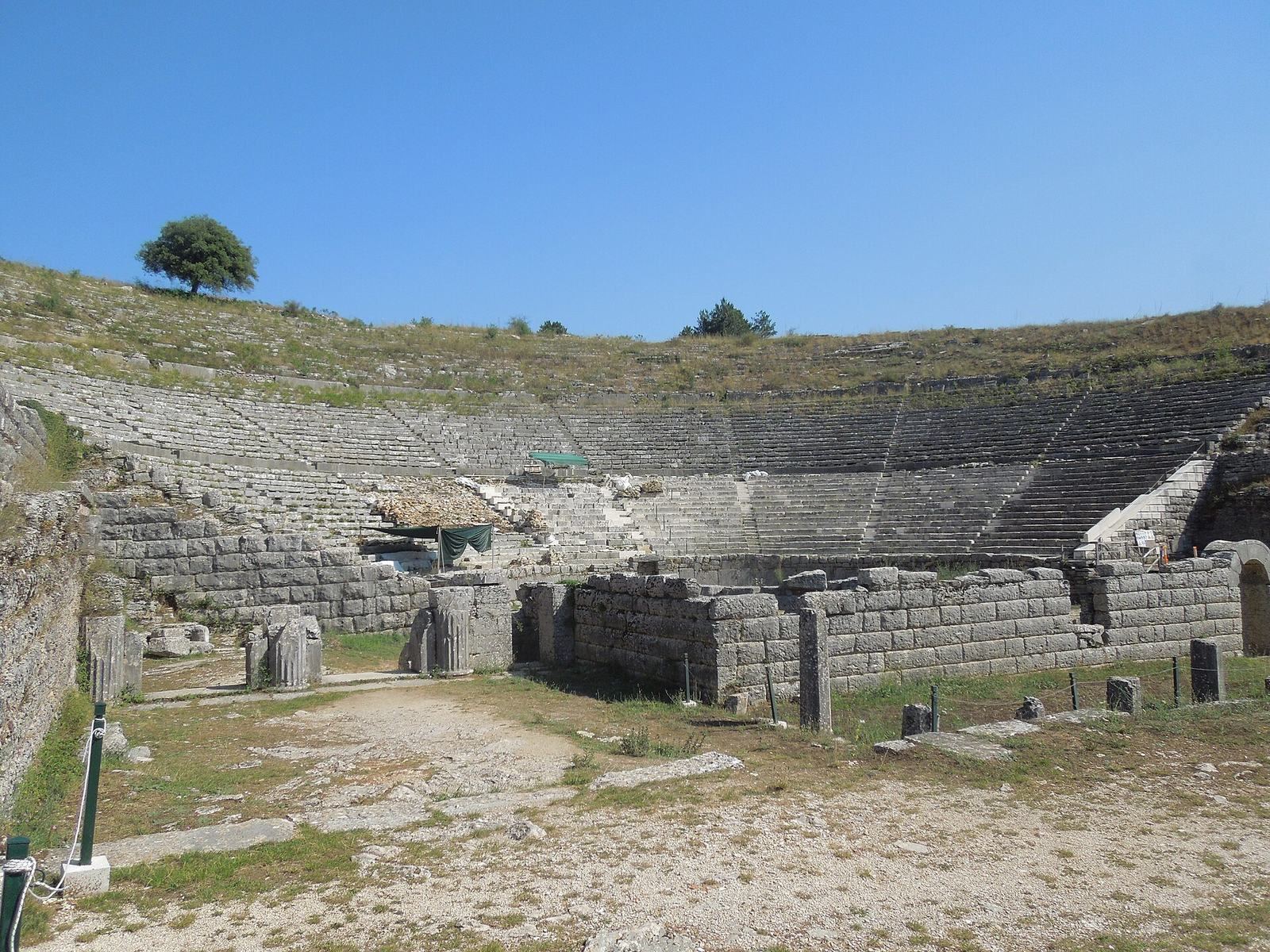
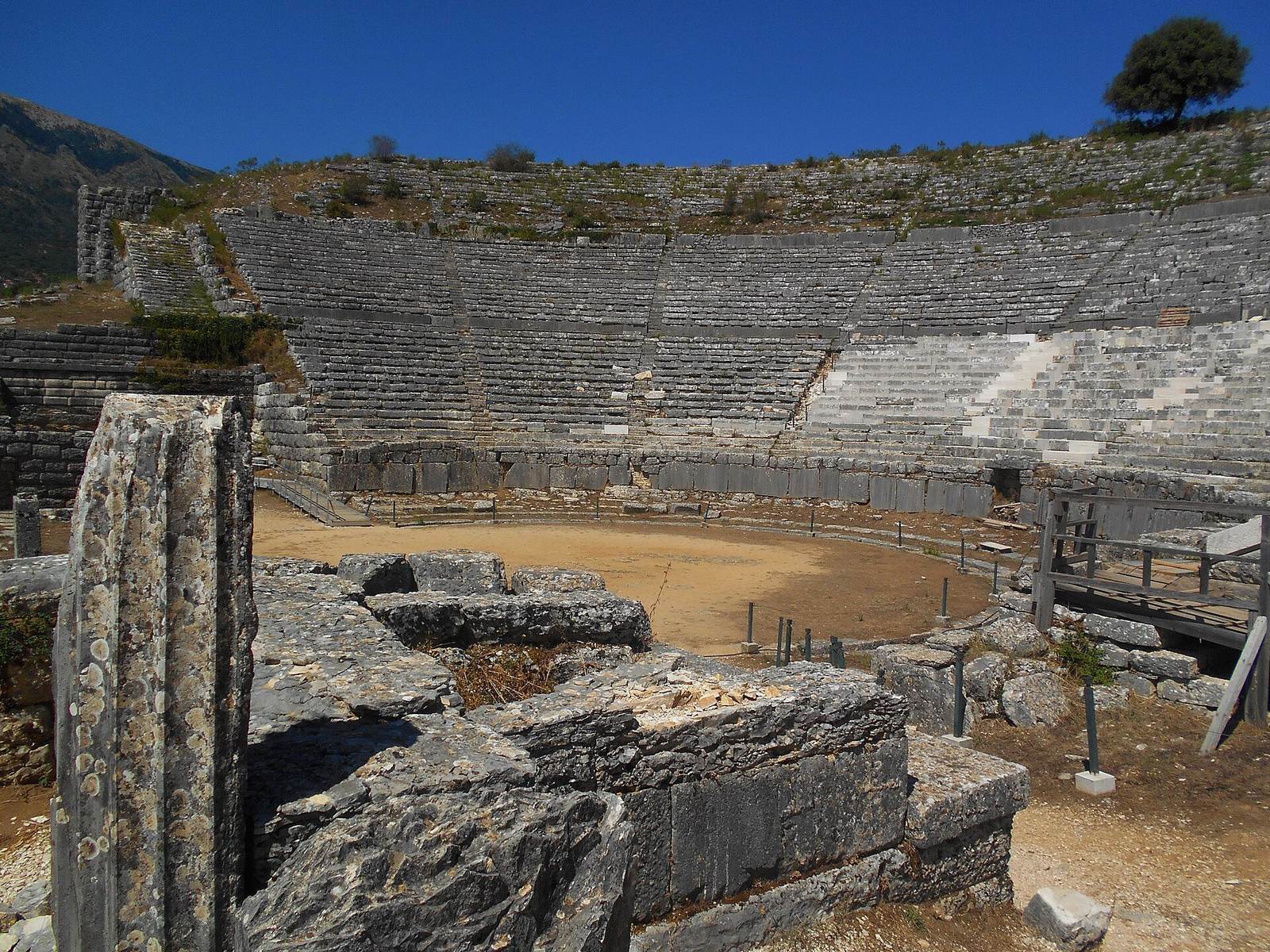
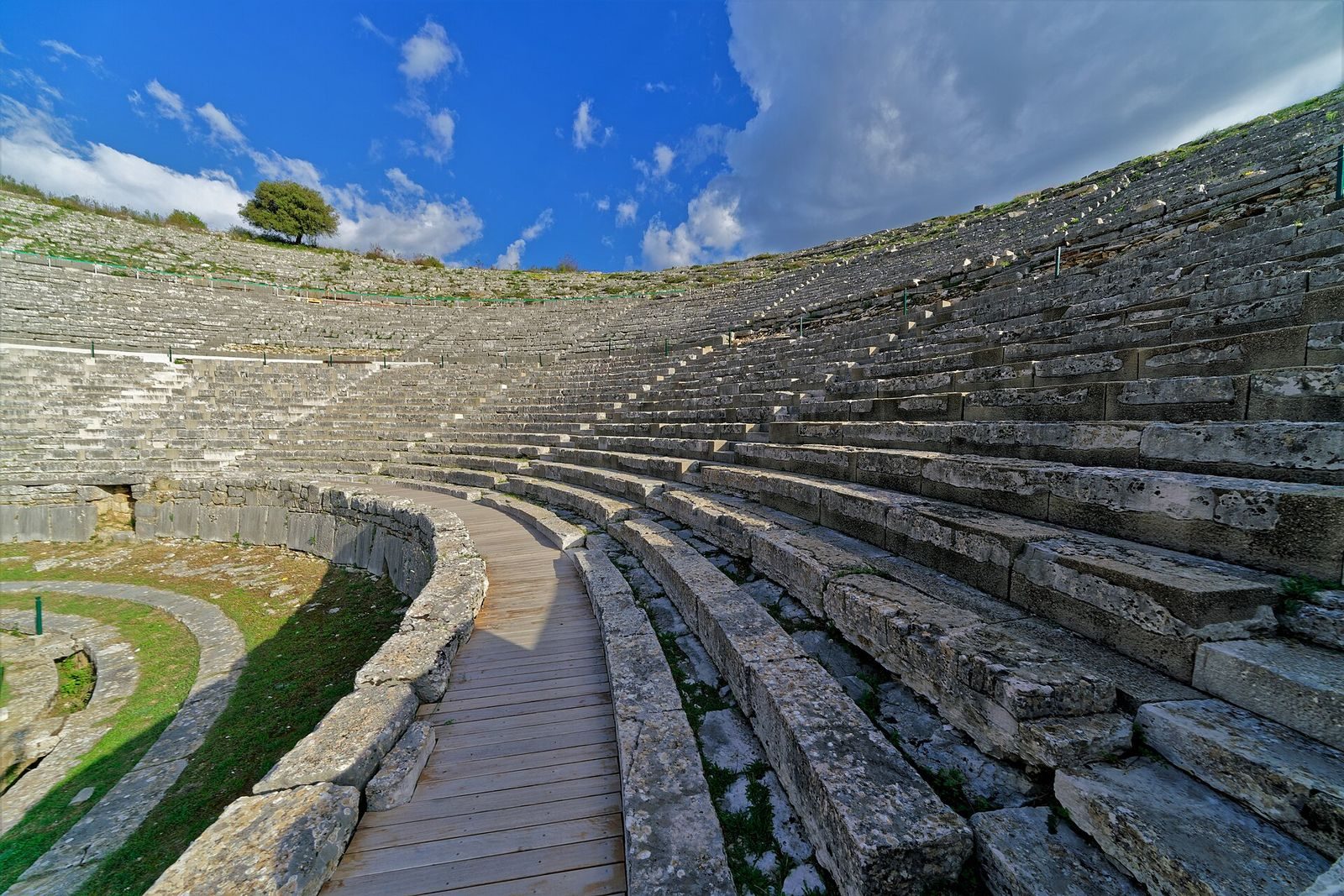
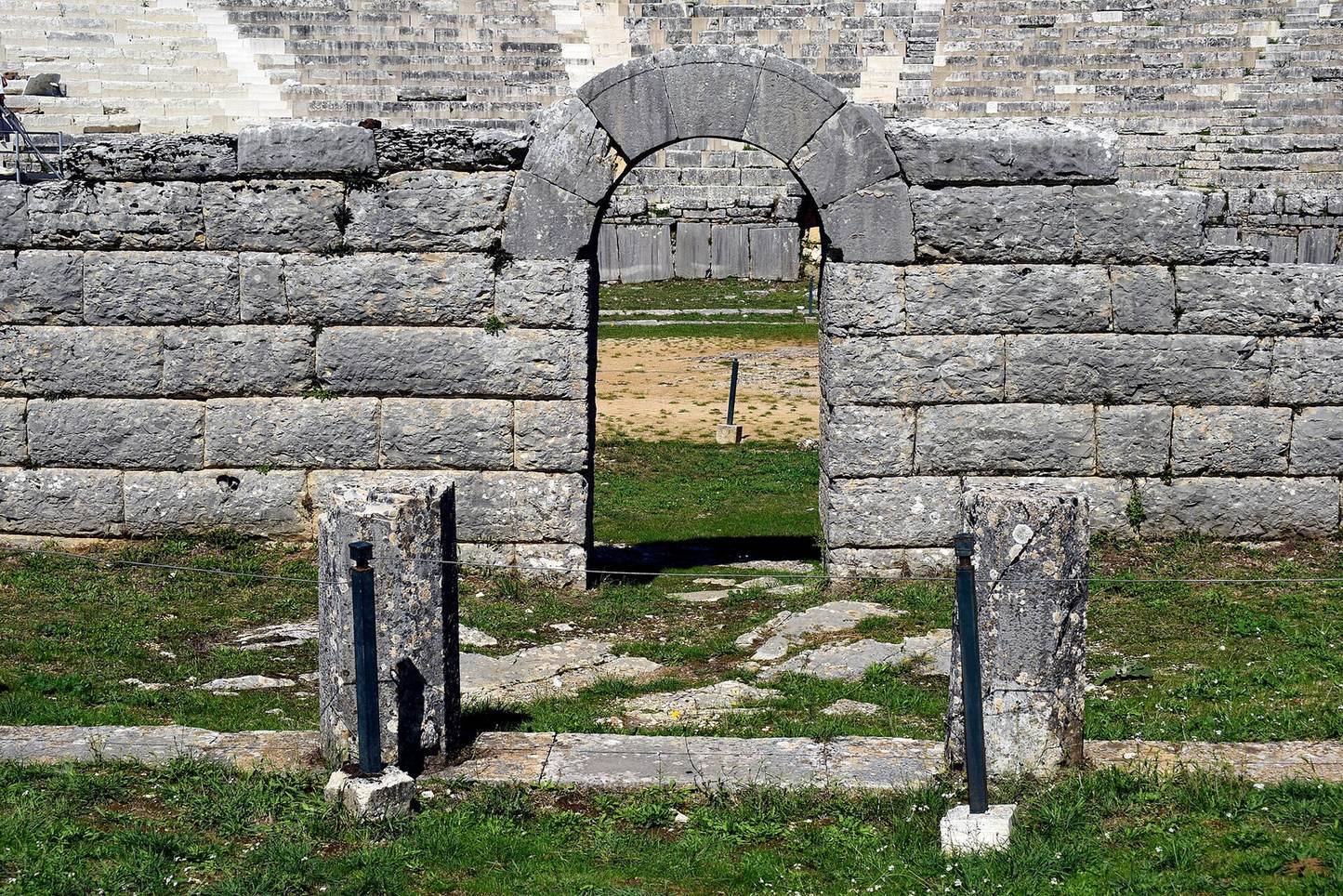
The theatre stands within the Sanctuary of Dodona, on the southern slope of the acropolis, the fortified citadel area, and west of Zeus’s sacred precinct. The sanctuary lies at the foot of Mount Tomaros in the Pindus range. The theatre’s semicircular seating, circular performance area, and two-level stage building formed its principal layout. Its later reconstruction was made entirely of stone.
Theatre layout and architecture
Auditorium
The theatre was among the largest in the Greek world, comparable in scale to the Theatre of Epidaurus. Its capacity is estimated at about 17,000 to 18,000 seated spectators, and the structure rose about 22 metres. Cross-passages divided the seating into three tiers, with 21 rows in the lowest tier, 16 in the middle, and 21 in the upper tier. Stairways separated the lower seating into nine blocks and the upper section into 18.
Orchestra and stage building
The orchestra, the circular performance area, measured about 19 metres in diameter and contained an altar dedicated to Dionysus, a Greek god associated with theatre and performance. The stage building had two levels, and its facade measured about 31.2 by 9.1 metres.
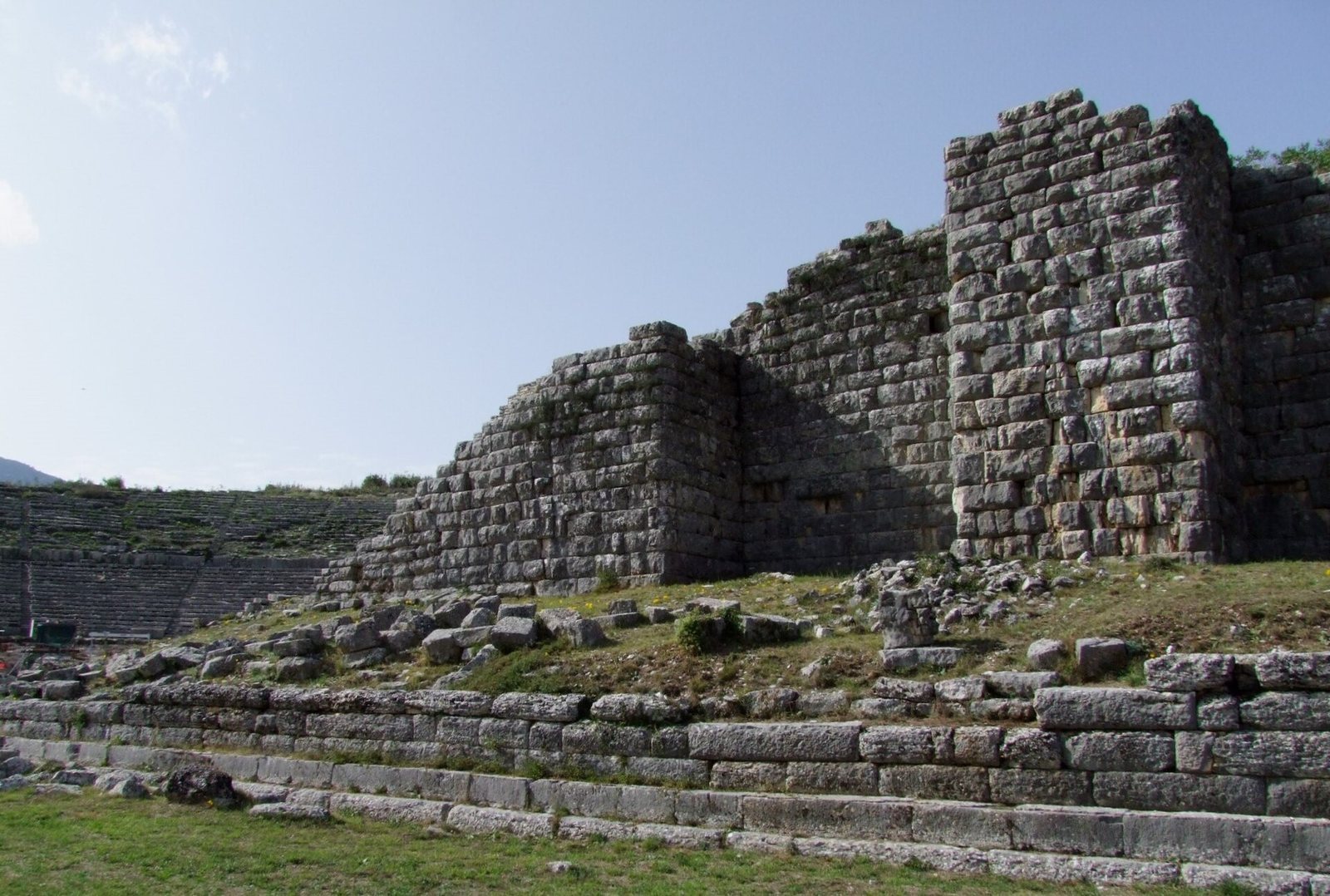
Supports and nearby buildings
High supporting walls on the east and west sides remain well preserved. The theatre also incorporated towers and retaining walls. A building used by the priesthood stood at its eastern corner, while Dodona’s stadium lay immediately to the south.