Church of the Renewal of the Temple of the Resurrection in Arbat: A Jerusalem Patriarchate Metochion in Moscow
Site at a Glance
- Popularity
- Medium
- Country
- Russia
- Primary era
- Early Modern
- Eras represented
- Early Modern, Modern
- Civilizations
- Russian
- Site type
- Religious
- Remains
- Church
On this page8 sections
History
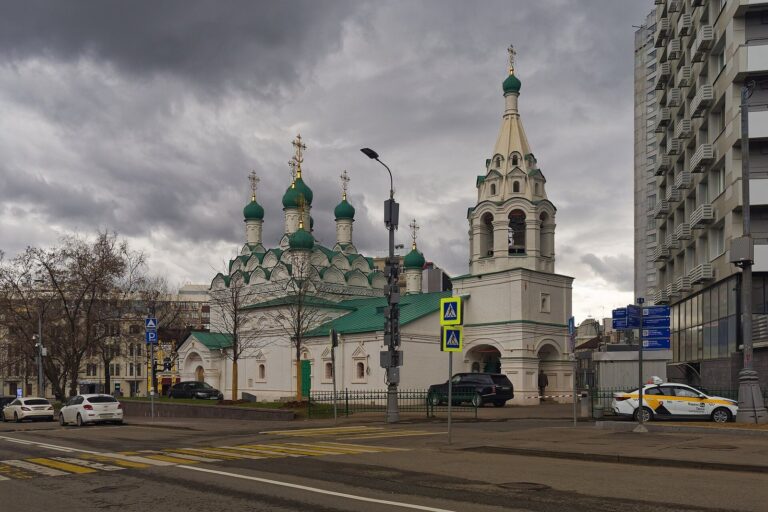
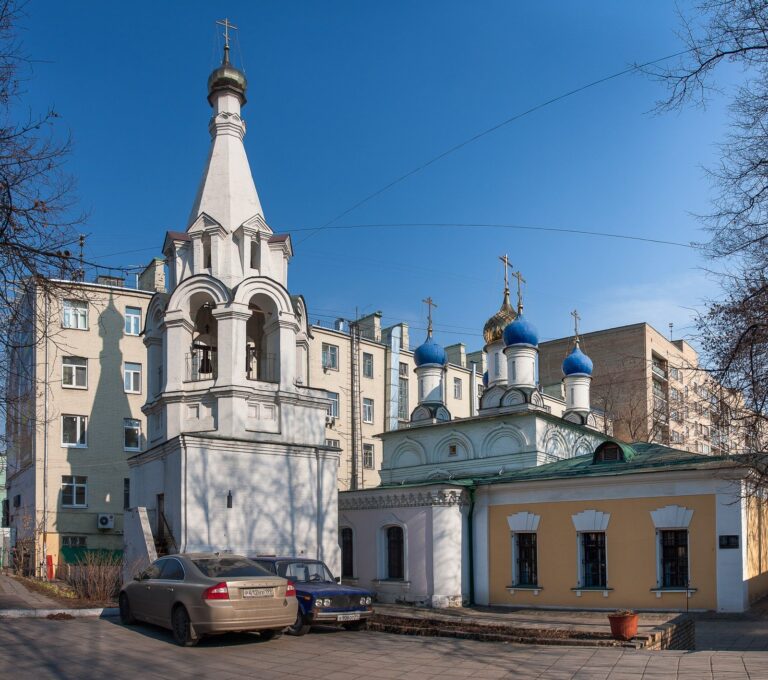
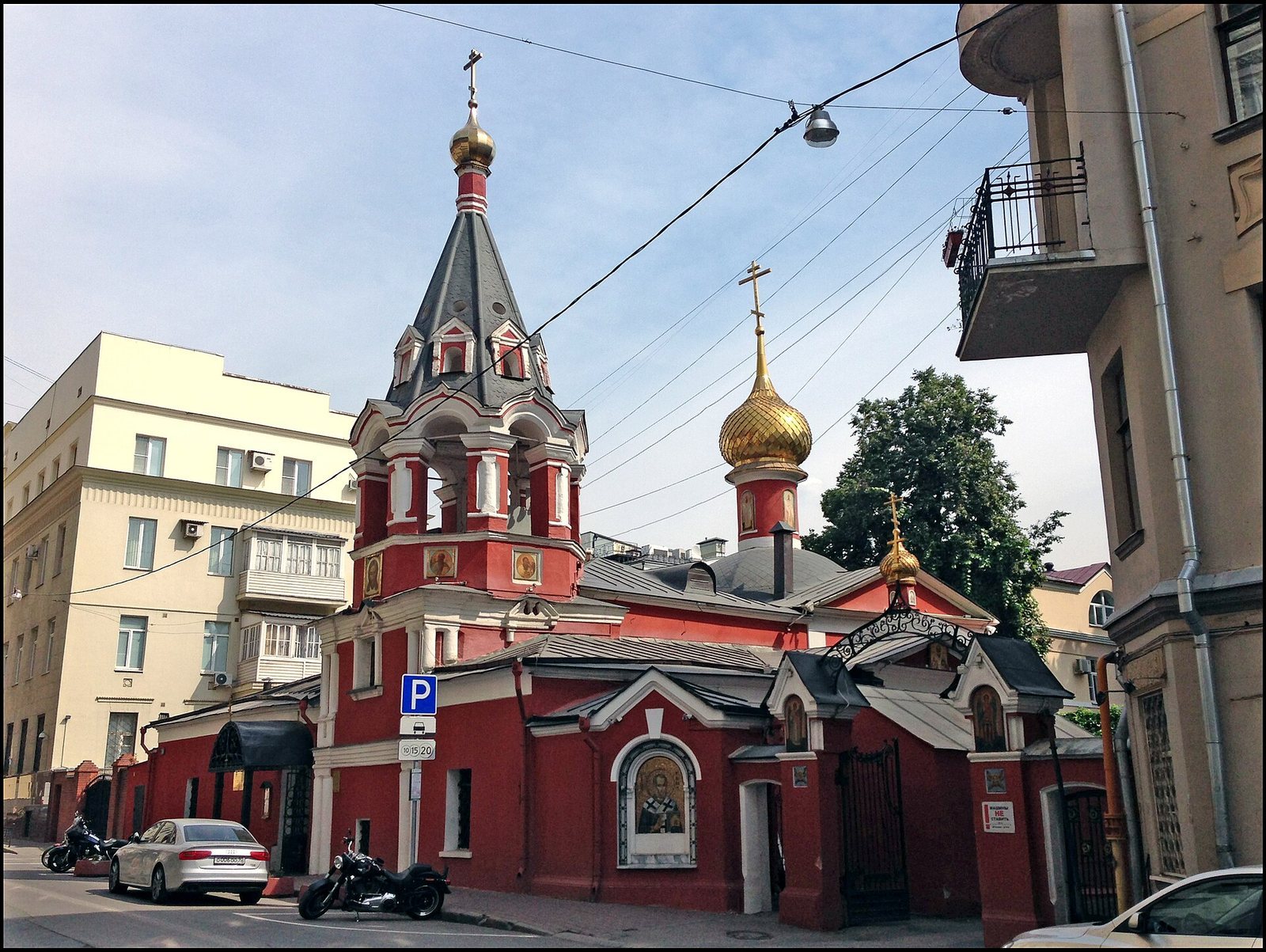
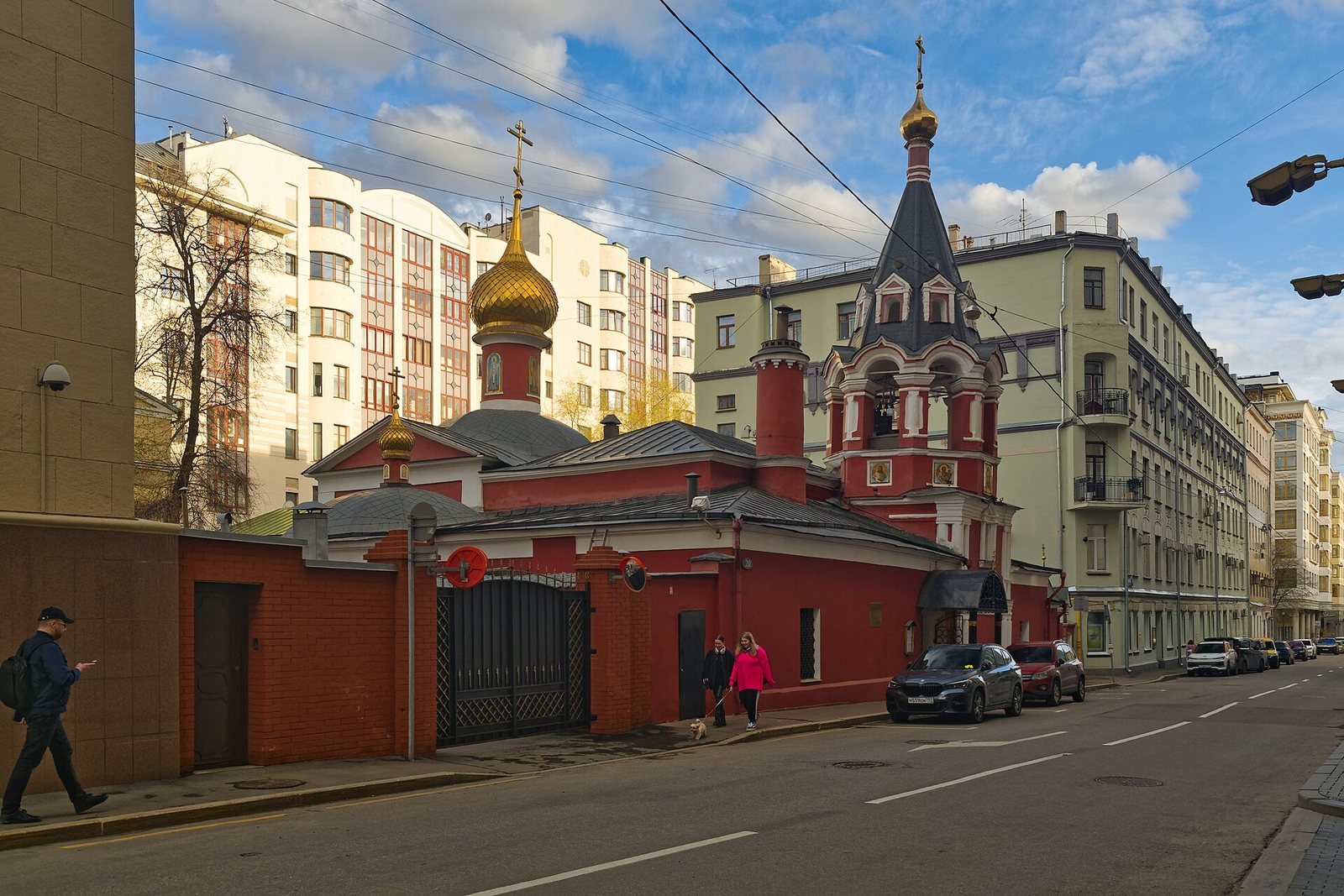
The Church of the Renewal of the Temple of the Resurrection in Arbat is a Russian-style Orthodox church in Moscow, Russia, built in masonry in 1687–1688. It later became the Jerusalem Patriarchate’s Moscow base, serving monks who came to Russia to raise funds for the upkeep and repair of the Church of the Resurrection in Jerusalem, also known as the Church of the Holy Sepulchre.
Predecessor and construction
A wooden church dedicated to the Apostle Philip, one of the leading followers of Jesus, stood on the site in the second half of the sixteenth century. Its founder is unknown. Metropolitan Philip II, a senior bishop of the Russian church, has been suggested as a possible founder because his country house was nearby and the church bore his name.
The present masonry church was built by Ivan Kosmin, a boyar, or member of the landed aristocracy. Patriarch Joachim, the senior bishop of the Russian church, consecrated it in 1688. Its original dedication was to the Apostle Philip.
Damage and establishment of the Jerusalem metochion
During the French invasion of 1812, soldiers looted and desecrated the church. It was also badly damaged in the Great Moscow Fire, and worship stopped for two and a half years. Repairs were completed in 1815, but the church had lost its parish and was attached to the Church of St Tikhon of Amathus at Arbat Square, a church later demolished.
With few parishioners, the church faced a proposed demolition in 1818 from the Holy Governing Synod, the Russian Orthodox Church’s central governing body. The plan was dropped after Patriarch Polycarp of Jerusalem secured permission to establish a metochion, an outlying church establishment maintained by a church based elsewhere. The Moscow establishment housed monks travelling to Russia to collect funds for the Jerusalem church’s upkeep and repairs.
Its first superior, Archimandrite Arseny, a senior monastic cleric, directed repairs and the rebuilding of a side altar dedicated to the Jerusalem Icon of the Mother of God and St Nicholas. In 1819 the main altar was rededicated to the feast commemorating the Dedication of the Church of the Resurrection in Jerusalem. The Apostle Philip remained the dedication of a side altar, which was rebuilt in the mid-nineteenth century and reconsecrated by Metropolitan Philaret of Moscow, a senior bishop.
Parish life and later changes
From the late nineteenth century, Saturday services were traditionally held in Greek following repeated requests from Moscow’s Greek community. The Jerusalem metochion was abolished in 1917, and the church was taken from the Jerusalem Patriarchate. It nevertheless remained open as an ordinary parish throughout the Soviet period. Protodeacon Mikhail Kholmogorov, a senior deacon, served there from 1943 until his death on 8 March 1951.
The Jerusalem Patriarchate re-established its metochion at the church in 1989. The church belongs to the Russian Orthodox Church’s Moscow diocese, a church district, and Central deanery, a grouping of parishes; it also serves as the Jerusalem Patriarchate’s Moscow representation. It is a federal cultural heritage site in Russia. Its liturgical commemoration falls on September 13/26.
Remains
The masonry church
At 20 Filippovsky Lane in Moscow’s Arbat district, the church occupies the site of its wooden predecessor. The surviving building is masonry and has a Russian-style design. Its physical and liturgical arrangement includes a church tower, a dome, three altars, and three iconostases, the icon-bearing screens that separate the sanctuary from the main body of an Orthodox church.
Tower and dome
The church has one tower and one dome. These features form the principal elements of its recorded exterior profile.
Altars and iconostases
Three altars serve the church, with three iconostases separating the sanctuary spaces from the main body of the building. The altars are associated with the Dedication of the Church of the Resurrection in Jerusalem, the Apostle Philip, and the Jerusalem Icon of the Mother of God and St Nicholas.