Church of St. John the Baptist in Sielsko: A Roman Catholic Parish Church in Poland
Site at a Glance
- Popularity
- Very Low
- Country
- Poland
- Primary era
- Early Modern
- Eras represented
- Early Modern, Modern
- Civilizations
- Duchy of Pomerania, Holy Roman Empire, Kingdom of Prussia
- Site type
- Religious
- Remains
- Church
On this page10 sections
History
Construction and early alterations
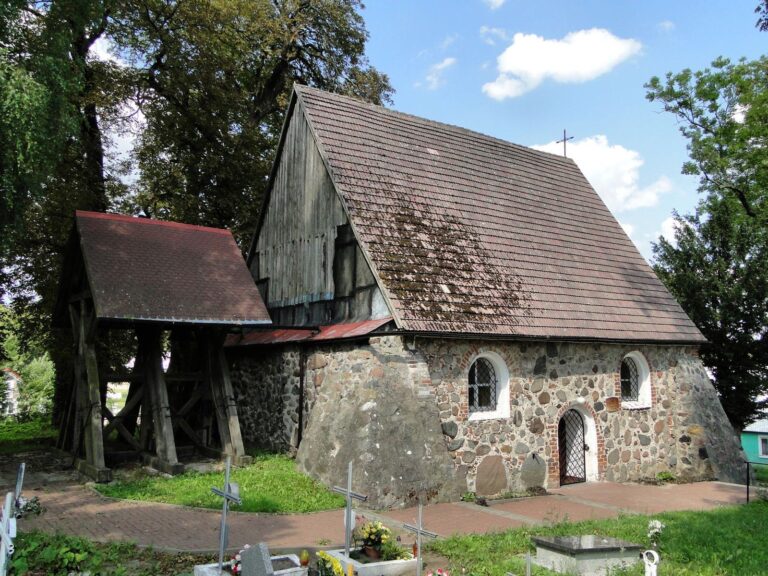
The Church of St. John the Baptist in Sielsko is a Roman Catholic parish church in Poland, built in the sixteenth century. The building was plastered in 1705, and a wooden tower was added at its western end in the eighteenth century.
Catholic use after 1945
In 1945, the church was consecrated for Catholic worship. Polish settlers who arrived from Kuropatniki transferred to it the dedication of their former church there. The church entered Poland’s register of monuments on 18 June 1958. A memorial was unveiled near the church in 2002.
Remains
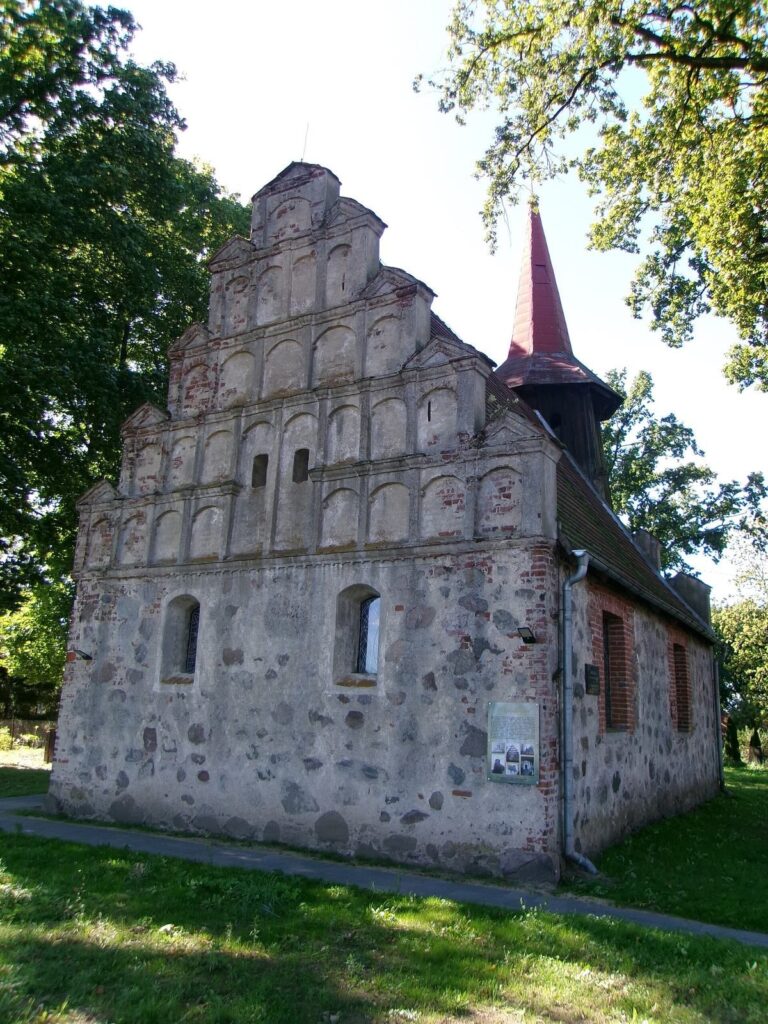
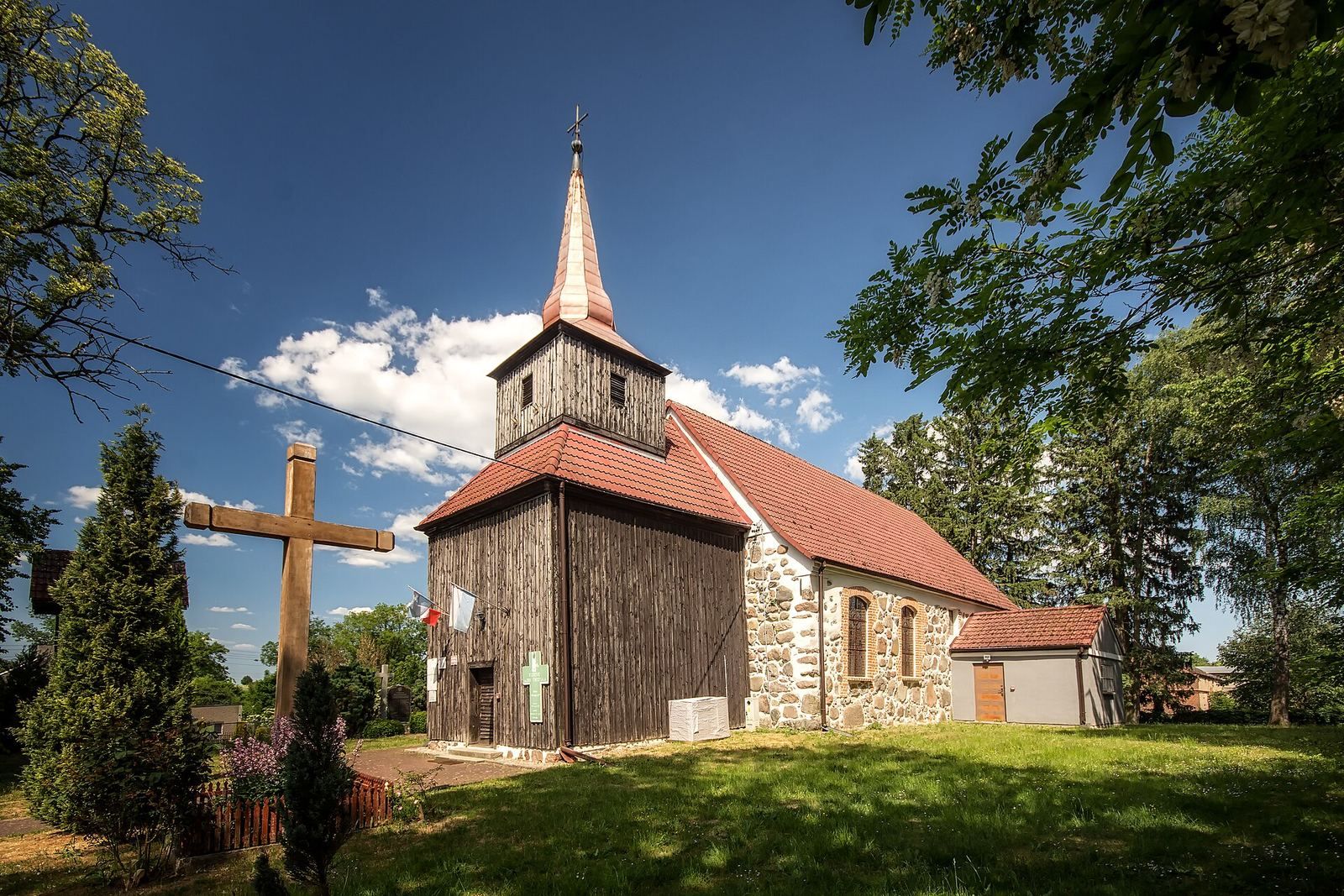
The church has a four-sided plan and is built from glacial erratic boulders, rocks carried from their original locations by glacial ice. Its main body is covered by a gabled roof, with a wooden tower at the western end.
Church building
Exterior
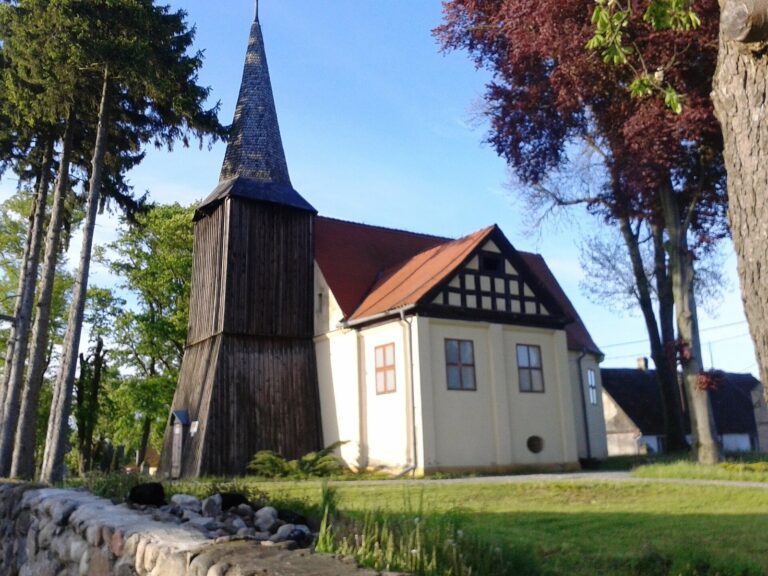
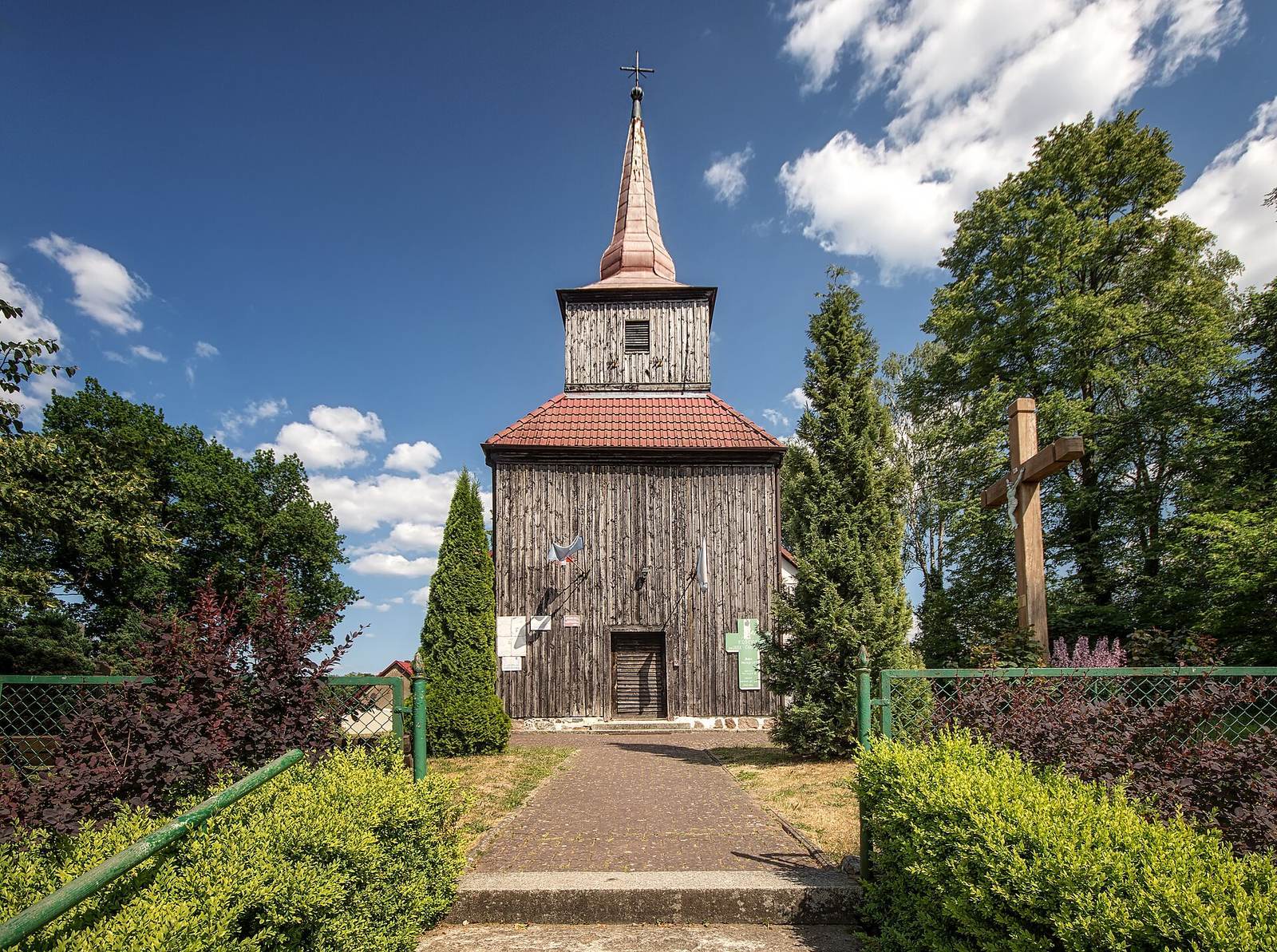
The western tower is four-sided and topped by a roof in the Baroque style, a European artistic and architectural style associated especially with the seventeenth and eighteenth centuries. The present entrance is in the tower. On the south side, an annex covers an earlier entrance doorway. The eastern wall has windows with gently curved tops framed in brick. Three stepped, blind recesses, shallow spaces that do not pass through the wall, decorate the gable, which also bears an inscription giving the year 1705.
Interior
Paintings decorate the timber-beamed ceiling. Above the entrance, a gallery rests on carved pillars, and an organ was installed there in 1966. In the chancel, the area around the altar, a niche forms a sacrarium, a fitting for the reverent disposal of certain sacred liquids. Another niche is set into the south wall. The church also retains a sixteenth-century pulpit and baptismal font.
Nearby structures and memorials
Bell tower
A separate bell tower beside the church has a gabled roof and holds two bells, one from the sixteenth century and the other from the twentieth century.
Memorials
Nearby monuments commemorate people killed in both world wars. One honors those who died in the First World War; another remembers residents of Kuropatniki murdered during the Second World War.