Church of Saint Michael the Archangel in Szybowice: A Roman Catholic Parish Church
Site at a Glance
- Popularity
- Very Low
- Country
- Poland
- Primary era
- Early Modern
- Eras represented
- Early Modern, Modern
- Civilizations
- Habsburg, Holy Roman Empire, Kingdom of Bohemia, Kingdom of Prussia
- Site type
- Religious
- Remains
- Church
On this page10 sections
History
The Church of Saint Michael the Archangel in Szybowice, Poland, is a Roman Catholic parish church whose present building dates to the sixteenth century and is described as Neo-Gothic, a revival of medieval Gothic forms. Its history includes a period of Protestant control, a forced return to Catholic worship, and repeated rebuilding and repair.
Medieval church and Reformation
A wooden church at Szybowice appears in a 1335 tithe register associated with Galhard de Carceribus, a papal collector of church payments. The present church was built in the sixteenth century. A 1534 register of the Prudnik castle estate names a prince as its patron. During the Reformation, the movement that divided Western Christianity and led to Protestant churches, Protestants held the church.
Confessional conflict and eighteenth-century changes
In 1625, 74 residents who died of plague were buried in communal graves in the churchyard. On 12 February 1629, under an order from Emperor Ferdinand II, Captain La Mordie expelled Protestant clergy from Prudnik. That summer, 50 soldiers entered Szybowice by force and compelled its inhabitants to become Catholic. Martin Prätorius became the village’s first Catholic parish priest.
The church was rebuilt in 1651 and repaired in 1731, when it was dedicated to the Archangel Michael, patron of Prudnik’s town church. In 1769, parish priest Johann Franz Ernst purchased an organ from the Scheffler workshop in Brzeg for 300 thalers, silver coins used in Europe.
Nineteenth-century work
Parish priest Johann Kahlert directed extensive work between 1820 and 1838. Further repairs followed in 1848, and the tower was enlarged and raised in 1867 by brothers Franz and August Kabierske. Joseph Drathschmidt, Guttschke’s successor, commissioned a new altar bearing a statue of Michael and arranged for the church interior to be plastered and painted.
Twentieth-century repairs and parish life
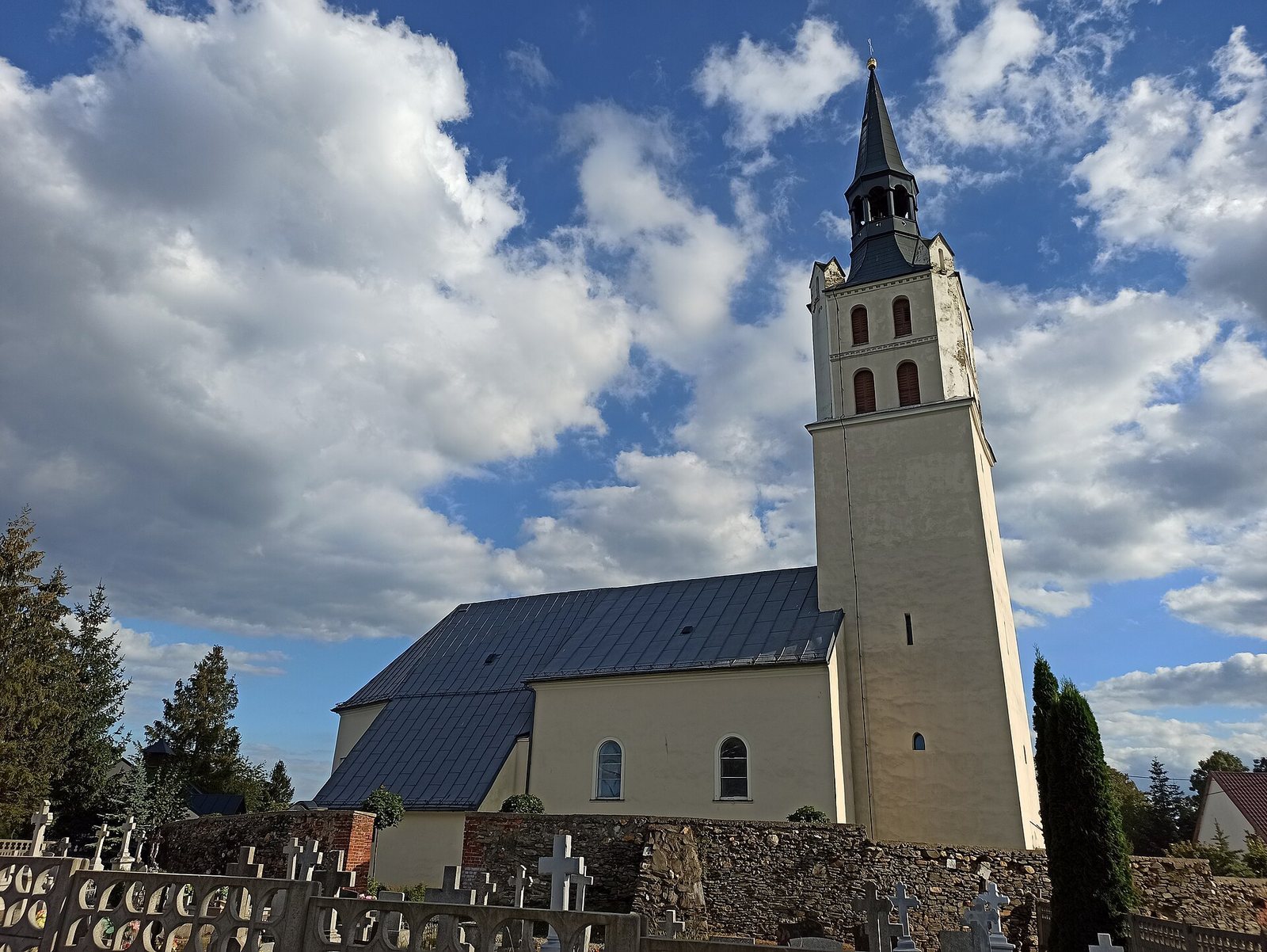
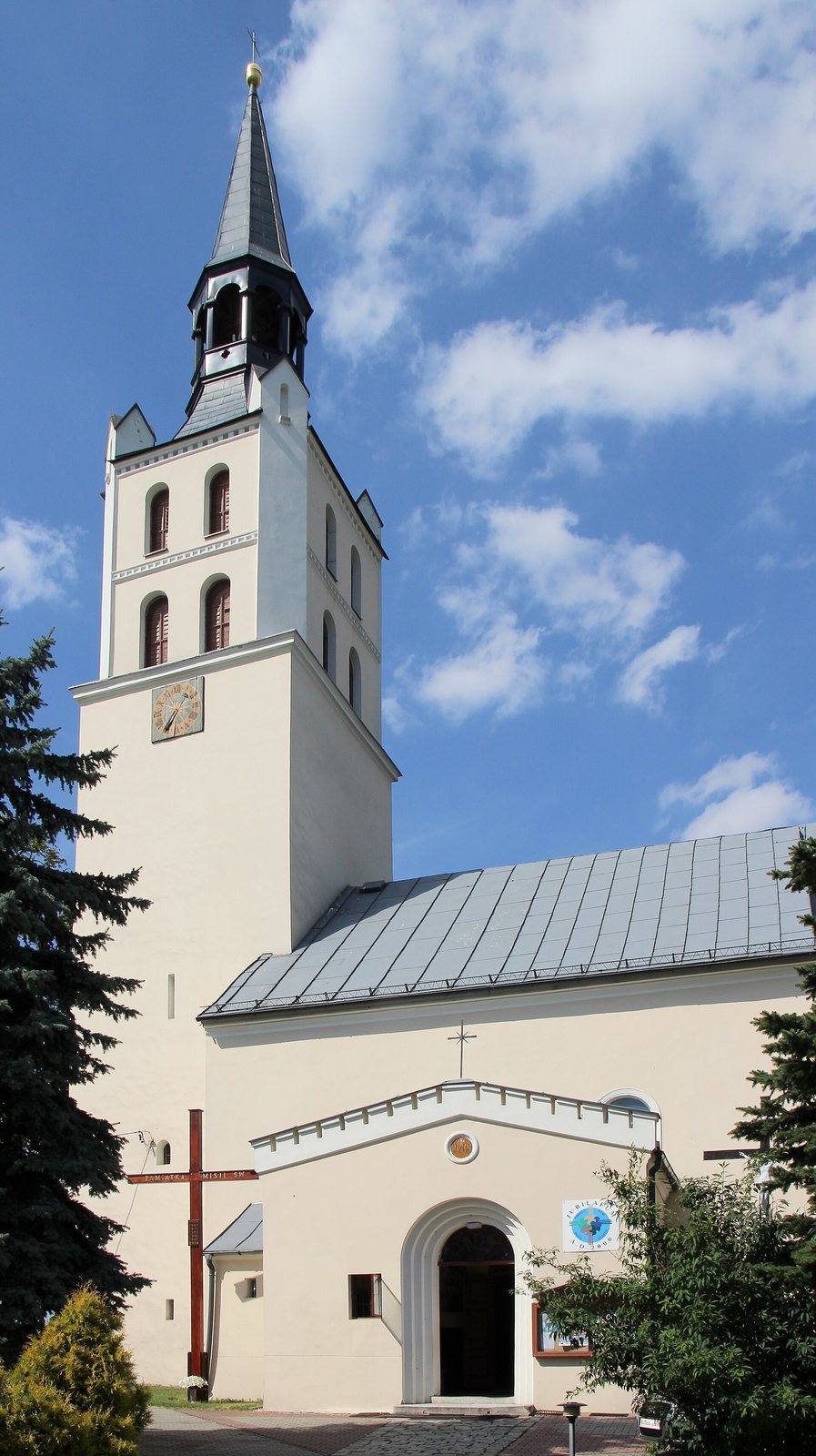
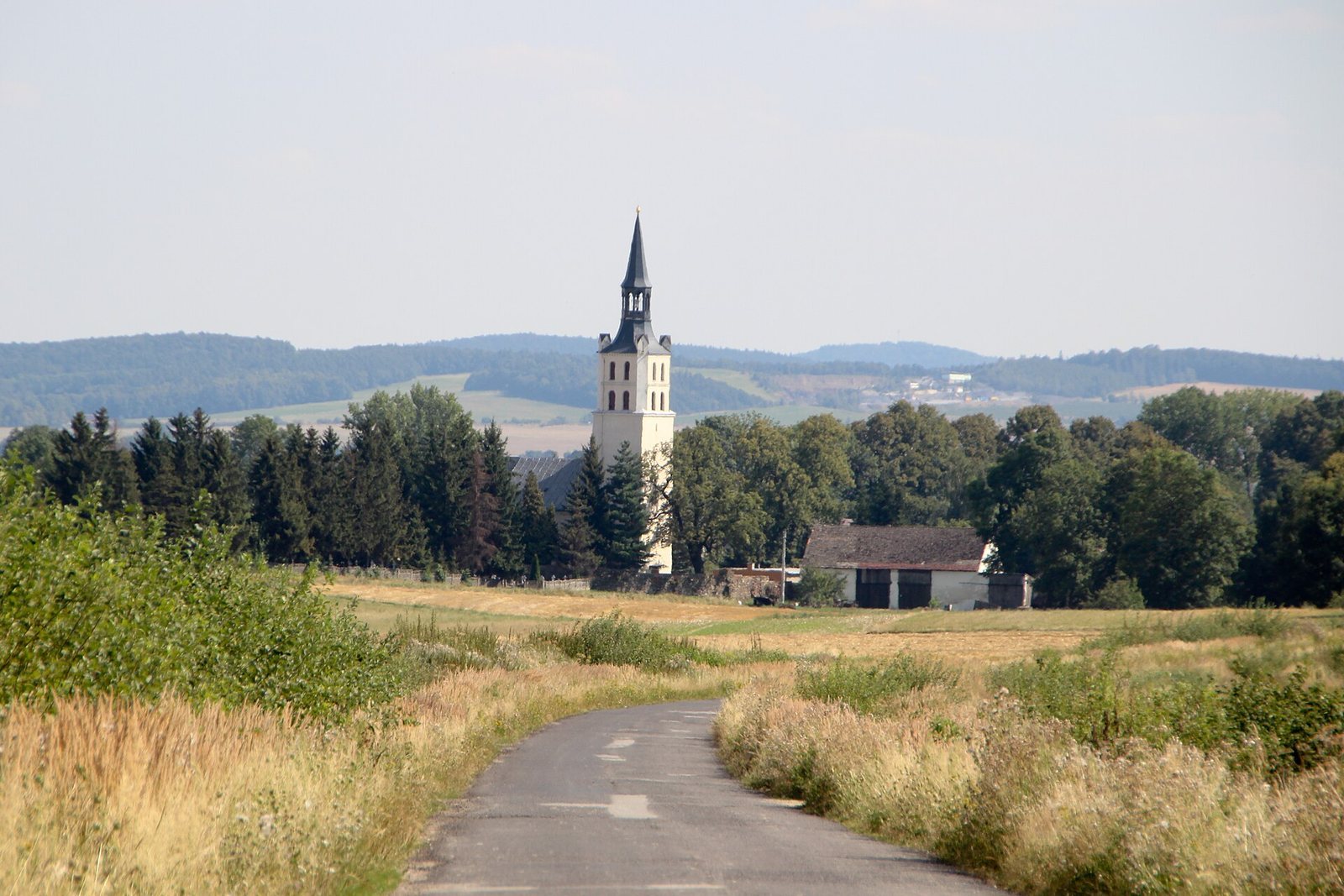
Adolf Schwarz, Szybowice’s last German parish priest, led the church’s most extensive renovation after the First World War. The upper part of the tower began to lean, so its spire was taken down in 1919 and rebuilt in 1923 with timber from trees felled in Prudnik Forest. A cross and sphere were placed on top, with documents enclosed in the sphere. Those documents were found during tower and roof repairs in 2010.
During Second World War fighting in the Prudnik area, German forces placed observation posts and machine-gun positions on the church roof. Russian artillery targeted the roof to destroy those positions. After Poles settled in Szybowice from 1945, parishioners and Father Ludwik Rutyna repaired war damage.
Later work, initiated by parish priest Roman Flakiewicz, included a sacristy door on the east side in 1959. Choir benches were installed in 1961. In 1962–63 the roof was covered with sheet metal, the choir was rebuilt, and an altar was restored. In 1970, an air-pressure organ replaced a mechanically operated organ dating from 1796; a new bell followed in 1988. The church serves the Roman Catholic parish of Saint Michael the Archangel in Szybowice, within the Prudnik deanery, a regional grouping of parishes, in the Diocese of Opole. Its feast is celebrated on 29 September.
Remains
Plan and structure
The brick church has two naves, the main spaces where the congregation gathers, along with a tower and a dome. It contains three altars. The side altars are dedicated to Saint Joseph and Our Lady of Częstochowa, a title for Mary associated with a venerated image at Częstochowa.
Interior and furnishings
Earlier arrangement
A description from 1651 records a masonry church beneath a wooden roof. It had one altar, with a tabernacle, the receptacle for the consecrated bread used in Catholic communion, set in a nearby wall recess. Four bells were in the tower. The church’s furnishings included a chalice, a chasuble, or priest’s outer garment, and an alb, a white liturgical garment.
Interior alterations
Work between 1820 and 1838 added marble paving from Sławniowice and new pews, opened a round window below the choir, and created a new door to the tower. Paintings of the Stations of the Cross, a sequence of devotional images of events in Christ’s Passion, replaced frescoes that were painted over. The new paintings had been bought from Nowy Las. An altar of Saint Francis, brought earlier from the Capuchin monastery in Prudnik, was removed. Work in 1848 renewed the pulpit and added side altars. Drathschmidt’s campaign brought a new altar with a statue of Michael, plastering, and interior painting.