Church of the Entry of the Lord into Jerusalem: A Russian Orthodox Church in Ryazan
Site at a Glance
- Popularity
- Low
- Country
- Russia
- Primary era
- Early Modern
- Eras represented
- Early Modern, Modern
- Civilizations
- Russian
- Site type
- Religious
- Remains
- Church
On this page6 sections
History
Origins and rebuilding
The Church of the Entry of the Lord into Jerusalem is a Russian Orthodox church in Ryazan, Russia. It is counted among the city’s oldest churches, alongside the Annunciation Church. Its wooden predecessor, a parish church on the Lower Posad, a settlement district outside the fortified town center, is first mentioned in 1550. It stood beyond the marketplace and burned in 1676.
The church’s foundation is dated to 1680, while construction of its stone building began in 1679 with the blessing of Archbishop Joseph, a senior Orthodox bishop. The Ryazan prelate Pavel consecrated the new church in 1684. It underwent repeated restoration during the nineteenth century.
Twentieth-century changes
After the 1917 Revolution, worshippers initially continued to use the church under an agreement. Archbishop Juvenaly (Maslovsky) of Ryazan and Shatsk held services there on several occasions. In 1935, the building was transferred to the Renovationists, a reform movement within the Russian Orthodox Church, and then closed. Its last rector was Hegumen Polikhrony, a monastic cleric.
Following its closure, the church served as a workshop, including for furniture production, and as a warehouse for the Oka furniture firm. It returned to the Russian Orthodox Church in 1992. Archbishop Simon consecrated a side chapel on 2 December that year, and the main altar was consecrated on 14 December 1996. The church was fully restored after reopening and is a federal-level cultural heritage site in Russia.
Remains
Plan and buildings
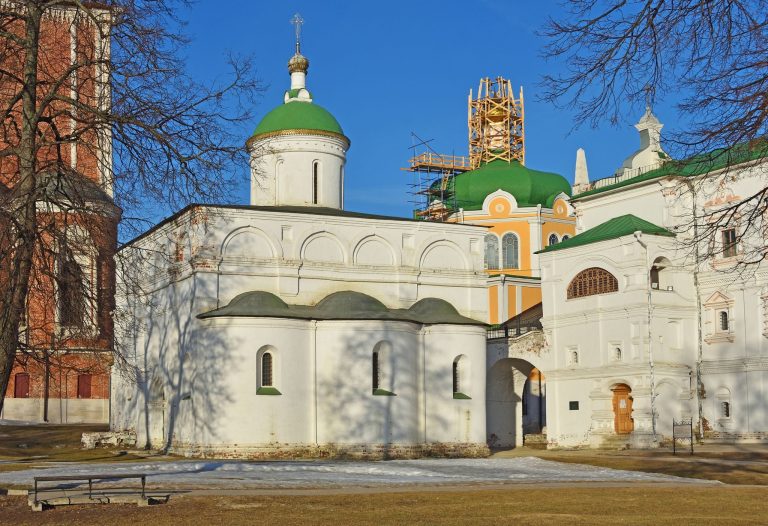
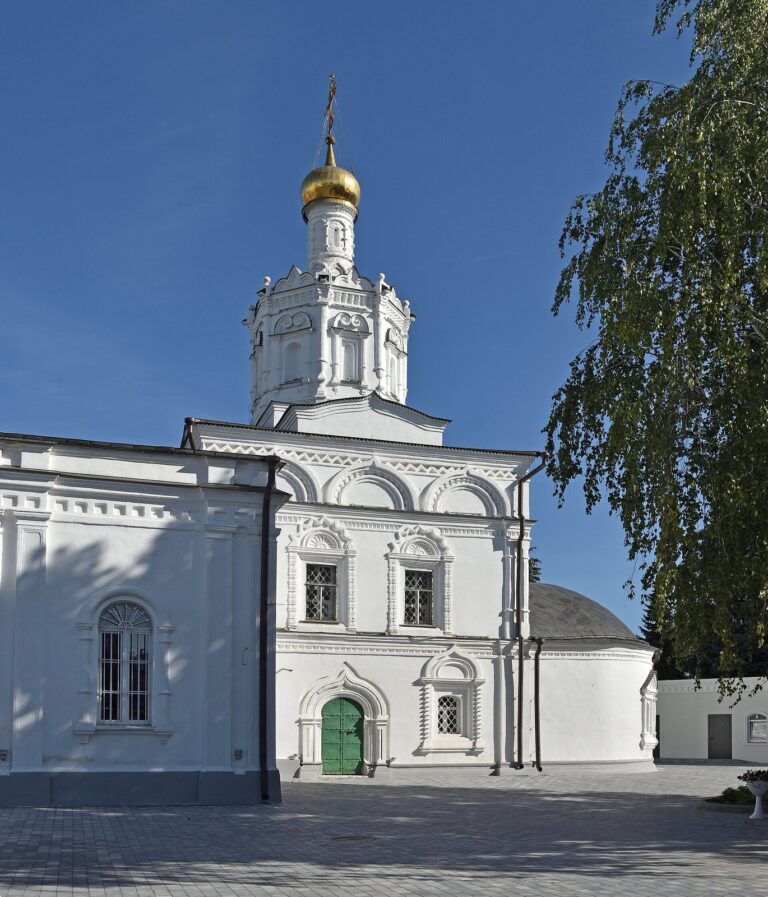
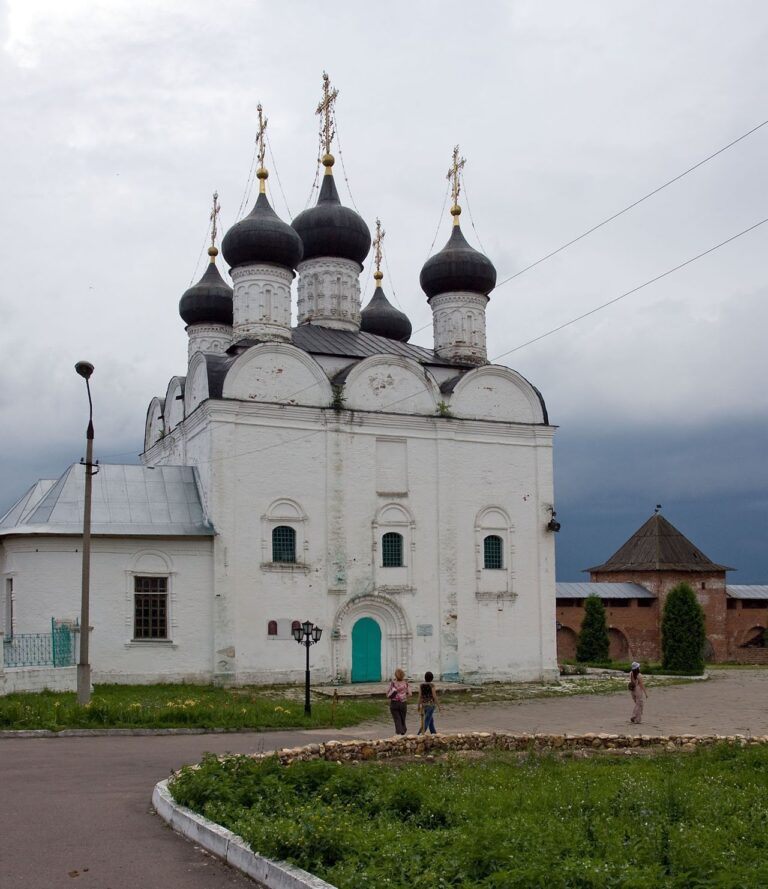
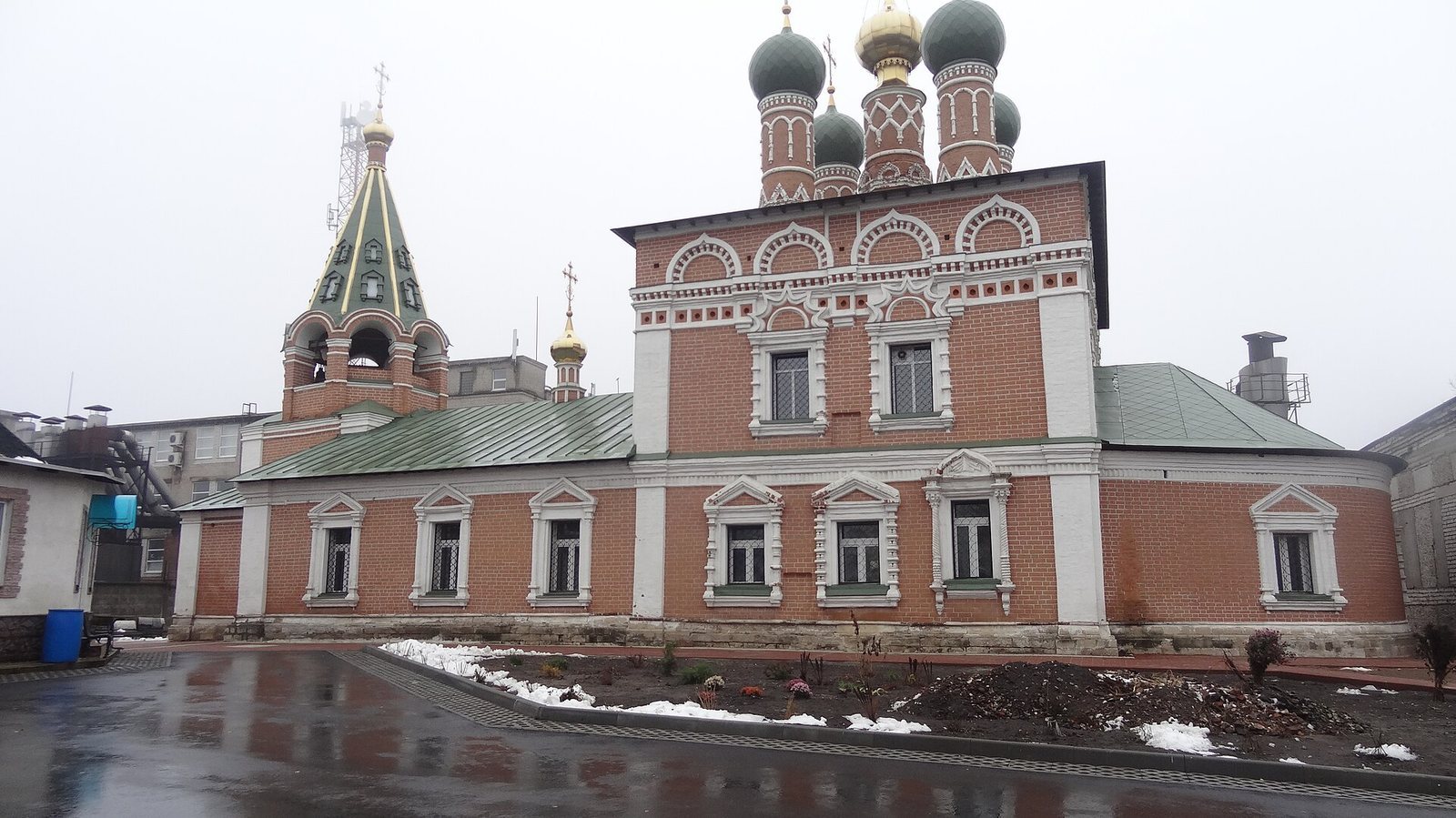
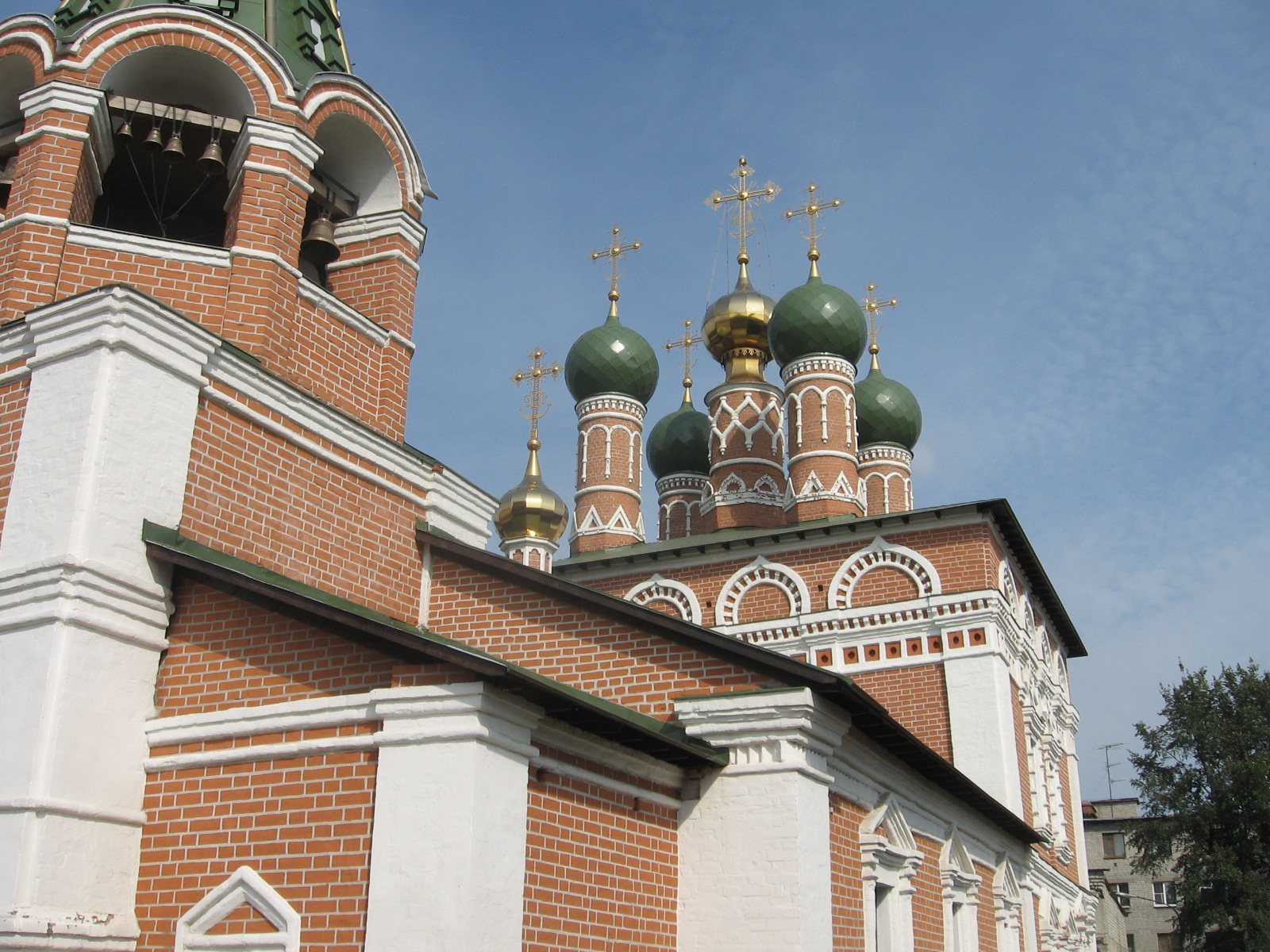
The complex centers on a square, four-sided main church topped by five small domes. It also includes a refectory, an ancillary hall attached to a church, and a bell tower with a hipped roof.
Stonework and surviving details
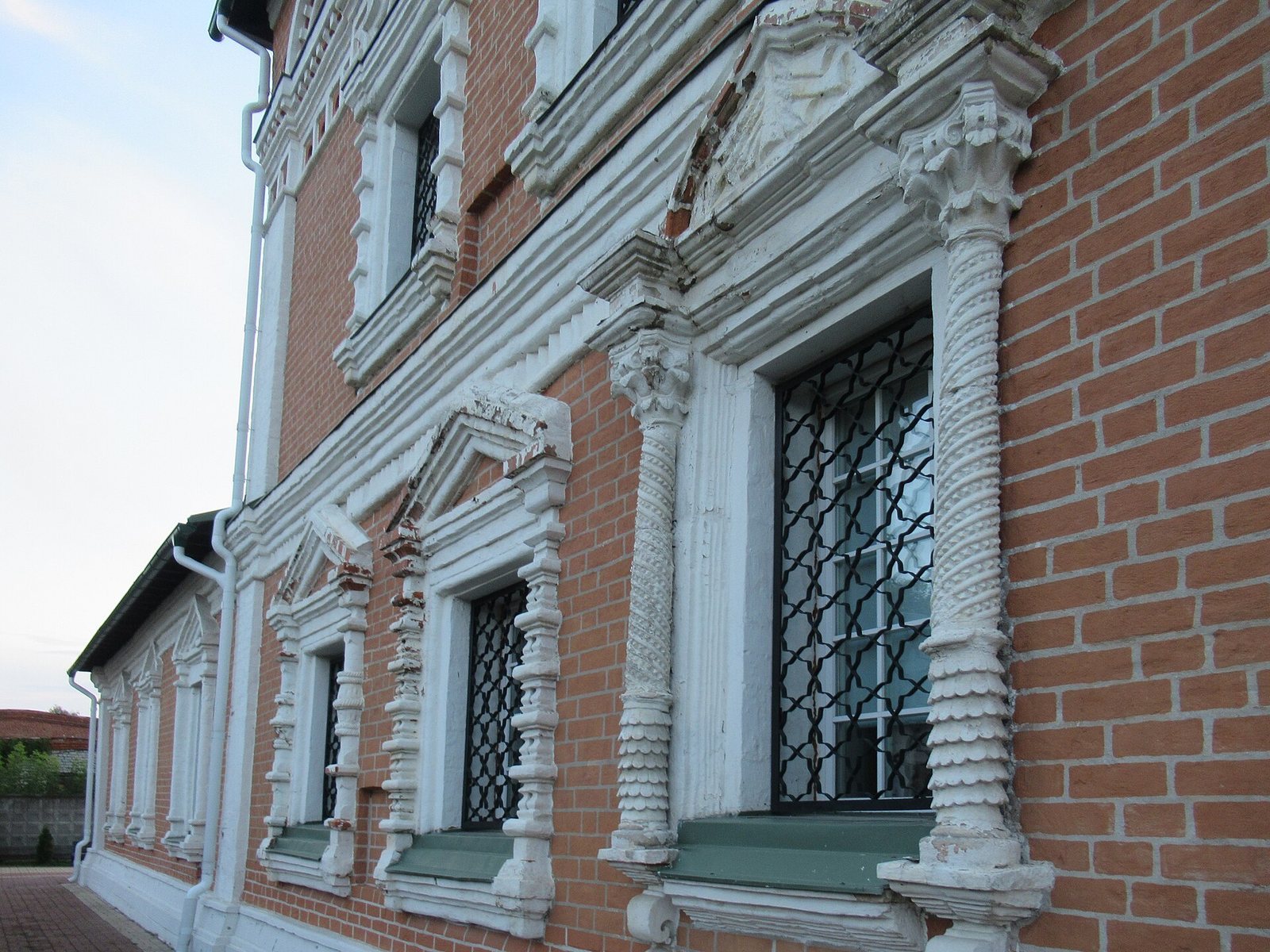
White stone forms part of the large-scale masonry, including the building’s base and carved exterior details. The church retained its original exterior form during the period of religious repression, but its interior was entirely lost. Around 2000, grilles were fitted to nearly all the windows. The only original grille to survive is in a window on the west wall of the bell tower’s lower southern section.