San Michele Arcangelo: A Medieval Church Rebuilt in Renaissance and Baroque Forms
Site at a Glance
- Popularity
- Very Low
- Country
- Italy
- Primary era
- Early Modern
- Eras represented
- Medieval, Early Modern
- Civilizations
- Duchy of Parma and Piacenza, French
- Site type
- Religious
- Remains
- Church
On this page12 sections
History
San Michele Arcangelo is a Roman Catholic church in Italy, first mentioned in 1230 and rebuilt around 1520. Its development spans the Renaissance and later Baroque periods, and it became an independent parish in the sixteenth century.
Medieval church and rebuilding
The earliest known mention appears in the Diocese of Parma’s 1230 tithe register, which listed the chapel at Sivizzano among the dependencies of the parish church of Traversetolo. In 1354, San Michele was united with the church of Saint Stephen at Torre, named for an early Christian martyr. The churches remained joined until the early sixteenth century. Around 1520, San Michele was completely rebuilt on the remains of its earlier structure. Its present architectural character combines Renaissance and Baroque features.
Parish and Baroque alterations
By 1564, San Michele had become an independent parish. It is a Roman Catholic church in the Diocese of Parma. Around 1683, a side chapel with an altar dedicated to Saint Lucy and Saint Roch was added. Renovations from the late seventeenth to the early eighteenth century brought Baroque decoration and paintings into the church.
Earthquake and repairs
An earthquake on 9 November 1983 damaged the church. The following year, work strengthened its foundations and roof and consolidated the entire apse.
Remains
Layout and exterior
Plan and setting
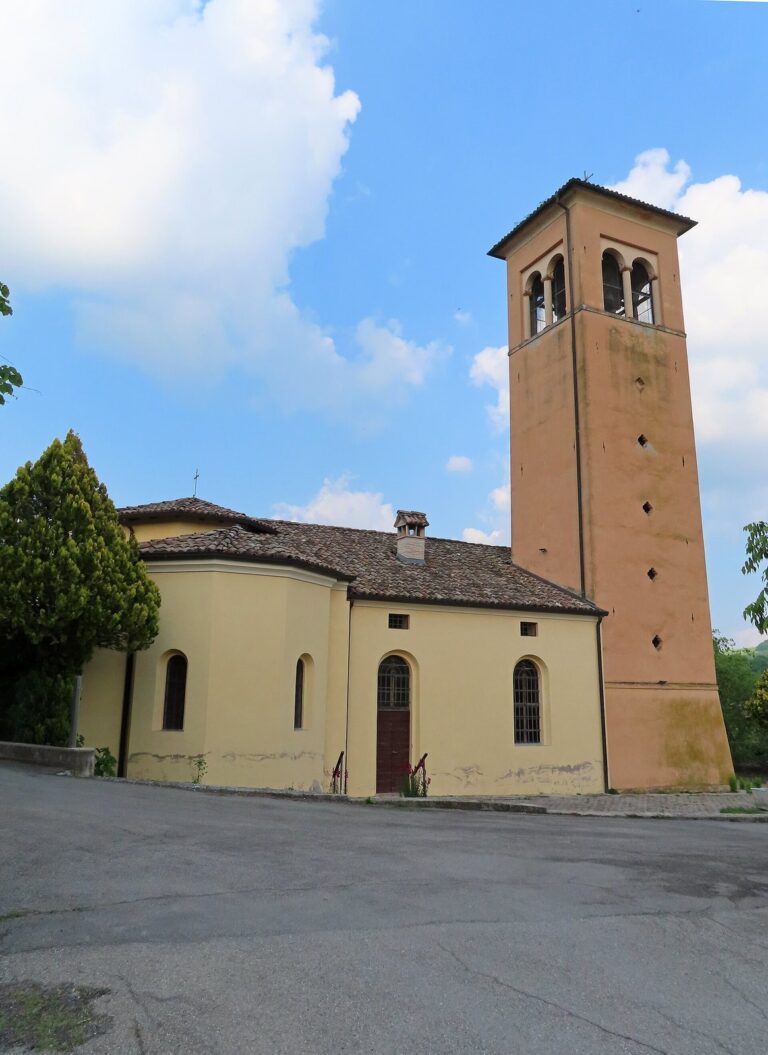
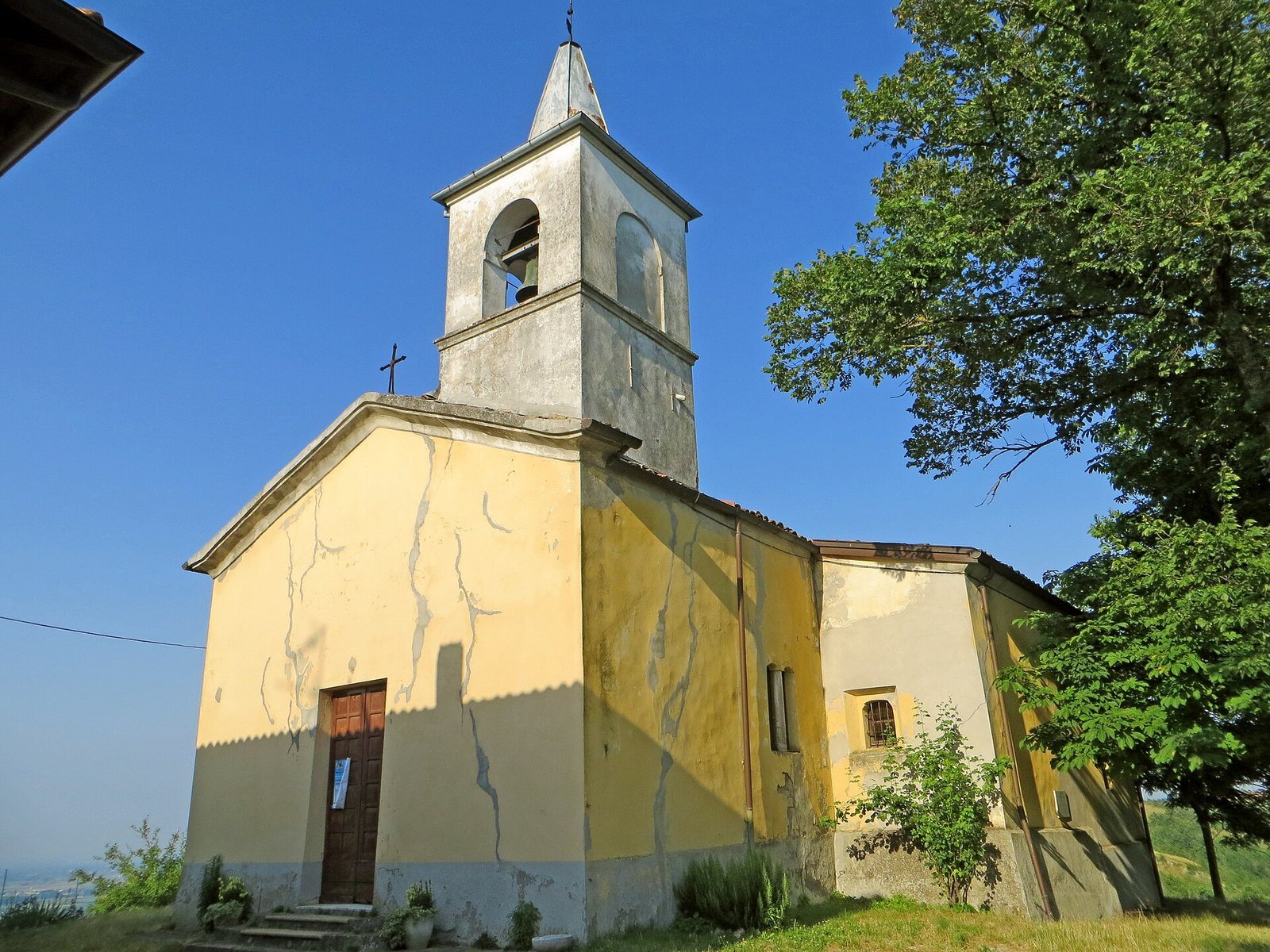
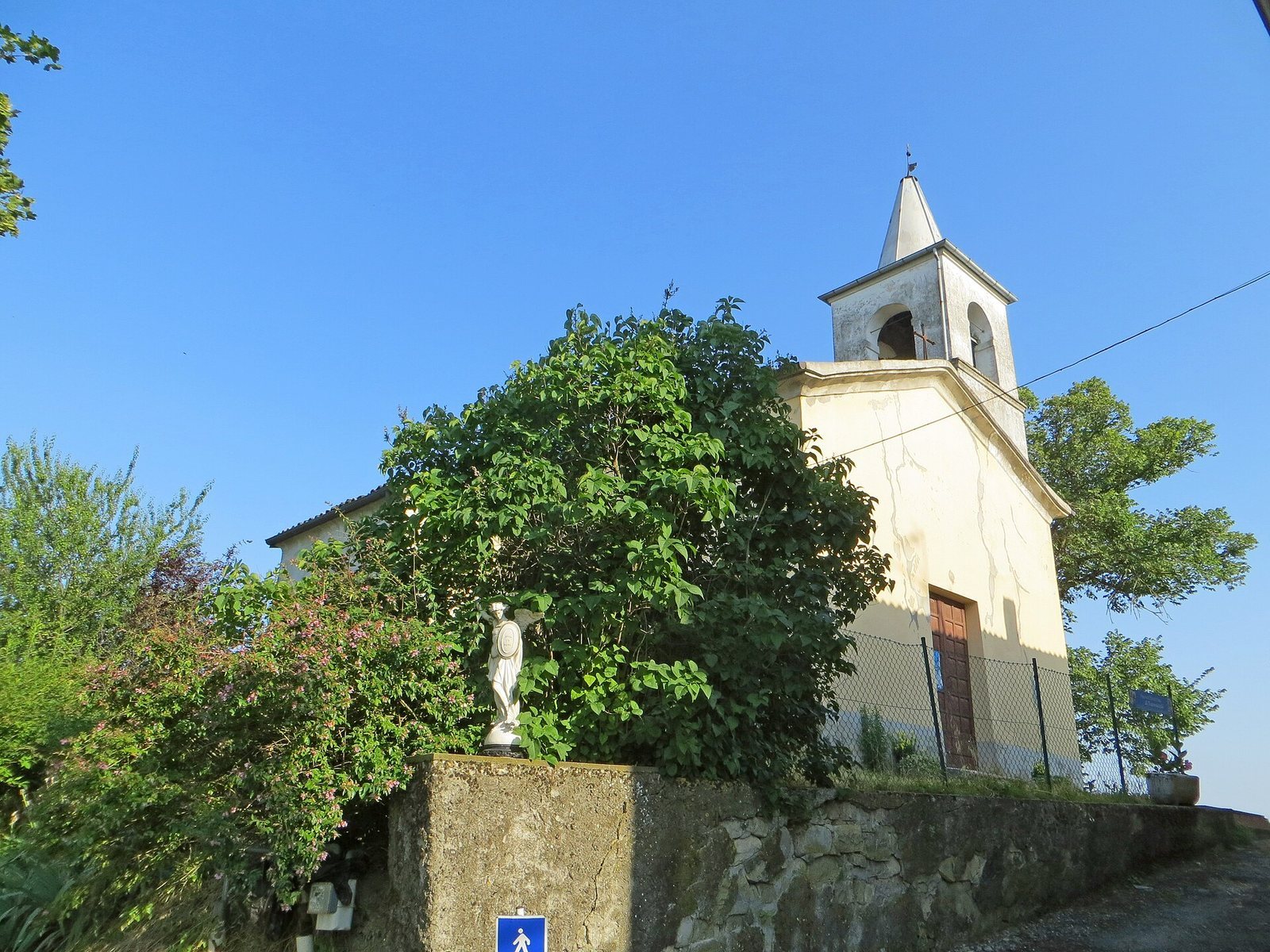
The small church stands on a raised embankment that is probably artificial. Its irregular plan has a single nave, the main body of the church, with one side chapel on either side. The entrance is at the west end, while the presbytery, the area around the altar, lies to the east.
Facade and bell tower
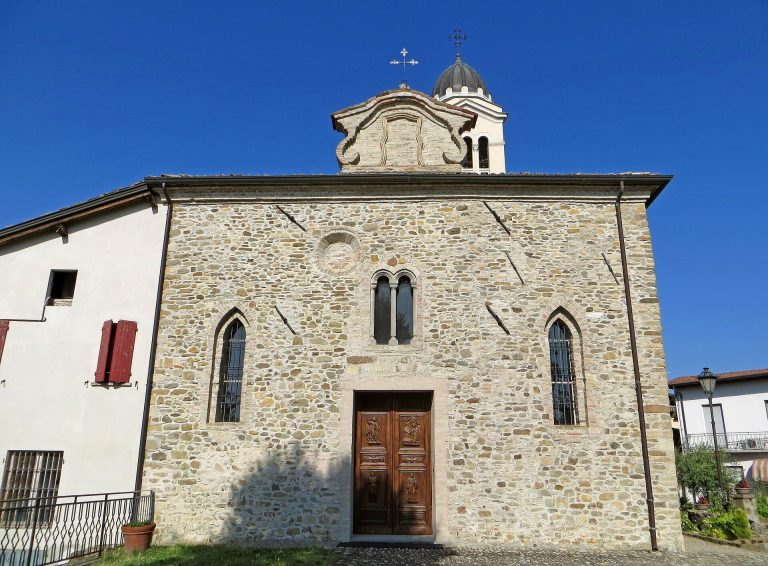
The fully plastered facade is symmetrical, with a central entrance reached by several steps. A projecting molded cornice follows the slopes of the gabled roof. To the right, slightly set back from the facade, stands the bell tower. Its bell chamber has broad, round-arched openings on three sides, and the spire rises from a hexagonal base.
Interior and furnishings
Nave and side chapels
Wooden joists form the nave’s pitched ceiling, which is supported by three broad, plastered round arches. The arches rest on pilasters, flat projections resembling columns, topped with Doric capitals. Framed arches open into the side chapels, whose upper sections have raised cornices from the eighteenth century.
Presbytery and main altar
A slightly raised presbytery begins beyond a triumphal arch supported by two pilasters. Its ceiling is a cross vault, formed where curved vault surfaces intersect. The space contains a seventeenth-century wooden main altar with a finish designed to resemble marble.
Paintings
Behind the presbytery is an altarpiece showing the Madonna and Child with Saint Michael the Archangel and Saint Anthony of Padua, a thirteenth-century Franciscan friar and preacher. The painting is attributed to eighteenth-century Italian artist Pietro Melchiorre Ferrari and probably came from a side chapel devoted to prayers for the dead. The church also holds a seventeenth-century painting of the Madonna and Child with Saints Roch and Lucy the Martyr, in a wooden frame finished to imitate marble. It was probably first placed behind the main altar.