Church of the Visitation of the Blessed Virgin Mary in Lesko: A Late Gothic Parish Church
Site at a Glance
- Popularity
- Low
- Country
- Poland
- Primary era
- Early Modern
- Eras represented
- Early Modern, Modern
- Civilizations
- Austria-Hungary, Habsburg, Kingdom of Poland, Polish–Lithuanian Commonwealth
- Site type
- Religious
- Remains
- Church
On this page9 sections
History
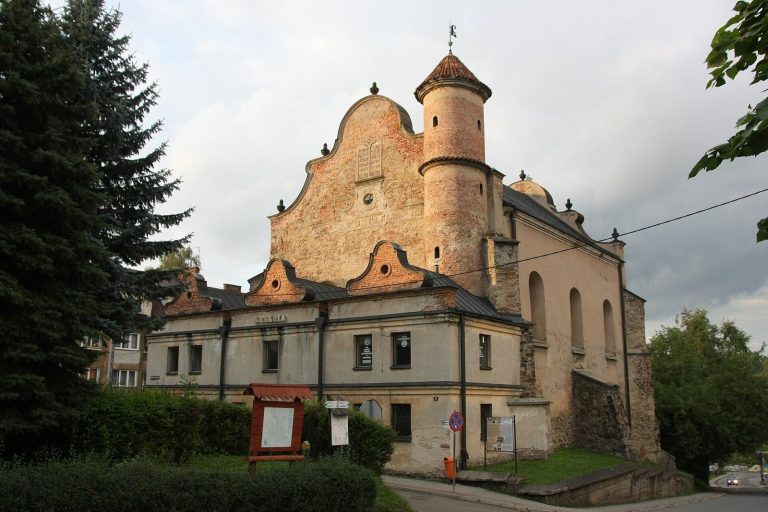
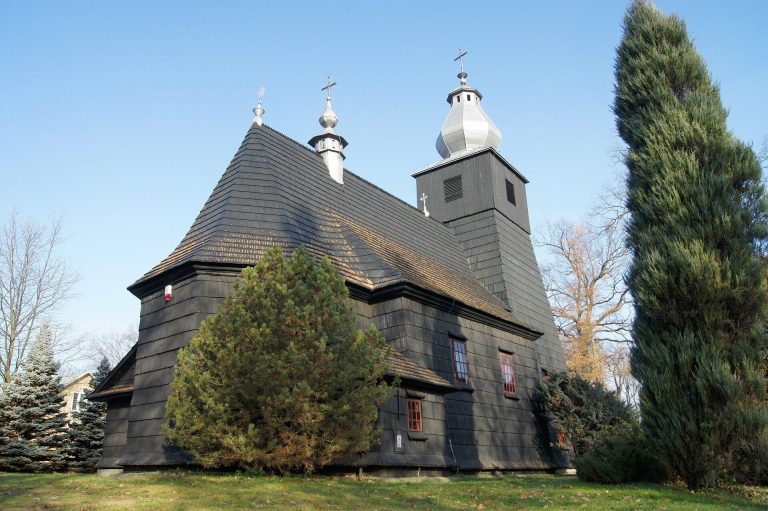
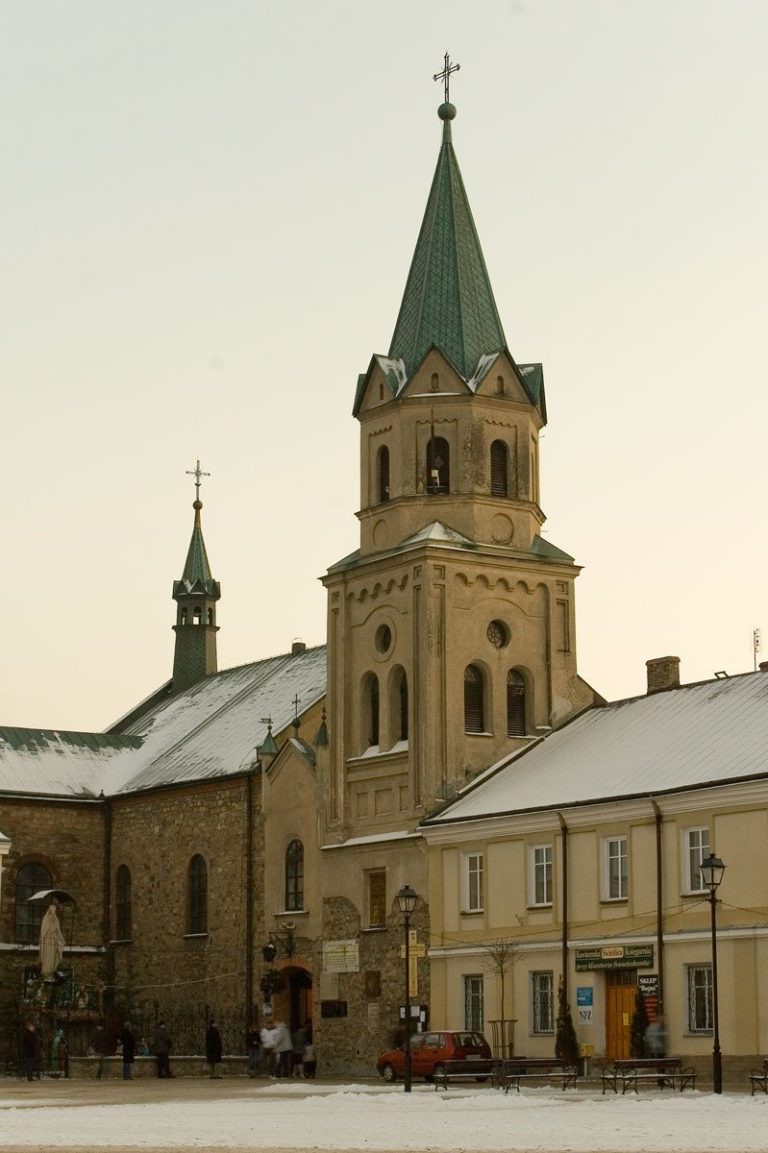
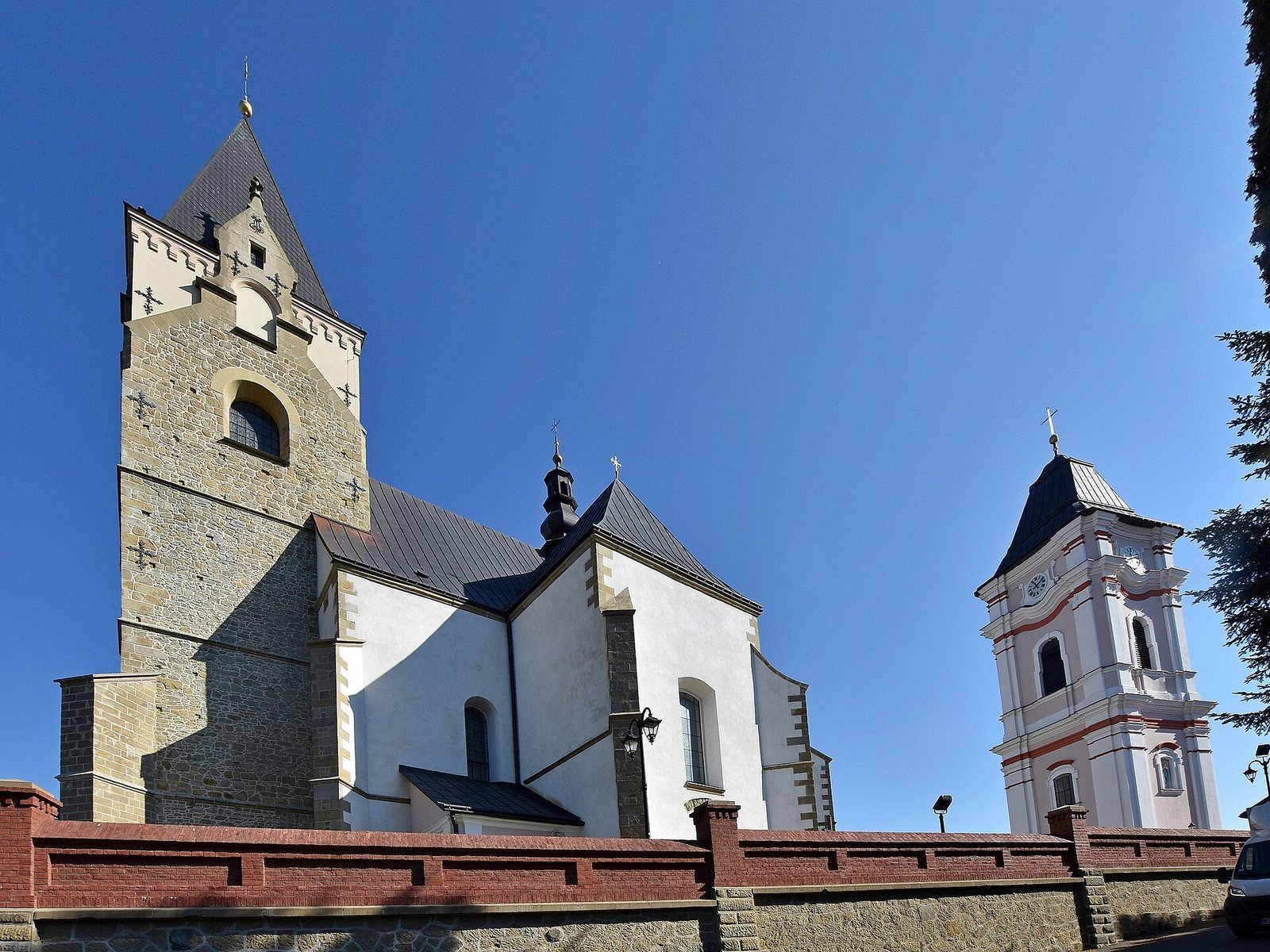
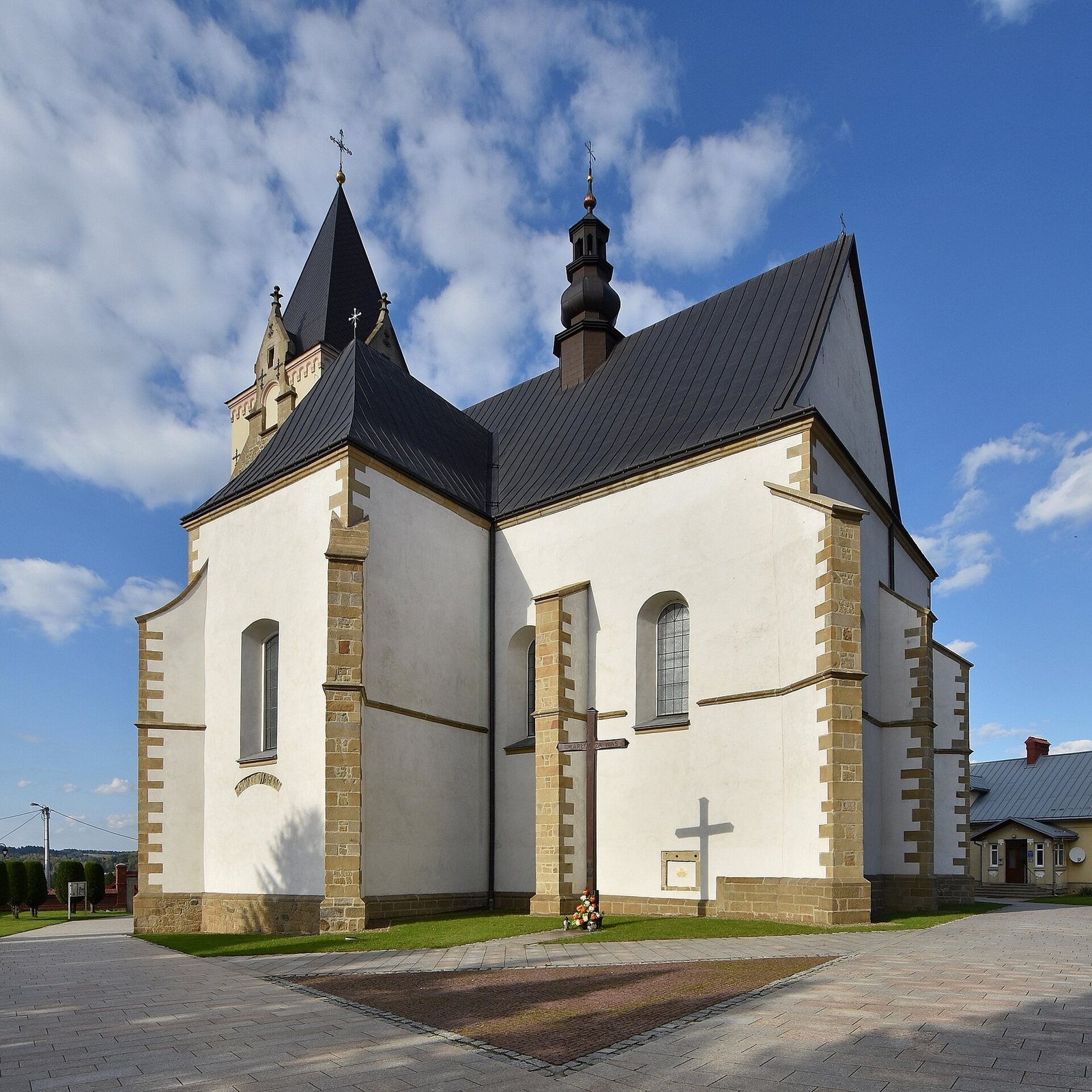
The Church of the Visitation of the Blessed Virgin Mary in Lesko, Poland, is a Roman Catholic parish church dedicated to the feast commemorating Mary’s visit to Elizabeth. It belongs to the Lesko deanery, an administrative grouping of parishes, within the Archdiocese of Przemyśl. Piotr Kmita, a sixteenth-century Polish magnate and royal official, had the church built beside the castle in 1539 in the late Gothic style.
War damage and Baroque refitting
During the Swedish invasion, fire consumed the church roof and looters stripped the interior. In 1759, Jakub Jaworski paid for a Baroque refitting of the interior.
Burial, remodeling, and devotional history
In 1769, Franciszek Pułaski was buried at the church after suffering a fatal wound at the Battle of Hoszów. He was a cousin of Kazimierz Pułaski, who became a commander in the American Revolutionary War.
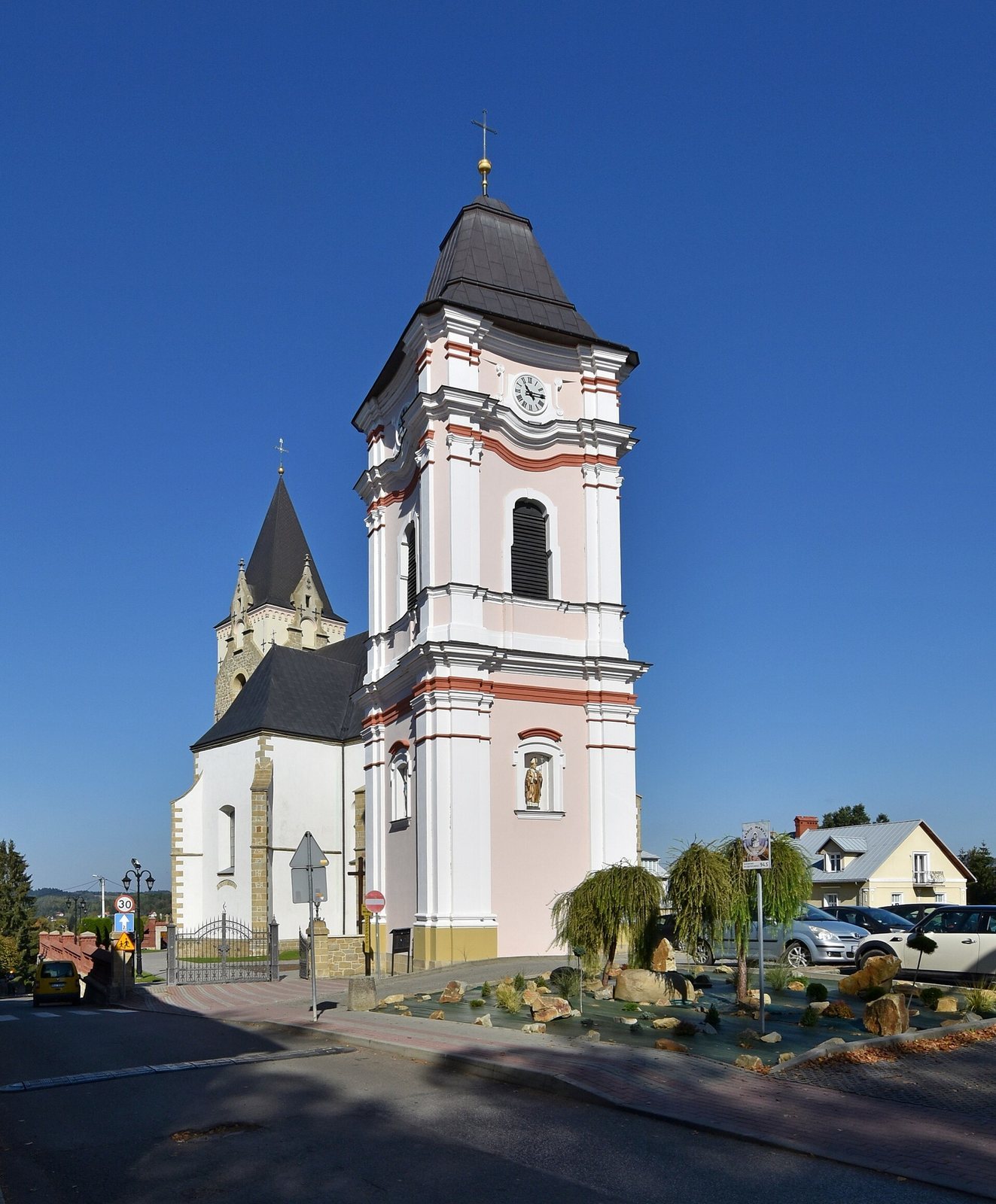
A second remodeling took place in 1889. Gotfryd Hoffman, architect to the Lesko estates since 1764, designed the new tower and supervised its construction.
Dr Hieronim Kőller gave the residents of Lesko an alabaster bust of the Virgin Mary. He was said to have received it from the pope while serving as a papal chamberlain, an official attached to the pope’s household.
Remains
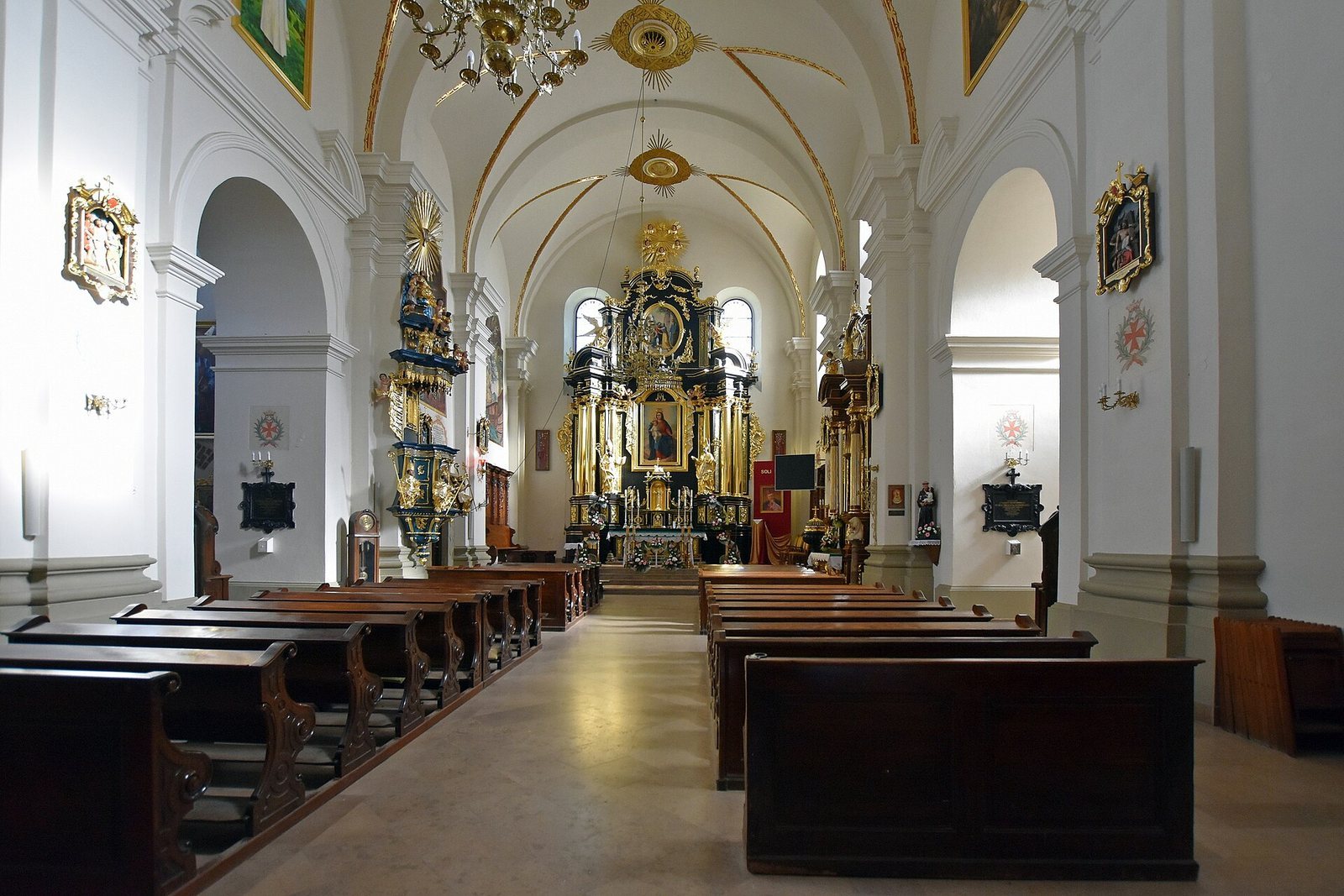
The church has a single nave, the main body of the building, and three altars. Its surviving Gothic wall core is made of stone and brick and strengthened by buttresses, projecting supports that reinforce walls.
Architectural fabric and vaults
The nave and chancel, the area around the main altar, have eighteenth-century barrel vaults, or tunnel-shaped ceilings, with lunettes, curved sections formed where openings meet a vault. The chapels and sacristy, a room where clergy prepare for services and keep sacred objects, contain sixteenth-century barrel vaults as well as cross-ribbed vaults with intersecting ribs and net vaults whose ribs form mesh-like patterns. A single neo-Gothic tower, reviving Gothic forms, rises above the porch and is built from sandstone from the area around Lesko. The original shingle roof was replaced with sheet-metal roofing during the remodeling.
Furnishings and memorials
Altars and furnishings
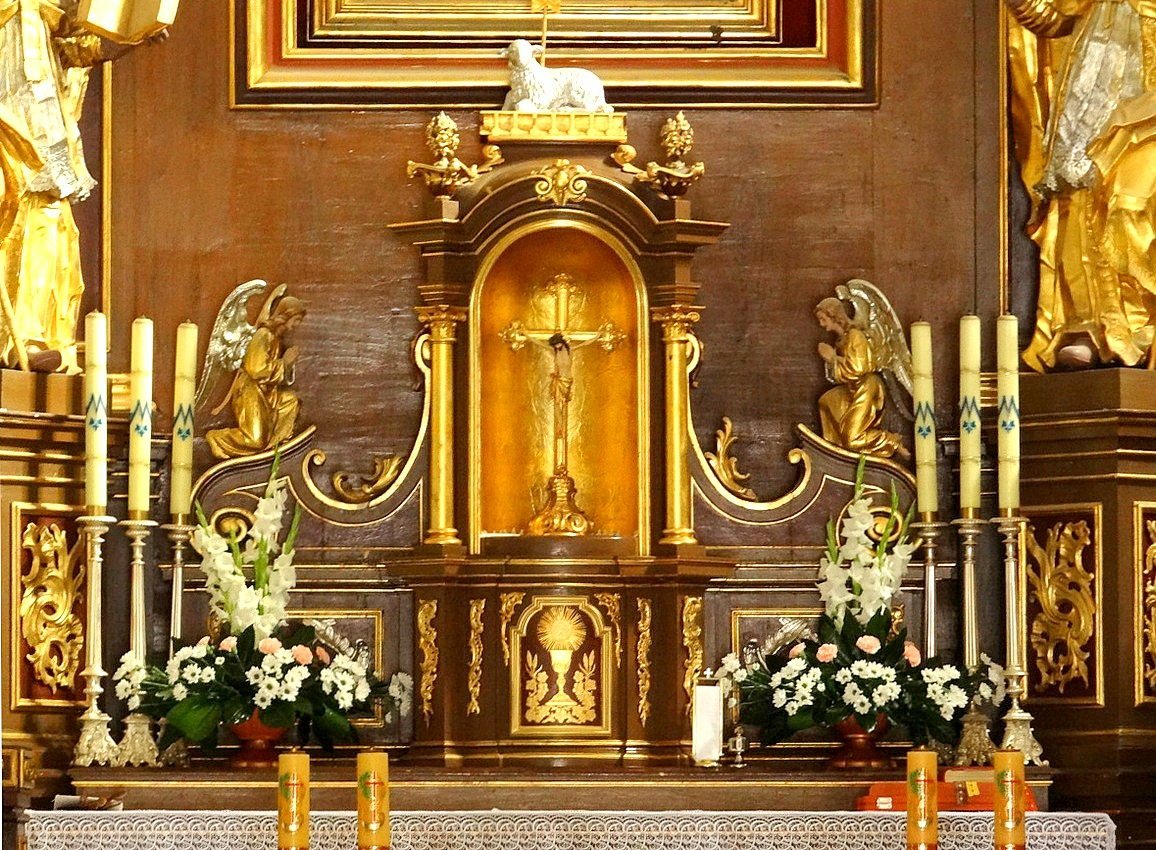
The furnishings are predominantly Baroque, with black and gold coloring. One eighteenth-century altar bears figures of the Polish bishops and saints Stanislaus and Adalbert, together with an eighteenth-century painting of the Crucifixion.
Marian bust and entrance
An alabaster bust of the Virgin Mary stands in the church and is attributed to F. Bertni. Above the entrance doorway, the Kmita family coat of arms is damaged.
Burial chapel and memorials
The Chapel of St Anthony contains the burial chamber of Franciszek Pułaski. Epitaphs commemorate Józef Kanty Ossoliński, Teresa Stadnicka, Franciszek Pułaski, for whom there are two, Count Edmund Krasicki, Countess Maria Aniela Krasicka, Gracjan Piotrowski, Ludwik Praszałowicz, Ludwik Paluch, Kazimierz Nawrocki, August Krasicki, and Izabela Krasicka. Memorial plaques honor parish priests from 1478 to 1978, people who died in Siberia, and victims of the Katyń crime, the killing of Polish prisoners by Soviet authorities during the Second World War. The plaque names Apolinary Beluch, Jan Brodawka, Stanisław Czyż, and Izydor Karaczewski among those victims.