Church of the Nativity of the Blessed Virgin Mary in Stare Objezierze: A Medieval Roman Catholic Church
Site at a Glance
- Popularity
- Very Low
- Country
- Poland
- Primary era
- Medieval
- Eras represented
- Medieval, Early Modern, Modern
- Civilizations
- German, Holy Roman Empire, Margraviate of Brandenburg
- Site type
- Religious
- Remains
- Church
On this page9 sections
History
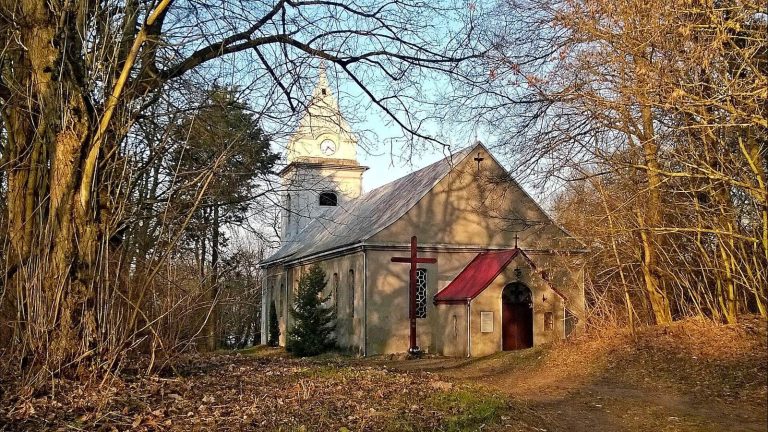
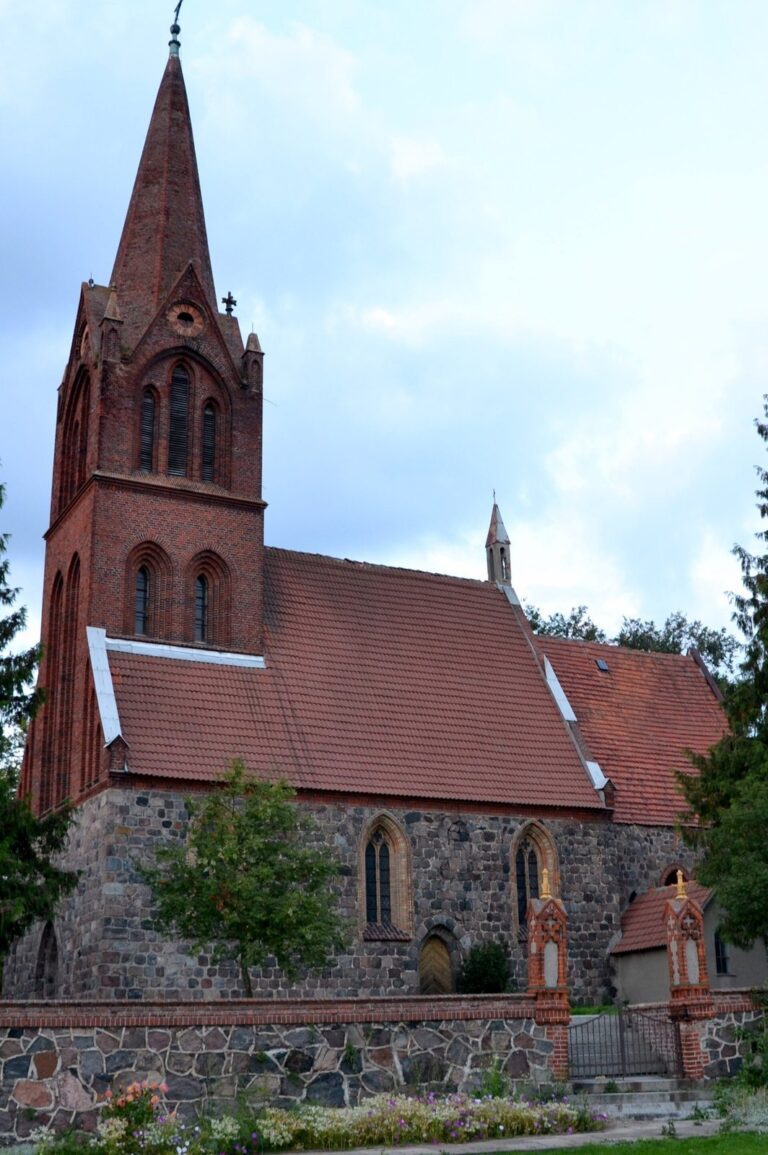
The Church of the Nativity of the Blessed Virgin Mary is a Roman Catholic church in Stare Objezierze, Poland, built in the second half of the thirteenth century. It is a filial church, meaning a subsidiary church attached to a parish, of the Parish of St. Stanislaus Bishop and Martyr in Klępicz.
On 8 September 1946, after the Second World War, the church was consecrated for Catholic worship. It was added to Poland’s register of historic monuments on 31 July 1956.
Remains
Exterior
Plan and masonry
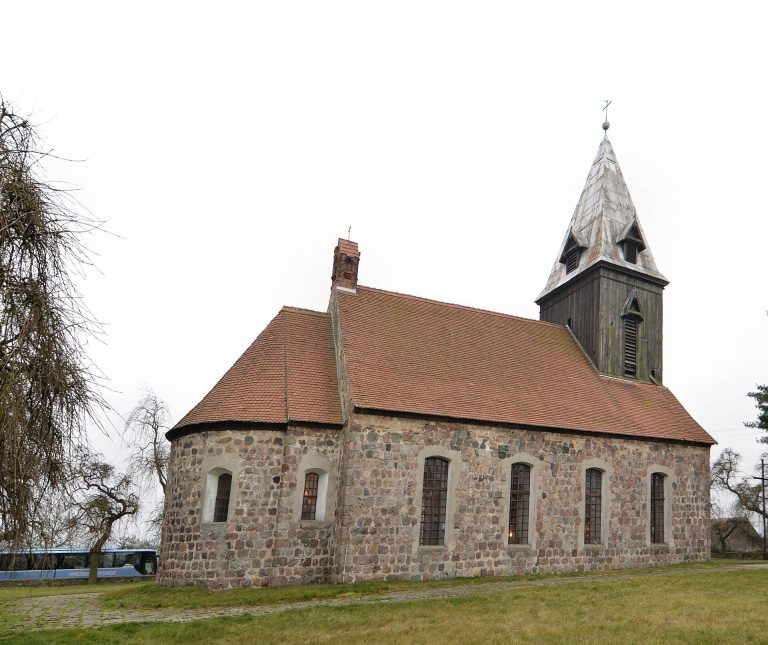
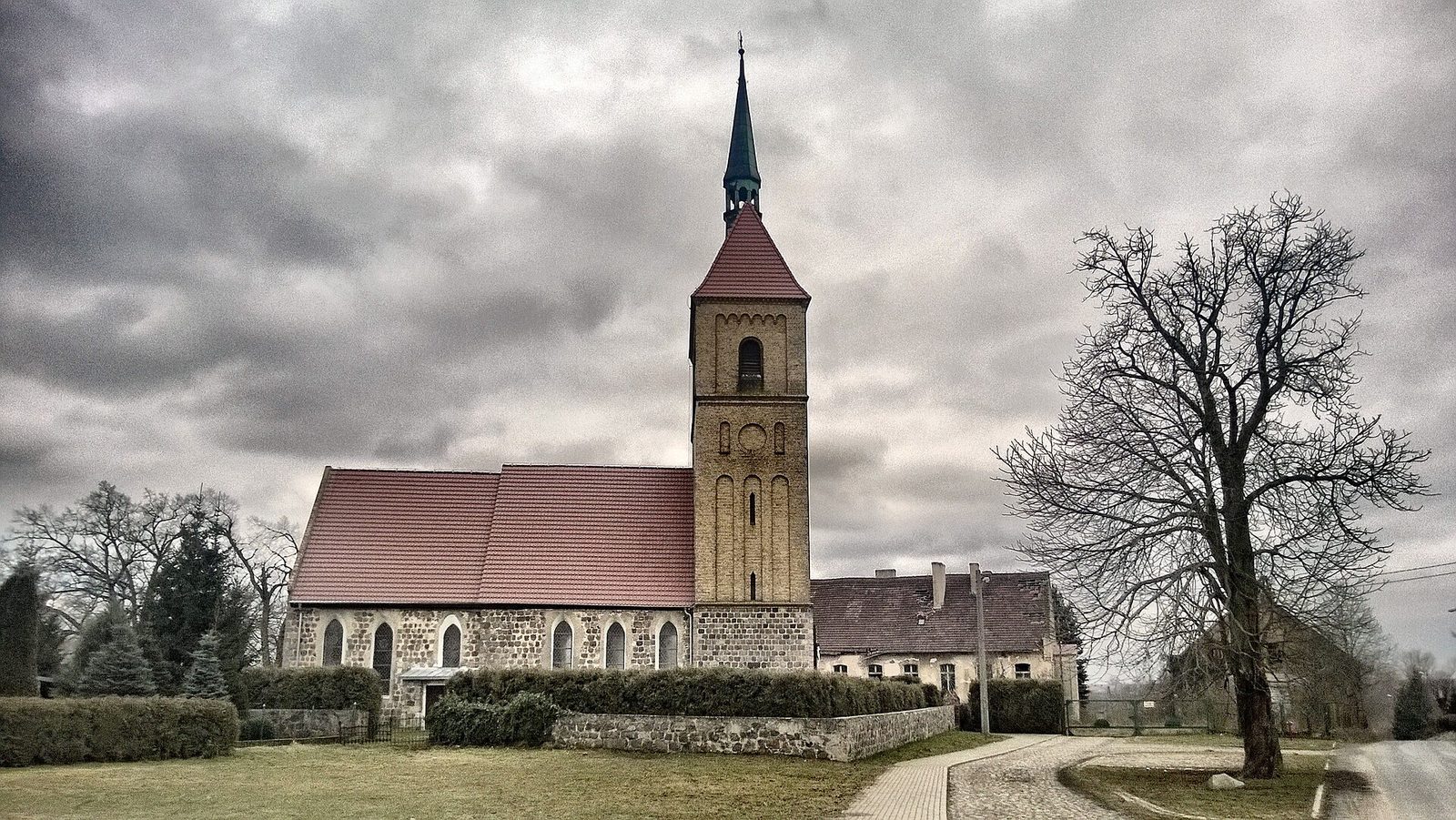
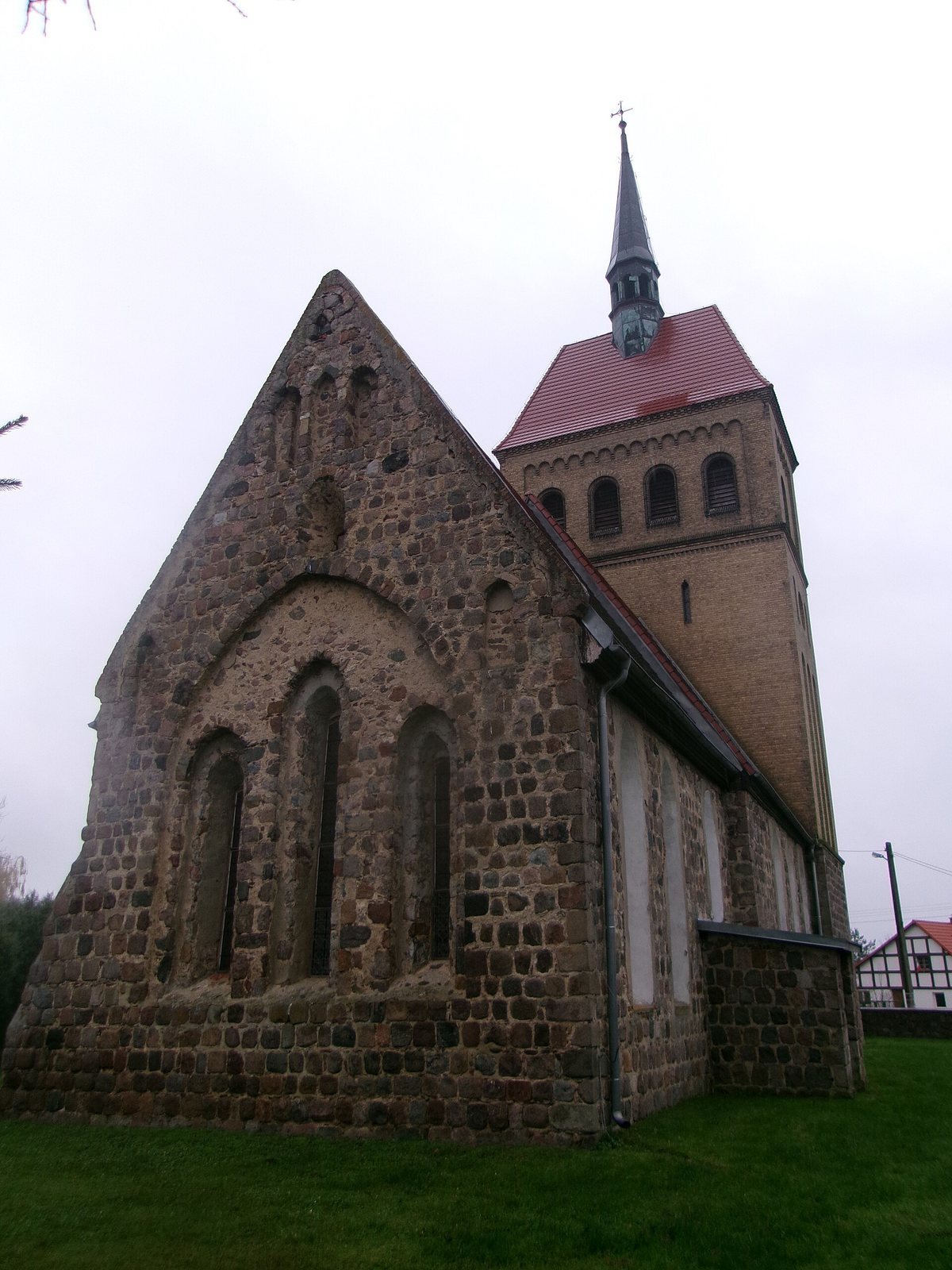
Granite blocks form the church, which has a hall plan. Its rectangular nave, the main worship space, measures 9.5 by 7.6 metres. The separate rectangular chancel, the area around the altar, measures 8.1 by 6.6 metres.
West entrance and tower
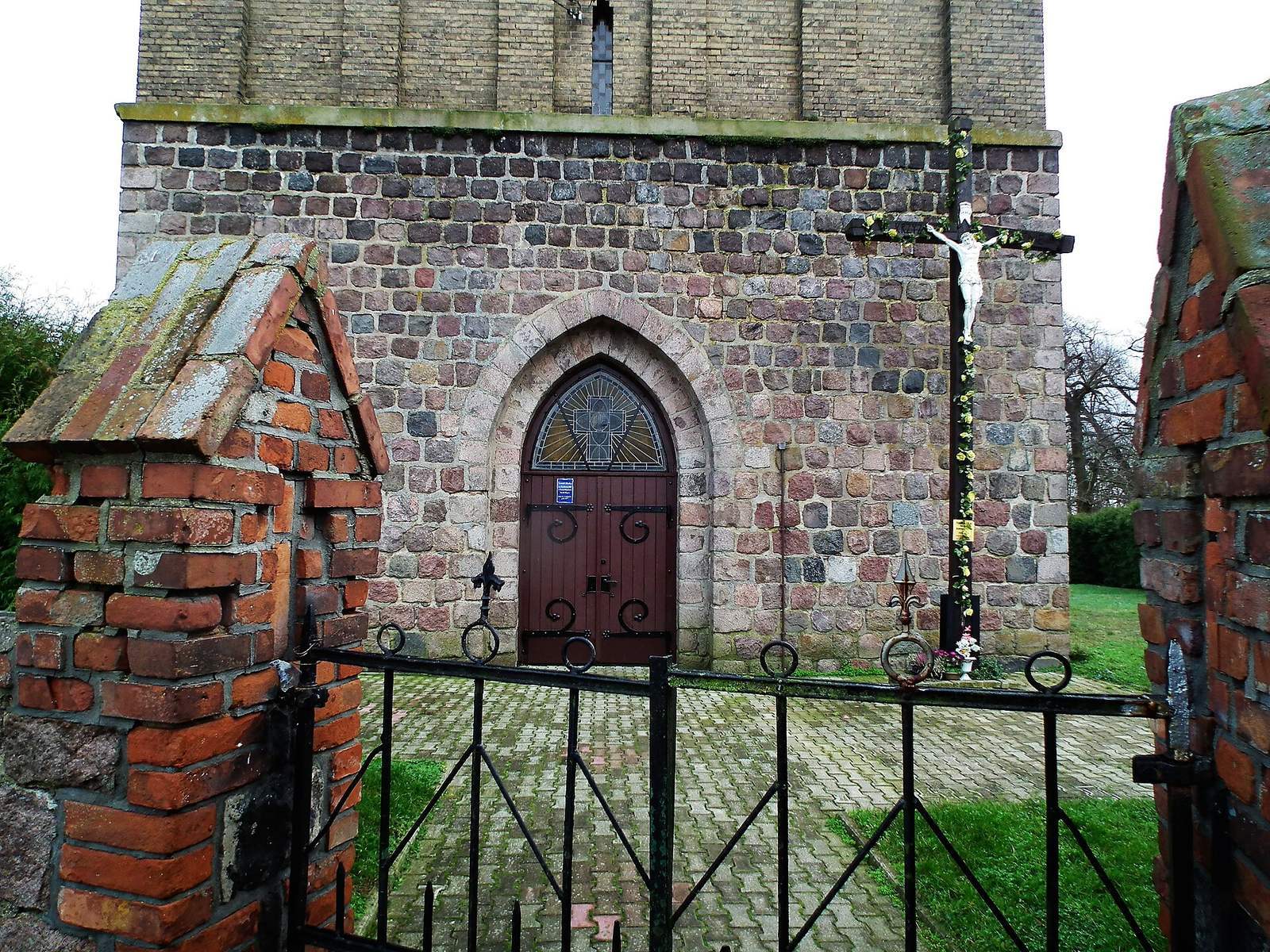
A pointed entrance portal with two recessed layers marks the west façade. A tower wider than the nave stands at the west end. It was heightened in 1910 with brickwork in a style reviving Romanesque forms, and three twentieth-century bells hang inside it.
Windows and east gable
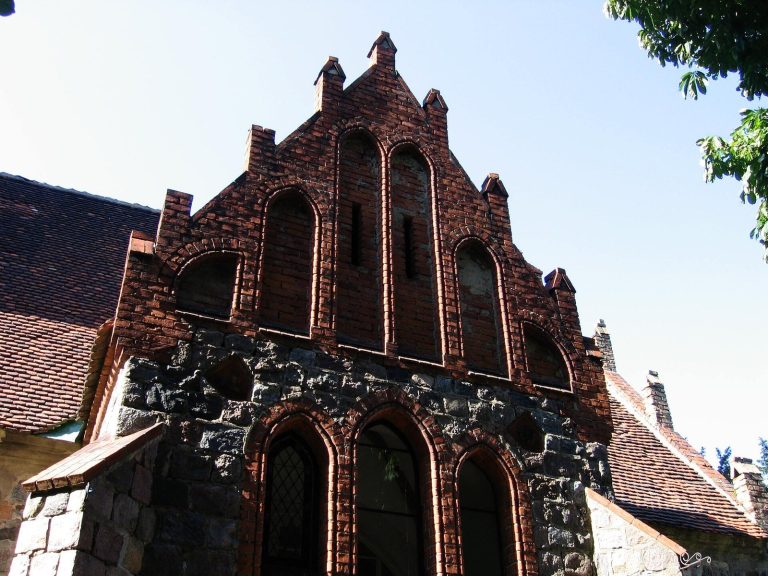
Each side wall of the nave has three pointed windows. The chancel has two windows on its south side and three on its north. On the east façade, three narrow pointed windows sit in pointed niches, or shallow wall recesses, within a larger pointed blind recess, a shallow decorative recess with no opening. The east gable has small blind recesses: two pointed ones at the sides and a conch-shaped one in the middle, with three more pointed recesses above.
Interior
Pulpit altar
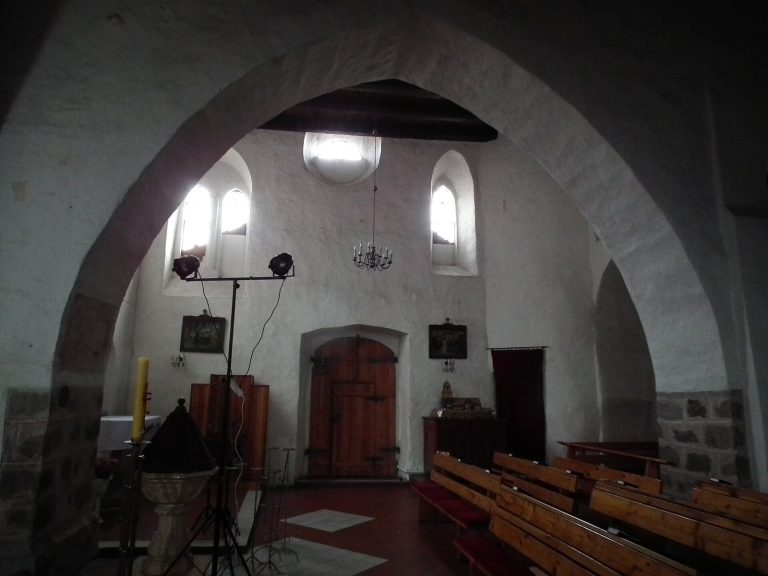
The church retains a Baroque pulpit altar, which combines an altar with a raised preaching platform. Made by the workshop of H. B. Hattenkerell of Moryń, it dates to about 1720. Its pulpit basket has been dismantled. The altar includes figures of John the Baptist, the Christian prophet associated with baptizing Jesus; Moses, the biblical prophet who led the Israelites out of Egypt; and Christ after his resurrection.
Chancel decoration
Traces of stucco, a decorative plaster finish, dating to about 1600 remain visible on the chancel walls.