The Basilica of Saint Michael the Archangel and the Assumption of Mary in Trzemeszno
Site at a Glance
- Popularity
- Medium
- Country
- Poland
- Primary era
- Early Modern
- Eras represented
- Medieval, Early Modern
- Civilizations
- Polish–Lithuanian Commonwealth
- Site type
- Religious
- Remains
- Basilica
On this page8 sections
History
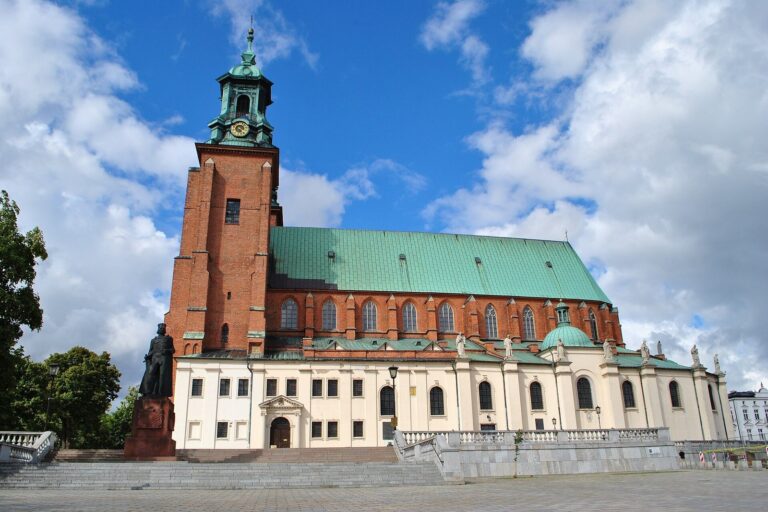
The Basilica of Saint Michael the Archangel and the Assumption of Mary in Trzemeszno, Poland, is a Roman Catholic parish church whose origins are placed in the 11th or 12th century and whose Romanesque phase dates to the 12th century.
Early church and Gothic rebuilding
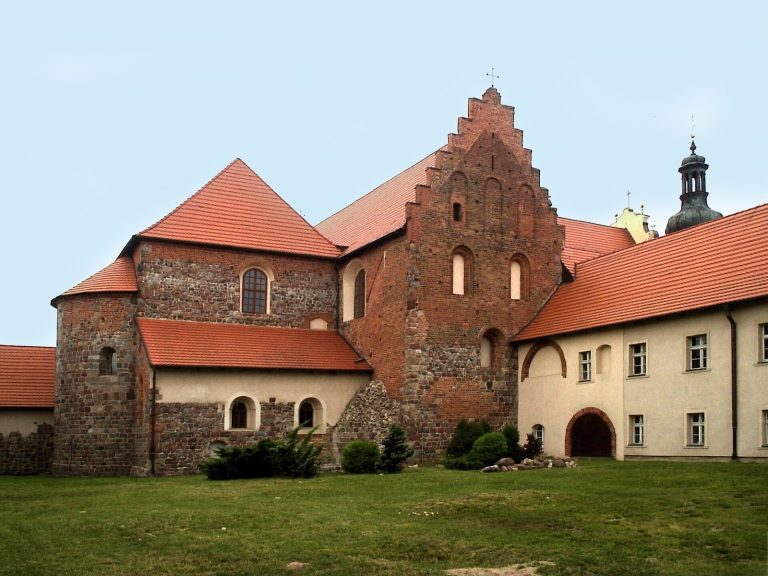
A predecessor church may have stood here in the 10th century, but it may have been destroyed during incursions by Bohemian forces led by Břetislav I, duke of Bohemia. After several fires, the church was rebuilt in the Gothic style late in the 16th century.
Baroque transformation and the monastery’s closure
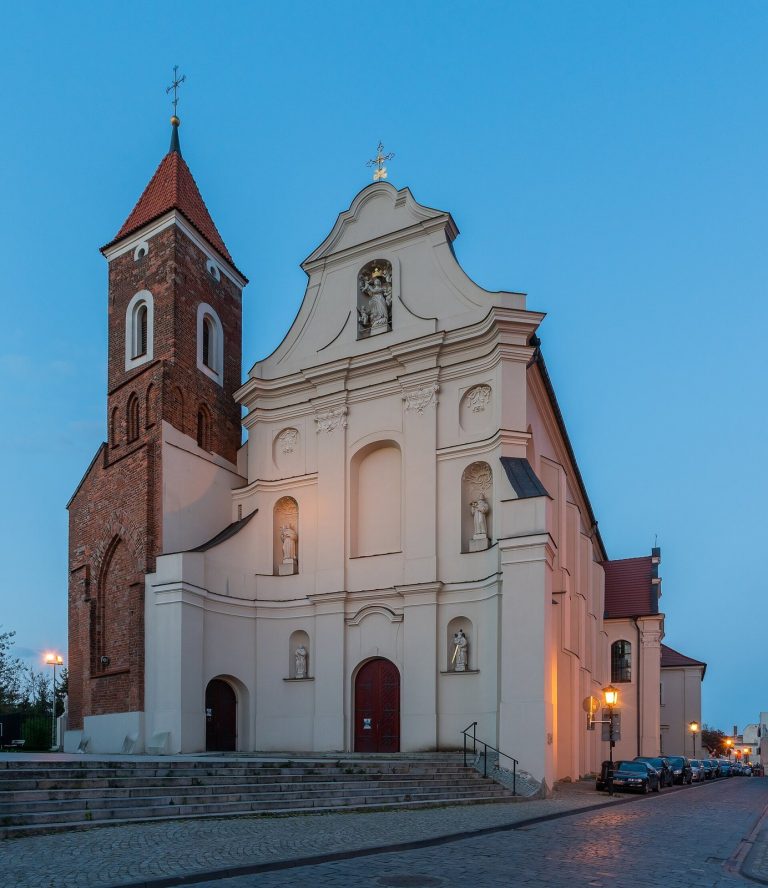
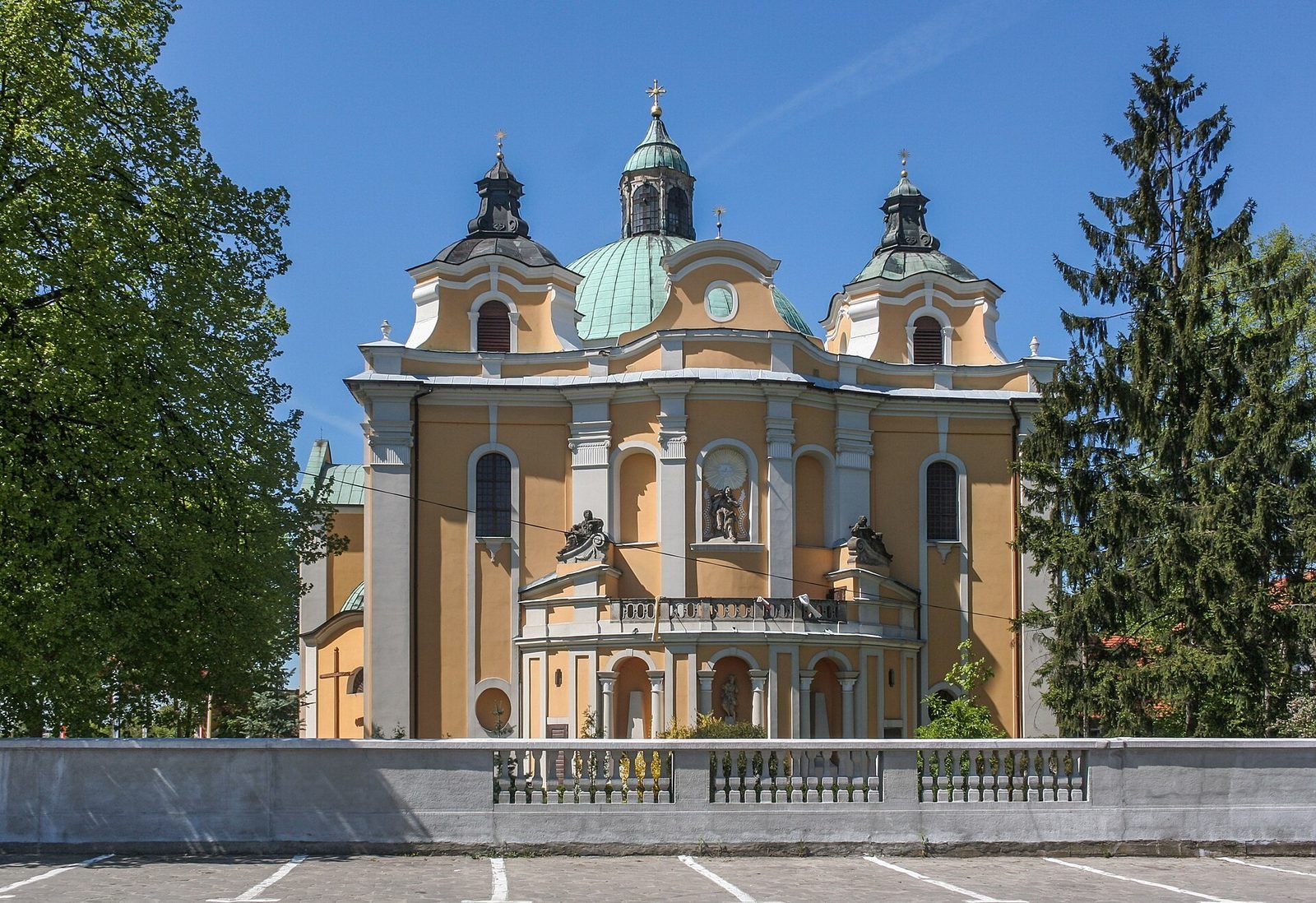
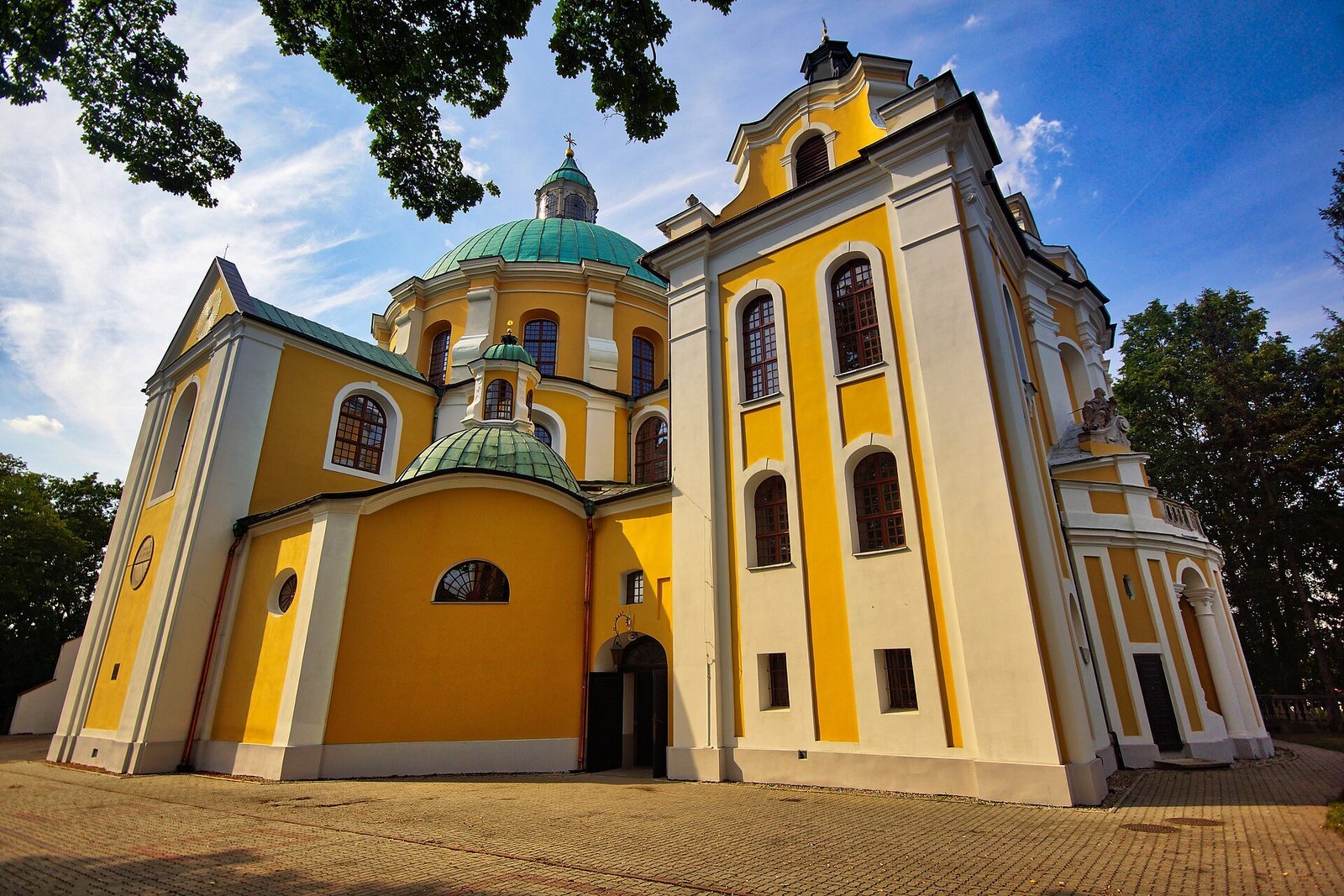
A 1737 concordat, an agreement between the Holy See and the Polish state, gave Poland’s kings the right to appoint commendatory abbots. Such an abbot held the appointment and its associated income without necessarily directing the monastic community. Under Abbot Michał Kosmowski, the church was enlarged and remodeled from 1764 to 1781, taking the Venetian Baroque church of Santa Maria della Salute as its model. It was consecrated in 1791. Under Prussian rule, the monastery closed in 1836 and its buildings were demolished.
Wartime destruction and reconstruction
During the Second World War, German occupiers looted the church’s valuable objects and used it as a military storehouse. On 21 January 1945, Wehrmacht soldiers, members of Nazi Germany’s armed forces, set the church on fire as they withdrew from the town. The building was reconstructed during the 1950s and 1960s, including extensive work on its interior furnishings. It is dedicated to the Assumption of Mary and Saint Michael the Archangel and belongs to the Archdiocese of Gniezno, a senior Catholic jurisdiction in Poland. Pope Paul VI granted it the honorary status of a minor basilica on 28 October 1969.
Remains
Basilica structure
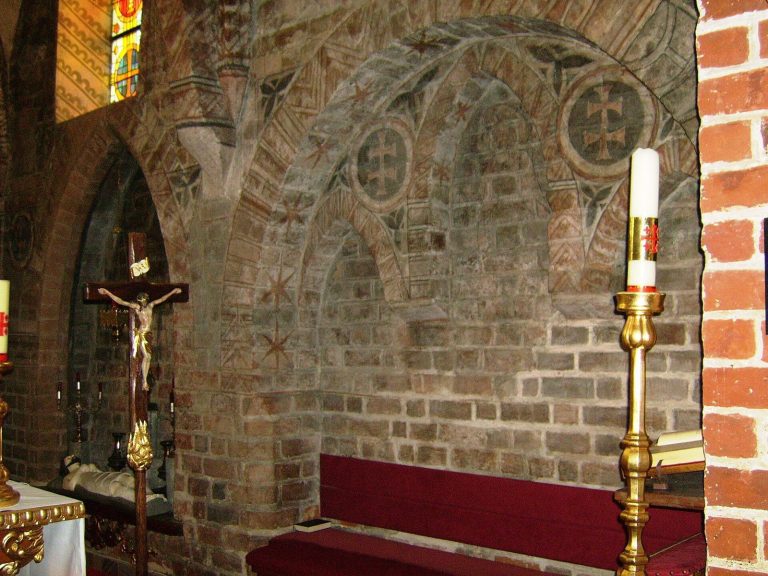
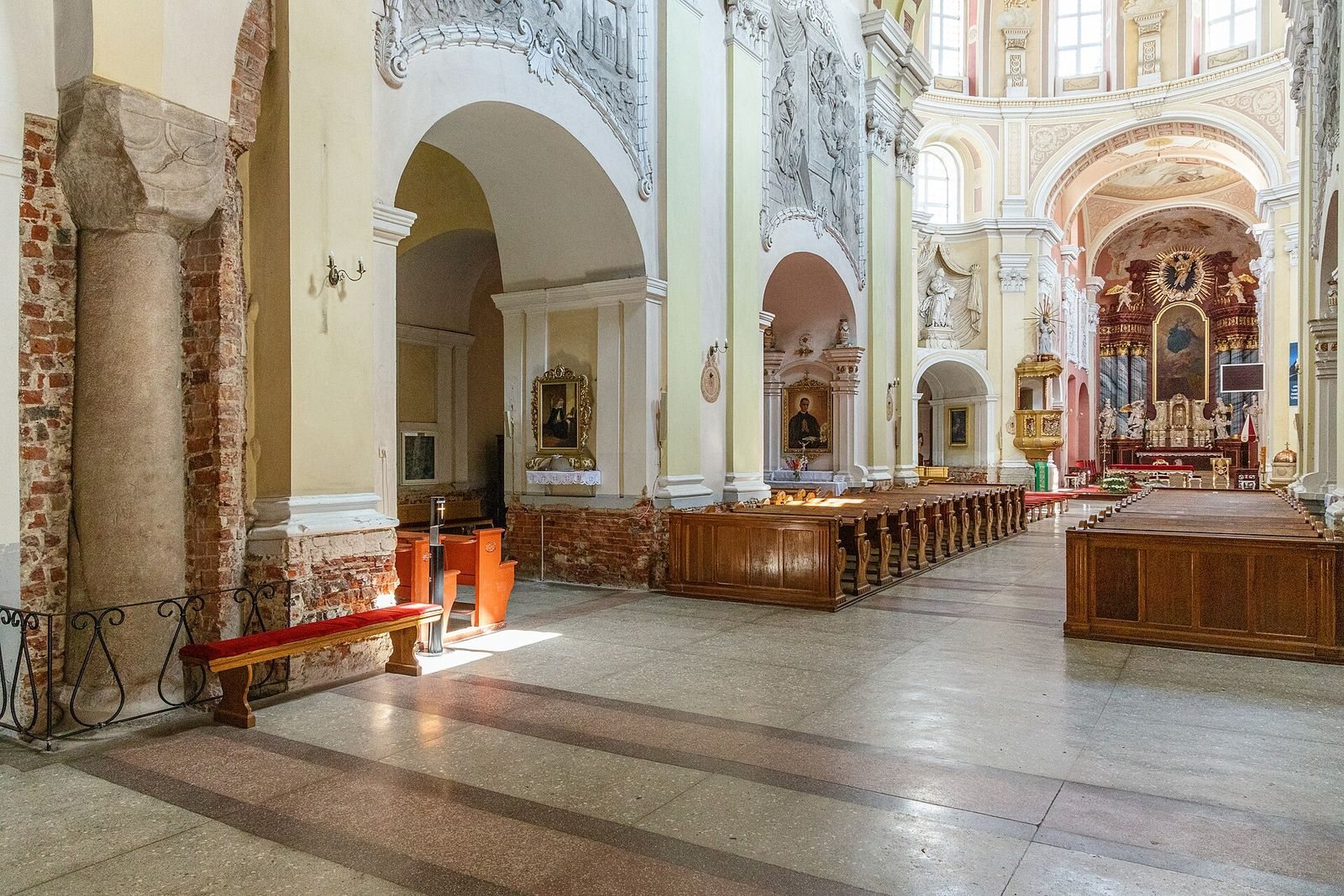
The brick church is a three-aisled Baroque basilica laid out as a Latin cross, with a long nave crossed by a shorter transept. A large dome rises above the crossing, where these parts meet, on a drum, a dome-supporting structure pierced by windows. Chapels form a ring around the central area, which is also surrounded by an aisle. Foundations and massive columns survive among the remains of the earlier Romanesque and Gothic churches. Foundations and some walls from a predecessor were reused in the late-16th-century Gothic rebuilding.
Interior and devotional features
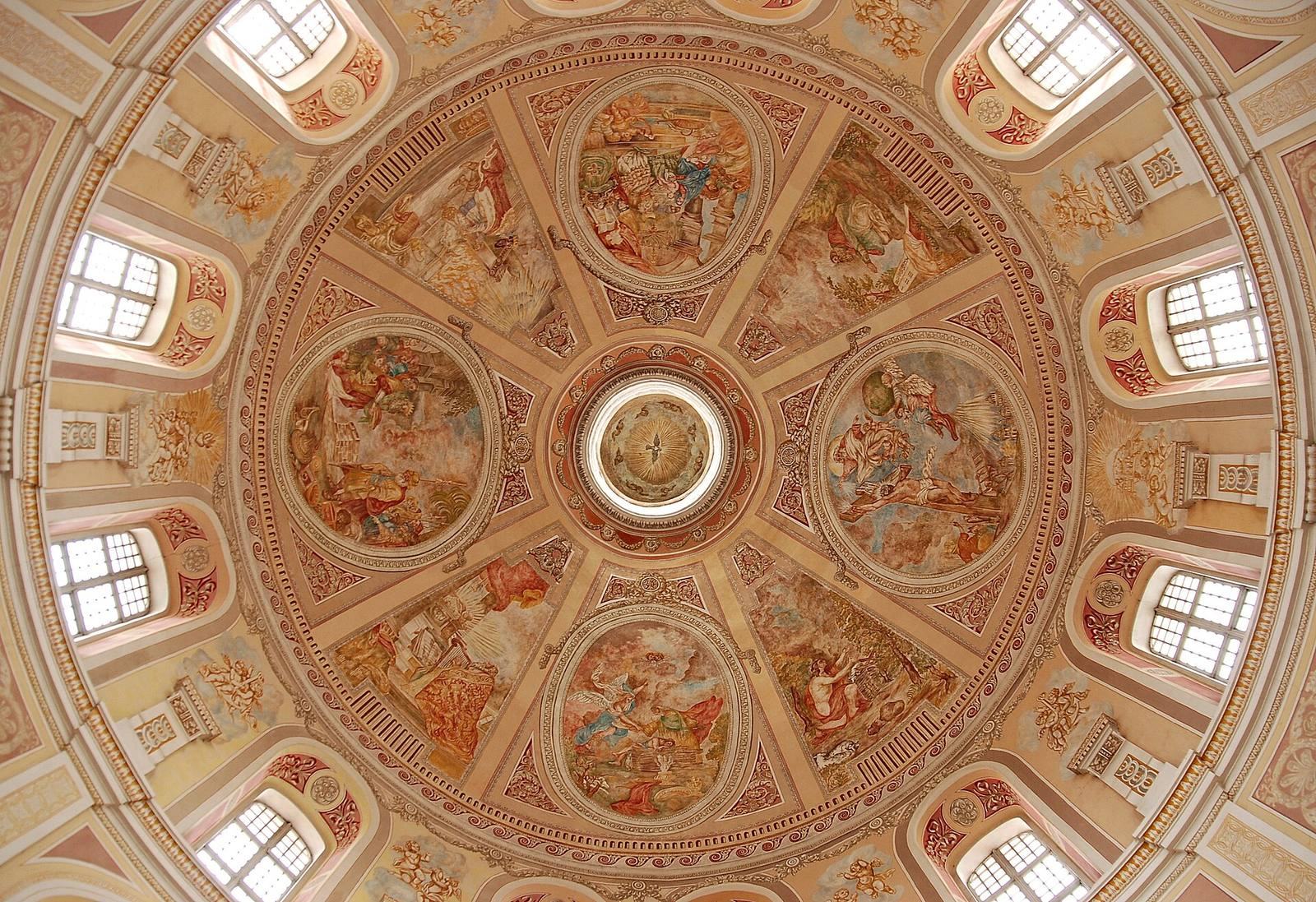
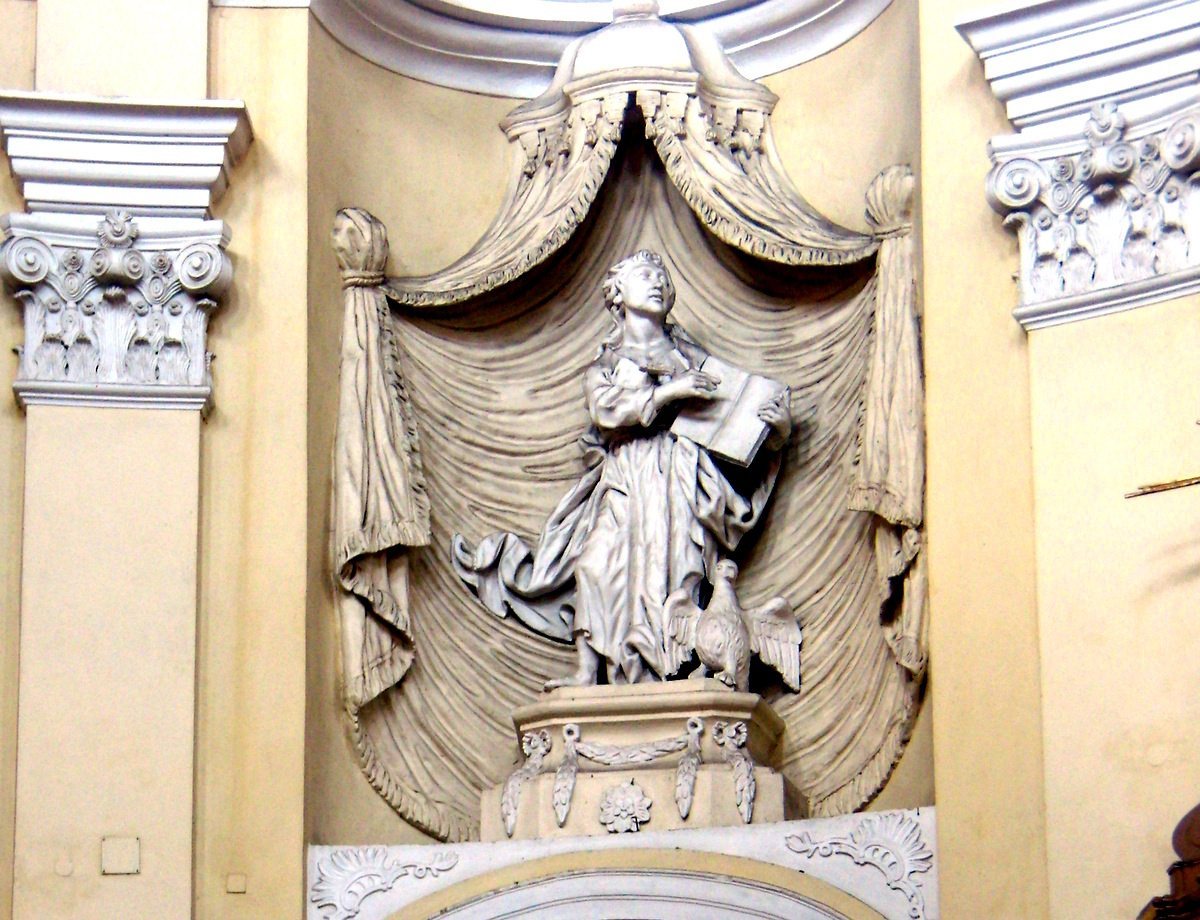
The church retains Baroque furnishings and painted decoration, including frescoes by the 18th-century painter Franciszek Smuglewicz. Its organ has 19 stops and two manuals. Relics of Saint Adalbert, a bishop and missionary venerated as a martyr, are associated with the church and receive special veneration.
Former abbot’s palace
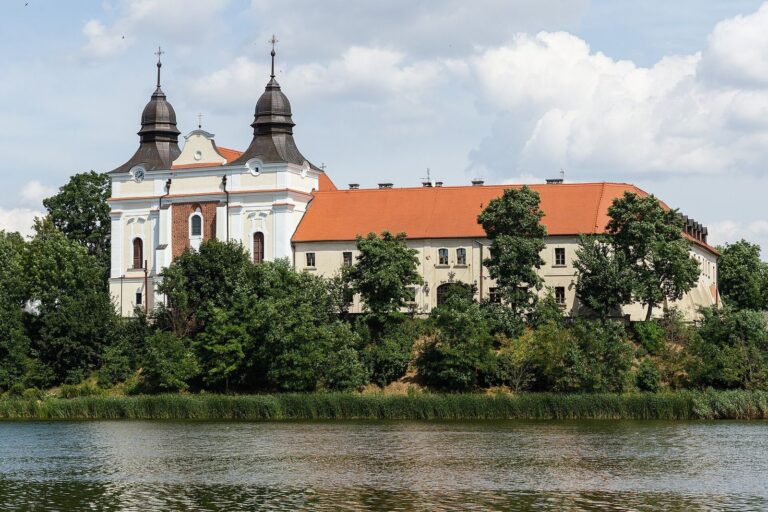
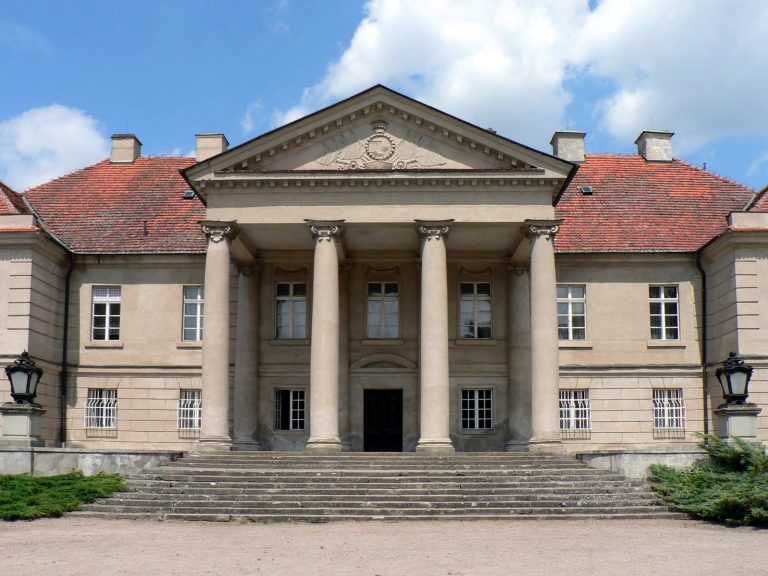
A renovated former abbot’s palace stands near the basilica and now serves as the parish house.