Monastiraki: A Middle Minoan Palace Center in Crete
Site at a Glance
- Popularity
- Medium
- Country
- Greece
- Primary era
- Bronze Age
- Eras represented
- Bronze Age
- Civilizations
- Minoan
- Site type
- City
On this page9 sections
History
Monastiraki is a Minoan settlement and palace center in Crete, Greece, whose principal buildings belong to the Middle Minoan Old Palace period, an early palatial phase of Crete’s Bronze Age civilization, flourishing about 1900–1700 BC. Its layout and finds indicate that it served economic, administrative, and religious purposes.
Palatial center and destruction
People occupied the settlement in Early Minoan times. Its palace and other major buildings developed during the Old Palace period. Around 1700 BC, an earthquake and the fire that followed destroyed the palatial center. It was not rebuilt, and most of the settlement was abandoned.
Regional connections and later occupation
Monastiraki lies in the Amari Valley, a natural route between Crete’s northern and southern coasts. Its position has been interpreted as strategically useful. One interpretation holds that people from Phaistos, a major Minoan center in southern Crete, established it as a satellite settlement to use resources in the Amari Basin. Archaeologist Athanasia Kanta also considered Monastiraki dependent on Phaistos. The site has additionally been linked with ancient Sibrita, a Cretan city whose remains lie on a nearby hill. Parts of the wider complex were occupied again on a smaller scale during Late Minoan IIIC, the final phase of the Late Minoan period, in the 12th century BC, around 1200–1100 BC.
Excavation and archaeological interpretation
Excavations began in 1942, during the German occupation of Crete, under German archaeologist Ernst Kirsten for the German Archaeological Institute. The work drew on the notebooks of British archaeologist John Pendlebury, who had been killed by German paratroopers during the capture of Crete on 22 May 1941. Systematic excavation directed by Kanta for the University of Crete began in 1980. The University of Naples worked at the site from 1982 to 1984, focusing on northern and northwestern areas; Greek archaeologists also excavated western, northwestern, and southeastern parts. The last major campaign took place in 1999. Monastiraki’s central area was not built over after the destruction around 1700 BC, preserving evidence of Middle Minoan culture.
Remains
Setting and layout
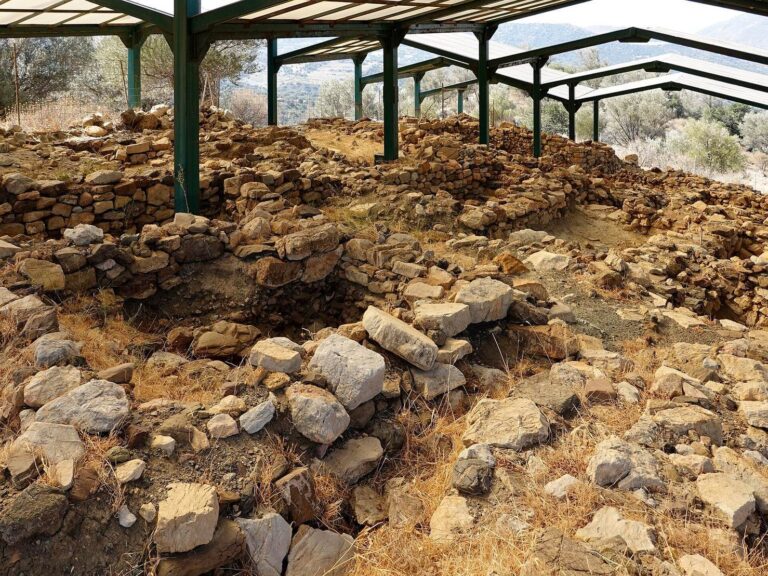
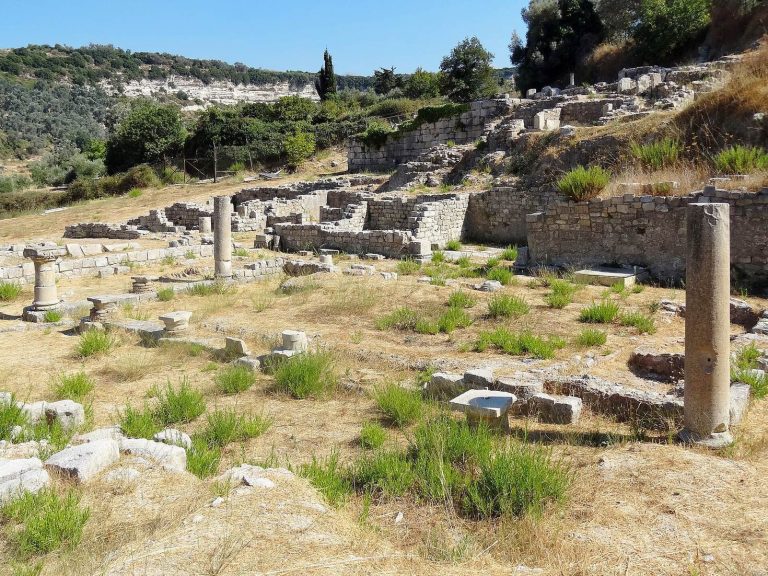
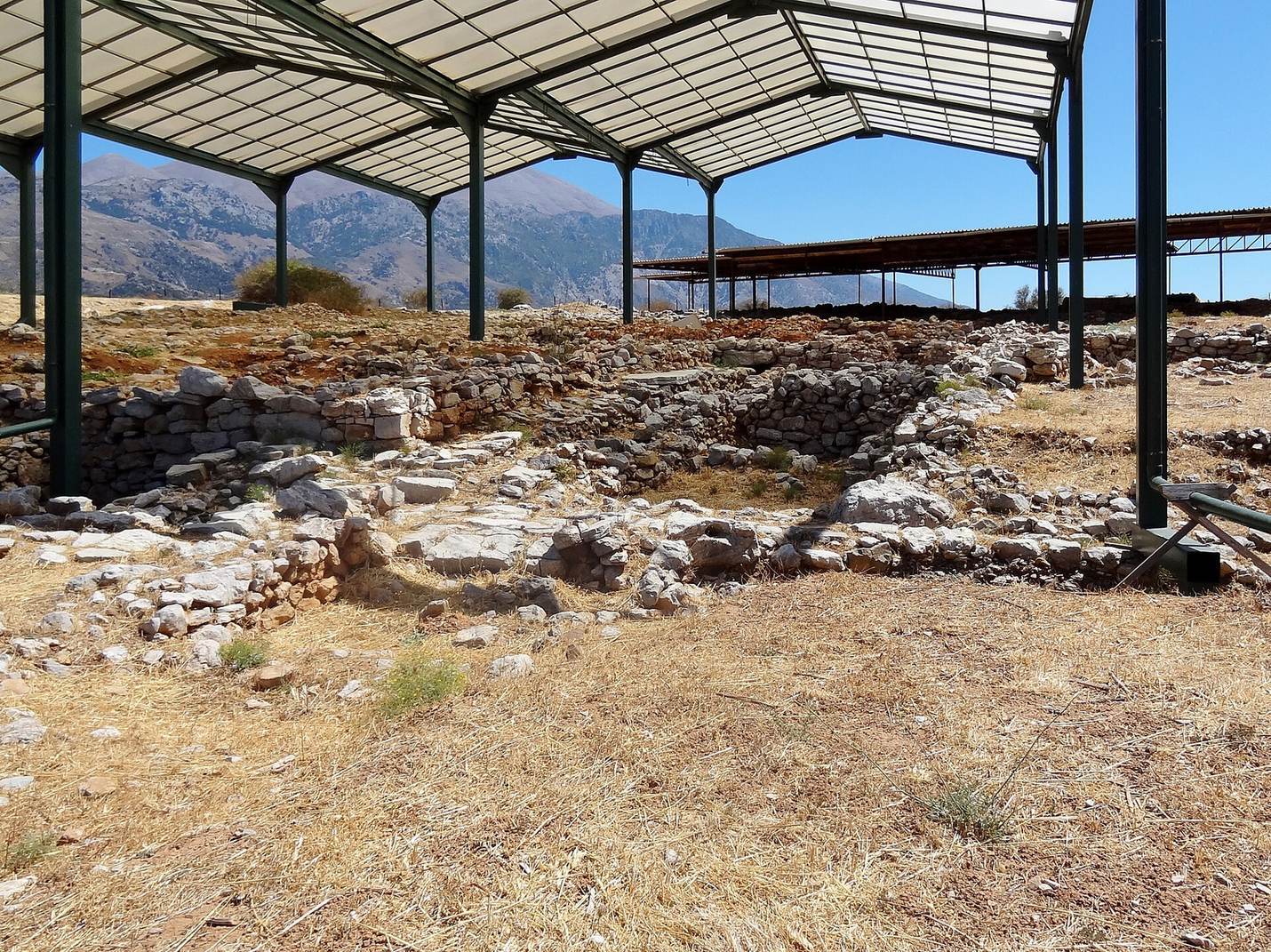
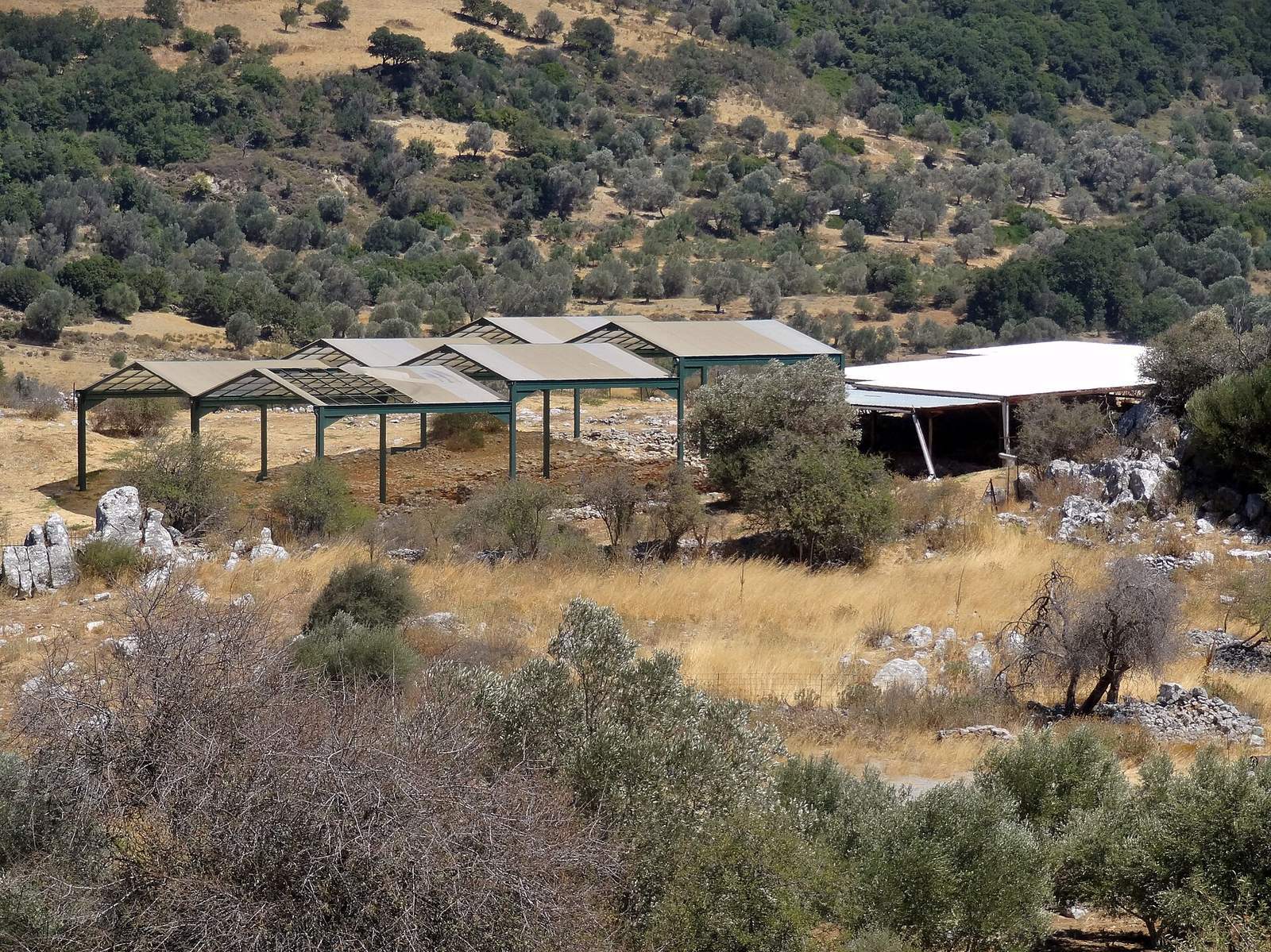
The archaeological complex extends over more than 300,000 square metres around Kokkinos Charakas hill, between the Platy River and the village of Monastiraki. It lies about 200 metres southwest of the village, in the central Amari Basin, between the Psiloritis range to the northeast and Mount Kedros to the southwest. The Platy flows northeast of the village and waters the basin. The settlement had a planned layout and a drainage system, and included a palace or palace-like building among numerous houses. The southeastern excavation area is covered for protection from the weather.
Palace and houses
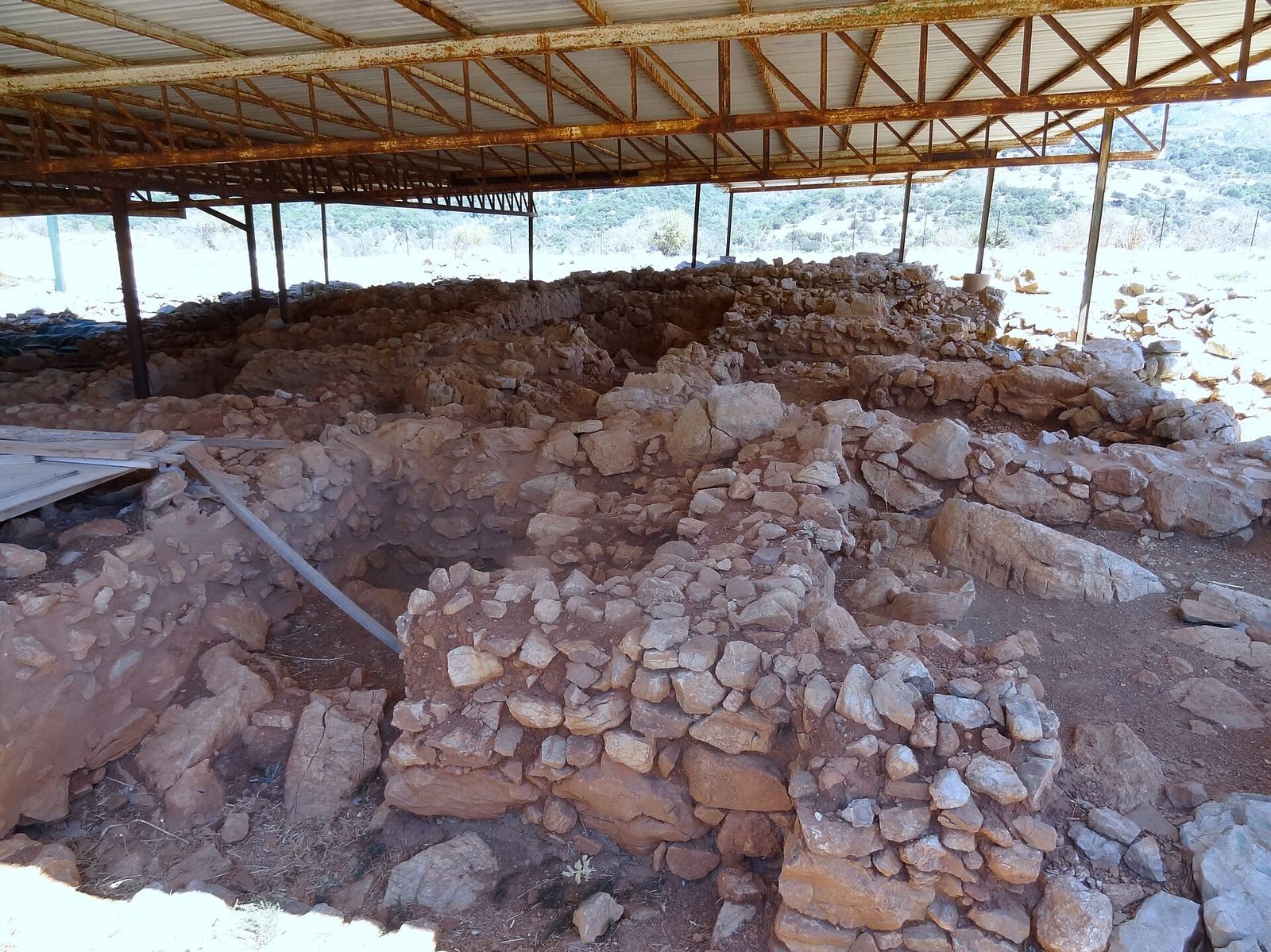
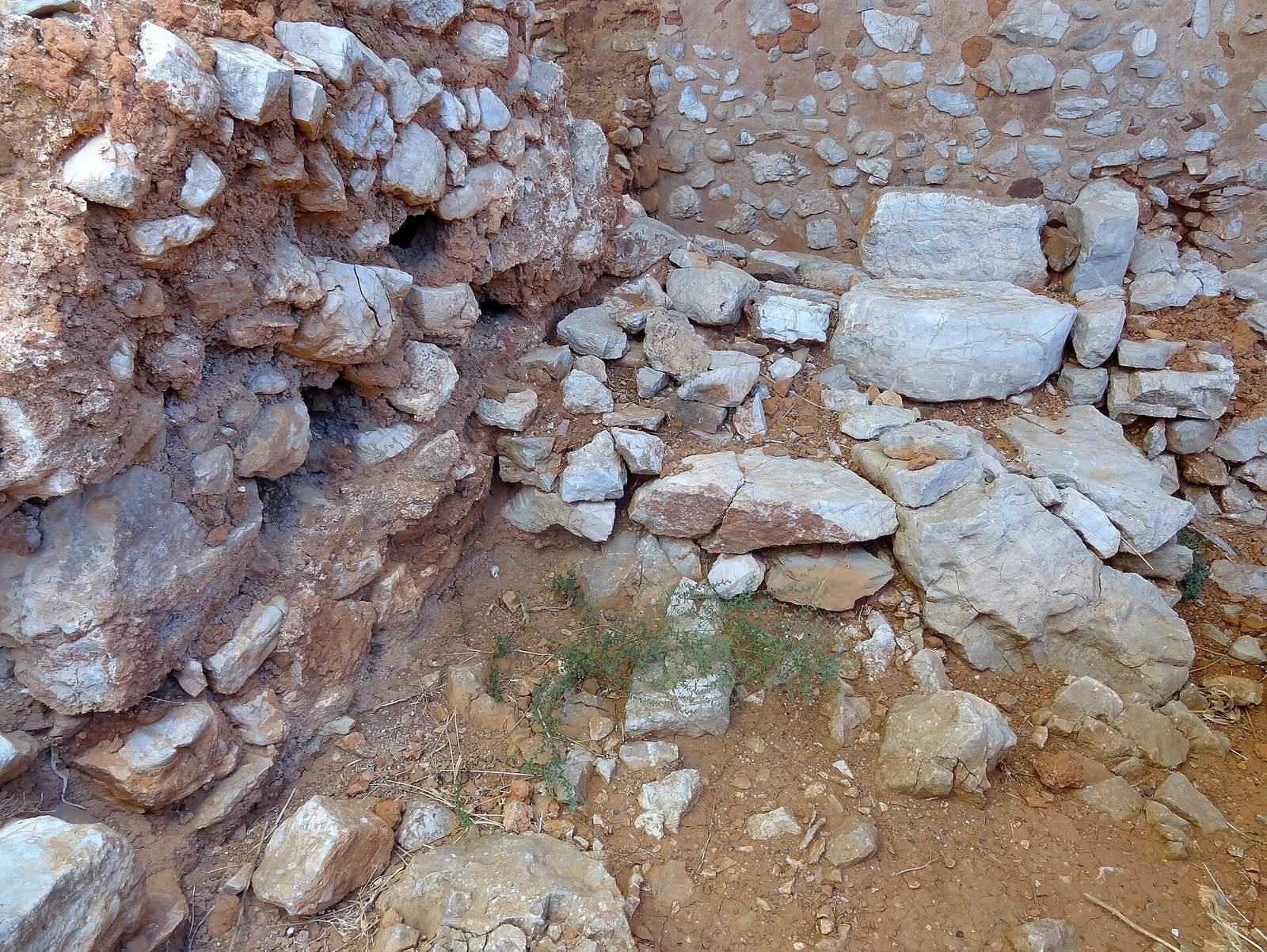
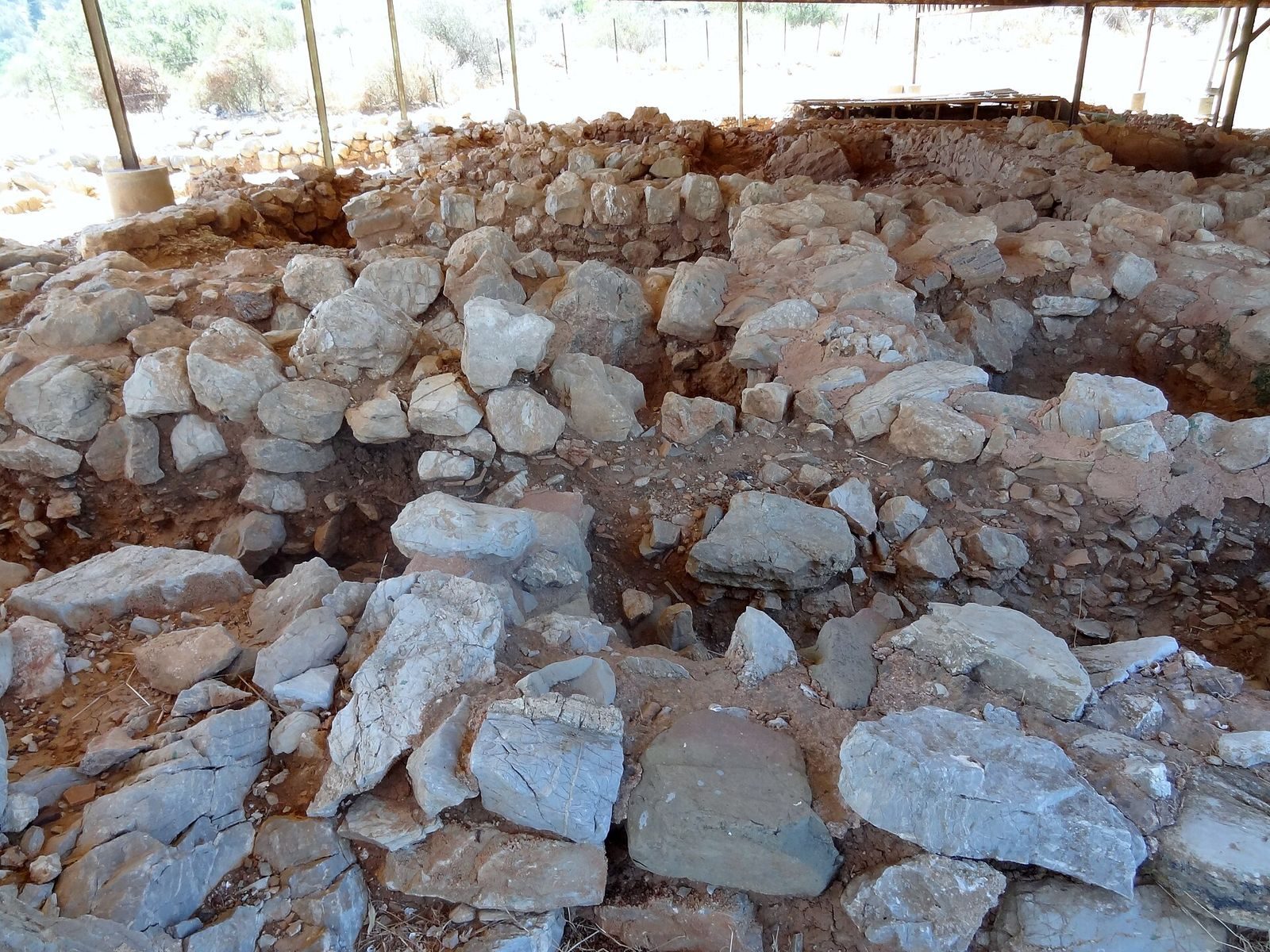
Excavators have uncovered 90 rooms, though only a small part of the settlement has been explored. The palace building had at least two storeys, supported by substantial walls. Its upper floor included residential, administrative, and textile-making spaces; ground-floor rooms served as storerooms and workshops and may also have been used for religious activity. One principal room is thought to have hosted banquets or formal communal drinking gatherings.
Storage and production
Some storerooms were built of small stones bonded with mud and strengthened by timber framing. Large storage jars held goods, and remains of their contents, together with abundant animal bones, provide evidence of food use and the local economy. Three-legged cauldrons contained traces of wax and vegetables, as well as indications of wine production involving roasted oak. Grater vessels associated with cult equipment were used in oil production. Residues point to wine, a beer-like drink, mead, and a spirit described as brandy; the spirit may have been made in jars where charred grapes were found. The complex also included a pottery-making workshop.
Administrative and ritual finds
Three archives contained hundreds of clay sealings, pieces of clay bearing impressions made by seals, still in their original positions. Their impressions resemble the sealing system at Phaistos, while numbered weights indicate that goods were controlled within Monastiraki’s sphere of influence. Pottery includes a provincial form of Kamares ware, a distinctive Minoan style. Other finds include clay models of an altar and miniature cult shrines. Wall paintings decorated parts of the complex.