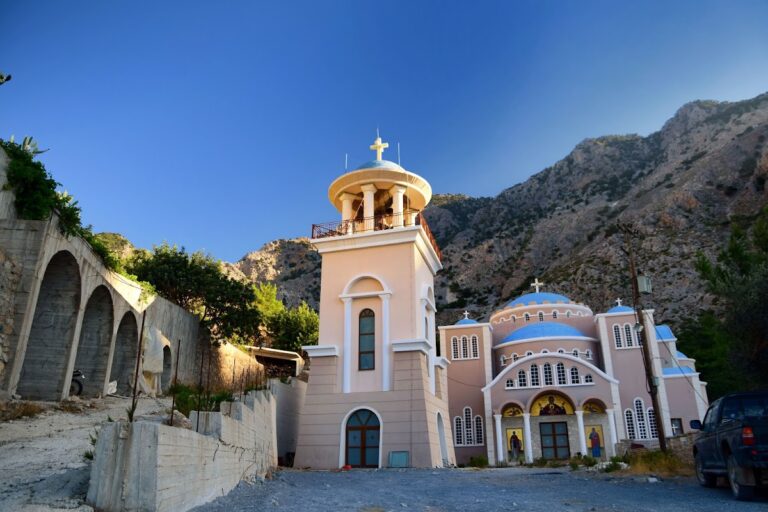
Eleutherna: An Ancient Cretan City and Archaeological Site in Greece

Site at a Glance
- Rating
- 4.6
- Popularity
- Medium
- Country
- Greece
- Primary era
- Classical
- External website
- Open
- Eras represented
- Bronze Age, Iron Age, Classical, Medieval
- Civilizations
- Ancient Greek, Byzantine, Roman
- Site type
- City
On this page13 sections
History
Eleutherna is an ancient city in Greece, established as a Dorian settlement on a naturally fortified limestone ridge during the ninth century BC, in the Sub-Mycenaean and Geometric periods. Its occupation began in the Early Bronze Age, or possibly in the late fourth to early third millennium BC, and continued through the Geometric, Archaic, Classical, Hellenistic, Roman, and early Byzantine periods. The city connected Kydonia, Knossos, the northern coast and its ports, and the sanctuary cave on Mount Ida, helping it become one of ancient Crete’s important urban centres.
Origins and Early Development
Tradition linked the name Eleutherna to Eleuther, one of the Kouretes who protected the infant Zeus from Cronus. The city was also called Apollonia, in connection with Apollo Eleutheros, and ancient forms of its name included Eleuthera and Eleutherai. Greek-speaking Dorian communities established themselves in Crete during the early first millennium BC, and at Eleutherna they occupied a defensible ridge with access to water, arable land, pasture, timber, aromatic and medicinal plants, limestone quarries, and possibly iron resources in the Tallaian Mountains.
Eleutherna prospered during the Geometric and Archaic periods, broadly the ninth to sixth centuries BC. Its territory supported agricultural and pastoral activity as well as access to building materials and natural resources. The city minted coins in the fourth century BC, reflecting its established political and economic role. Eleutherna was also associated with several named intellectual and artistic figures, including the poet Linus, the lyric poet Ametor, the philosopher Diogenes of Apollonia, and the sculptor Timocharis. Timocharis was traditionally regarded as the adoptive father of Pythokritos of Rhodes, who is associated with the Nike of Samothrace.
Hellenistic Conflicts
Eleutherna became involved in the Cretan conflicts of the third century BC, when rival cities and external powers competed for influence. It initially stood with Knossos against Rhodes. During the conflict of 220 BC, a siege forced the city to abandon that alliance. Eleutherna then joined the coalition led by Philip V of Macedon, the king of Macedon from 221 to 179 BC, against Rhodes and Knossos.
Roman Rule and Decline
In 68 BC, during the Roman conquest of Crete, the Roman commander Quintus Caecilius Metellus besieged Eleutherna. The city resisted for a time because of its fortified position, but it was eventually captured through treachery. Under Roman rule, Eleutherna remained prosperous. Baths, villas, public buildings, roads, waterworks, and mosaic floors formed part of an urban landscape that was constructed or rebuilt during this period.
The earthquake of AD 365 severely damaged the city’s prosperity. Later attacks associated with the caliph Harun al-Rashid, the subsequent Arab domination of Crete, and another earthquake in AD 796 contributed to Eleutherna’s decline and eventual abandonment. During the Byzantine period, the city became the seat of a Christian bishop. A Catholic diocese was established during the Latin occupation of Crete and survives as a titular bishopric. The settlement was still known in the fifteenth and sixteenth centuries, but it was later abandoned during the Venetian-era revolt of 1510–1621.
Archaeology and Protection
The British School at Athens carried out a short excavation campaign in 1929 under Humfry Payne. Systematic archaeological research by the University of Crete began in the mid-1980s under Petros Themelis, Thanasis Kalpaxis, and Nikos Stampolidis. Work in three sectors revealed the settlement pattern, sanctuaries, cemeteries, quarries, and remains dating from the Early Bronze Age through the Roman, Byzantine, and later periods.
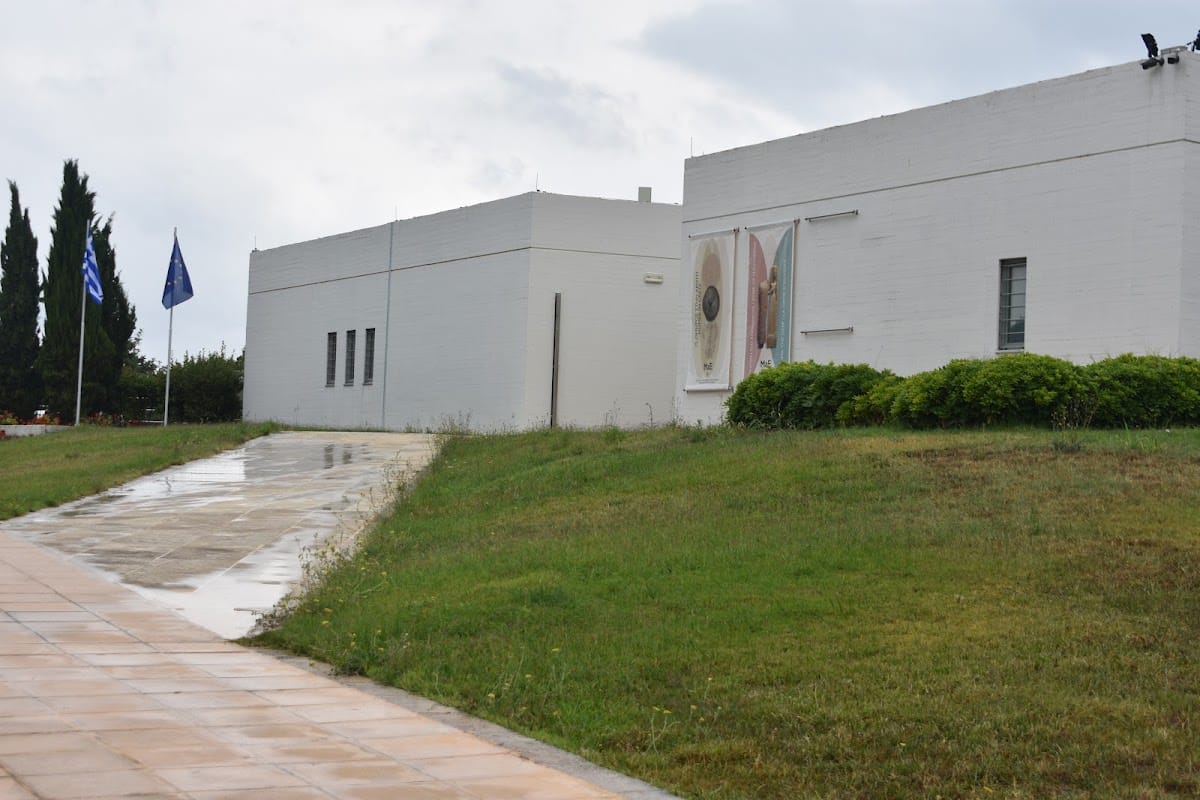
Eleutherna became the subject of major public exhibitions in 1993, 1994, and 2004, and the archaeological museum associated with the site was inaugurated in June 2016. The archaeological area has an absolutely protected Zone A and a controlled Zone B. Since the 1960s, the wider area has also been protected as a historic landscape and an area of natural beauty, reflecting the coexistence of archaeological remains and a substantial natural environment.
During the first decade of the twenty-first century, the Eleuthernians Grove archaeological park was created with paths linking the excavated areas and points of interest. Conservation and restoration at the necropolis and ancient city improved the legibility of the monuments while preserving the character of an excavated archaeological site.
Remains
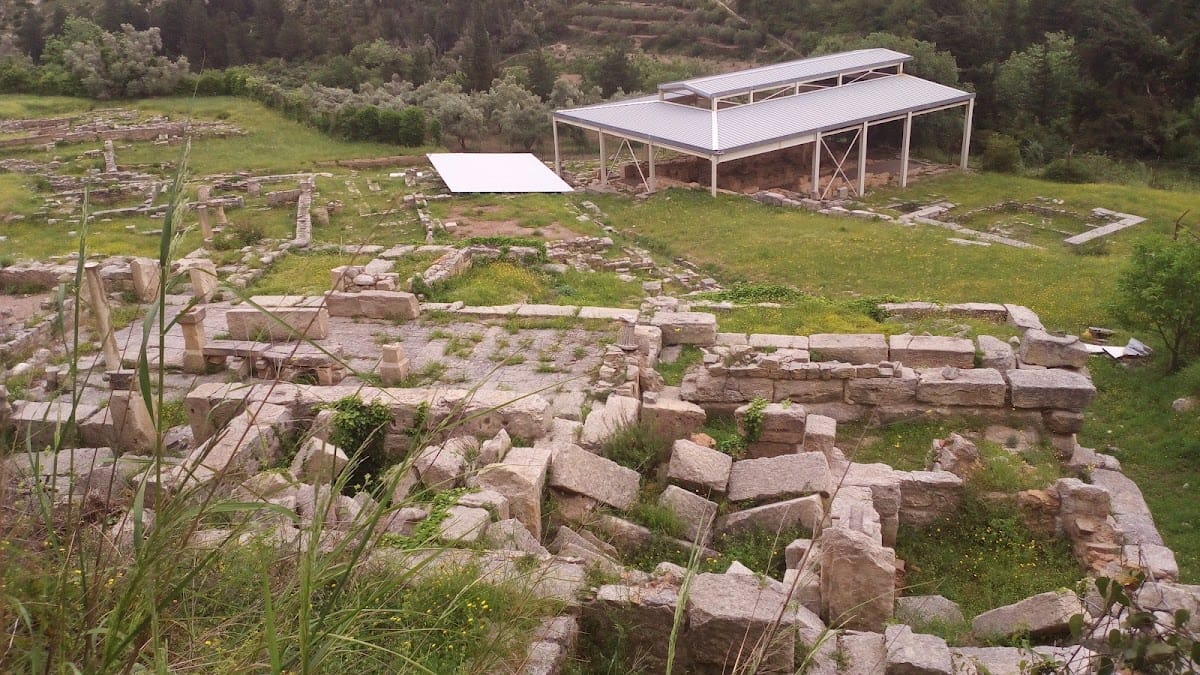
Eleutherna occupies a narrow, elongated limestone ridge on the northwestern foothills of Mount Ida, approximately 380 metres above sea level. The ridge resembles a peninsula and is divided into the northern terrace of Pyrgi, a higher central plateau, and a southern neck interrupted by a Byzantine-medieval tower. The western part of the ancient city is known as Nisi. Two stream beds bound the ridge, with Haplota associated with its western side and Farangitis with its eastern side. The principal urban nuclei lie on Pyrgi and Nisi, corresponding respectively with the modern settlements of Ancient Eleutherna and Eleftherna.
Acropolis and Central Plateau
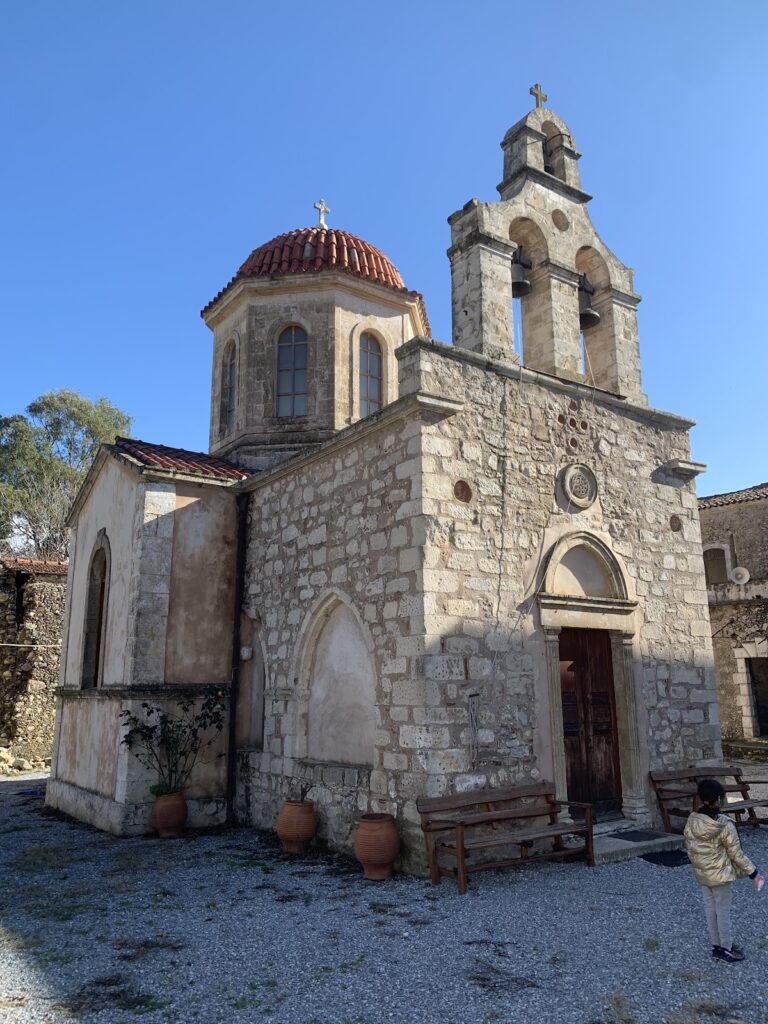
The acropolis occupies the northern part of the summit. Its remains span several periods, including Late Bronze Age architectural features, a Geometric-period kiln, an Archaic sanctuary with probable continuity of use, and Roman, early Christian, and Byzantine buildings. A later large church was constructed over a tetraconch, a structure with four apses or lobes.
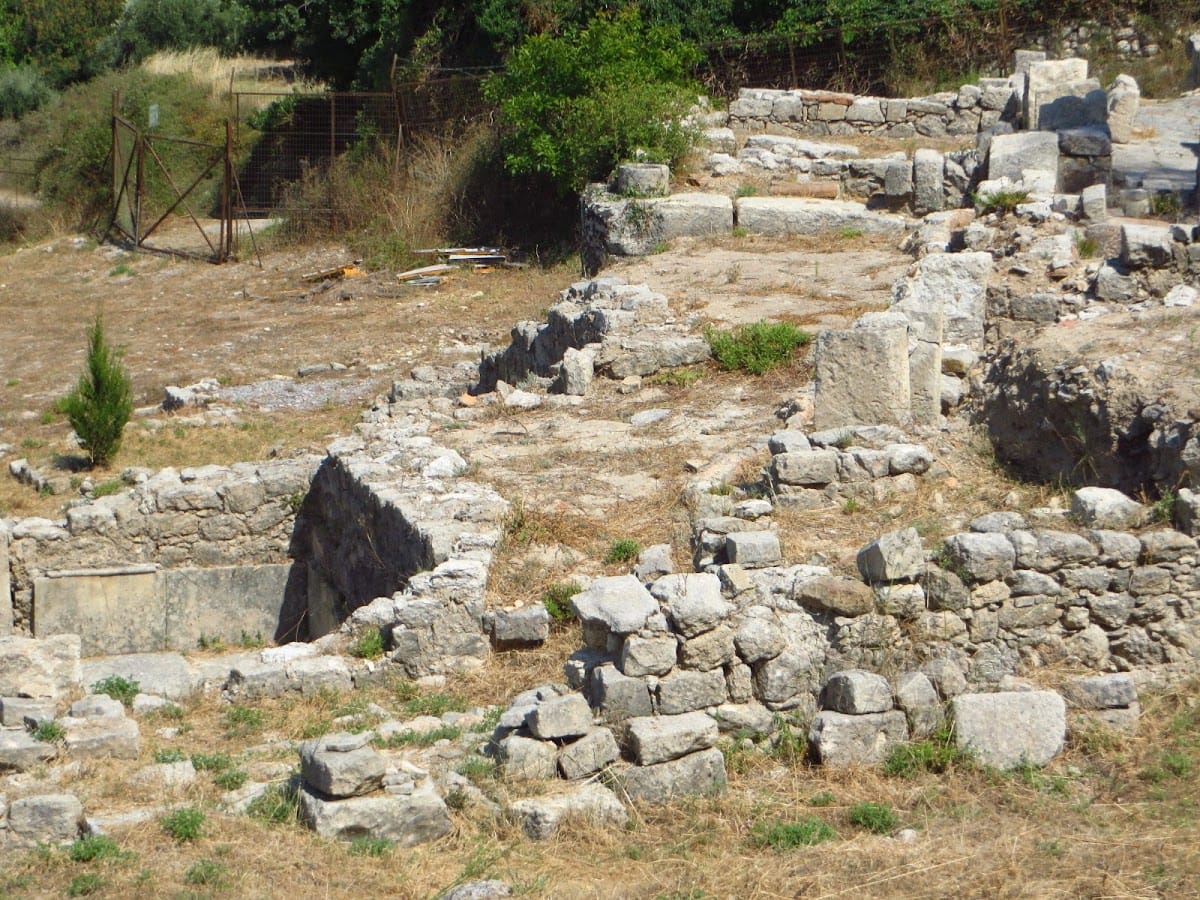
The central plateau appears to have served as a religious and political focus during the seventh century BC. A temple was built on the natural bedrock from local limestone and remained in use from the seventh century BC until the second century AD. Later construction obscured much of its original form, but parts of its walls survive. The south wall measures 9.87 metres long and 0.65 metres wide. It combines ashlar blocks, fieldstones, and rough or partly worked stones used as fillers.
The eastern wall is approximately 5.9 metres long and 0.77 metres high, retaining two courses of four ashlar blocks. A separate lower section may be the euthynteria, the level foundation course beneath the visible masonry of an ancient Greek building. Portions of the north wall measure 4.38 metres long and 0.98 metres high. A separate wall on the western side has unusual masonry and ceramic fillers.
Sanctuaries and Christian Buildings
At Katsivelos, on the eastern foothills, the Basilica of the Archangel Michael was built over an earlier Hellenistic sanctuary. A basilica is a large Christian church arranged around a central nave and side aisles. The building’s founding inscription places it in AD 430–450, although a later date has also been proposed. It was destroyed in the seventh century. The three-aisled church retains rich mosaic decoration.
Three rock-cut pits on the western side of the acropolis contained ritual materials. Two belong to the Late Minoan IIIc period and one to the Protogeometric period. Their contents included drinking and cooking vessels, animal bones, a burnt brazier, skyphoi, a tripod cooking pot, stone tools, and an oenochoe, or wine jug, whose fragments had been placed in two parts of a single pit.
One Late Minoan IIIc pit was approximately 1.02 metres in diameter and cut 0.8 to 0.9 metres into the bedrock. It contained a seated female figurine, probably representing a child-nurturing figure, and a handmade bull figurine with red-painted details on its face and body, possibly indicating a harness.
Necropolis of Orthi Petra
The western slope contains the Orthi Petra necropolis, used from the Late Protogeometric period, around 870–850 BC, to the Archaic period, around 600–550 BC. Hellenistic and Roman urban phases, buildings, and paved roads were later built over part of the cemetery. A rock-cut area functioned continuously as a cemetery from approximately 900 BC to AD 670 and produced more than 700 funerary vessels.
About twenty cremations contained offerings such as gold, jewellery, luxury pottery, and four finely carved miniature ivory heads dating to about 600 BC. Excavations in 1990–1992 also revealed cremations, funerary offerings, and human remains interpreted as possible evidence of human sacrifice and funerary practices recalling the funerals of Patroclus and Achilles in the Iliad.
A double tomb approximately 2,700 years old contained more than 3,000 gold leaves and the first depiction of a bee as a goddess. These discoveries, together with the cremations and associated objects, provide evidence for the ritual practices and funerary culture of Eleutherna during its early historical periods.
Urban Areas and Fortifications
On Nisi, the western hill, excavations exposed an entire Hellenistic neighbourhood with houses and a five-column Doric propylon, a monumental entrance structure. Dated to about 400 BC, the propylon was associated with the enclosure of a sanctuary.
The eastern side of Prines hill preserves Hellenistic retaining walls, Roman buildings, an Early Christian basilica, and other structures. Nearby excavations brought to light a paved road, three Roman houses, and a large public building probably dating to the second or first century BC. The building was reused during the first and second centuries AD.
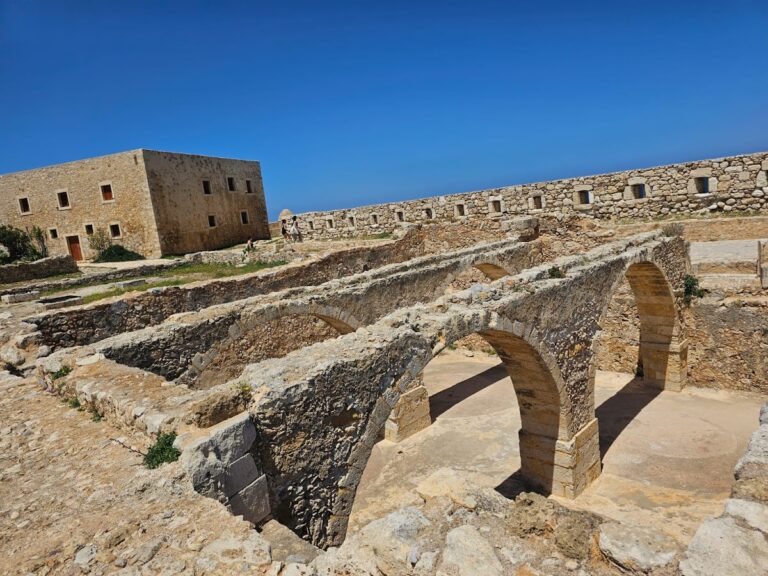
A fortification tower stands on the summit of Pyrgi. It was used from the Hellenistic period through the Byzantine period and overlooks the narrow approach to the acropolis. Large water cisterns lie below and west of the tower, supplied by a Roman aqueduct, a structure or channel designed to carry water.
Roman Infrastructure and Surrounding Features
Roman remains include a bathhouse with two hypocausts, underfloor heating systems, as well as villas, public buildings, an aqueduct, and mosaic floors. Associated deposits contain marble veneer, hydraulic mortar, clay floor tiles, clay spacers, and bronze coins dated to AD 296–310. At Peristere, a large limestone quarry forms part of the wider archaeological area, while Roman-period cemeteries lie beneath the quarry in the Lagas area.
A stone bridge north of Prines hill dates to the Hellenistic period. Its arched structure remained in use, linking the ancient landscape’s roads and water-management features. Together with the quarry, aqueduct, roads, and public buildings, it illustrates the infrastructure surrounding the urban centres on the ridge.
Objects and Inscriptions
Eleutherna has produced dozens of inscriptions, sculptures, precious-material objects, coins, imported and exotic objects, metal artefacts, vessels, and glassware. These finds indicate contacts with the Aegean islands, Asia Minor, Cyprus, the Levant, Egypt, and the Italian peninsula.
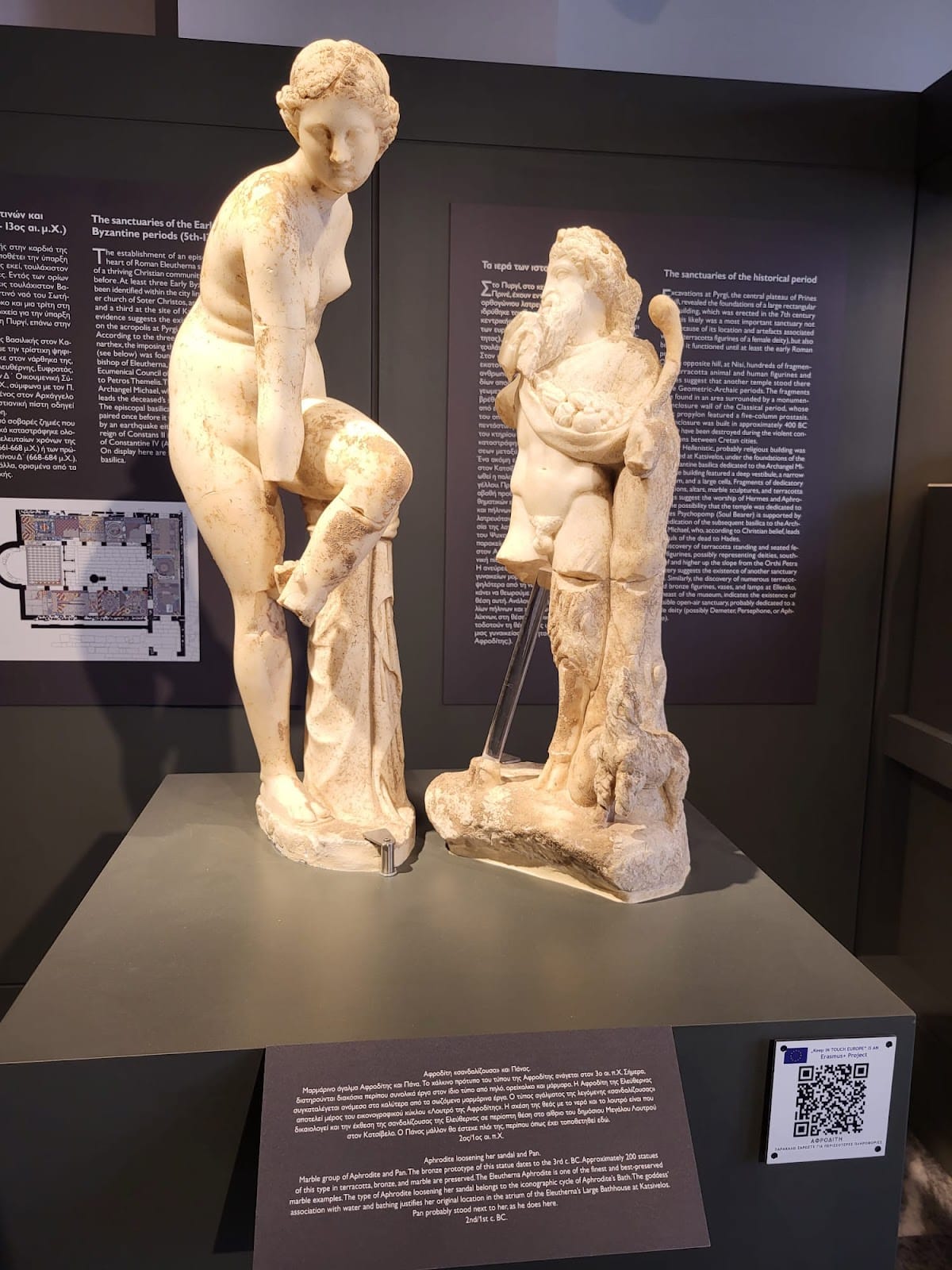
The sculptures include a fragment of a female statue that predates the Lady of Auxerre, the legs of a limestone male statue that may have stood about two metres high, and other Daedalic works in local limestone. Daedalic sculpture is an early Greek style marked by formal frontal figures, triangular faces, and patterned hair or clothing. Another statue depicts Aphrodite preparing to bathe while Pan teases her. A Phoenician funerary stele and an image of an Egyptian deity add evidence of objects and artistic influences from the wider eastern Mediterranean.
Several inscriptions were found on the acropolis, including one instructing soldiers not to drink. Roman and early Byzantine glass and glazed ceramics are being examined for their materials, manufacturing methods, chronological development, and possible evidence of local production.
Archaeological Park and Landscape
The archaeological park incorporates earthen and paved paths, wooden stairs, handrails, explanatory panels, and rest stations. Two modern protective shelters cover parts of the site, with a curved structure over the necropolis and a stepped structure over the eastern basilica. Plantings and surviving vegetation, including ancient olive trees, cypresses, carob trees, pomegranates, oaks, and oleanders, form part of the protected cultural landscape.