Ponte Azzone Visconti: A Fortified Medieval Bridge at Lecco
Site at a Glance
- Popularity
- Medium
- Country
- Italy
- Primary era
- Medieval
- Eras represented
- Medieval, Modern
- Civilizations
- Duchy of Milan, Holy Roman Empire, Italian
- Site type
- Military
- Remains
- Fortified Bridge
On this page13 sections
History
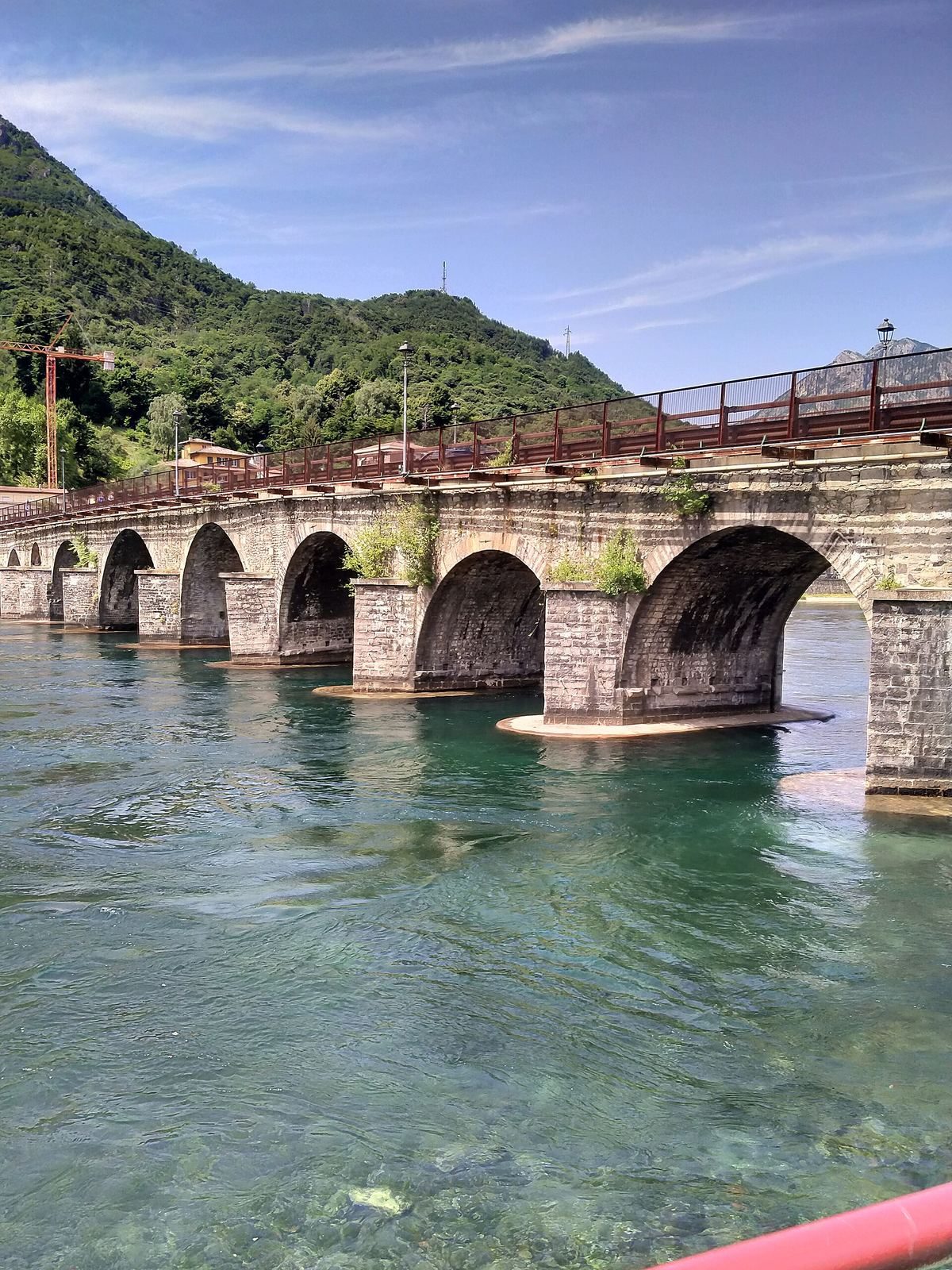
Ponte Azzone Visconti is a stone bridge over the Adda River at Lecco, Italy, built under Azzone Visconti between 1336 and 1338 after the town came under his control in 1335. First called Ponte Grande and also known as Ponte Vecchio, it linked Lecco to the road toward Milan and the Duchy of Milan, a state in northern Italy. The crossing helped make Lecco a fortified point in Milan’s defenses.
Medieval crossing and expansion
The bridge connected the Adda’s banks by land and controlled entry into Lecco. People and goods passed through it, while its defenses offered military protection. It was involved in battles during the fourteenth and fifteenth centuries, and its military installations were noted in 1433 and 1436.
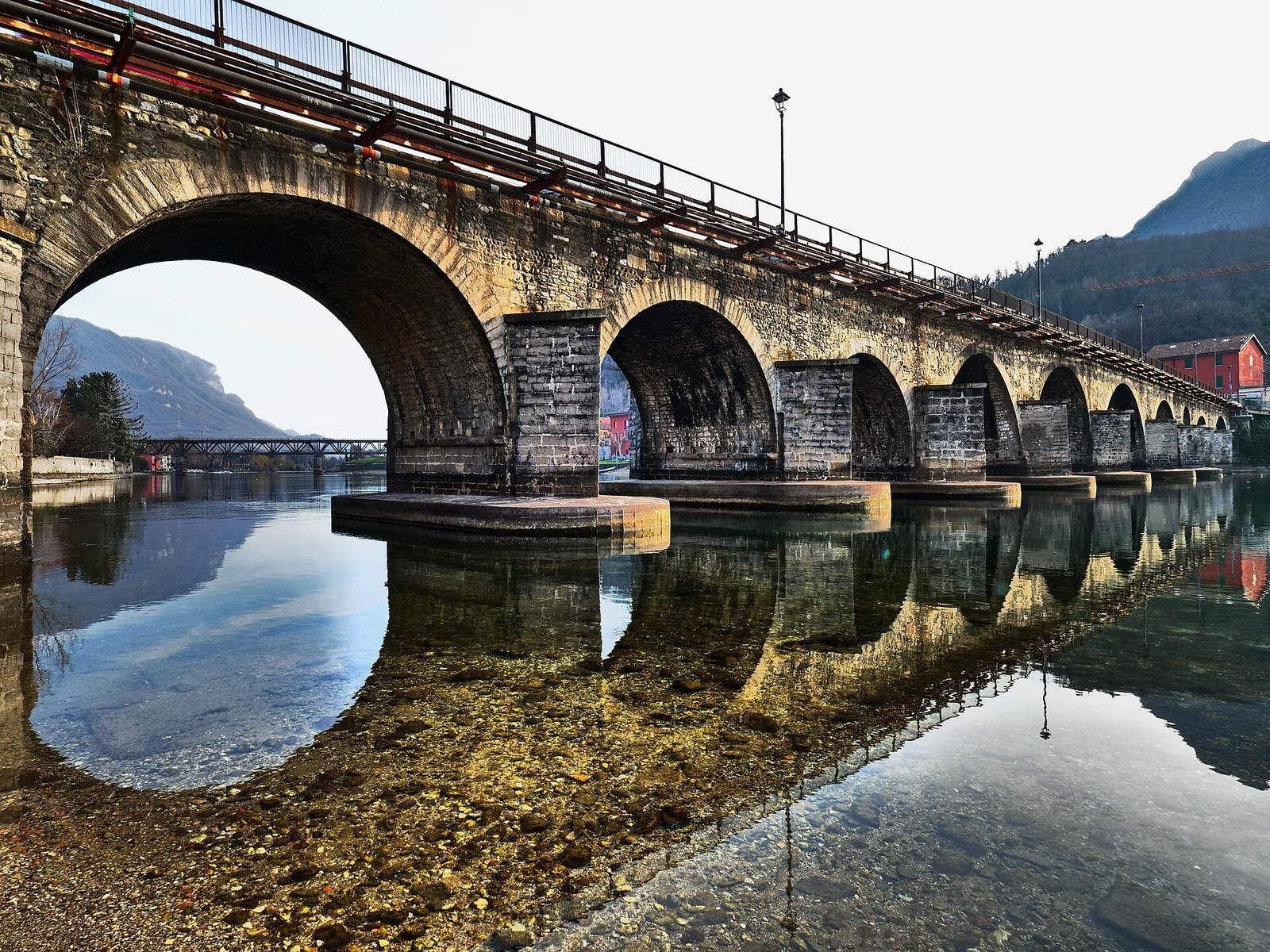
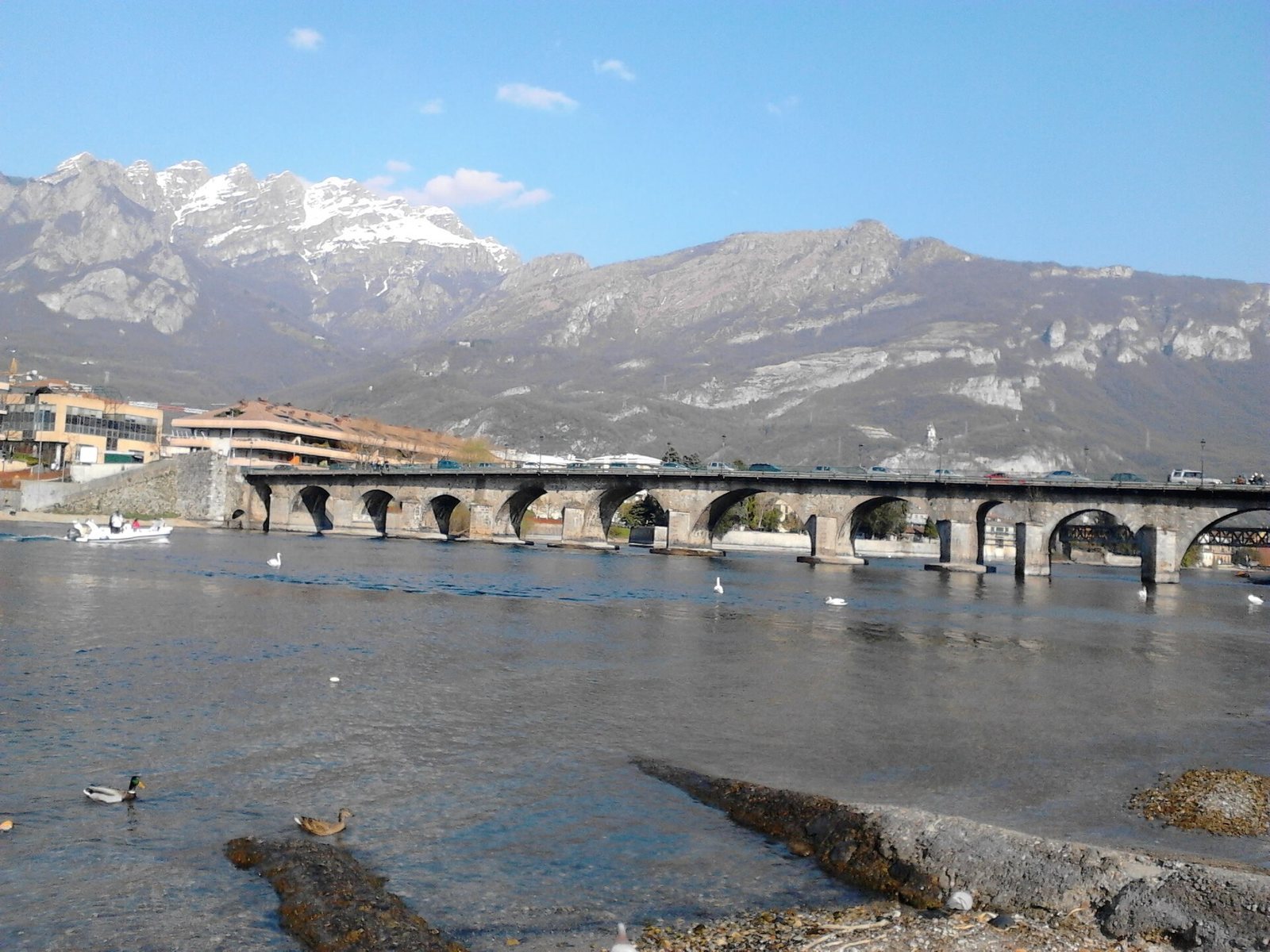
Its arches were enlarged in stages. Work on the western spans took place from 1349 to 1354, followed by further additions in the fifteenth century. Residents of Como blamed the bridge for restricting water flowing from Lake Como through the Adda and worsening floods in their city. They paid for an additional span. By 1440, the bridge had eleven arches, a total associated with Francesco Sforza, the military commander who later became Duke of Milan.
Sieges and tolls
In 1531, the bridge suffered substantial damage during a siege of Lecco that lasted about a year. The fighting was led by Gian Giacomo Medici, known as the Medeghino. Spanish authorities ordered repairs in 1609.
In 1629, German-speaking mercenary infantry passed through Lecco, sacked the town, and helped spread plague. During the seventeenth century, the bridge also served as a toll point for materials in transit. A group of about twelve co-owners and contractors managed the tolls, including Lecco and Milanese nobles and the Benedictine monastery in the Arlenico area. The charges were regarded as high.
Revolutionary-era fighting
During the 1799–1800 fighting between French and Austro-Russian forces, the bridge was one of the few Adda crossings left intact after the French destroyed others. It enabled Austro-Russian forces to approach Lecco, where a three-day battle caused many deaths. On 28 April 1799, French troops retreating across the bridge blew up two arches on the Monte Barro side to hinder pursuit.
Nineteenth-century changes
In 1832, the fortifications at the entrance were demolished to make way for a road realignment. The bridge is mentioned in chapter I of the 1840 edition of Alessandro Manzoni’s The Betrothed. Local scholars have also traditionally proposed that the bridge in the background of Leonardo da Vinci’s Mona Lisa is Ponte Azzone Visconti, citing similarities between the painted landscape and the Lecco area.
The bridge was widened in 1909–10 despite opposition from the monument-preservation authority. Further fortifications were removed in 1910 to allow the Como tramway to pass. The bridge survived the Italian wars of independence and both world wars without damage.
Twentieth-century use
Temporary pedestrian walkways projecting from the bridge were added in the 1950s while the J. F. Kennedy Bridge was being built. They remained until 2014, when they were removed during major maintenance that also brought new protective barriers. Since 2015, the bridge’s principal use has been as a route for pedestrians and cyclists, with motor traffic permitted in alternating directions at different times of day.
Remains
The bridge crosses the Adda in stone and measures 131 metres long. Its original form differs substantially from its present appearance, and its semicircular arches have unequal widths. Following the widening of 1909–10, the bridge measures 9.05 metres across.
Bridge structure and associated features
Stone spans and widening
The 1909–10 widening used iron brackets along the sides, and the two parapet walls, low protective barriers at the edges, were removed. In 2017, lighting work added conduits without cutting into the historic deck, along with four bases at the sides for lighting poles.
Defensive remains
The original defenses included towers at both ends, three drawbridges, a central tower, outer defensive works called ravelins, a small fortified structure, and a dovecote for carrier pigeons. Small guns and heavier cannon armed the crossing. At the Lecco end, a tower stood apart from the mainland across a canal; remains of that tower can still be seen on the southern side.
Religious and commemorative features
A statue of Saint John of Nepomuk, a Bohemian Catholic saint, was placed on the bridge in the eighteenth century. It fell into the water during the 1799 fighting and was later recovered; it now stands in the main square of the Castello district. A Marian chapel occupies its former position on the bridge. Lecco residents also carved an inscription there in gratitude for the bridge’s role in their safety.
River-level staircase
A staircase uncovered during widening work in 1959 connected the castellan’s residence, the home of the official responsible for the fortified position, directly to the riverbed. It provided a way for him to reach a boat in an emergency.
Lazzaretto and artificial island
The area known as the Lazzaretto lies along the bridge’s southern side, where material excavated during work on the arches was deposited. An artificial island lies near the bridge, but its exact origins remain uncertain; the deposited material may also have contributed to its creation. The island’s first certain appearance in a document is on a 1723 boundary map marking the Adda between the Duchy of Milan and the Republic of Venice.