Chudleigh Fort: A Civil War Fortification and Memorial Park in Bideford
Site at a Glance
- Rating
- 4.4
- Popularity
- Low
- Country
- United Kingdom
- Primary era
- Modern
- Eras represented
- Modern
- Civilizations
- British
- Site type
- Civic
- Remains
- Monument
On this page6 sections
History
Chudleigh Fort is a nineteenth-century stone viewing structure at East-the-Water in Bideford, Devon, United Kingdom, rebuilt on the site of a Parliamentarian fortification from the English Civil War (1642–1651), fought between supporters of Parliament and King Charles I. The original defenses were intended to protect Bideford from Royalist ships approaching by sea.
Parliamentarian fortifications and the siege
The original fortification was established in 1642 for Devon landowner Sir George Chudleigh and his son James. James had previously served as an officer in the Royalist army in Ireland, but both men sided with the Parliamentarian garrison at Barnstaple, which also defended Bideford. Their support for Parliament was partly linked to opposition to Charles I’s treatment of merchants. Ship money, a levy associated with naval defense, had harmed trade through Bideford and Barnstaple.
Sometime after August 1642, James built two raised-earth artillery platforms on high ground, one at East-the-Water and the other at West-the-Water, on opposite sides of the River Torridge. In 1643, Royalist victories at Braddock Down in January, Stratton in May, and Lansdown and Roundway Down in July left Parliamentarian forces besieged in Bideford. After it became clear that relief would not come, Royalist troops stormed the town in August. Colonel John Digby’s infantry regiment took part in the attack, and fierce fighting around both forts preceded Bideford’s fall. James was away from the town during the siege; he had fought at Stratton.
Rebuilding and commemoration
The forts were abandoned at the end of the Civil War. As Bideford expanded, buildings covered the West-the-Water site, while the East-the-Water position remained undeveloped until James Ley of Northam rebuilt it in the mid-nineteenth century as an ornamental stone structure. A plaque’s claim that the fort was erected in April 1642 is erroneous: the Civil War began in August of that year.
In 1921, the site was bought through public subscription for use as a park commemorating those who died in the First World War. Its memorial plaques were later revised to honor Bideford residents killed or missing in both world wars. Chudleigh Fort received Grade II listing in 1949, a category for buildings considered of special architectural or historic interest in England.
Remains
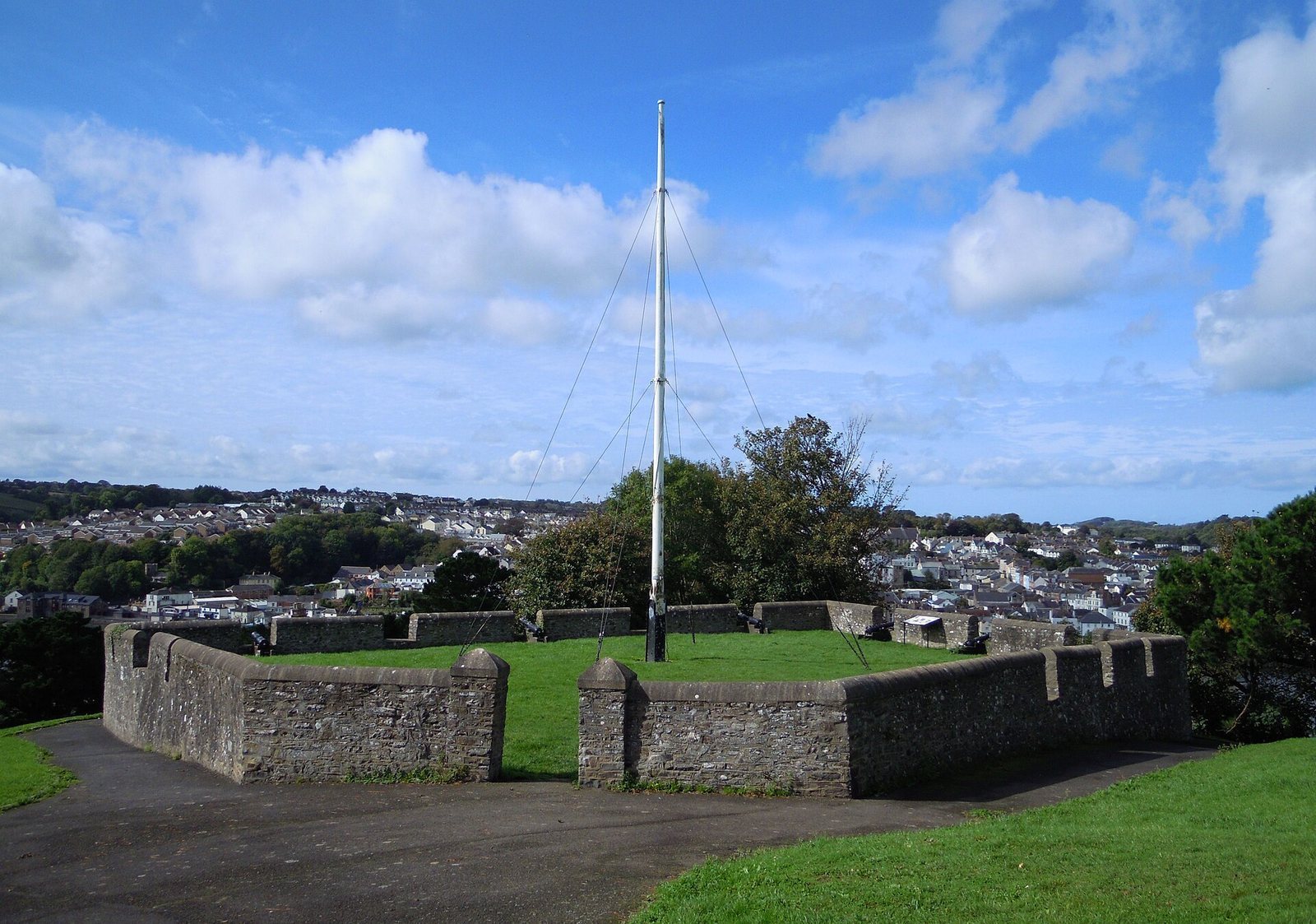
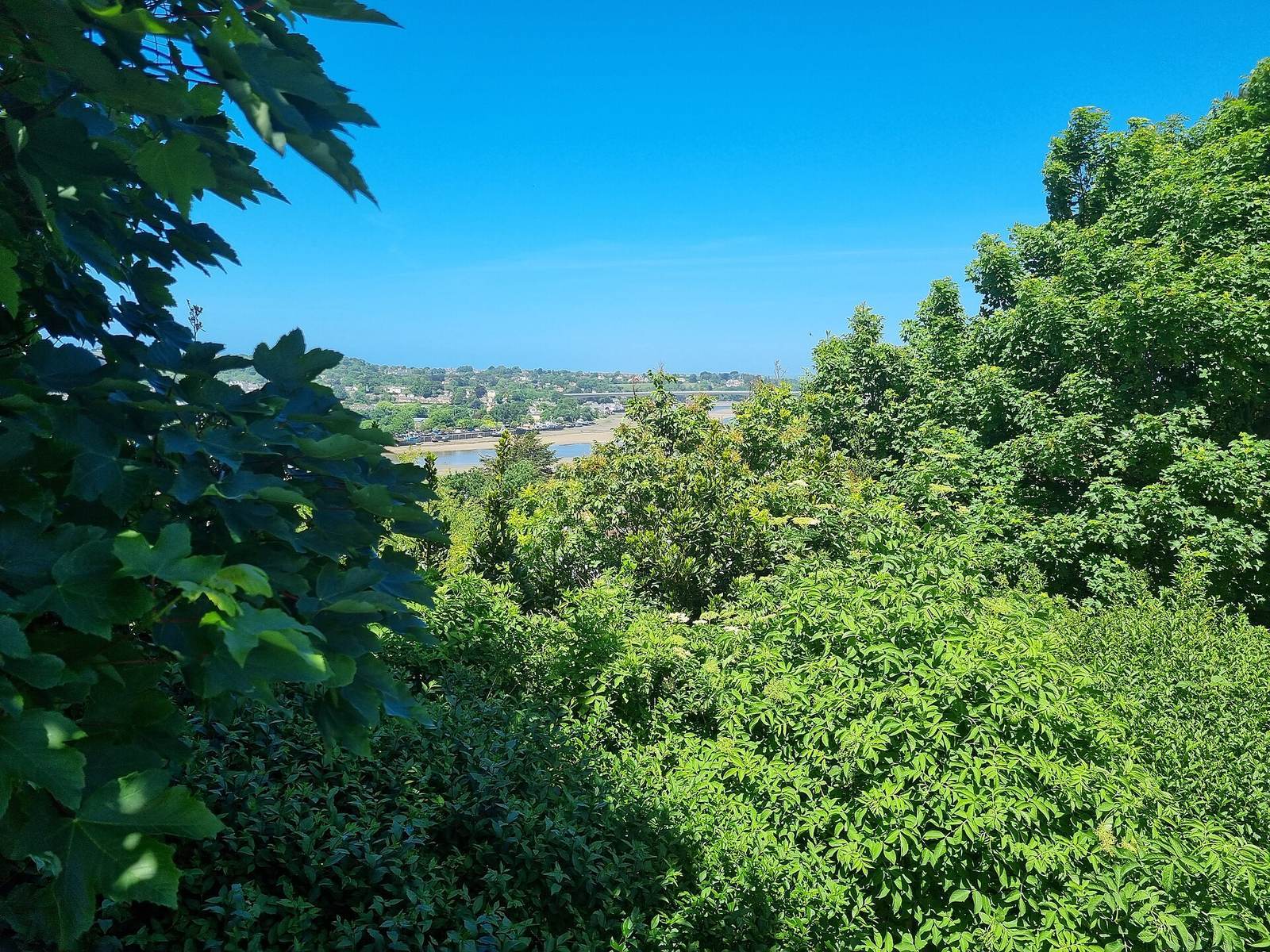
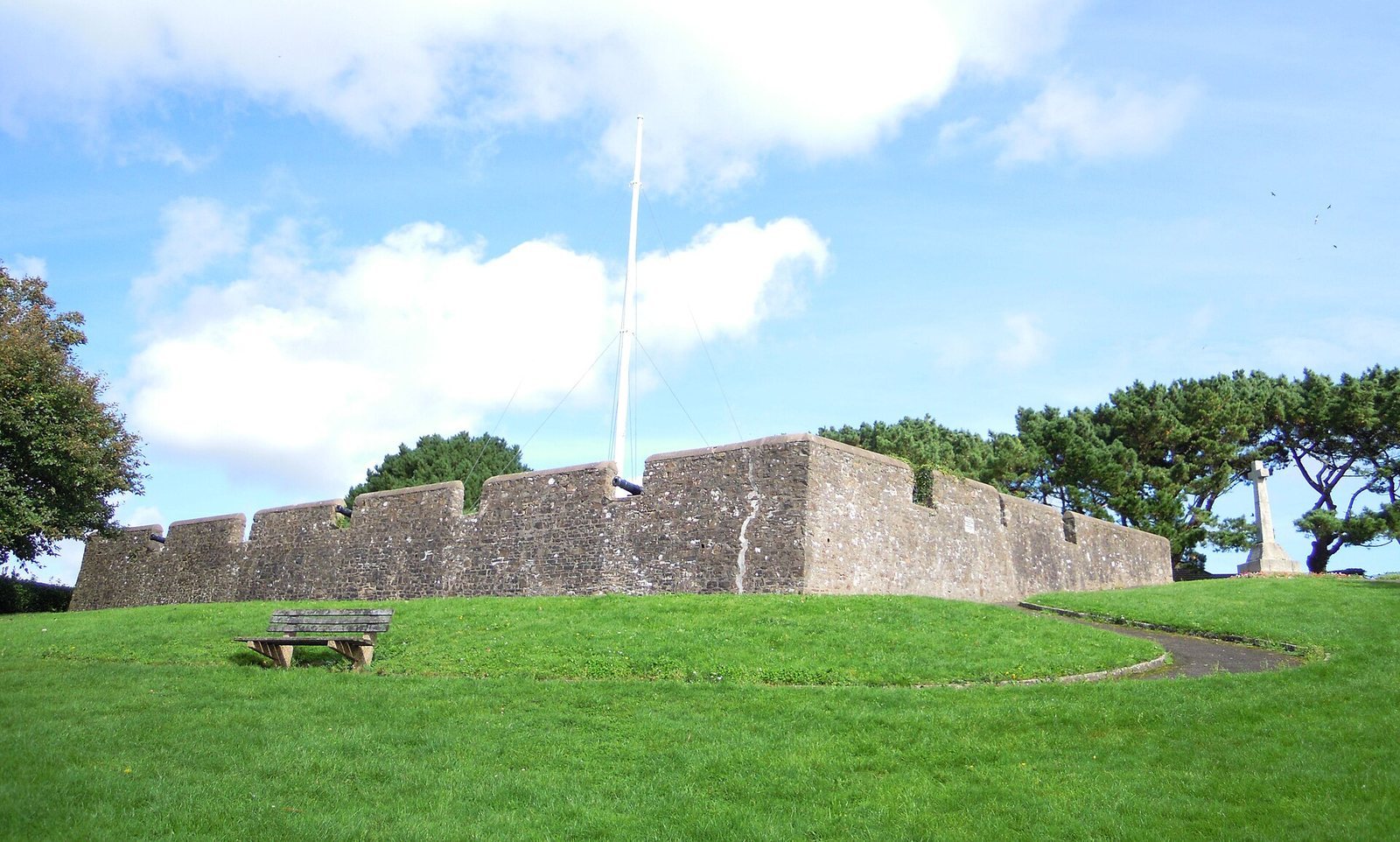
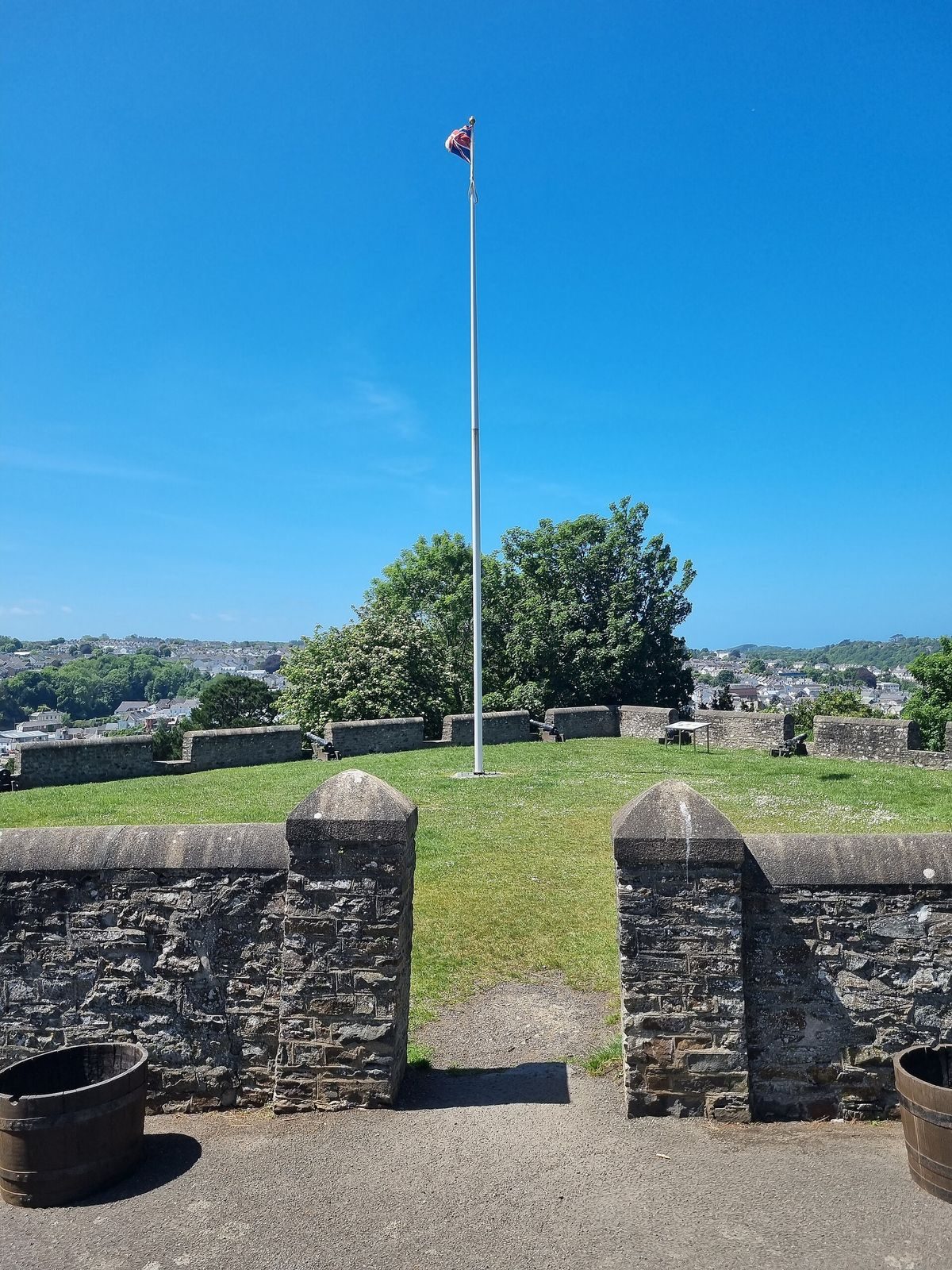
The surviving East-the-Water site occupies high ground overlooking the River Torridge. Its five-sided stone fort stands within a public park that includes paths, landscaped grass, and a war memorial.
The stone fort
The fort has thin walls and an open rear. Its fourteen positions for guns differ from the eight on the original raised-earth platform. Seven old cannons on wheeled wooden carriages were installed at the stone structure. Designed to provide elevated views across Bideford and the river, it served as a viewing point rather than a military defense. A wall plaque attributes its erection to Chudleigh and describes him as a major-general, a senior military rank.
The park memorial
The park’s memorial plaques commemorate Bideford residents killed or missing in the First and Second World Wars. The memorial and landscaped grounds form part of the present public use of the site.