Abbeydorney Abbey: A Medieval Cistercian Monastery in County Kerry
Site at a Glance
- Popularity
- Low
- Country
- Ireland
- Primary era
- Medieval
- Eras represented
- Medieval
- Civilizations
- Norman
- Site type
- Religious
- Remains
- Monastery
On this page7 sections
History
Foundation and early connections
Abbeydorney Abbey is a ruined Cistercian monastery just north of Abbeydorney village in County Kerry, Ireland. In 1154, the regional leader O Torna established it for monks invited from Monasteranenagh Abbey. His family had ruled in Kerry before the Norman invasion of Ireland. The Cistercians were a monastic order developed from the Benedictine tradition and centered on communal religious life. Abbeydorney was a dependent foundation of Monasteranenagh, a Cistercian abbey in County Limerick, and belonged to the lineage of Clairvaux, an influential early Cistercian house. It was the only Cistercian monastery in medieval County Kerry.
Dedicated to Mary, the abbey was first called Kyrie Eleison, a Greek prayer meaning Lord, have mercy. The name evoked the prayer and echoed Ciarraí, the Irish name for Kerry. The O’Torna name may derive from Mochuda, the birth name of St Carthage the Younger, an Irish monk who died in Kerry around 638.
Christian O’Conarchy travelled to Clairvaux for religious training alongside a cleric who later became Pope Eugene III. He became the first abbot, or head, of Mellifont Abbey, and later a bishop of Lismore, a senior church official responsible for a diocese. After retiring in 1180, he lived at Abbeydorney and was buried there in 1186.
Conflict and financial difficulties
Abbeydorney became involved in the Mellifont conspiracy of 1227 to 1228, a revolt by Irish monks against Anglo-Norman rule and pressure to abandon customs connected with Irish Christianity. The Anglo-Normans were Norman-led settlers and rulers in medieval Ireland. In 1227, Stephen of Lexington, a Cistercian reformer, removed Abbeydorney’s abbot and installed an English replacement.
The community probably had limited means. In 1453, the superior of Monasteranenagh accused its abbot of mismanaging the abbey. Around 1460, James FitzGerald, Earl of Desmond, also levied taxes without authorization, adding to its difficulties.
Dissolution and the end of monastic life
The abbey was dissolved in 1537, and its property was transferred to Edmund, 11th Baron of Kerry. The monks remained for a time, but the religious community ended in 1577. That year, the final abbot was arrested and shot at Lixnaw Castle.
Remains
Church and monastic buildings
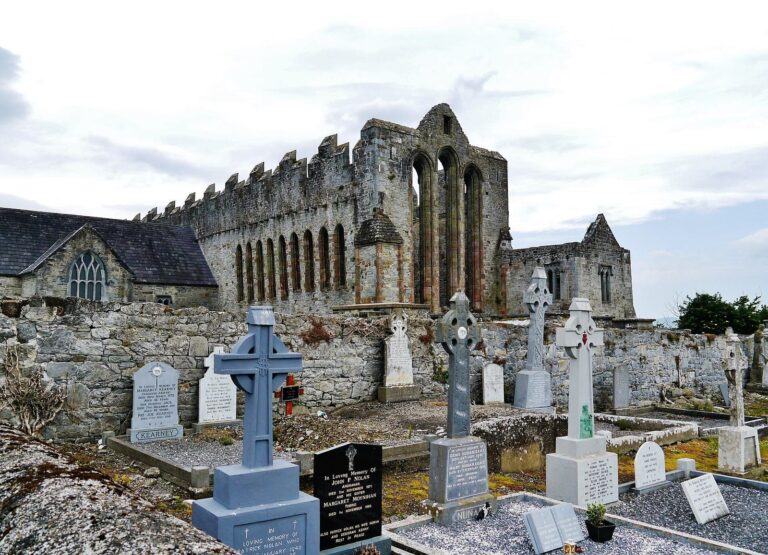
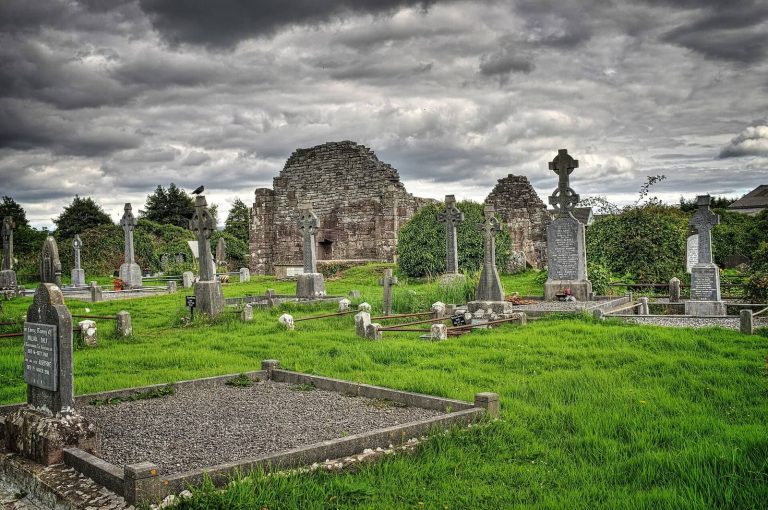
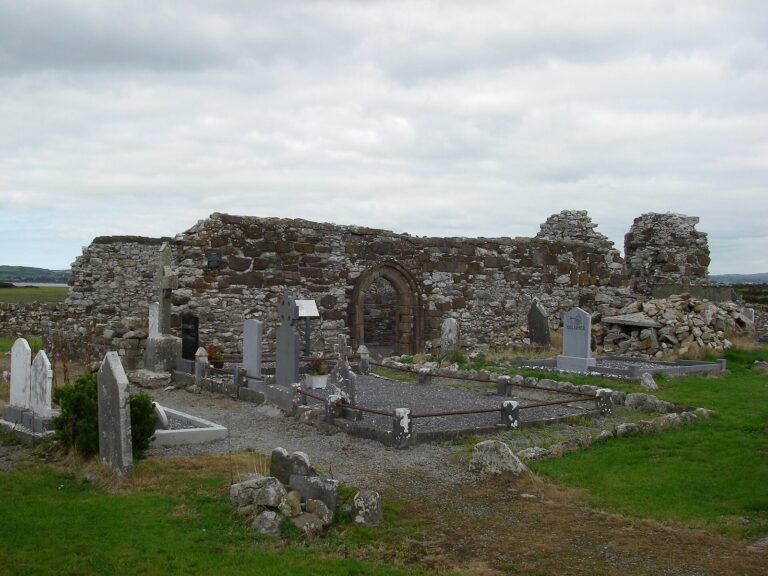
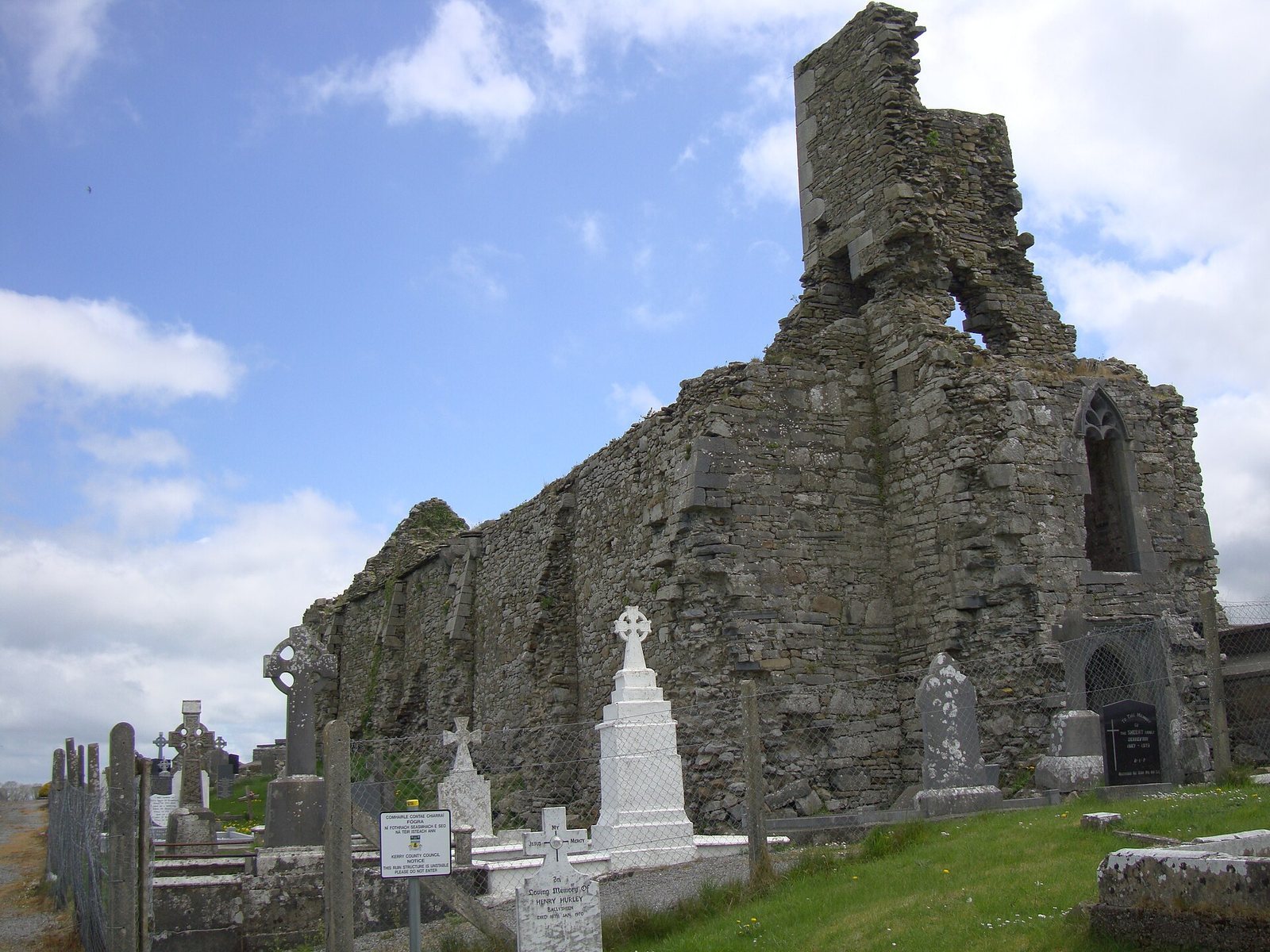
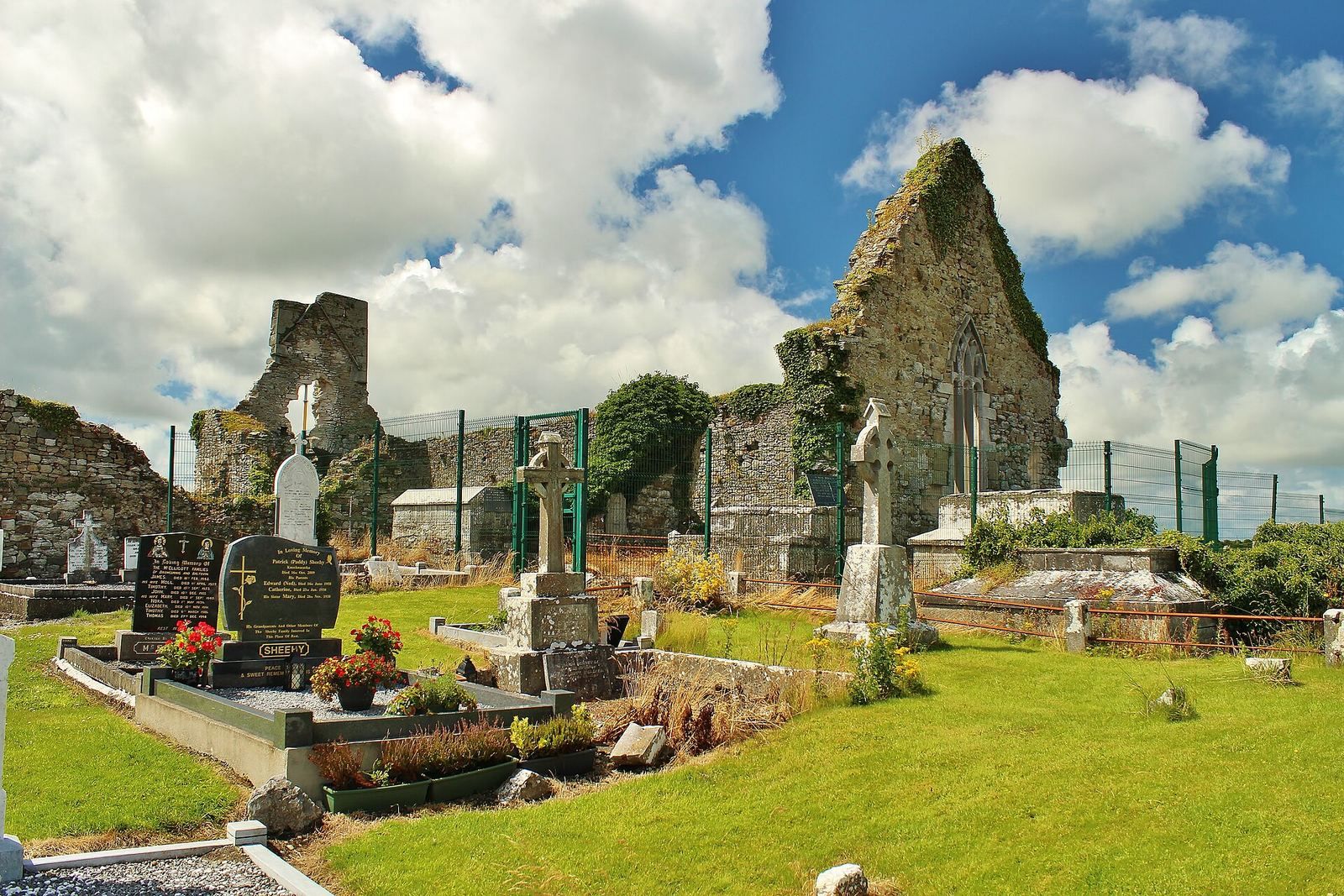
The surviving complex includes a cross-shaped church and ruins of other buildings used by the monastic community. The church dates to the fifteenth century, and its remaining fabric probably reflects extensive restoration during that period. Its western and eastern ends retain their triangular gable walls, with part of a bell tower surviving at the west end. The church’s alignment turns about 60 degrees toward the northeast from the orientation usual for churches, apparently because of local site constraints. The buildings are fragile, and falling stones pose a safety risk.
Cemetery grounds
The abbey grounds now serve as a cemetery. Burial there may date to the monastic period, when local people sought to be laid to rest near the religious community.