Donators Church: An Orthodox Cave Church at Eski-Kermen
Site at a Glance
- Popularity
- Medium
- Country
- Ukraine
- Primary era
- Medieval
- Eras represented
- Medieval
- Civilizations
- Byzantine
- Site type
- Religious
- Remains
- Church
On this page9 sections
History
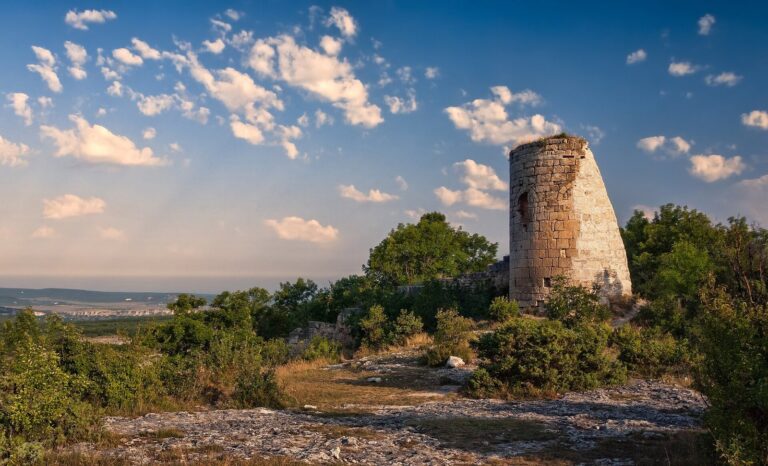
Donators Church is an Orthodox cave church associated with the medieval fortified city of Eski-Kermen in Ukraine and usually dated to the 14th century. It was also linked to the Diocese of Gothia. Its construction date remains disputed, and the church ceased to function in the 15th century.
Dating, dedication, and possible patrons
Proposed dates range from the late 12th or early 13th century to the 14th or early 15th century. Nikolai Repnikov first placed the church in the second half of the 14th century, then revised his estimate to the 1380s. Nikolai Ernst proposed the 14th or early 15th century, while Oleg Dombrovsky argued for the late 12th or early 13th century. Other researchers placed its construction before the middle of the 14th century.
A damaged construction inscription has been interpreted as saying the church was founded with the help of Mary, described as a servant of Christ. Its date has been read as either 1351–1352 or 1381–1382. One proposal identifies Mary as a nun from a princely family who founded the church as a tomb for relatives, in either 1351 or 1381.
Nikolai Ernst introduced the name Donators Church in the 1920s, drawing on a fresco that showed a family understood to be the church’s patrons. The figures have been proposed as members of the ruling family of the principality of Doros, whose capital was Eski-Kermen. Ernst, Anatoly Yakobson, and Yuri Mogarichev also considered that the church might have belonged to a small memorial hermitage and served as a burial place for a local prince. One burial has been identified, and a second is possible.
Use and modern study
The painter Moritz Webel visited the church in 1848 with an expedition led by archaeologist and antiquarian Alexei Uvarov, making watercolor copies of frescoes that were then in better condition. In 1872, writer Evgeny Markov described the surviving Byzantine paintings. Investigation of the frescoes began during the Crimean archaeological expedition of the 1920s. Ernst remarked on their preservation, while Yakobson attributed them to a painter from Constantinople. Painter and restoration specialist Igor Grabar examined them in 1927 during an expedition of the Central State Restoration Workshops. Repnikov prepared a detailed description; Ernst’s 1929 work is generally treated as the first scholarly description, and Repnikov’s report on the expedition appeared in 1932.
The church is designated a federal cultural-heritage site in Russia, a status granted in 2015, and a national cultural-heritage monument in Ukraine.
Remains
Setting and rock-cut approach
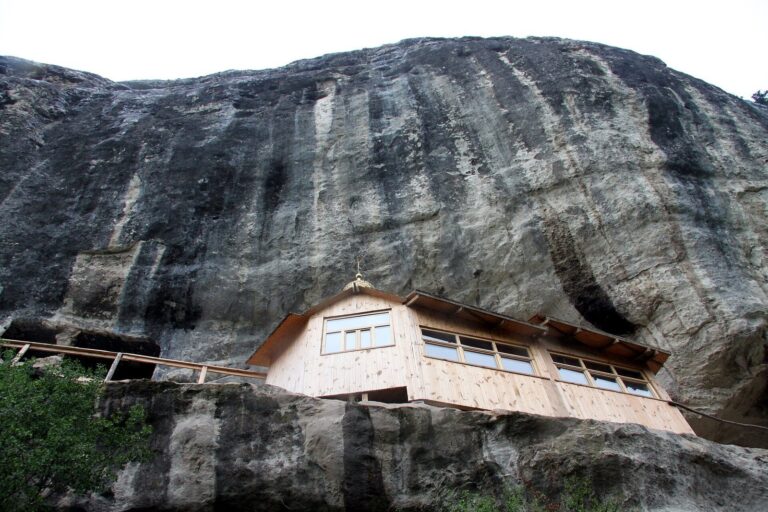
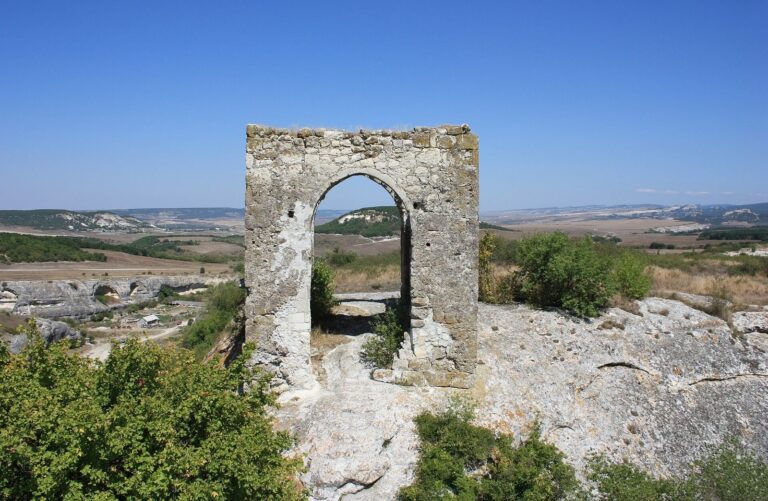
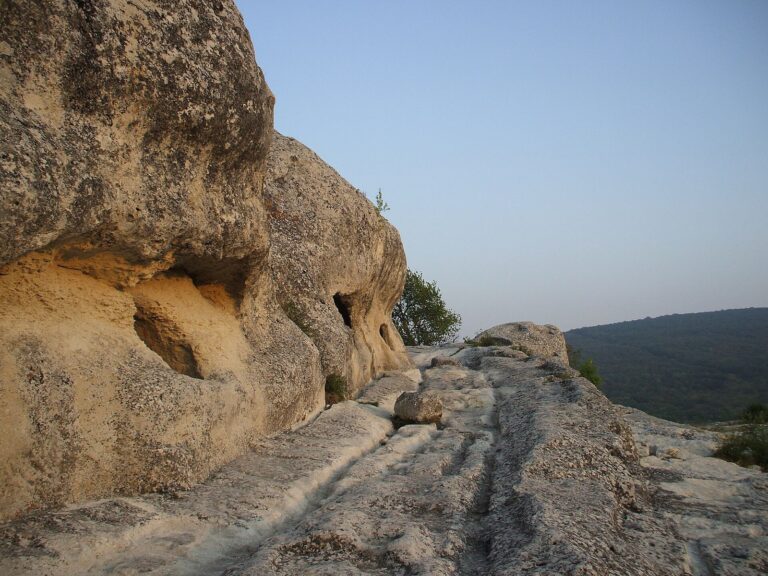
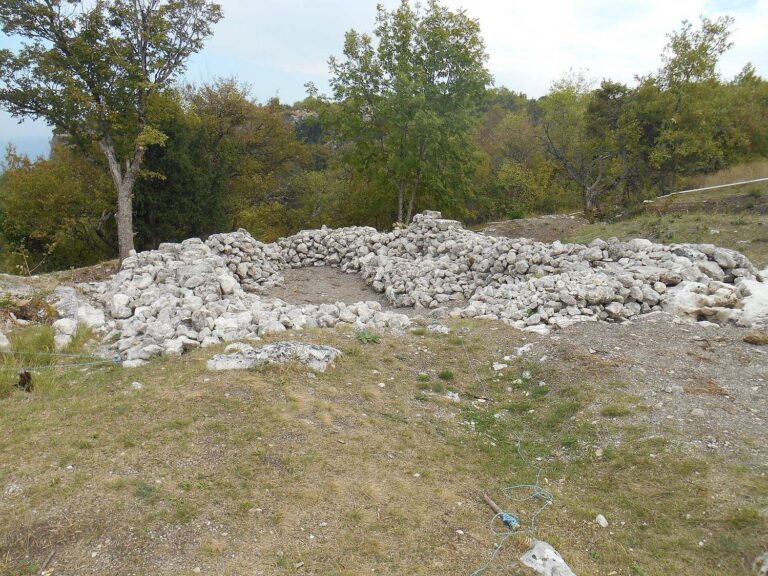
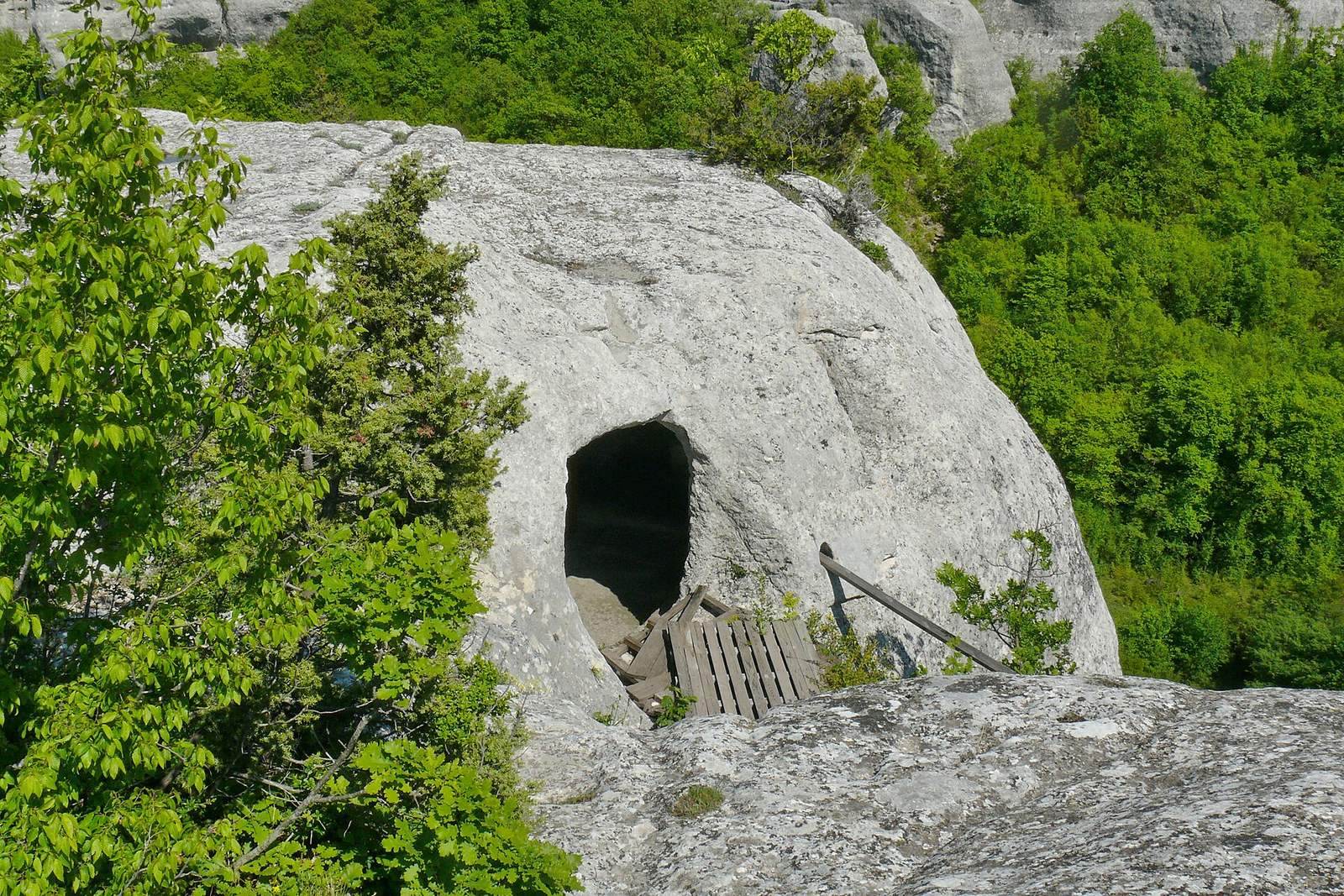
The church is cut into a rocky promontory at the upper end of a gorge in the second ridge of the Crimean Mountains. The promontory divides the ravine into two branches. Traces of narrow stairs cut into a fissure and sockets for wooden hanging walkways survive along the old approach, which is now nearly impassable. Two further rooms cut into the rock stand beside the church. One is identified as a tomb; the other may have been a burial chamber, crypt, or cleric’s cell. Sockets in the rock before the entrance and on the platform indicate that wooden structures may also have stood above ground nearby.
Church plan and interior
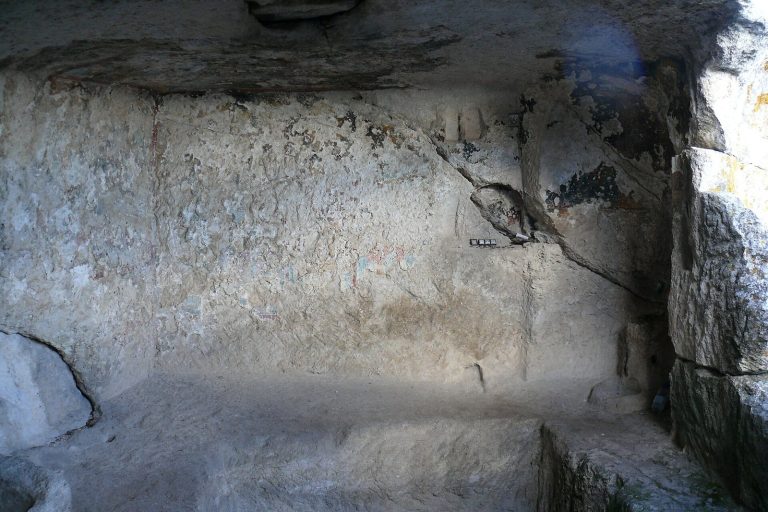
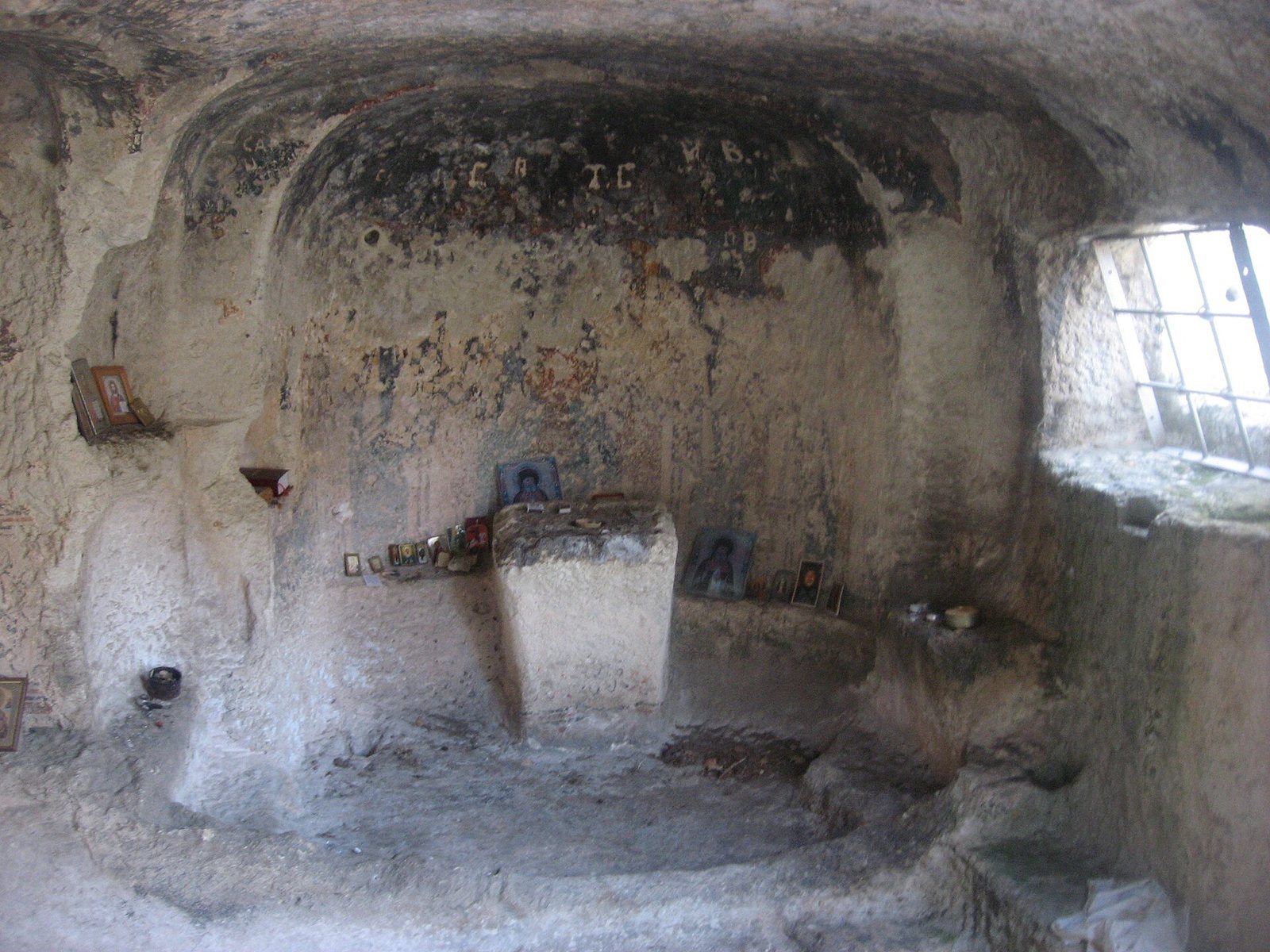
The nearly rectangular church measures 5.1 by 3.2 metres and reaches 2.5 metres in height. Its entrance and a window are on the south side. The horseshoe-shaped apse, the recessed sanctuary end, faces due east and sits slightly south of the centre of the worship space. An altar barrier survives to a height of 35 centimetres and may have been raised later with a screen of icons. A stone bench follows the west and north walls. The northern ceiling has a half-barrel curve, while the rest is flat. A proposed reconstruction of this northern area includes two half-columns against the walls and a column between them, which may have separated a small chapel from the main space.
Decorative arched recesses on the north wall contain images of saints; they were not used for burials. The recess nearest the entrance continues onto the west wall. Repnikov suggested that one niche may have held an offering table. The walls were plastered, and frescoes once covered the interior, including the ceiling and the reveals around the window and doorway. Only small fragments of the paintings survive.
Frescoes and inscriptions
Painted scenes
The semi-dome of the apse held a half-length Deesis, a Christian image of Christ with the Virgin and John the Baptist in intercessory positions. Christ, dressed in red, occupied the centre, with John to his right and the Virgin to his left. Below was an Adoration of the Lamb, surrounded by saintly hierarchs, or senior clergy honoured as saints. Part of the leftmost deacon was painted inside a recess cut into the wall. Dombrovsky took this as evidence that this part of the composition was added later and may not have belonged to the original plan.
Above the altar, scenes on the ceiling showed the Annunciation, the Baptism of Christ, and the Presentation of Christ. Five medallions with elaborate ornament on the northern ceiling contained half-length saints; by the 1920s, figures identified as Hermolaus, Panteleimon, and the apostles Peter and Paul could still be recognized. Another ceiling scene showed the martyrdom and beheading of Theodore Stratelates before a king. Dombrovsky proposed that the apse paintings dated to the late 12th or early 13th century and that other compositions were added in later campaigns ending in the late 14th century. Restoration artist Irina Volkonskaya disputed this sequence, arguing that the paintings’ style and technique did not support separate phases.
The western arched niche on the north wall retained small fragments in the 1920s of two standing figures in military dress, identified as George the Victorious and Demetrius of Thessaloniki, with part of a smaller figure between them. Hooves in the eastern niche suggest that it once contained a figure on horseback. The niches had ornamental patterns and inscriptions, with medallions of saints’ busts between the arches. Dombrovsky questioned the identification of the northern-wall figure as George. Beside the altar barrier were half-length figures of two female martyrs, with ornament below.
The west-wall niche held the donor scene that gave the church its name, although only fragments remained by the 1920s. At its centre was a full-length, haloed man in rich red clothing, with a youthful face and short beard. Repnikov identified him as the martyr Akindynos; Ernst and later Dombrovsky proposed that he was Christ. To his right stood a praying nun. On his left were a bearded man wearing a hat with a fabric top and fur trim, and remnants of a woman in reddish clothing with elbow-length sleeves and a pointed traditional headdress. The paintings also extended across the south wall and around the window and doorway.
Inscriptions
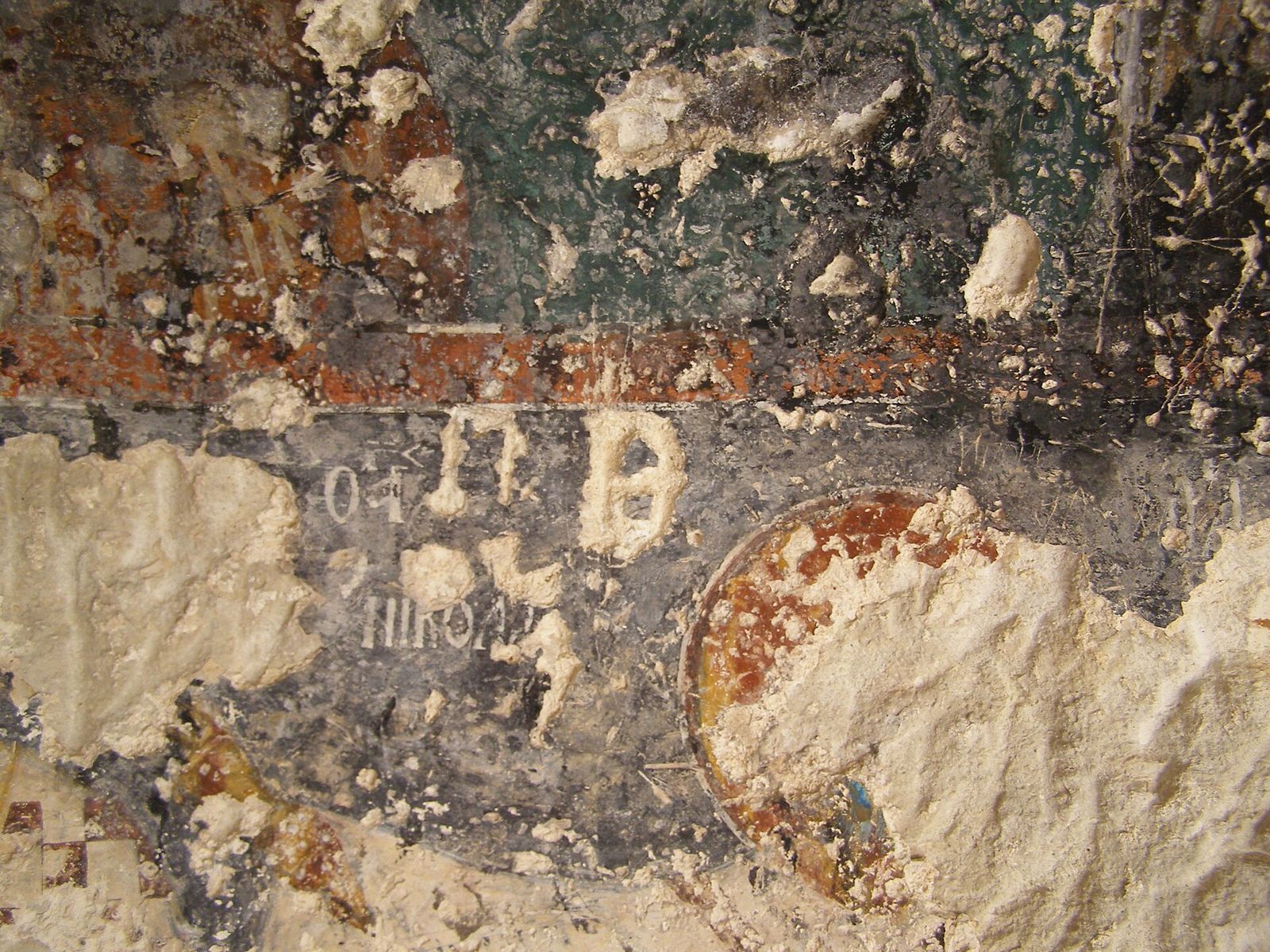
Four inscriptions in Byzantine Greek were painted above the arched niches on the west and north walls. The construction text on the north wall used yellow lettering edged in red against a blue ground; damage has obscured parts of it. Three other inscriptions are epitaphs, painted in white on blue. Their lettering appears to be by the same hand, though they need not have been made at the same time. The epitaphs may have been added separately over completed frescoes, perhaps after a donor’s death, and have been dated to about 1351–1352 or 1381–1382.