Church of Saint Theodore Studite at Nikitskie Gates: A Monastic Cathedral in Moscow
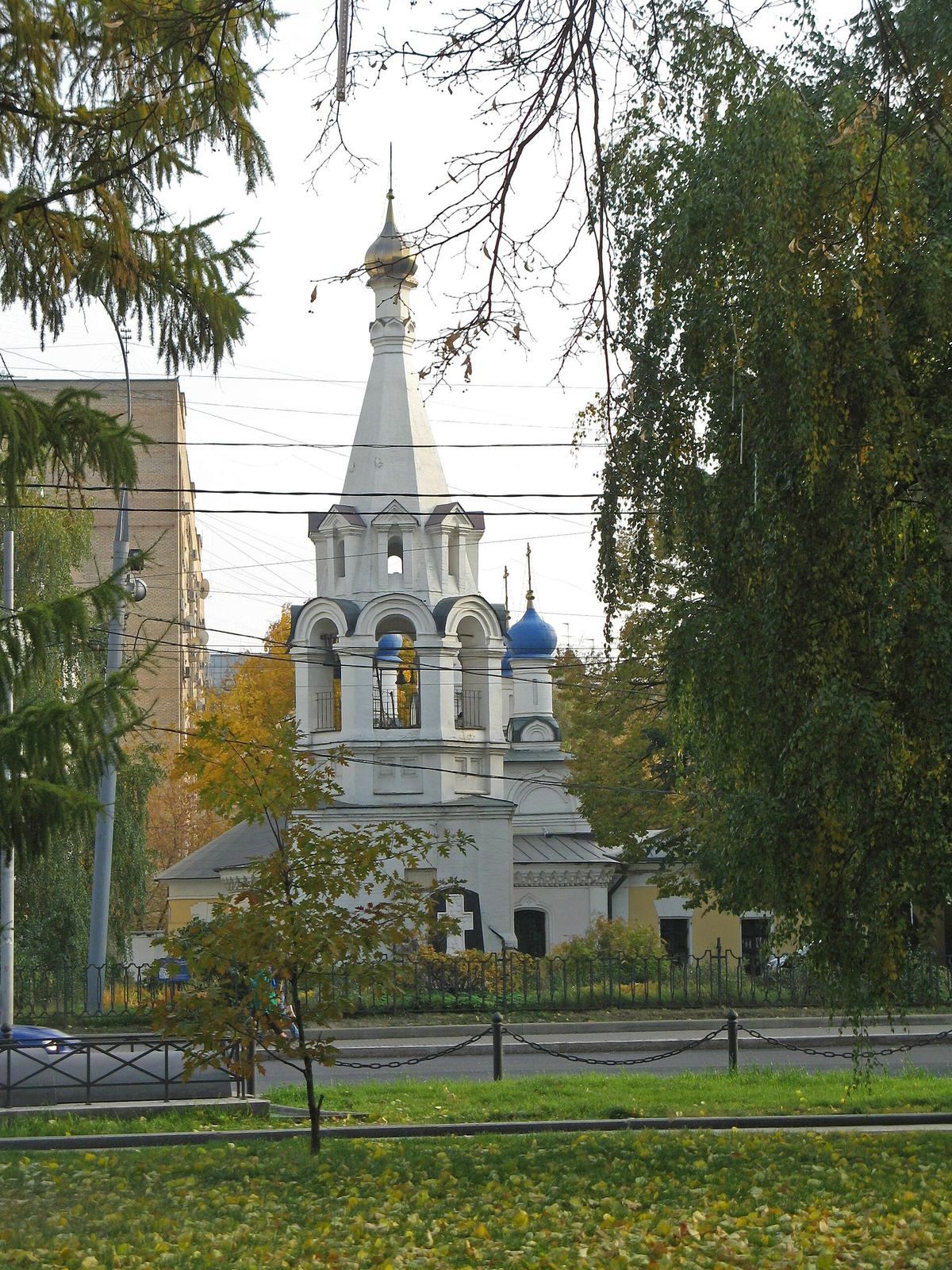
Site at a Glance
- Popularity
- Medium
- Country
- Russia
- Primary era
- Modern
- Eras represented
- Early Modern, Modern
- Civilizations
- Russian
- Site type
- Religious
- Remains
- Church
On this page7 sections
History
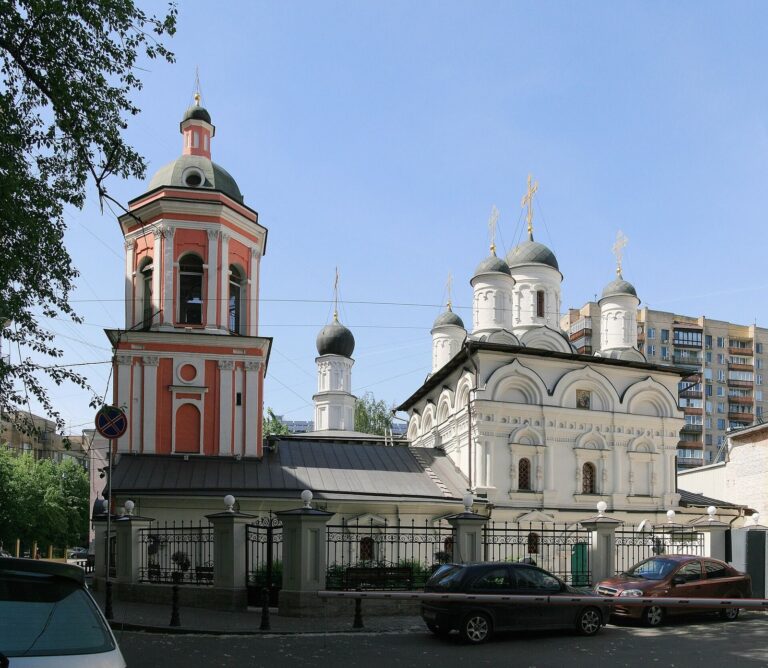
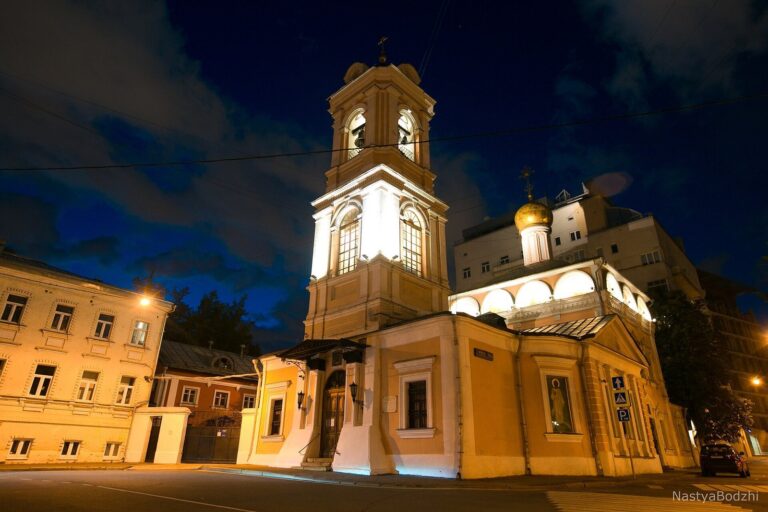
The Church of Saint Theodore Studite at Nikitskie Gates is a Russian Orthodox church in Moscow, Russia, built in 1624–1626 and consecrated in 1627. Patriarch Filaret founded it as the cathedral of a men’s monastery dedicated to the Fedorov and Smolensk icons of the Mother of God, also called the Fedorovsky Hospital Monastery. The monastery was established at the place where Moscow clergy greeted Filaret after his return from captivity in Poland. The church honors Theodore the Studite, a Byzantine monk and theologian, and is also known as the Church of the Smolensk Icon of the Mother of God.
Earlier church and monastic foundation
A wooden church stood on the site before the Moscow fire of 1547, which destroyed it. Its construction date is unknown, though it may have followed the 1480 standoff on the Ugra River between the forces of Ivan III, Grand Prince of Moscow, and Ahmed Khan, leader of the Great Horde. The Horde withdrew after the confrontation, an event regarded as ending Tatar overlordship over Russia.
Parish life and rebuilding
The monastery closed in 1709, and its monks moved to Novinsky Monastery. By 1712, the church had become a parish church. The Suvorov family belonged to the parish, and Alexander Suvorov, later a prominent Russian commander, was baptized there in 1730. The burial of his father, General Vasily Suvorov, at the church is unverified. On 3 July 1864, Moscow historian Ivan Snegiryov described a grave near the altar as belonging to Suvorov’s parents and urged the restoration of their tombstones. A funeral service for parishioner Fyodor Chizhov took place at the church in 1877.
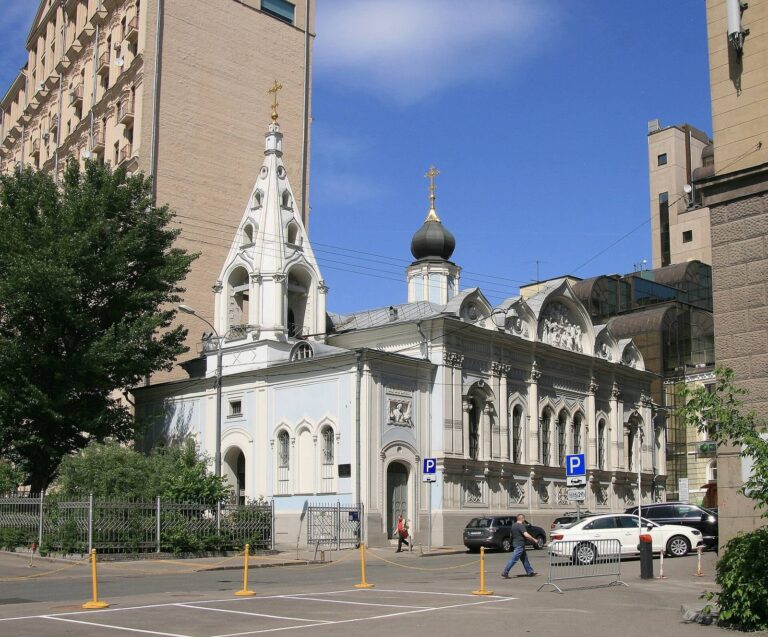
The 1812 Moscow fire, during Napoleon’s invasion, badly damaged the church. It was repaired after French forces were expelled. Extensive rebuilding followed in 1865–1873, substantially changing the earlier building.
Soviet closure and restoration
The church was closed by 1932 under Soviet rule and desecrated. Authorities converted the building to secular institutional use, including use by the All-Union Scientific Research Institute of Fats of the USSR Ministry of Food Industry. In 1960, a proposal to turn it into an Alexander Suvorov museum was made, but the plan did not proceed.
Restoration took place during the 1980s and early 1990s. The Russian Orthodox Church regained the building in 1991, and services had resumed by 1992. Pavel Vishnevsky, rector from August 1991, oversaw the return of worship and the completion of restoration work. Abbot Hermogen (Golin), rector from 1998 to 2016, oversaw the completion of the church’s painting. The church is a Russian federal heritage site and belongs to the Central Deanery of the Moscow Diocese.
Remains
Church building
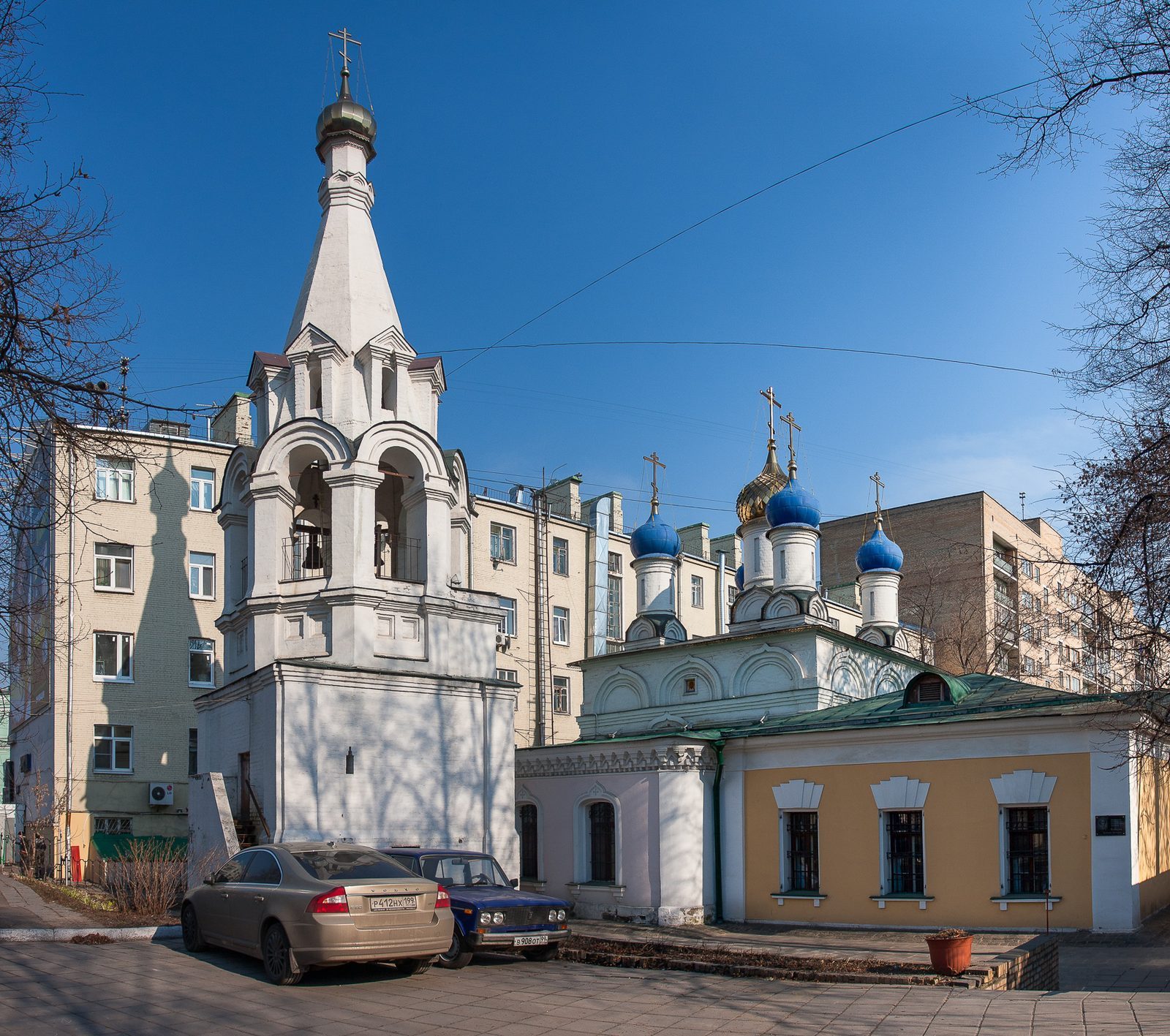
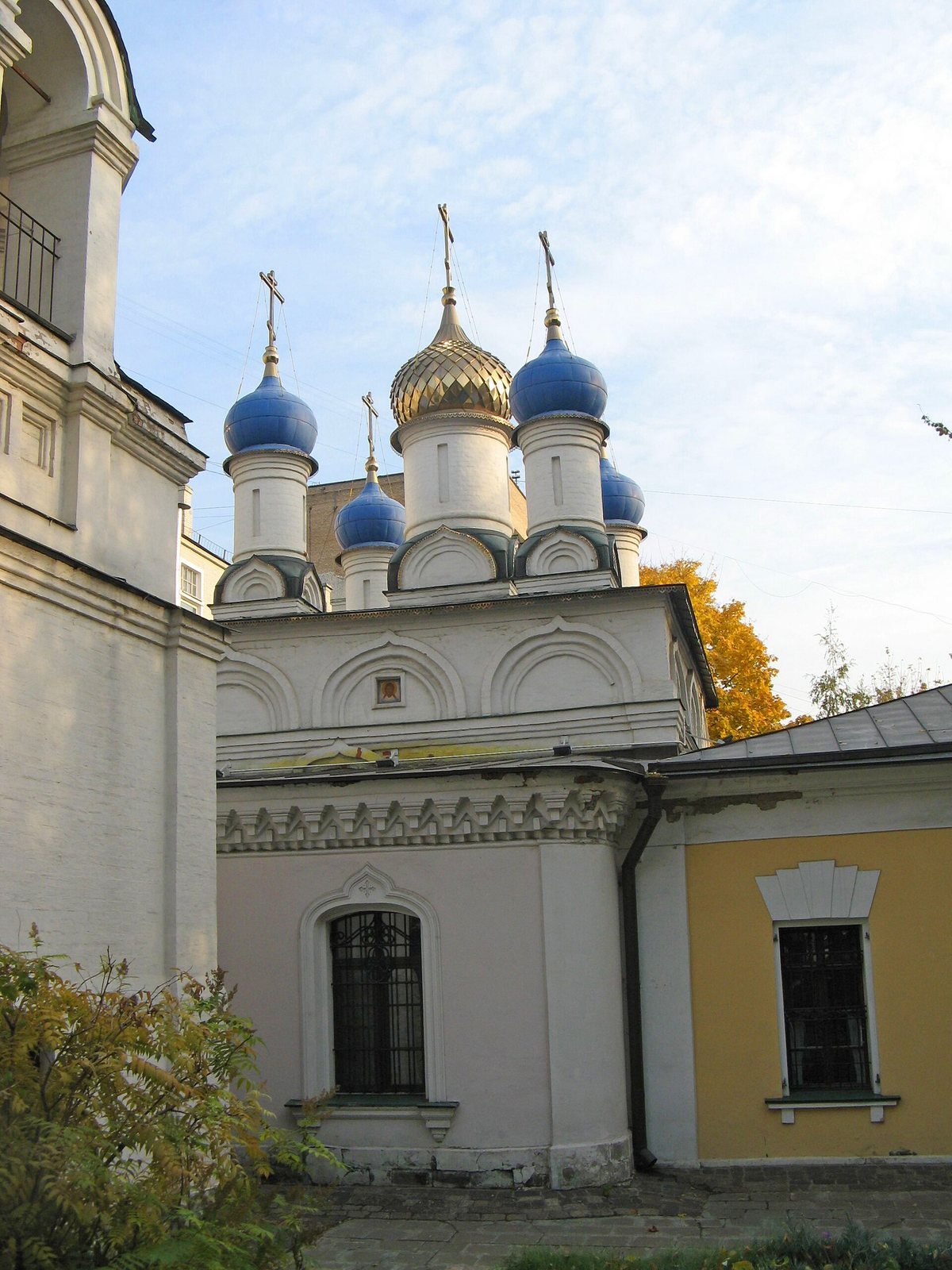
The church has a single nave, one iconostasis (a screen of icons separating the sanctuary from the main body of an Orthodox church), and two side chapels. These are dedicated to Theodore the Studite and Averky of Hierapolis, an early Christian bishop. The building originally had five domes; after repairs following the 1812 fire, it had one, and it now has five again. Work after the fire added an apse, an extension at the sanctuary end, and changed the decoration on the broad entrance hall’s facade. The arched ceilings were relaid, while the adjoining refectory received a flat ceiling. Two columns were added to the widened arch between that hall and the adjoining space. During Soviet conversion, the domes were removed, the decorative finish stripped, and the interior lost. The church’s patronal icon remains an object of particular veneration.
Bell tower
The bell tower was a freestanding, two-storey structure topped by a tall, tent-shaped pyramidal roof. It was among the earliest Moscow bell towers with this form. After the rebuilding of 1865–1873, it was the only surviving part of the earlier church. Most of the tower was demolished during the Soviet period; its lower section survived and was converted into a kiosk.