Palace in Stanowice: A Historic Manor House
Site at a Glance
- Popularity
- Very Low
- Country
- Poland
- Primary era
- Modern
- Eras represented
- Early Modern, Modern
- Civilizations
- German, Holy Roman Empire, Kingdom of Prussia
- Site type
- Domestic
- Remains
- Manor House
On this page5 sections
History
The Palace in Stanowice is a former manor house in Stanowice, Poland. The village was historically known as Stennewitz, and the oldest parts of the present house probably derive from a building commissioned by Asmus von der Marwitz in the second half of the sixteenth century. The manor underwent four building phases, continuing through 1871–72.
Medieval village and estate
Stennewitz appears in a donation charter dated 23 May 1300, issued by Albert III, margrave (a territorial ruler) of Brandenburg, to Himmelstädt Monastery. The von Stennewitz family originally held the local seat. A 1337 land register names the von Winningen family as owners and records land held by the von Perwenitz family as fiefs, grants carrying obligations to a superior. The lower and upper mills, now called Gąśnik and Trząśnik, respectively, belonged to church property.
Members of the von Marwitz and von Horker families held fiefs there in 1455. Henning von der Marwitz held patronage rights connected with the churches of Landsberg, Sellin and Stennewitz in 1492–93. A feudal charter, a formal record of rights or obligations, dated 13 March 1499 names Hans (II) von der Marwitz.
Manor house and estate changes
Karl Friedrich von der Marwitz was the last member of his family recorded at Stennewitz, in 1714–18. Hans Ehrenreich von Glöden owned the estate in 1741. Wilhelm Gottfried von Bayer acquired it in 1763 and ordered changes to the manor house, a redesign of the park and renovation of the church. The complex was extended eastward and raised.
During the first third of the nineteenth century, the manor house was remodelled and two wings were added to its north side. Older land registers place the estate’s transfer to Martin Gottlieb Treichel around 1839. By 1857, Karl (also written Carl) Treichel, who was married to Klara Bayer, held properties including Stennewitz, Stennewitzer Hütte, Christinenhof and Sophinau. He commissioned extensive work on the manor house to plans by the German architect Karl Johann Bogislaw Lüddecke. The estate-owning family used the compound name Treichel-Stennewitz. In 1879, the manorial estate covered 1,614 hectares, including about 1,091 hectares of arable land and 512 hectares of forest.
The Treichel estate and 1945
Georg Treichel owned the estate in 1914. After working at the Liebenow estate until 1897, he took over Stennewitz and also owned Sophienaue. In 1929, his son Friedrich Karl was recorded as a tenant under his father, and the Treichel-Stennewitz estate operation included a flake factory.
Friedrich Karl Treichel was the last estate lord at Stennewitz, first as tenant and later as owner. In late January 1945, the Red Army, the armed forces of the Soviet Union, shot him in Stennewitz. His wife, Hannah von Freier-Raduhn, was considered missing.
Remains
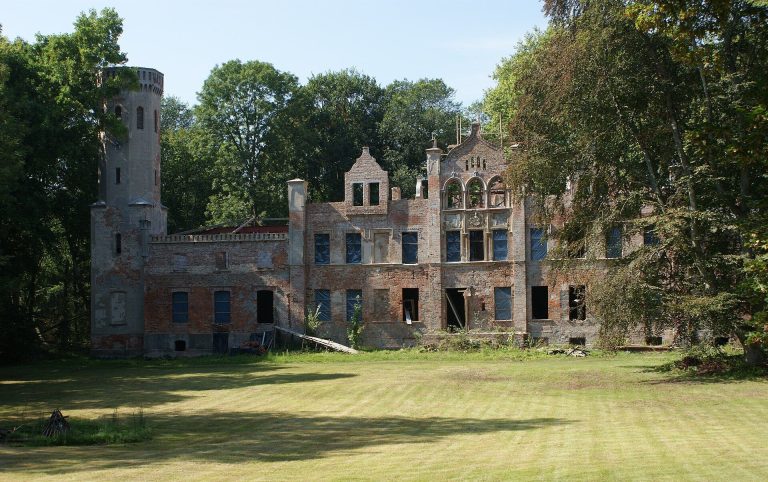
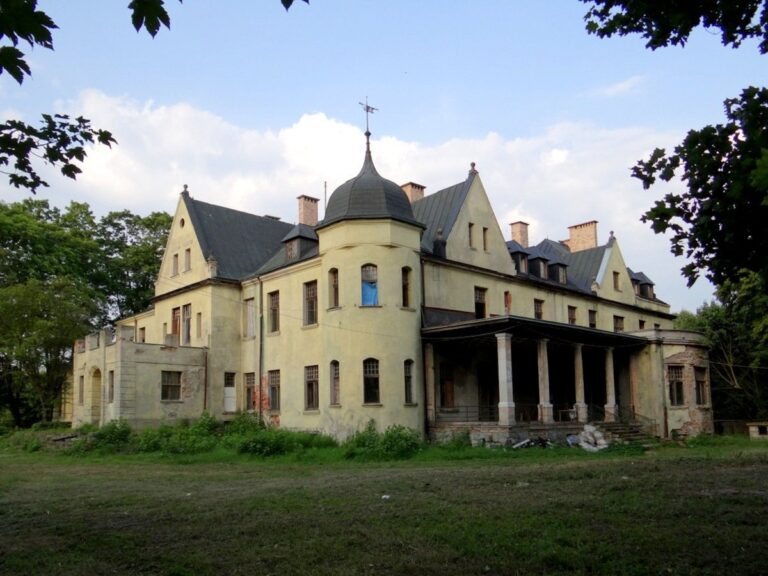
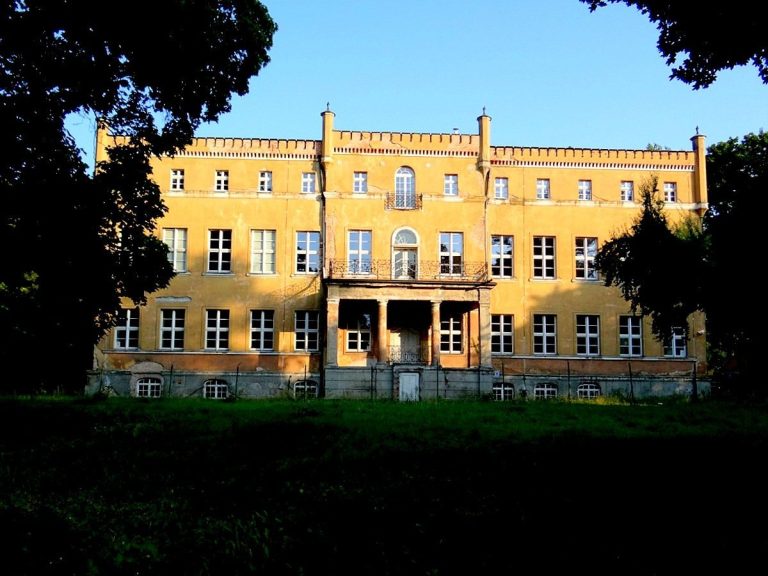
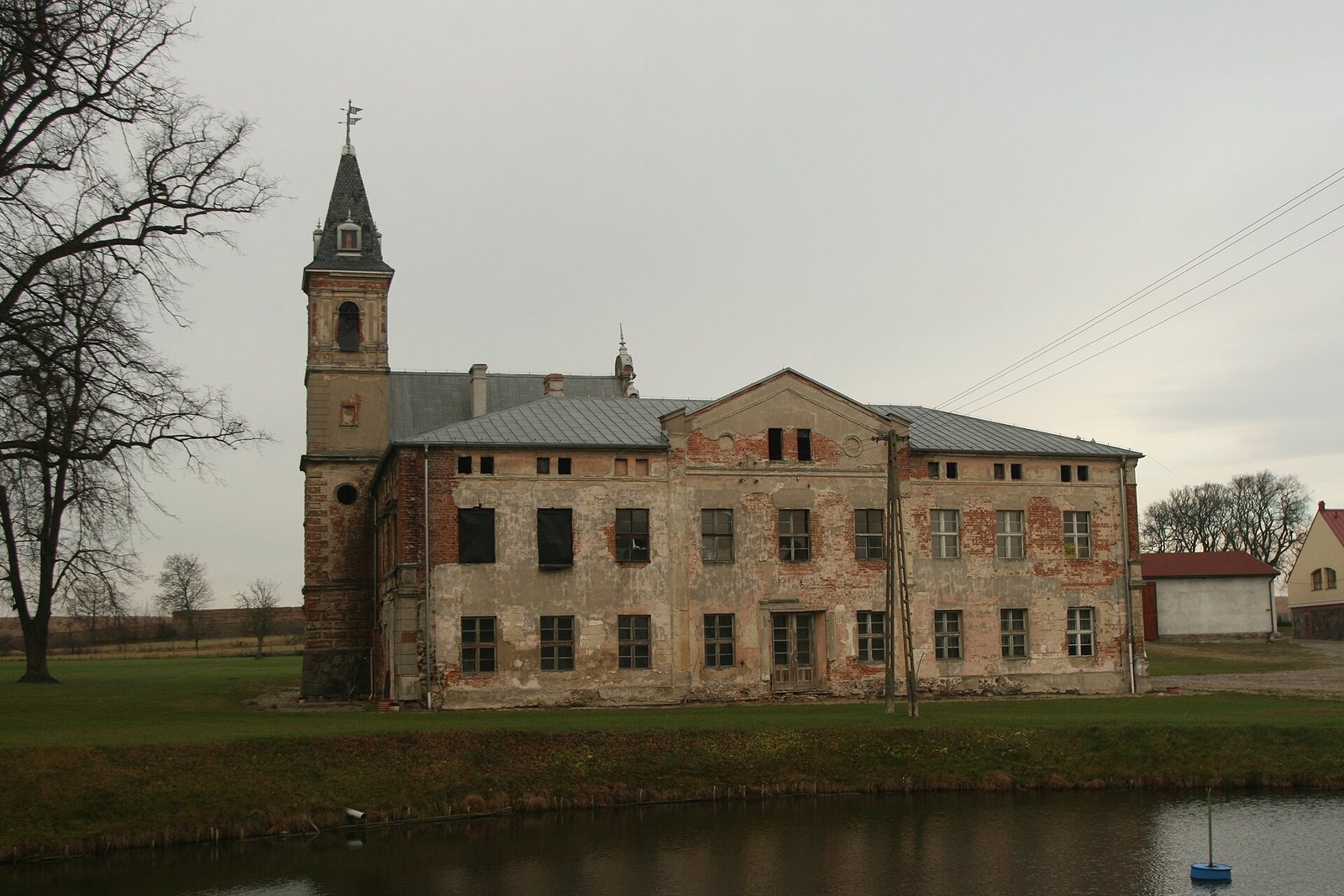
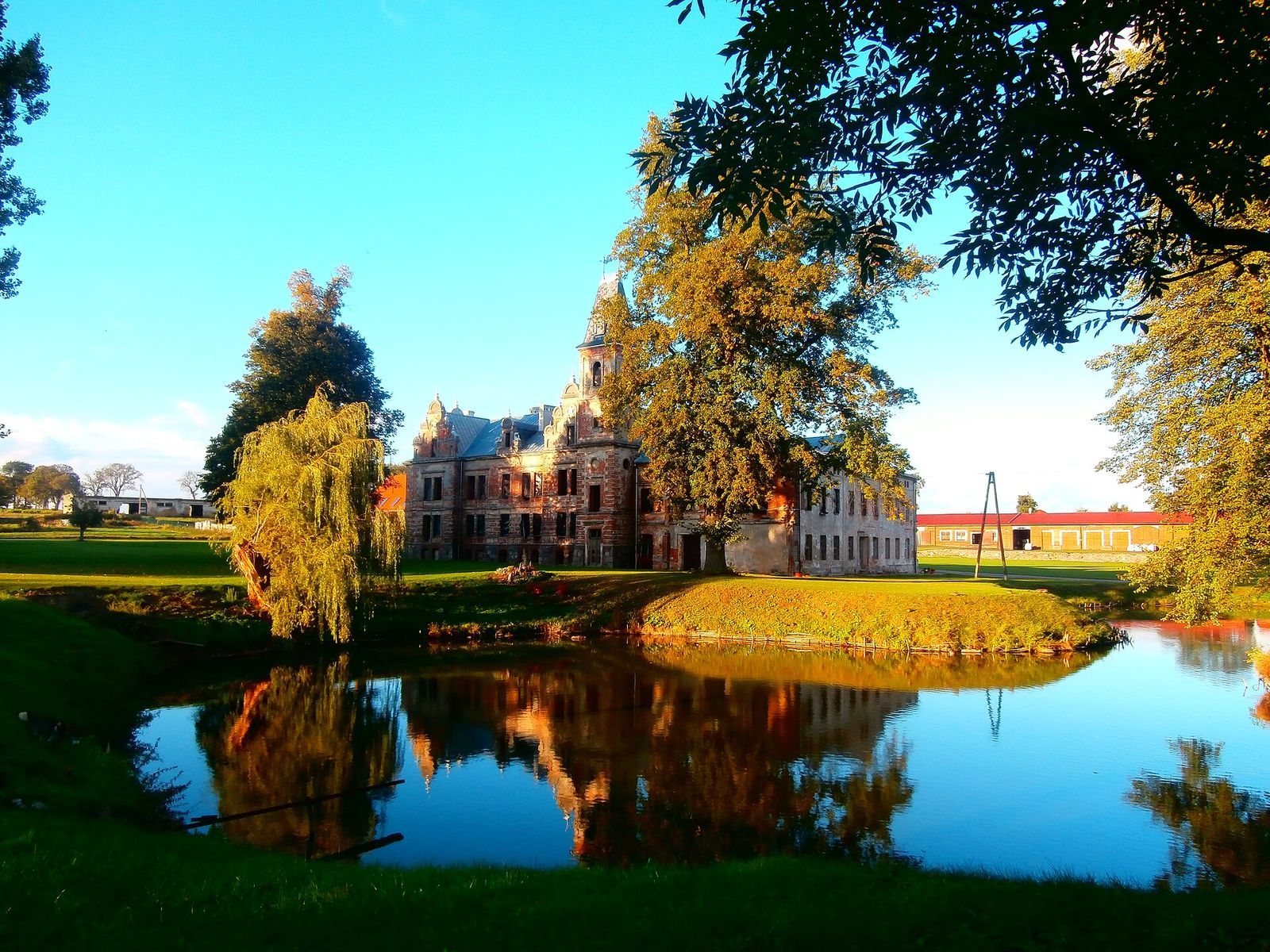
The manor house is now a ruin. Its main building and two wings enclose a small courtyard. The main building and east wing have similar designs, while the west wing is in the Neo-Renaissance style, a revival of Renaissance forms. Its facade has five projecting sections, and the wing includes a tower.