Palazzo Legnani Pizzardi: A Renaissance Palace in Bologna
Site at a Glance
- Popularity
- Low
- Country
- Italy
- Primary era
- Early Modern
- Eras represented
- Early Modern, Modern
- Civilizations
- Papal States
- Site type
- Domestic
- Remains
- Elite Residence
On this page7 sections
History
Palazzo Legnani Pizzardi is a Renaissance palace in central Bologna, Italy, begun in the late 16th century on the site of an earlier residence. That property belonged to the Carbonesi family until Giovanni da Legnano, Bologna’s vicar general from 1377, bought it in 1379.
The Legnani family and the palace’s creation
In 1506, Pope Julius II granted the Legnani family senatorial status in Bologna. This standing connected them to the Bolognese Senate, the city’s civic governing institution, rather than to Italy’s later national Senate. The family held the status almost continuously until that civic body was abolished in 1797. In 1587, Alessandro Legnani commissioned Francesco Terribilia and Francesco Guerra to design the palace facade. The building’s decoration developed over the following centuries, with further work in the 18th century by Antonio Galli da Bibbiena and the sculptors Petronio and Francesco Tadolini. Filippo Legnani’s death in 1757 brought the family’s senatorial branch to an end.
The French occupation in 1796 ended aristocratic and senatorial privileges. Girolamo Legnani Ferri, then the palace’s owner and Bologna’s gonfaloniere, or chief civic magistrate, approved the abolition.
New owners and changing decoration
After passing through several owners, the palace was acquired in the first half of the 19th century by Marquis Camillo Pizzardi, a member of another old Bolognese senatorial family. In 1854 it passed to his grandson Luigi Pizzardi. Luigi Carlo Farini appointed Luigi Pizzardi to the office described as “first mayor of free Bologna” and made him a senator of the Kingdom of Italy.
During the Pizzardi family’s ownership, the grand salon became a hall devoted to the Risorgimento, the 19th-century movement for Italian unification. The family decorated it with patriotic paintings. In 1885, Cesare Pizzardi, Luigi’s brother and the palace’s last owner, sold the building to the Southern Italian Railway Company. The Pizzardi family’s painting collection, assembled by the early 19th century, was later dispersed. A refurbishment by Antonio Zannoni also changed the palace’s interior decoration.
Institutional uses
During the Second World War, the palace sheltered families displaced from nearby villages and served as headquarters for the National Liberation Committee and Allied military command. It later housed Italian State Railways offices and was occupied by government bodies and private tenants. Since 2009, it has housed Bologna’s judicial authorities.
Remains
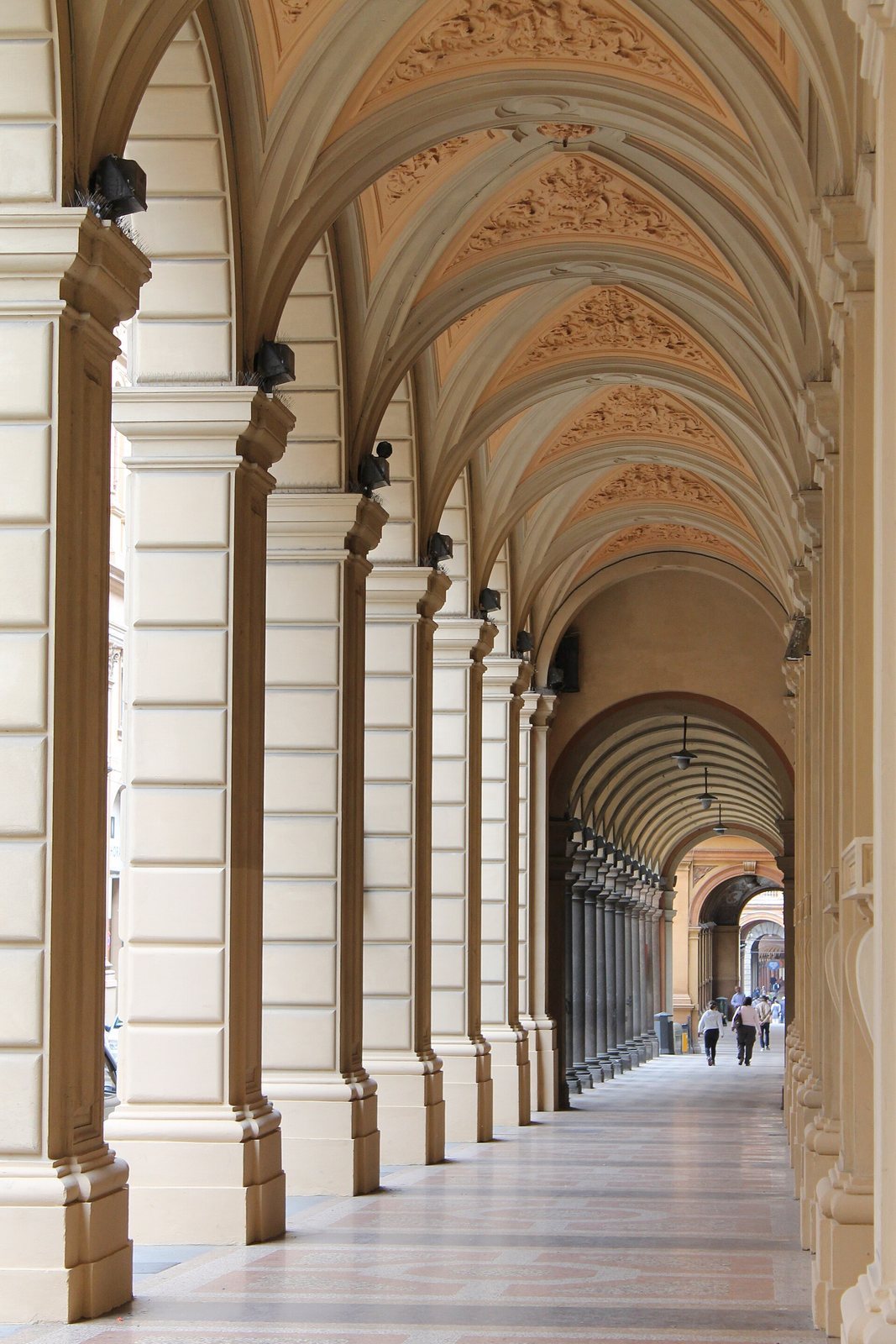
The palace stands on a corner at Via d’Azeglio 38 and Via Farini in central Bologna. Its Renaissance-style frontage and a street portico form part of the building. The principal entrance leads to a grand staircase designed by the 17th-century architect Gabriele Chellini.
Interior decoration
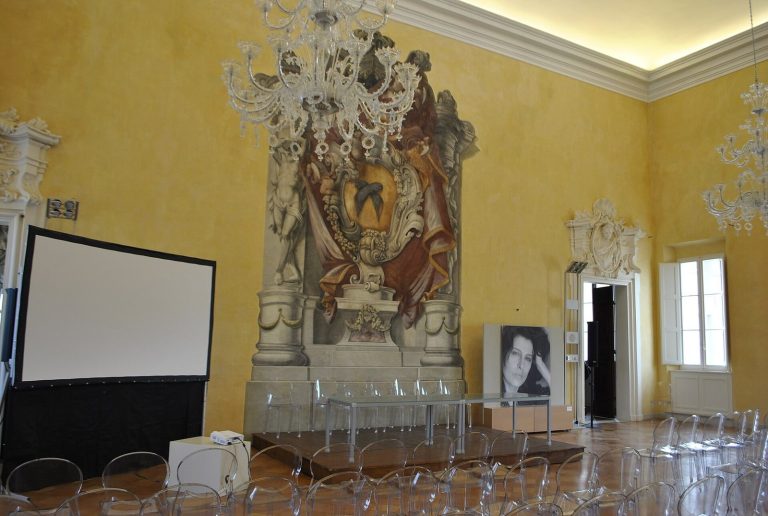
The palace’s interior decoration brought together work from several periods. Giovanni Antonio Burrini painted frescoes, and Giuseppe Maria Mazza created stucco ornament. Antonio Galli da Bibbiena added quadratura, an illusionistic technique that makes painted architecture appear three-dimensional. The Tadolini brothers contributed later embellishments, including a monumental statue of Hercules and copies of the ancient sculptures known as the Furietti Centaurs. In a refurbishment by Antonio Zannoni, some earlier decorative frescoes were destroyed and replaced with landscape paintings by Gaetano Lodi.
Paintings associated with the palace
The palace’s early 19th-century collection included works by Jacopo da Pontormo, Paolo Veronese, Antonio da Correggio, Denys Calvaert, Annibale and Agostino Carracci, Guido Reni, Prospero Fontana, Bartolomeo Cesi, Bartolomeo Passerotti, Domenichino, Elisabetta Sirani, Nicolò dell’Abate and Donato Creti. The patriotic paintings once displayed in the salon included Antonio Puccinelli’s Charles Albert in Oporto, Alessandro Guardassoni’s scene of Pier Capponi tearing up agreements imposed by Charles VIII of France, Luigi Busi’s Cavour and Minghetti, and Gaetano Belvederi’s portrait of Napoleon III. Carlo Alberto Pizzardi donated these paintings to Bologna’s Civic Museum of the Risorgimento in 1920.