Frascarolo Castle: A Medieval Fortress and Medici Residence
Site at a Glance
- Popularity
- Medium
- Country
- Italy
- Primary era
- Early Modern
- Eras represented
- Medieval, Early Modern, Modern
- Civilizations
- Duchy of Milan, Holy Roman Empire, Italian, Spanish
- Site type
- Domestic
- Remains
- Castle
On this page12 sections
History
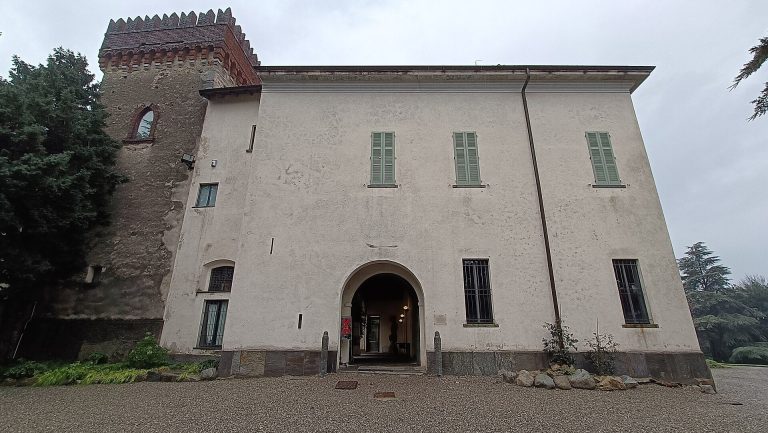
Frascarolo Castle, also known as Villa Medici di Marignano, stands in Induno Olona, Italy. Its construction dates to the 12th century, although it may have earlier origins.
Medieval origins and defense
The castle may have begun in the early Middle Ages as a Lombard fortress controlling access to the Valganna and Valceresio valleys. The Lombards were a Germanic people who established a kingdom across much of Italy. In 1160, Oberto da Pirovano, Milan’s archbishop and senior church official, used the fortress to defend Varese against forces from Como, which had sided with Frederick Barbarossa, the name commonly used for Frederick I, Holy Roman Emperor.
From the 12th century until the 16th, the castle belonged to the Abbey of San Gemolo in Valganna, a monastery governed by an abbot or abbess.
The Medici residence
Gian Battista Medici, marquis of Marignano, a noble rank, acquired the castle in 1543. In 1545, Gian Giacomo Medici and Maria Orsini married there. Apart from brief interruptions, the Medici family of Marignano has owned the property since the 1540s and continues to do so.
During the 16th century, the family reshaped the fortress as a residence, substantially reducing its defensive character. Giovanni Battista Medici commissioned major building works, followed a few years later by Gian Angelo Medici. Their designs drew inspiration from Giulio Romano, an Italian Renaissance painter and architect. The Renaissance was a European cultural movement associated with renewed interest in classical art and learning.
Several members of the family were connected with the castle. Margherita Medici di Marignano, sister of Pope Pius IV and mother of Charles Borromeo, lived there. Pius IV also stayed at the residence, and Charles Borromeo, a Catholic church leader later venerated as a saint, may have grown up there. Bartolomeo Sessa, a priest, benefactor of Varese, and son of Ippolita Medici di Marignano, was another resident. The family chapel near the main entrance received further work during the 17th century.
Later guests and restoration
Opera composer Gaetano Donizetti stayed at the castle in 1837. Writer Gian Battista Bazzoni was a guest soon afterward. In the early 20th century, architect Luca Beltrami directed restoration work at the residence.
Remains
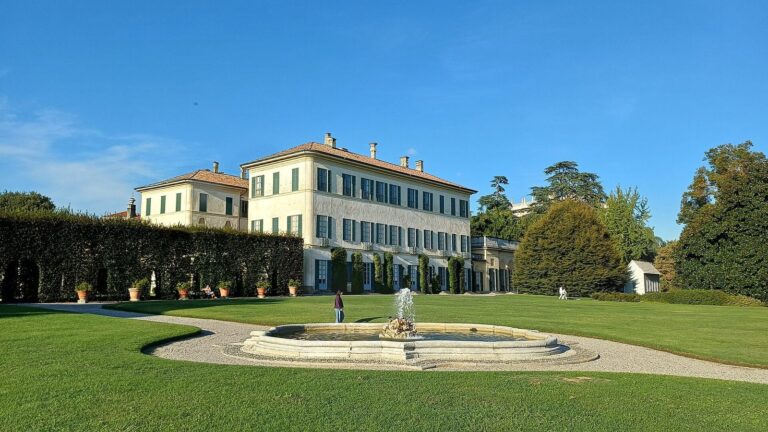
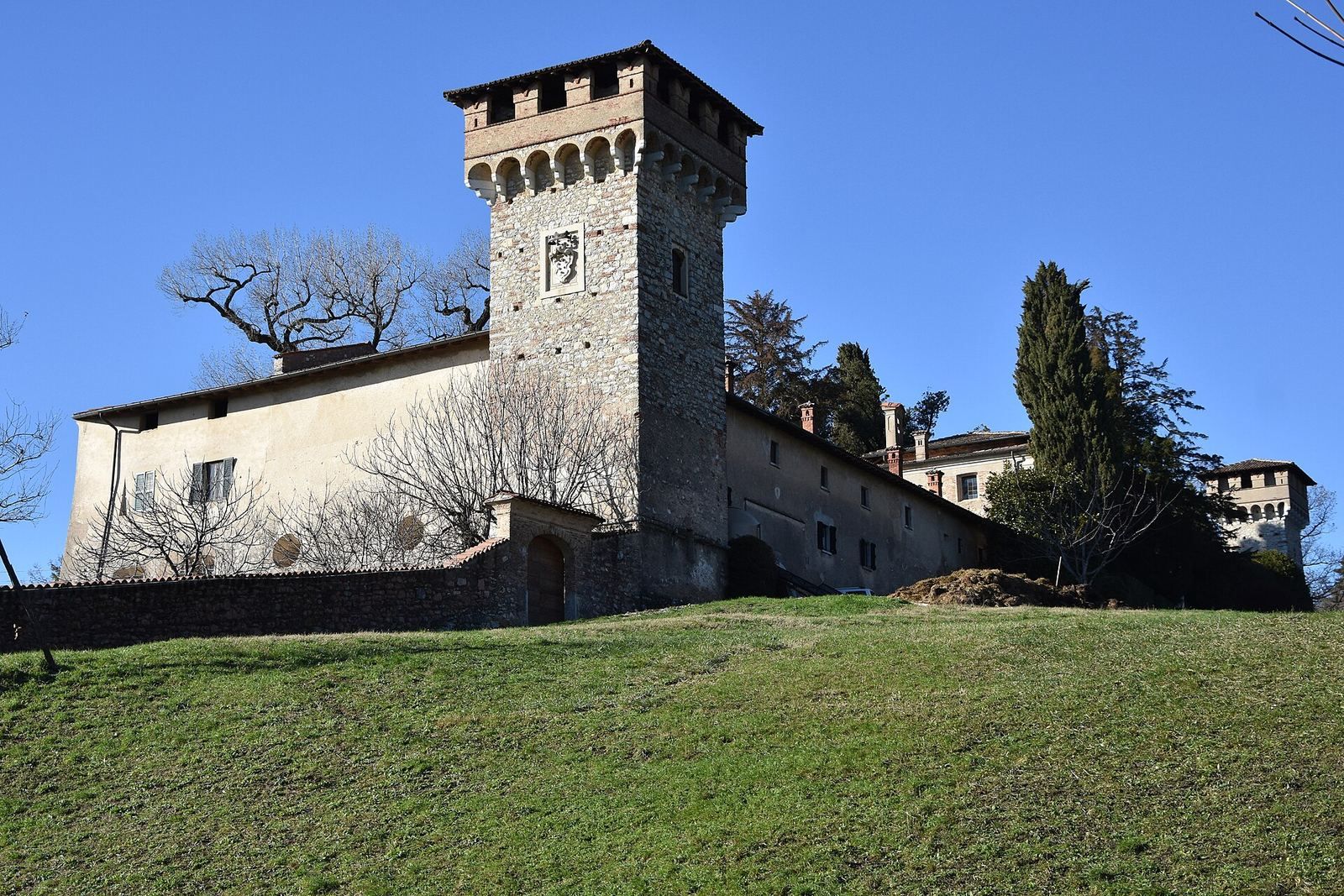
The castle stands at the foot of Mount Monarco, between the Valganna and Valceresio valleys, with a group of rustic outbuildings in front of it. Its entrance opens into a first courtyard. From there, one side leads to a garden terrace, while the other connects to two arcaded courtyards, one to the west and one to the east.
Garden terrace and courtyards
Garden terrace
An L-shaped building overlooks the terrace, which includes a formal Italian garden, further terraces, and fountains. Frescoes, or paintings made on plaster, cover the building’s southern exterior walls. They are comparable to exterior paintings at Villa Cicogna Mozzoni and Palazzo Vertemate-Franchi.
Arcaded courtyards
The eastern courtyard is decorated with frescoes. In the western courtyard, a portico has a two-storey loggia, a roofed, open-sided gallery, on its northeastern side. The ground-floor portico has semicircular arches; above it, columns support a plain architrave, a horizontal beam. A gate on the courtyard’s opposite side opens toward the fields.
Towers, chapel, and interior
Towers and entrance
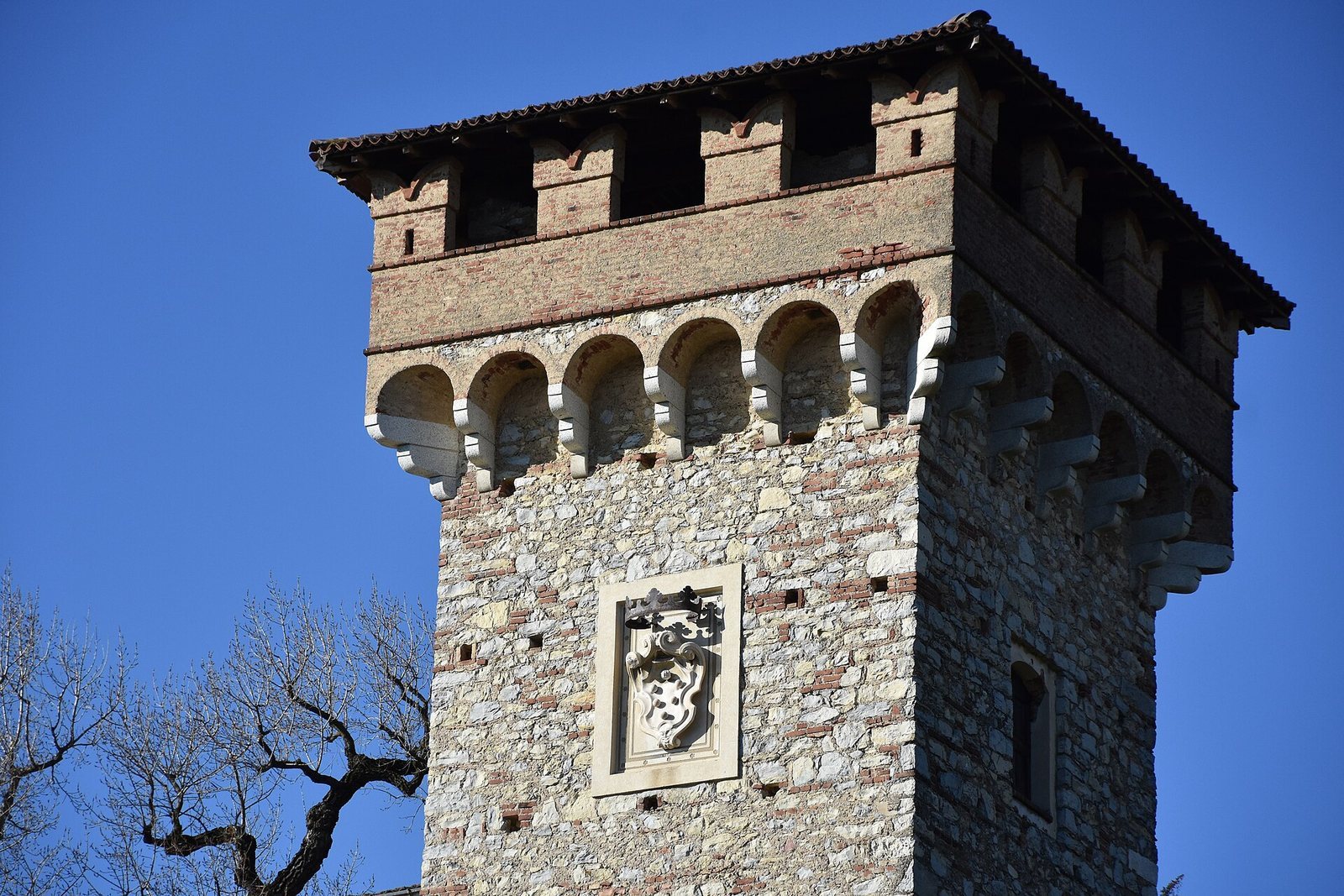
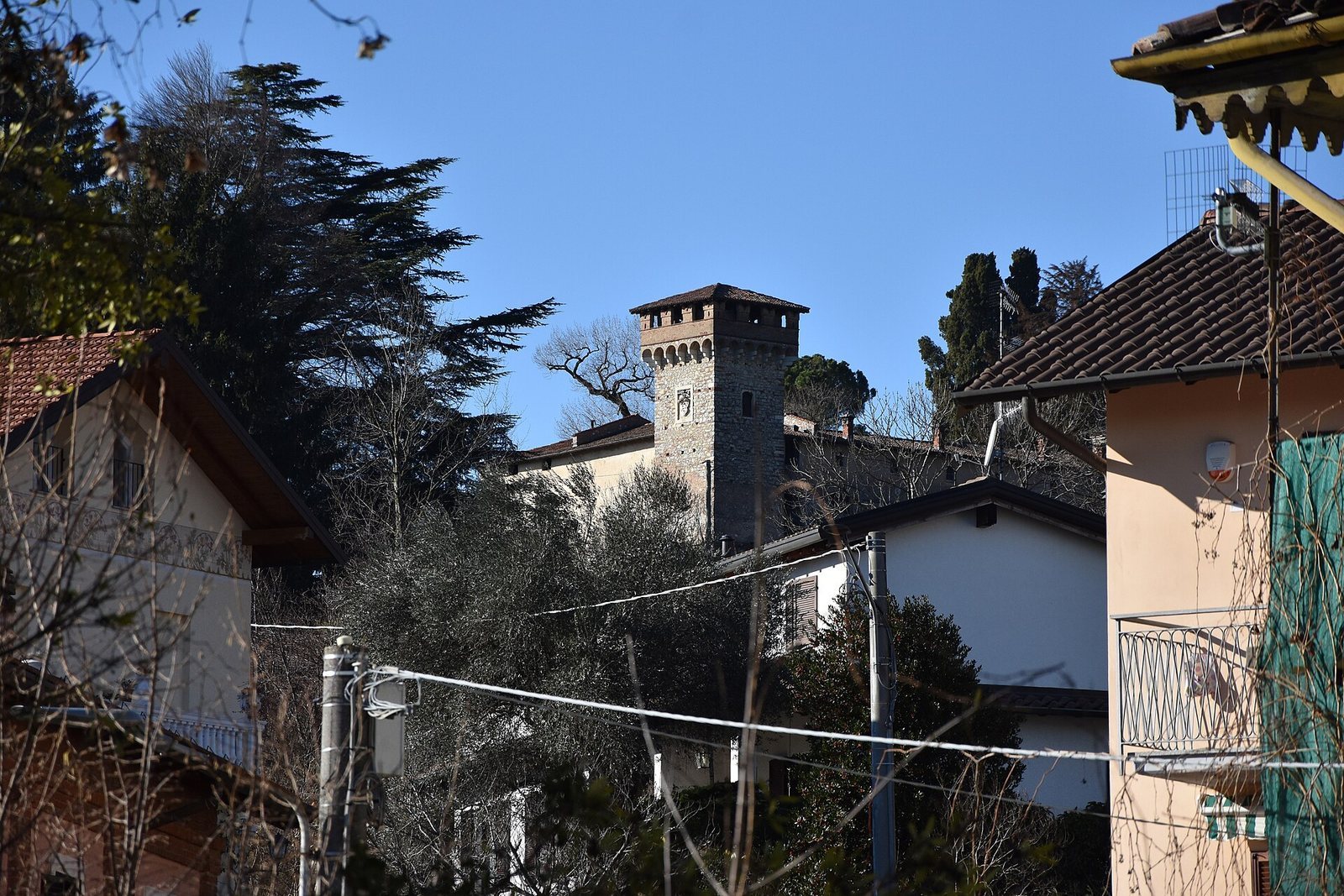
The square-plan western tower is believed to date to the castle’s 12th-century phase and remains a feature of its defensive structure. Two turrets stand at the north and east ends of the building. They were built during the 16th-century works associated with the monumental northwest entrance, and their upper parts were altered during Beltrami’s restoration.
Family chapel
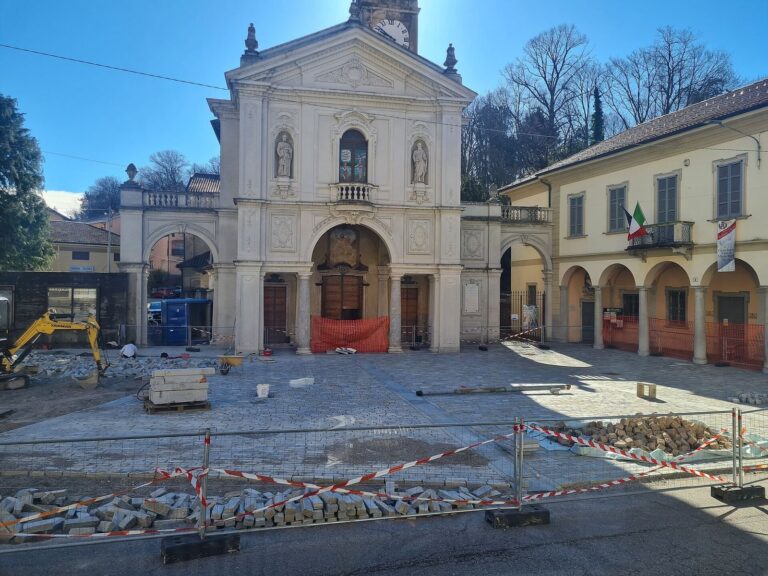
The family chapel is positioned near the castle’s main entrance.
Interior rooms
The ground floor contains an armory, while the upper floor has a formal reception hall. Decorations and wall paintings appear throughout the residence. Some interior paintings are attributed to the artistic circle around Bernardino Campi, a Renaissance painter.