Church of the Saviour on the Sands: Cathedral of a Former Convent
Site at a Glance
- Popularity
- Low
- Country
- Russia
- Primary era
- Early Modern
- Eras represented
- Early Modern
- Civilizations
- Russian
- Site type
- Religious
- Remains
- Church
On this page5 sections
History
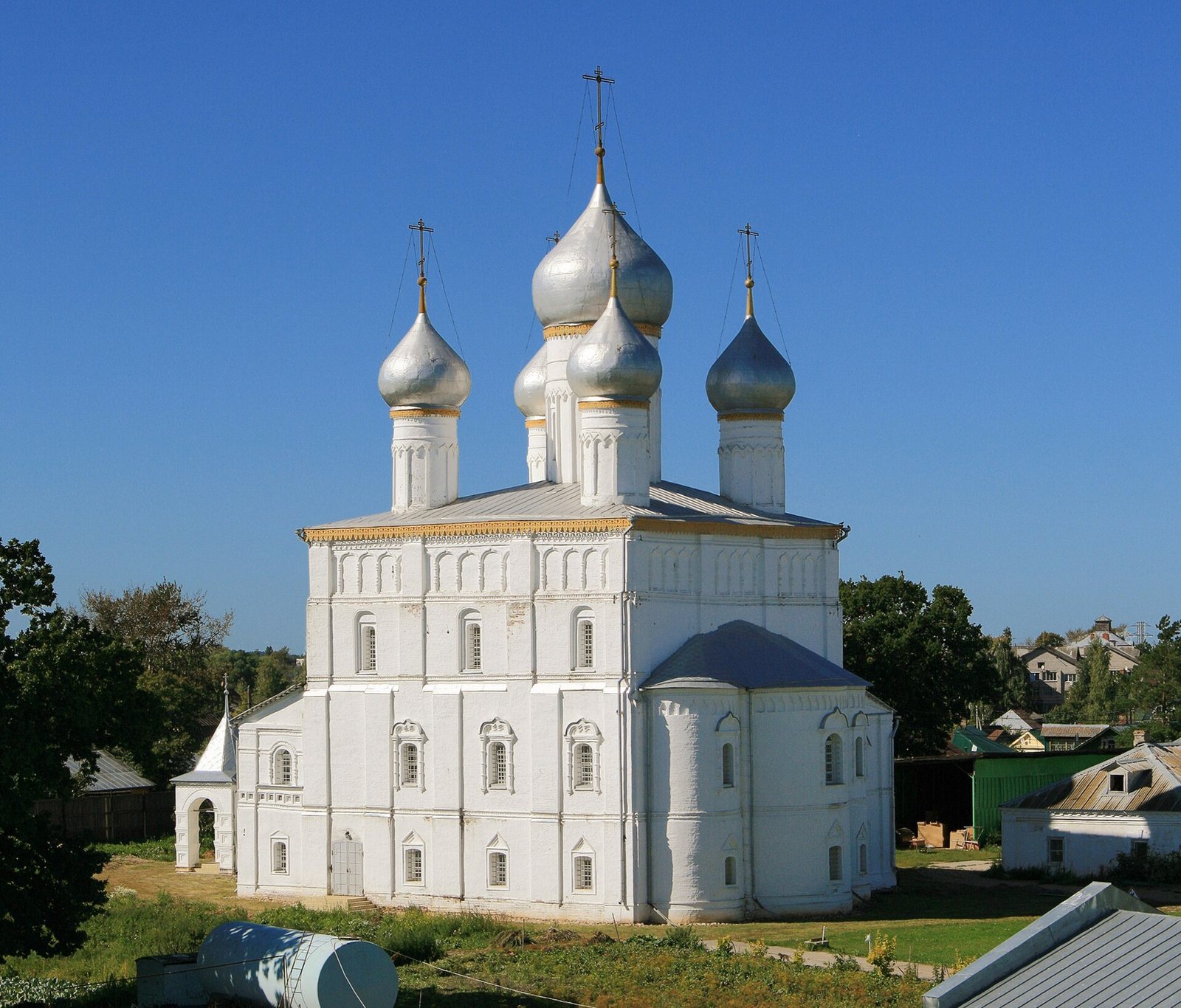
The Church of the Saviour on the Sands is the surviving cathedral of a former women’s convent in Rostov Veliky, Russia. Princess Maria founded the convent in the second half of the thirteenth century. Its cathedral was built in stone in the late sixteenth or early seventeenth century.
The convent and princely burials
Maria was the daughter of Michael of Chernigov and the wife of Vasilko of Rostov, princes of medieval Rus’. She was buried beneath the Church of the Saviour in 1271. Her son, Gleb Vasilkovich, and his wife, a granddaughter of Batu, the Mongol ruler and grandson of Genghis Khan, were later reburied there.
Stone construction and dissolution
The convent buildings, including its enclosing wall, remained wooden until the end of the sixteenth century. Stone building began in the late sixteenth or early seventeenth century, when the cathedral Church of the Transfiguration was constructed. It was later entirely rebuilt under Jonah Sysoevich, the senior Orthodox bishop of Rostov and Yaroslavl. In the seventeenth century, builders added a heated stone Church of St George and a porch linking the Church of the Saviour with the Church of the Transfiguration. A bell tower with a tent-shaped roof stood above the porch.
In 1764, Empress Catherine II ordered the convent dissolved. It held 599 serfs at the time, and in 1765 it was attached to the neighboring Spaso-Jakovlevskij Monastery.
Later use and restoration
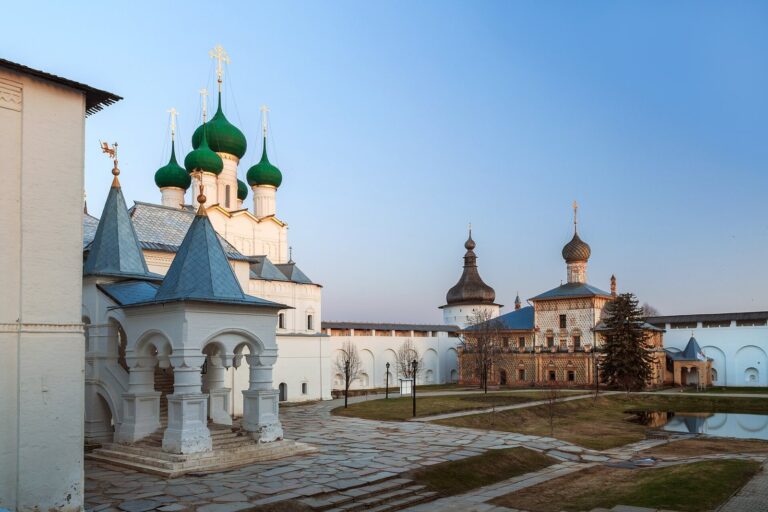
During the 1860s, the Church of St George, the bell tower, and the porch were demolished. The surviving church was then used for burials of monks from the Spaso-Jakovlevskij Monastery. It stood neglected during the Soviet period. After monastic life resumed at the monastery, the church was whitewashed and the porch was recreated. The adjoining monastery, which lies east of the church and administers it, has federal cultural heritage status in Russia.
Remains
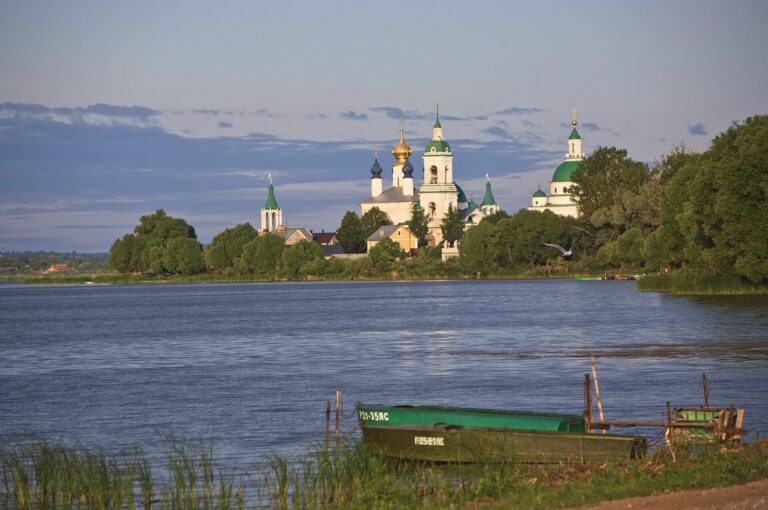
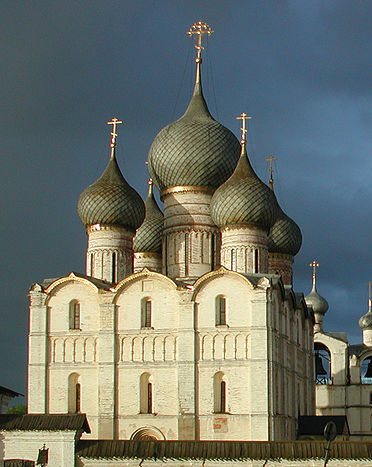
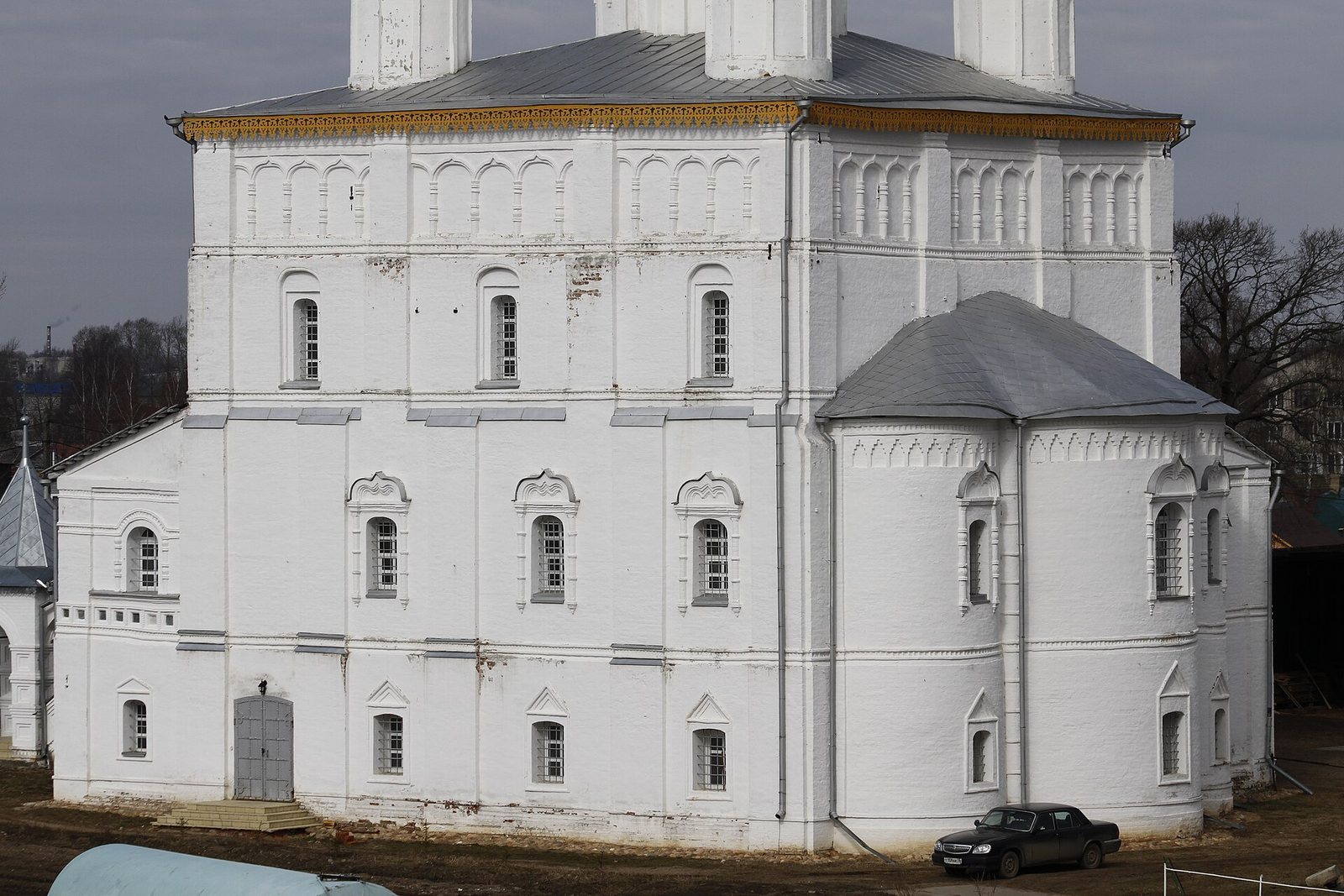
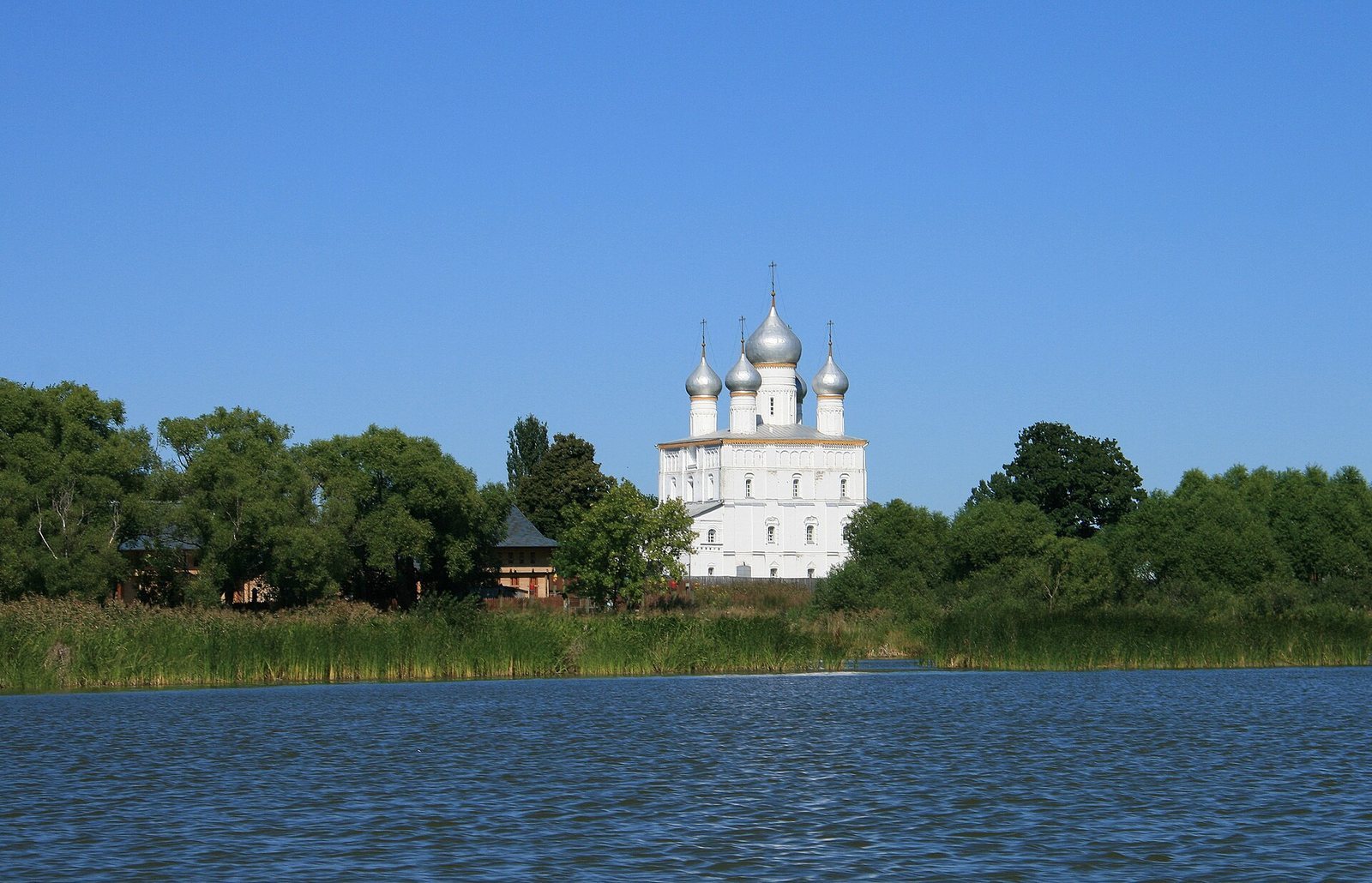
The cathedral is the only surviving building of the former convent, which stood on the shore of Lake Nero. It has a lower basement level, four substantial interior supports, three projecting ends, and five domes. Its façades are divided into three tiers. A decorative row of small arches runs along the upper tier and around the bases beneath the domes, echoing the diocesan cathedral.
A covered gallery extends along the north side, where recessed decorative panels contain ceramic inserts. A vestibule stands on the west side. The domes are clad in white sheet iron, following Rostov tradition. A nineteenth-century inscription inside the main space, to the left of the entrance, records that Metropolitan Kirill of Rostov consecrated the Church of the Saviour on 1 July 1603.