Our Lady of the Snows Church in Piotrków Trybunalski: A Former Dominican Convent Church
Site at a Glance
- Popularity
- Low
- Country
- Poland
- Primary era
- Early Modern
- Eras represented
- Early Modern, Modern
- Civilizations
- Polish–Lithuanian Commonwealth, Russian
- Site type
- Religious
- Remains
- Church
On this page10 sections
History
Foundation and rebuilding
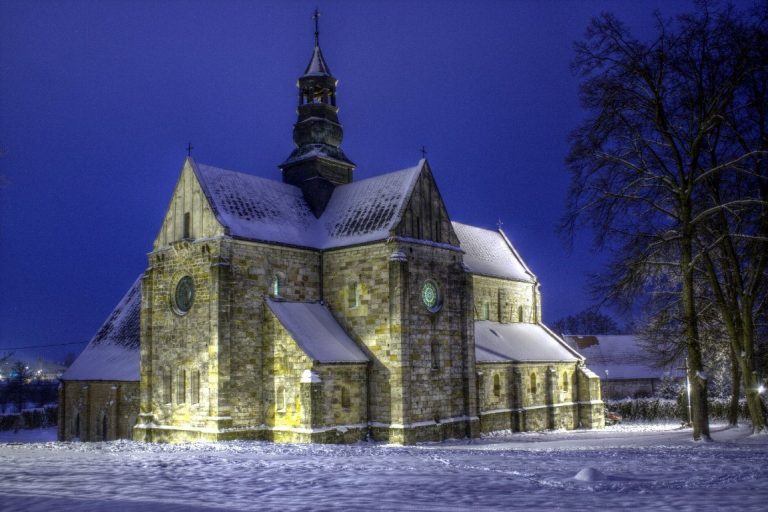
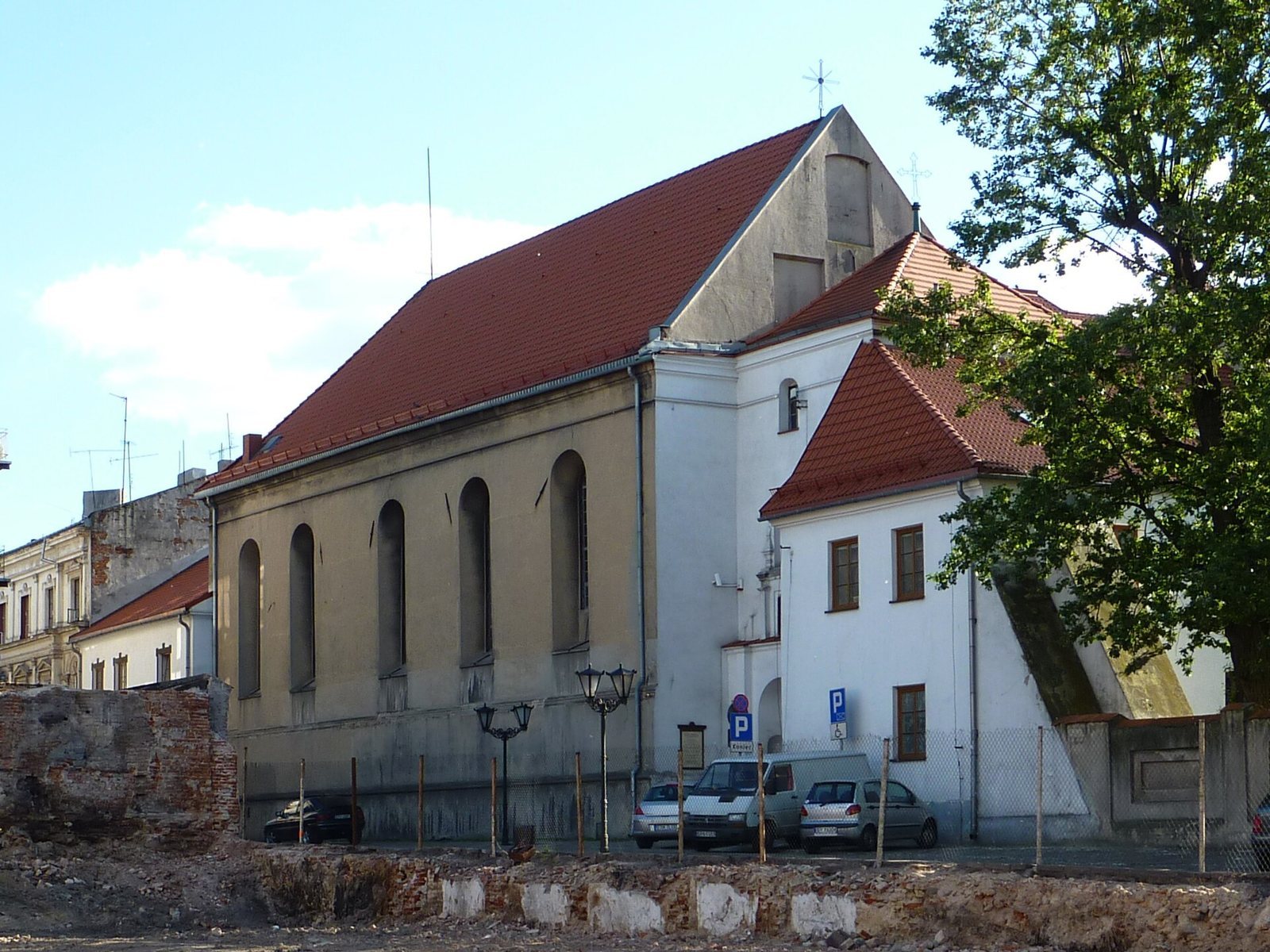
Our Lady of the Snows Church in Piotrków Trybunalski is a seventeenth-century Roman Catholic church in Poland, built in the early Baroque style as part of a Dominican convent complex. Early Baroque was the first phase of the European Baroque style. Dominican nuns, the women’s community of the Catholic Dominican order, were brought to Piotrków in 1608 by Katarzyna Warszycka, identified as the church’s foundress. Work on the church and convent began in 1627.
A fire destroyed the convent complex in 1648, and it suffered further destruction in 1657 during the Swedish Deluge, the Swedish invasion and occupation of the Polish-Lithuanian Commonwealth. Reconstruction was completed in 1673, and the church’s altars were consecrated in 1685.
Fire, suppression, and later use
The church burned in the 1786 fire that affected Piotrków. Part of the convent complex was restored the following year. After the Dominican house in the city was suppressed, the church closed after 1865. The nuns left during that decade, but people continued to call the building the “Nuns’ Church.” Services for pupils at the boys’ gymnasium began there in 1881. In 1882, architect Feliks Nowicki remodeled the church, giving it its present appearance.
The church is dedicated to Our Lady of the Snows, a Catholic title for the Virgin Mary. It now serves as a rectoral church within the parish of St. Hyacinth and St. Dorothy. A rectoral church is administered by a rector rather than operating as an ordinary parish church. St. Hyacinth was a Polish Dominican saint, and St. Dorothy was an early Christian saint. The church also serves an academic community and hosts cultural events. On 1 June 2020, Polish Archbishop Grzegorz Ryś solemnly crowned its copy of the image of Our Lady of the Snows.
Remains
The church and the buildings of the former Dominican convent together form a horseshoe-shaped plan. The church is a single-nave building, meaning it has one main body, and its early Baroque design is expressed in the interior’s vaulted ceiling and connected passages.
Interior and furnishings
Altars and paintings
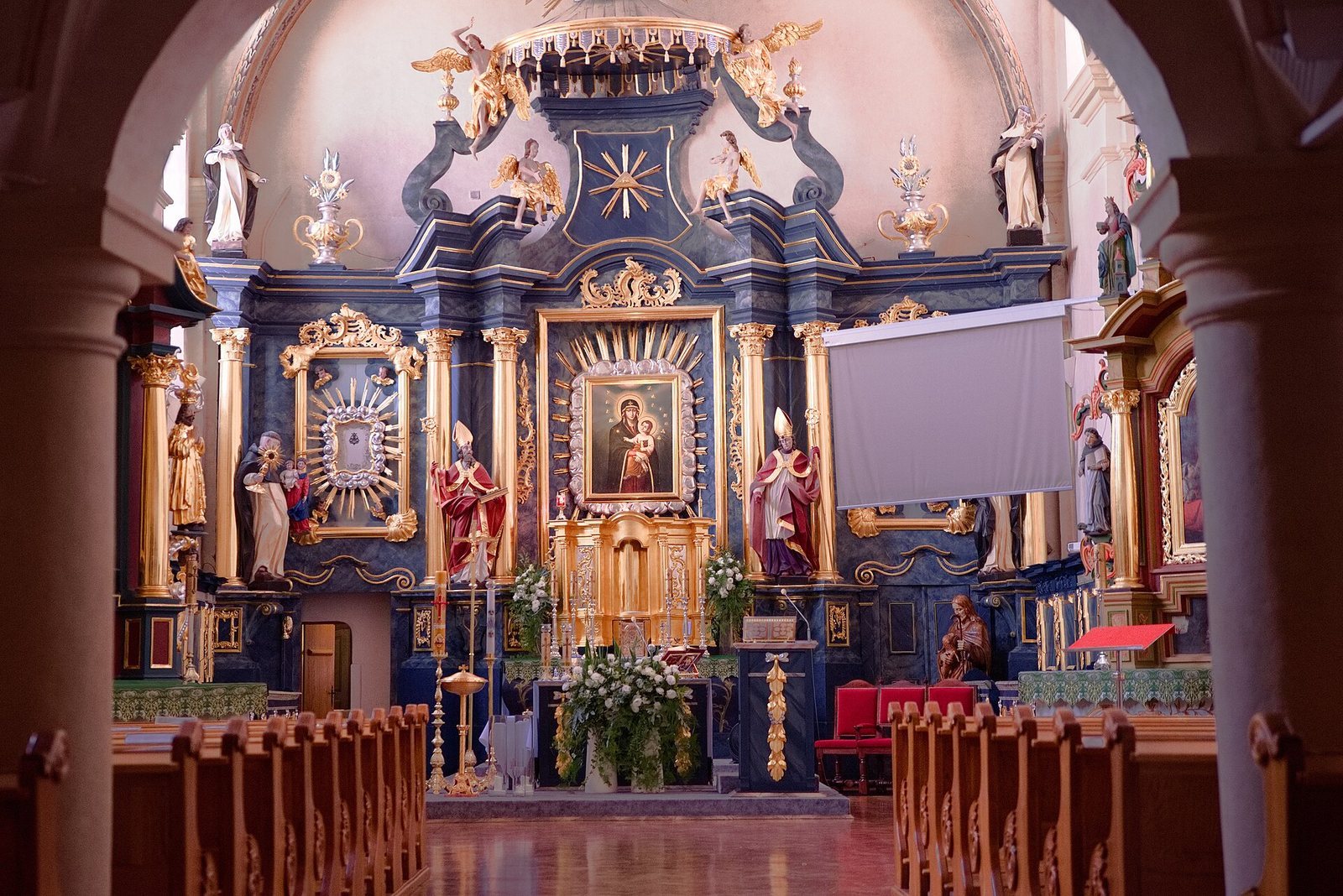
The church contains three altars. The main altar, dated 1755, incorporates elements from an earlier altar made in 1684. It holds a copy of the image of Our Lady of the Snows dating to around the turn of the seventeenth and eighteenth centuries. The two side altars were made after 1648. One is dedicated to St. Stanislaus Kostka, a sixteenth-century Polish Jesuit and Catholic saint; the other honors St. Roch, a Christian saint traditionally associated with protection from plague. Each altar includes a painting of its dedicatee dating to about 1862.
Pulpit and crucifix
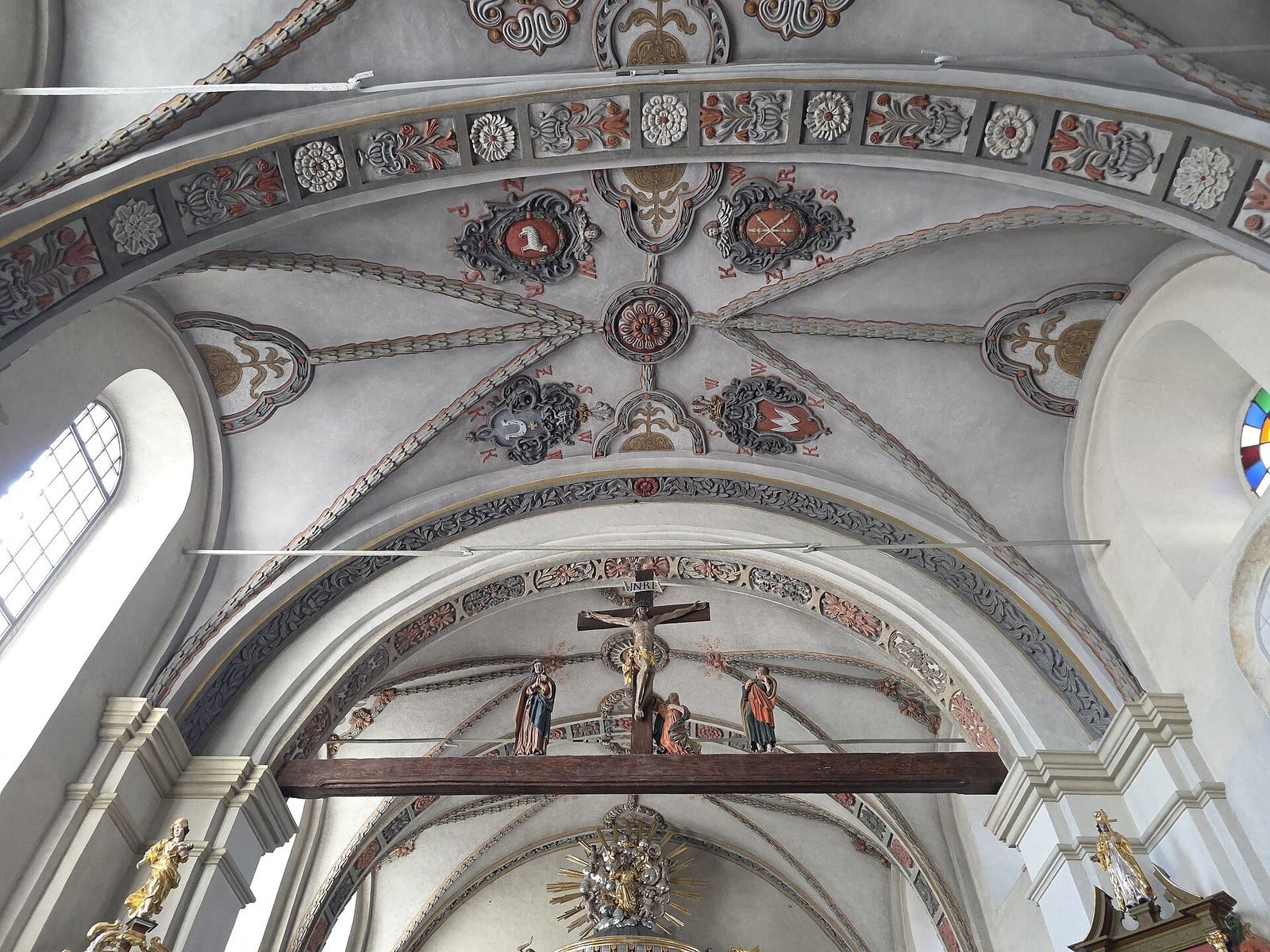
A pulpit dated 1767 and a seventeenth-century crucifix are also part of the church’s furnishings. The crucifix rests on a rood beam, a beam spanning the church that traditionally supports a crucifix.
Vault decoration
Ornamental framed panels, called cartouches, decorate the nave vault. They display the Abdank, Pobóg, Junosza, and Jelita coats of arms, heraldic emblems that probably belonged to benefactors of the convent and church.
Organ and tombstone
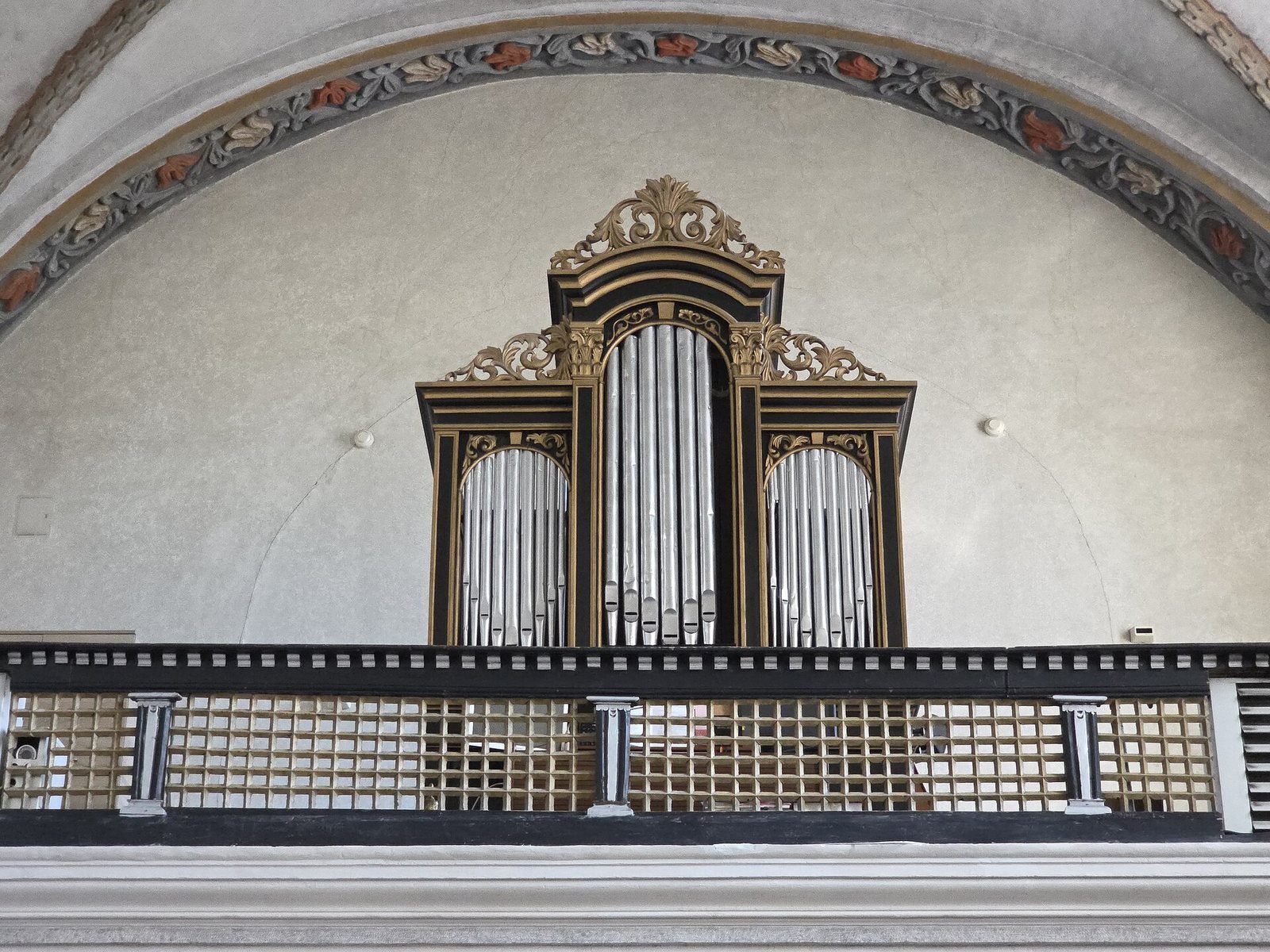
The organ has one manual, or keyboard, and six stops, which control sets of pipes. A tombstone commemorates Katarzyna Warszycka, the church’s foundress.
Vaults and convent passages
The interior ceiling is formed by barrel vaults, continuous arched ceilings, crossed by transverse arches. Arched recesses called lunettes are set into the vaults. Passages connect the church with the sacristy and the cloisters, covered walkways associated with a monastery.