Church of the Most Holy Name of Jesus (Chiesa del Gesù): Ancona’s Jesuit Church
Site at a Glance
- Popularity
- Medium
- Country
- Italy
- Primary era
- Early Modern
- Eras represented
- Early Modern
- Civilizations
- Papal States
- Site type
- Religious
- Remains
- Church
On this page13 sections
History
The Church of the Most Holy Name of Jesus, known as Chiesa del Gesù, is a Roman Catholic church in Ancona, Italy. It follows the Roman rite, the principal Latin liturgical tradition of the Catholic Church, and is associated with the Archdiocese of Ancona-Osimo.
Jesuit foundation and redesign
The first church on the site was built in 1605 at the request of Count Giovanni Nappi, a local nobleman. Members of the Society of Jesus, the Catholic religious order known as the Jesuits, established a college beside it in 1631. Around 1605, Nappi also commissioned Orazio Gentileschi to paint The Circumcision. The work later influenced the artistic development of Gentileschi’s daughter Artemisia, who drew on it more than once.
In 1733, the Jesuit fathers commissioned architect Luigi Vanvitelli to remodel the church. The project, completed in 1743, formed part of Ancona’s modernization promoted by Pope Clement XII. Vanvitelli’s redesign reshaped the church while retaining its place in the city’s religious life.
Diocesan seminary
After the Society of Jesus was suppressed in 1773, the church passed first to the municipality and then to the diocese. The diocese assigned the church and former college to serve as its seminary, an institution for training candidates for the priesthood. In 1799, during the Napoleonic era, the church closed and the seminary was suppressed. The church returned to diocesan control in 1804, when the seminary resumed its work there.
Wartime damage and restoration
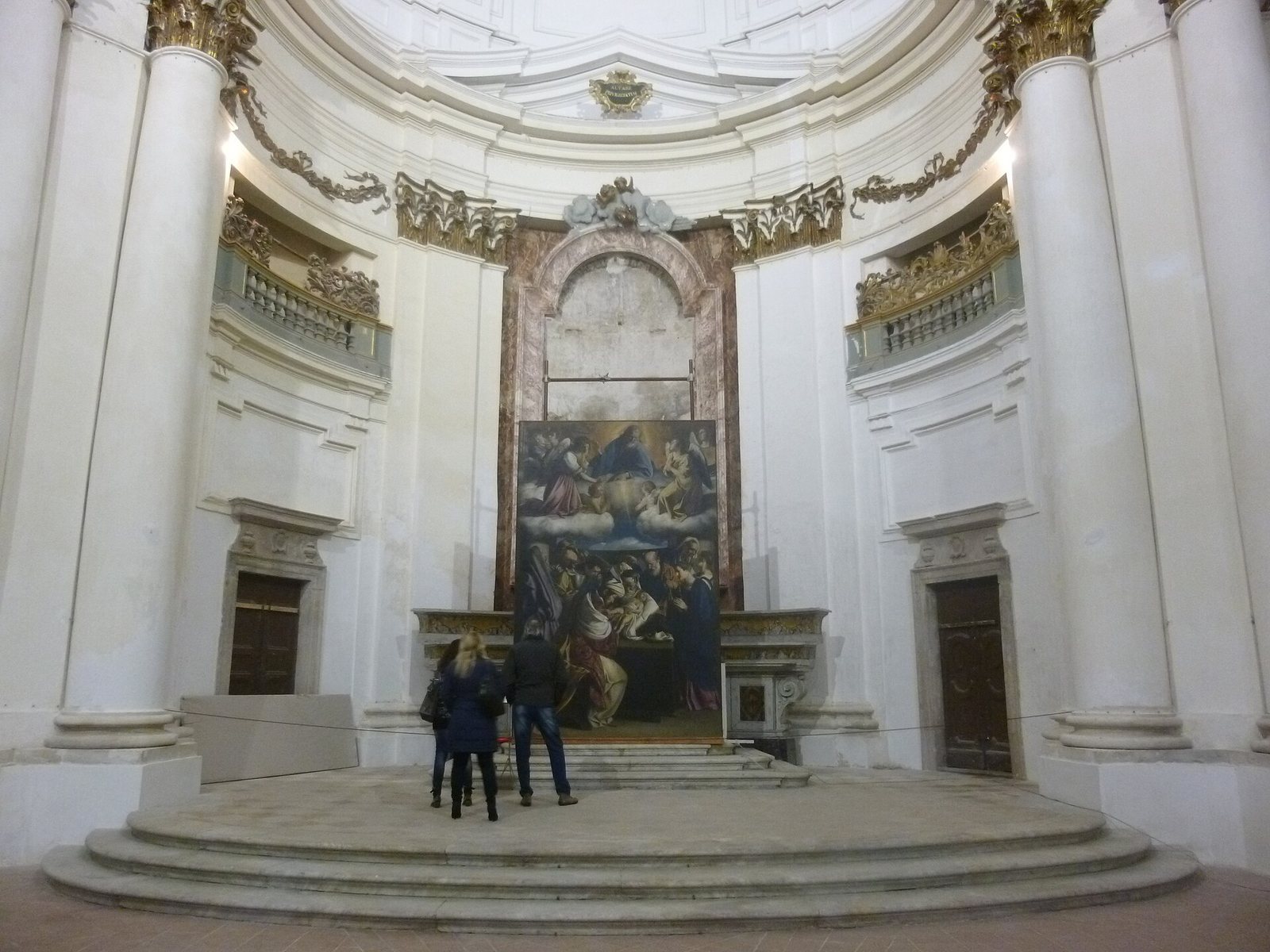
Bombing on 1 November 1943 severely damaged the entrance porch and the church’s perimeter walls. The building remained closed to the public for many years while interior restoration proceeded. It reopened on 1 September 2011 during events connected with the 25th National Eucharistic Congress, a Catholic gathering focused on the Eucharist. Paintings previously held in the municipal art gallery returned to the church, alongside restoration work on paintings that had remained there.
Remains
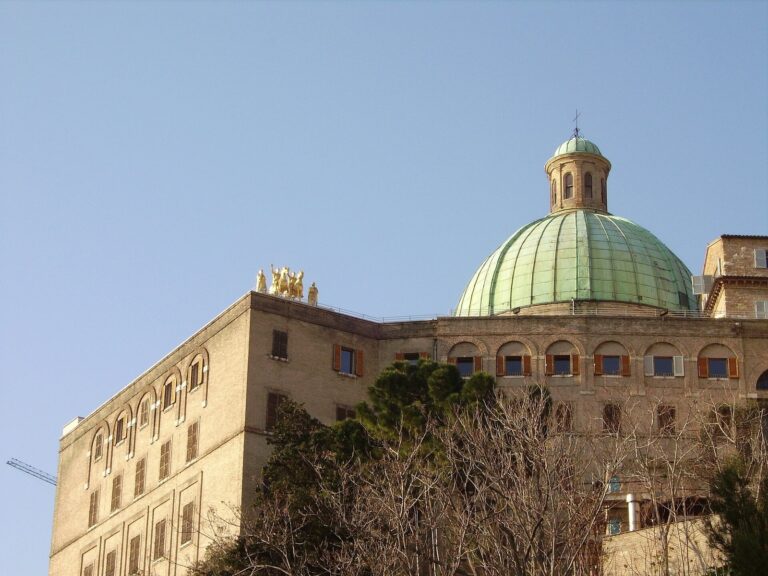
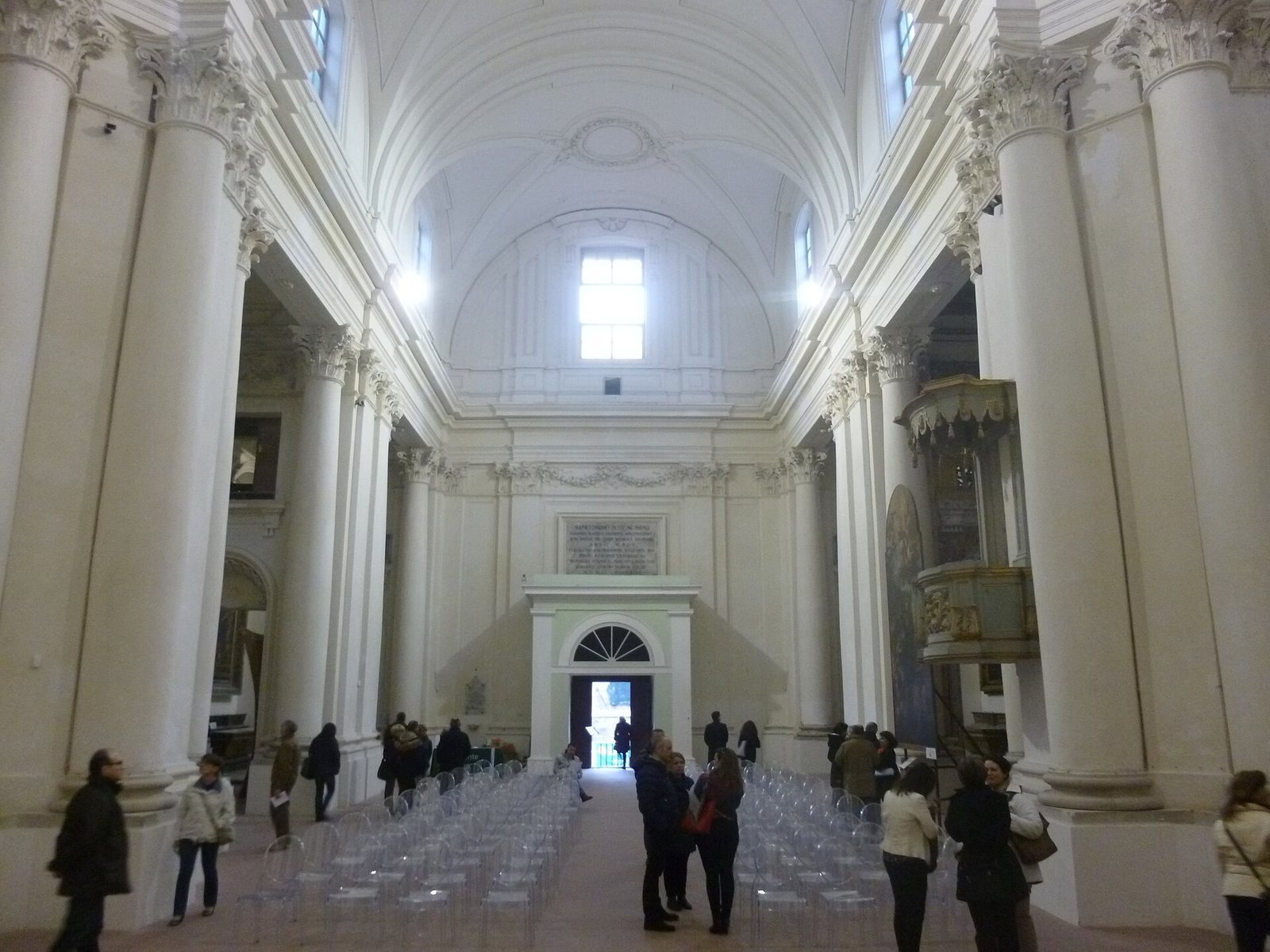
The church combines a concave exterior façade with an interior arranged around a single nave, side chapels, a crosswise transept, a semicircular apse, and a dome. Its plan follows a Latin cross, a cross-shaped layout contained within a rectangular outline.
Setting and façade
Entrance and stairways
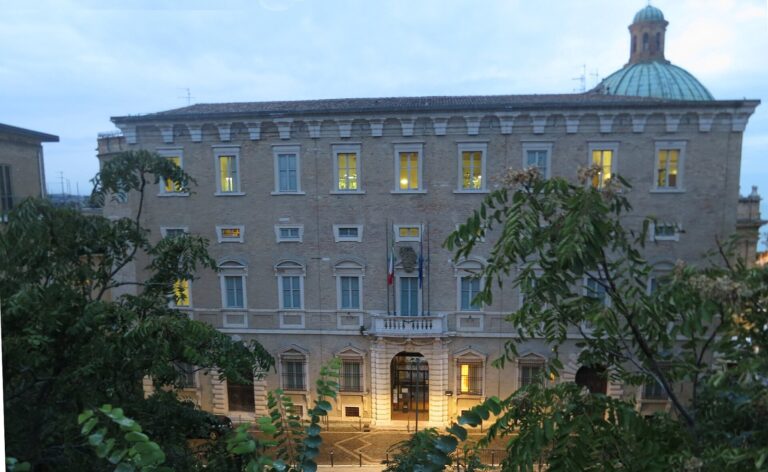
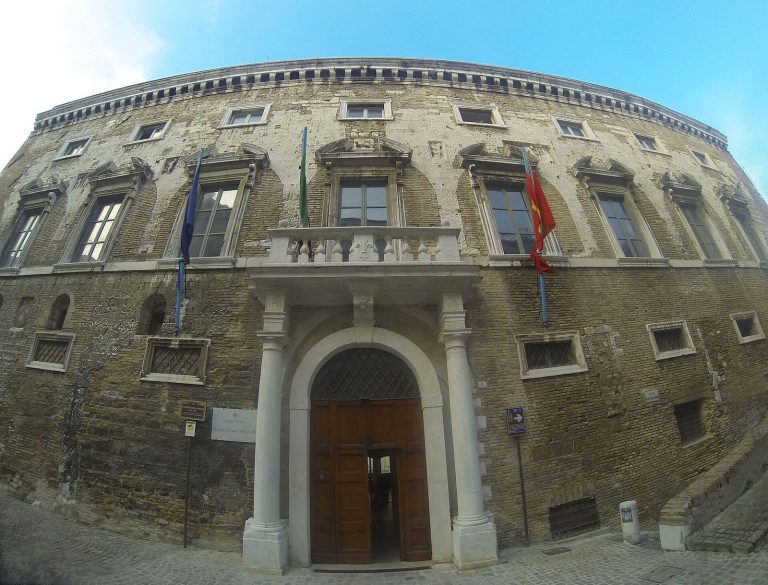
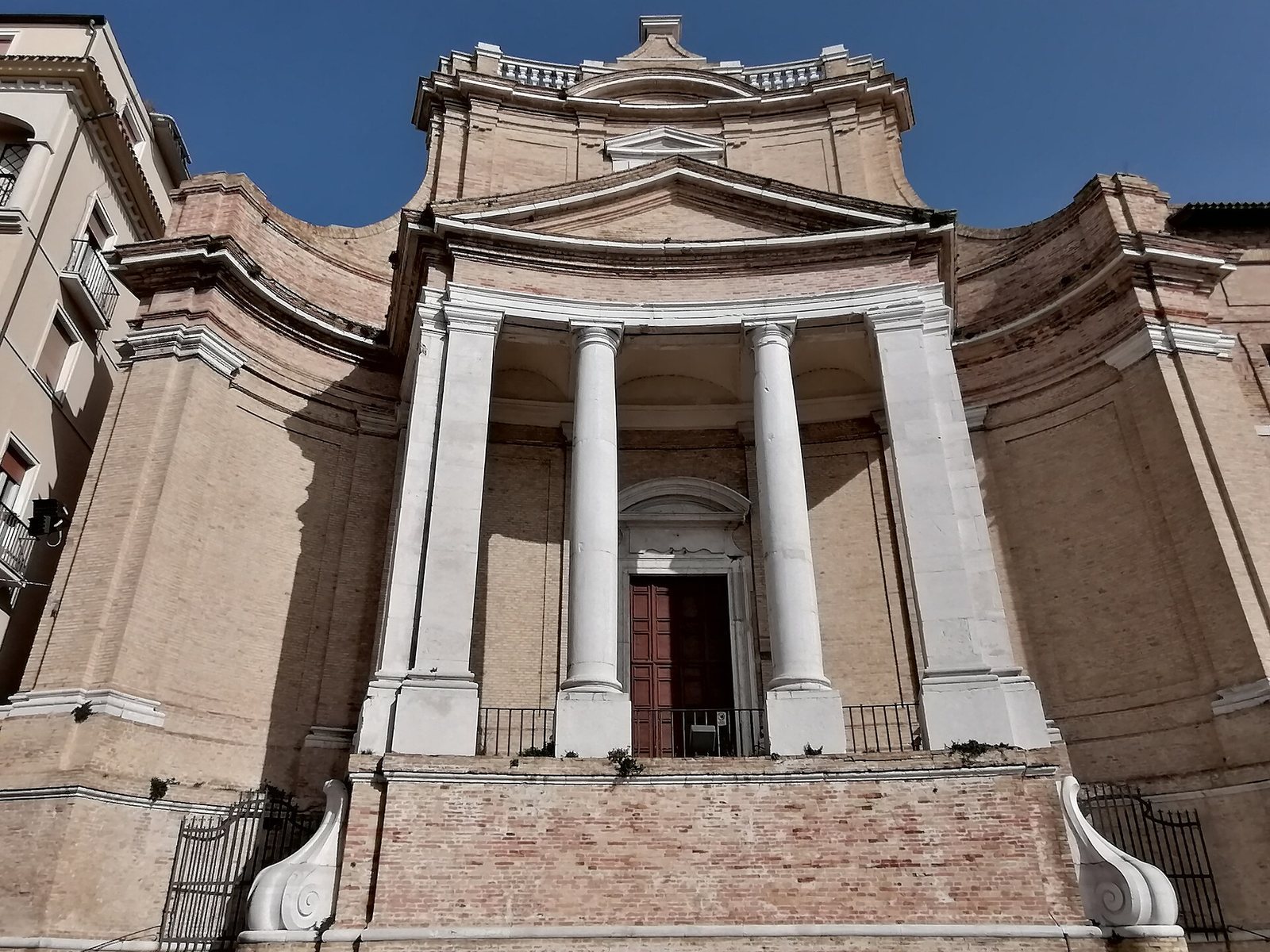
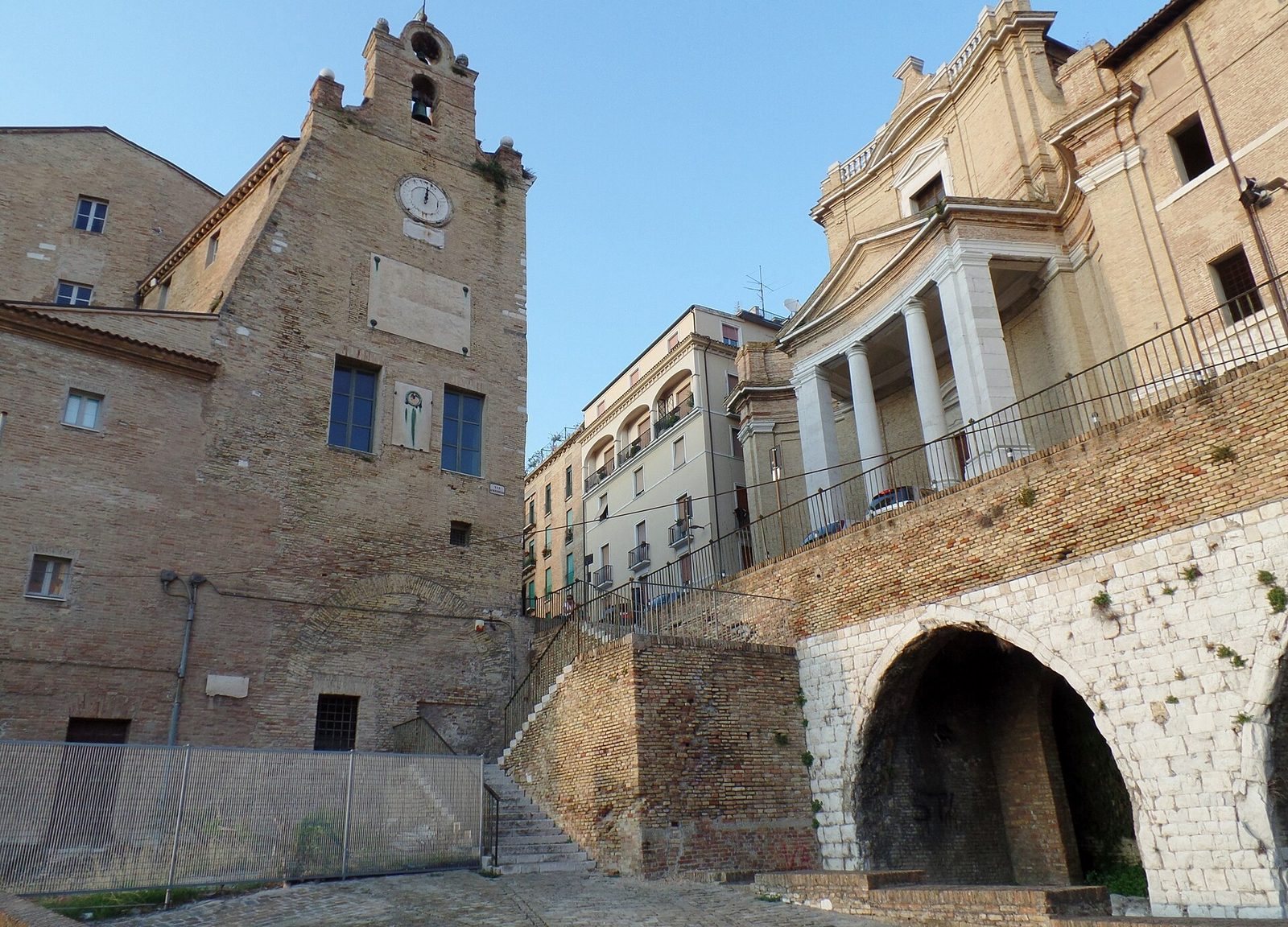
Chiesa del Gesù stands in Piazza Benvenuto Stracca, also called Piazza del Comune, opposite the Palazzo degli Anziani. Two half-oval stairways connect the square to the entrance, accommodating the difference in level between street and church within a confined space. The entrance porch has two corner pilasters, shallow column-like projections from the wall, and two central columns. These support a Doric entablature, the horizontal structure carried above columns in a relatively plain classical style. The porch is finished with a triangular, gable-like pediment.
Curved façade
The façade’s inward curve follows the shape of the harbor inlet. At the inlet’s northern and southern ends are two other works by Vanvitelli, the Clementine Arch and the Lazzaretto, a facility historically used for quarantine. Above the entrance, a tall raised section contains a large rectangular window topped by a triangular pediment. Its center is crowned with a curved pediment. Vanvitelli’s design also included six flaming terracotta torches at the top of the façade; they were later removed.
Interior and artworks
Nave and chapels
The single nave, or central hall, leads toward the semicircular apse, the recessed end of the church, while the transept forms its crosswise section. Two chapels on each side sit between pillars and Corinthian columns, a classical form with capitals decorated with acanthus leaves. The columns support the horizontal entablature. The side chapels connect with one another and with the transept, creating a side-aisle-like arrangement. The design follows the model of Rome’s Church of the Gesù, the Jesuit order’s mother church, and shares this chapel arrangement with Sant’Ignazio and the Gesù in Rome.
The Circumcision
Orazio Gentileschi’s The Circumcision hangs on the high altar. Its composition has two levels. In the lower scene, the infant Jesus stands at the center as a priest performs the rite, surrounded by three other religious figures. Mary and Joseph stand to his right and look toward him; he turns toward them. Two pairs of figures converse in the background. The older figures may represent the prophetess Anna and Simeon, associated with the later Presentation of Jesus at the Temple. Above them, God the Father presides over two kneeling angels. The angel on the left, identified as the archangel Gabriel, points toward the IHS monogram, a traditional Christian abbreviation associated with the name of Jesus, while holding his other hand over his heart. Three musician angels appear behind them, and a still life sits to the infant’s right.
Other paintings
The church’s other paintings include Sebastiano Conca’s The Departure of Saint Francis Xavier for the Indies and The Preaching of Saint Ignatius, attributed to Pellegrino Tibaldi. Filippo Pallavicini’s Saint Anthony Abbot is on the first altar to the left, and Michele Gisbel painted The Assumption.
Bronze statue
The church also housed a bronze statue of the Madonna and Child by Pietro Paolo Jacometti.