Niebudszen Church: An Evangelical Lutheran Parish Church in Russia
Site at a Glance
- Popularity
- Very Low
- Country
- Russia
- Primary era
- Early Modern
- Eras represented
- Early Modern, Modern
- Civilizations
- Duchy of Prussia, Kingdom of Prussia, Russian
- Site type
- Religious
- Remains
- Church
On this page8 sections
History
Congregation and rebuilding
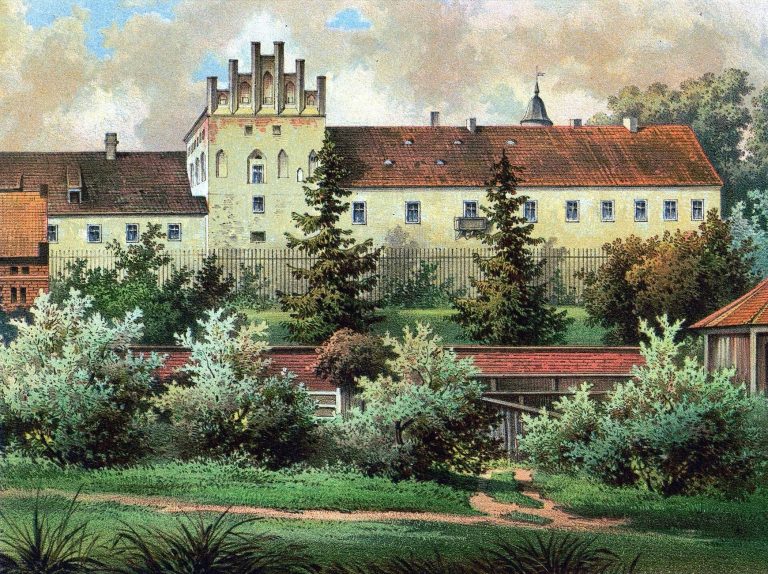
Niebudszen Church is a former Evangelical Lutheran church in Krasnogorskoje, in Russia’s Kaliningrad Oblast. Its brick replacement was built between 1691 and 1700 with features influenced by Dutch design, serving a parish that encompassed 34 settlements.
An Evangelical congregation was established at Niebudszen in 1615, and a pastoral post followed in 1621. The village later took the names Niebudschen from 1936 to 1938 and Herzogskirch from 1938 to 1946, before becoming Krasnogorskoje. The earlier church, built of fir wood, had a tower added in 1621. A hurricane badly damaged the tower sometime between 1628 and 1639, after which it was rebuilt. An altar was installed in 1655. The church had become too small during the 1680s and was demolished in 1689.
Work on its brick successor began in 1691. The building was consecrated in 1693, while construction continued until it was completed in 1700. Royal patronage began in 1701 and was later exercised by the owners of the Rohrfeld estate.
Parish and postwar transformation
Until 1945, the parish belonged to the Gumbinnen church district, the Church Province of East Prussia, and the Evangelical Church of the Old Prussian Union, a Prussian Protestant organization bringing Lutheran and Reformed traditions together. In 1925, the parish had 4,958 Lutheran members. Reformed residents instead belonged to the Neustädtische Church in Gumbinnen.
The church served its local Evangelical Lutheran community until 1945 and survived the Second World War. After the war, it was used for grain and agricultural machinery storage, and as a meat shop. The flight and expulsion of local residents, together with restrictive Soviet religious policies, sharply reduced church life in the renamed village. In 2001, the Russian Orthodox Church adapted the southern entrance hall as a prayer room and glazed the windows to protect the interior from the weather.
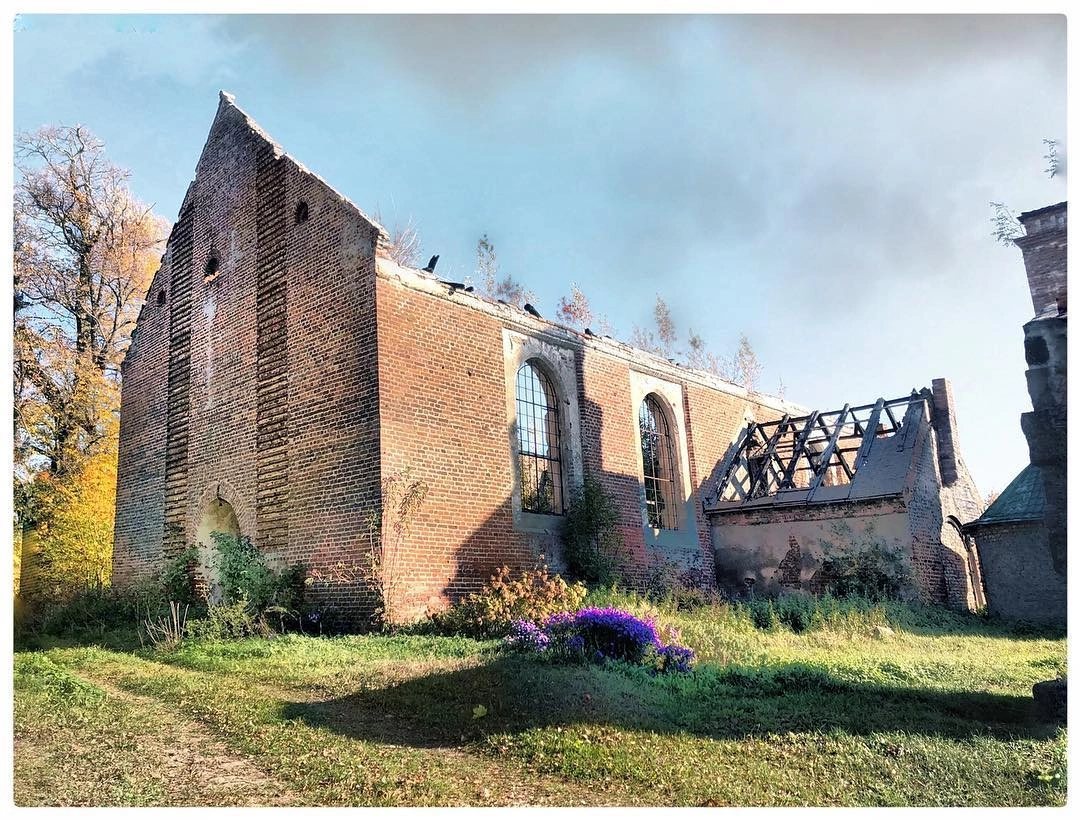
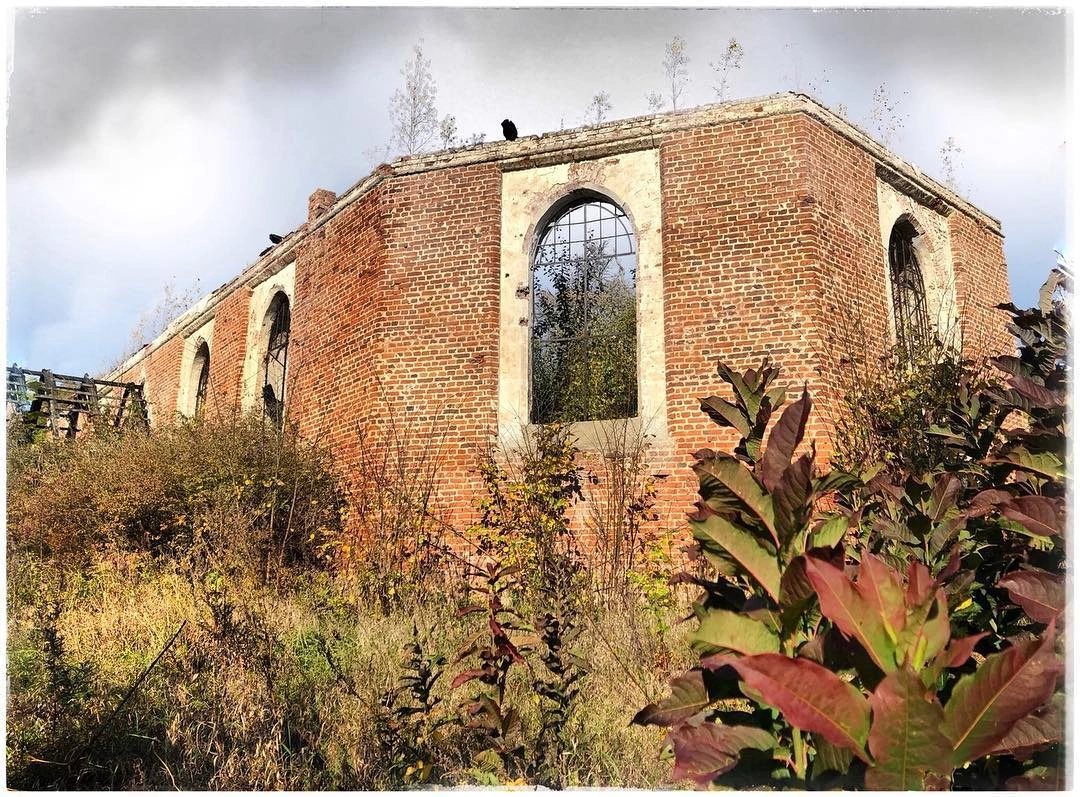
The church interior burned out in May or June 2012, probably as a result of arson. The original parish no longer exists, and the building is not owned by a church. Krasnogorskoje now falls within the area served by a newly established Evangelical Lutheran congregation based at the Salzburger Church in Gusev. This congregation belongs to the Kaliningrad provostship of the Evangelical Lutheran Church of European Russia, whose territory includes the eastern part of Kaliningrad Oblast.
Parish registers held by the German Central Office for Genealogy in Leipzig include baptism entries for 1695 to 1790, 1797 to 1811, and 1874; marriage entries for 1695 to 1819 and 1874; and burial entries for 1695 to 1811 and 1874.
Remains
Surviving architecture and furnishings
Building and present fabric
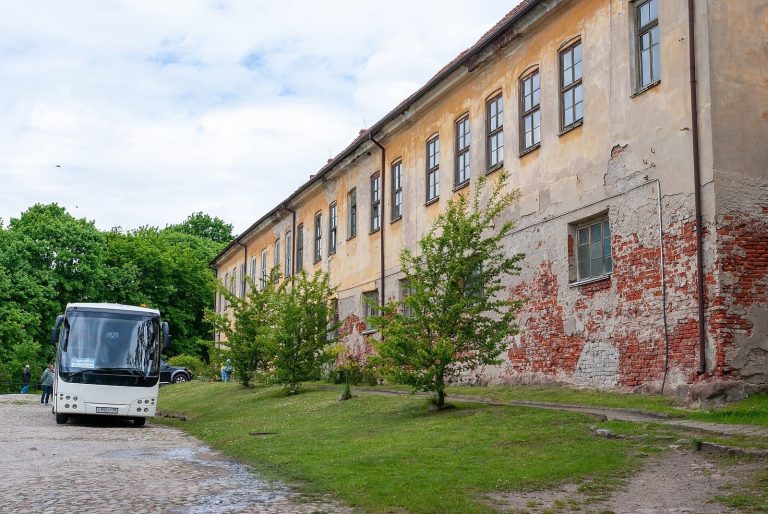
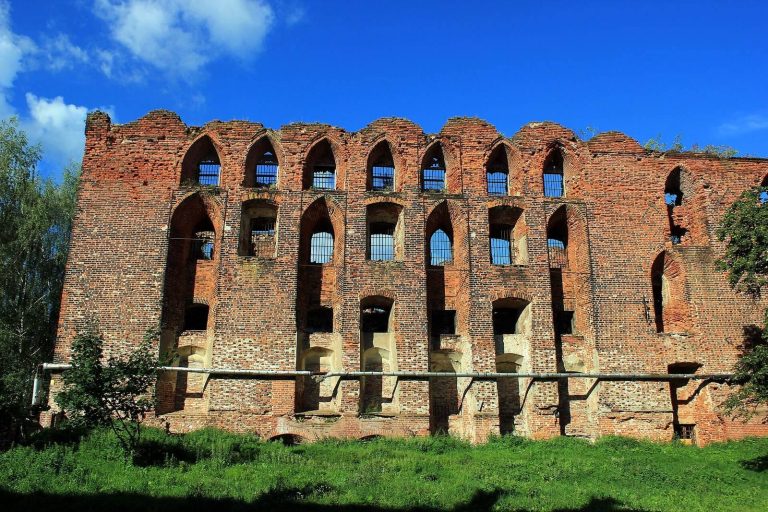
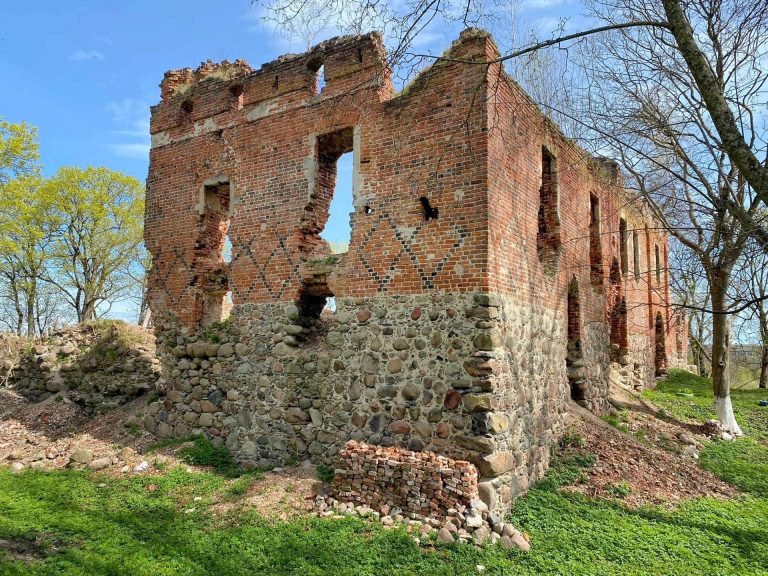
The ruins stand in the northern part of present-day Krasnogorskoje, beside the main road. The church measured 12.75 by 34.55 metres and was built of brick on a fieldstone base. Its plan included a many-sided apse, and its architecture showed Dutch influence. The interior is burned out, while the exterior walls remain beneath a temporary roof. Only the bell tower’s foundation survives. A projecting tower and an intermediate structure beside the southern entrance hall provide rooms that the Russian Orthodox Church uses intermittently as a prayer space.
Interior and altar
The interior had a flat ceiling and galleries along the sides. In 1697, the Königsberg woodcarver Isaak Riga made a Baroque altar, with a confessional, an enclosed place for private confession, beside it. Later, only fragments of Riga’s altar remained, including a figure of the Evangelist Matthew. A simpler altar carried a large crucifix, with an undecorated pulpit wall behind it.
Organ and bell
An organ was installed in 1702 and replaced by a new instrument in 1866. The church’s single bell was cast in 1797 and hung in the roof above the southern entrance hall.