Ghislieri College: A Historic Educational Institution in Pavia
Site at a Glance
- Popularity
- High
- Country
- Italy
- Primary era
- Early Modern
- Eras represented
- Early Modern, Modern
- Civilizations
- Austrian Empire, Duchy of Milan, Habsburg, Italian, Spanish
- Site type
- Civic
- Remains
- University
On this page20 sections
History
Ghislieri College is a historic educational institution in Pavia, Italy, founded in 1567 by Pope Pius V. It was established to educate capable religious and professional leaders, especially young people of merit with limited means. Construction of its palace began in 1571, and the building’s austere character reflects the Counter-Reformation, the Catholic Church’s response to the Protestant Reformation. Ghislieri is Pavia’s second-oldest college and one of Italy’s oldest.
Foundation and early development
Pius V initially restricted admission to clerics. In 1569 he granted the college the fiefs of Lardirago and Gerenzago, lands and rights that provided income. The properties had previously belonged to the monastery of San Pietro in Ciel d’Oro. Their revenues supported the college and gave it financial and administrative independence. Lardirago included a castle.
The architect Pellegrino Tibaldi directed construction of the college palace from 1571 until 1585, when Philip II, king of Spain, called him to Spain. The college’s educational motto, “Wisdom joined with moral integrity is the perfection of the human mind,” expresses its founding aims and remains displayed in many student rooms.
Austrian rule and the college library
In the mid-eighteenth century, the college became fully secular as the Austrian monarchy assumed its patronage and control. The transfer is associated with Maria Theresa’s government in 1771. Around the same time, a south wing, known as Crimea, was added to the college.
The library grew from books belonging to the institution, including works purchased by Pius V and volumes acquired from the suppressed holdings of San Pietro in Ciel d’Oro. The founding bulls made no provision for a library, and the collection’s earliest formation is uncertain. From 1768, mathematician and abbot Gregorio Fontana led the library’s development, expanding its holdings, particularly in science and European academic publishing.
In 1771 the collection was moved to Palazzo Malaspina and later transferred to the University of Pavia library in 1778. The transfer was partial: some older books remained at Ghislieri, and Fontana was subsequently charged with rebuilding its internal collection. Books from suppressed Jesuit institutions also arrived, including volumes from monasteries in Milan, Pavia, Lodi and Vienna, obtained directly or through Milan’s Braidense Library. During the post-Napoleonic Restoration, the Austrian monarchy censored the collection because of suspicion toward ideas associated with the French Revolution. This ended with Italian unification. Later additions included bequests and gifts, notably from rector Pietro Ciapessoni and scholar Alessandro Pellegrini.
Artillery school and political change
In 1803, the Italian Republic, the Napoleonic state established in northern Italy in 1802, requisitioned the college and turned it into a theoretical and practical artillery school. The school operated until 1814. After Austrian rule returned, the college reopened in 1818. Its rulers intended it to help keep young people under control, but it became a focus of political activism. Several students later played prominent parts in the Five Days of Milan, the 1848 uprising against Austrian rule in the city.
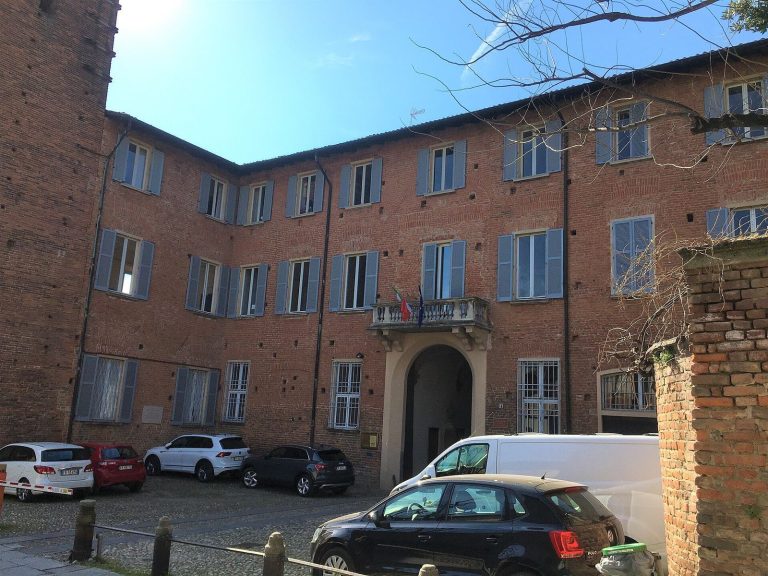
A separate building for the artillery school’s arsenal and drawing school was constructed in 1806 to a design by Pietro Gilardoni. The military used it until 1816, when it passed to the college. The college also obtained the use of the former church of San Francesco di Paola from the municipality of Pavia under a 99-year agreement. After restoration work from 1997 to 2001, the church became the college’s Aula Magna, or great hall.
Expansion and continuing role
A smaller wing called Bosforo was built in 1936 to connect the south wing more closely with the main palace. The Aula Goldoniana was later established inside it for conferences and meetings. In 1965, the college opened a women’s section named for its founder, Sandra Bruni Mattei, making Ghislieri the first coeducational college in Italy.
At Bruni Mattei’s request, land for Ca’ della Paglia was acquired around 1975. Construction began in the late 1980s, and the building opened in 1999. It was first intended for young graduates, including international students pursuing research or further study. The Ghislieri Foundation later converted it into a merit college for advanced-cycle students, including doctoral candidates, students in specialist postgraduate programs, master’s students and international students.
Ghislieri co-founded the University Institute for Advanced Studies of Pavia. It operates under the High Patronage of the President of the Italian Republic, a formal honorary endorsement, and is recognized by the national education ministry as an institution of high cultural qualification. The college also promoted and funded the restoration of Lardirago Castle for cultural activities such as conferences, courses, seminars and exhibitions.
Remains
The palace and chapel
College palace
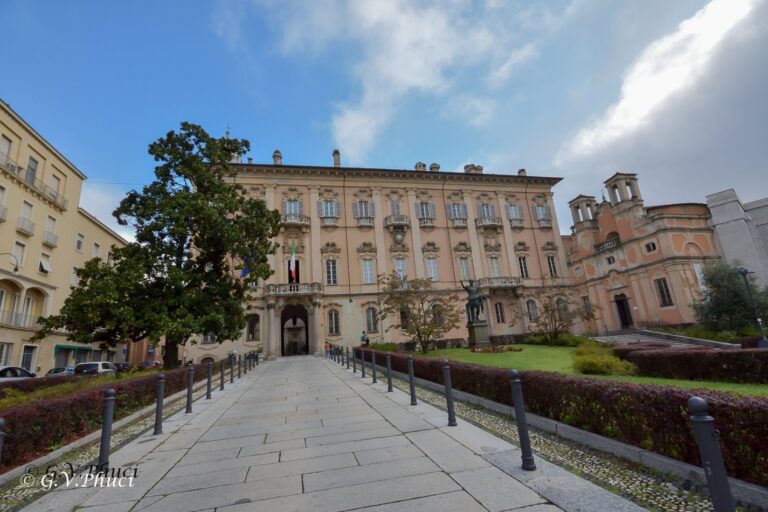
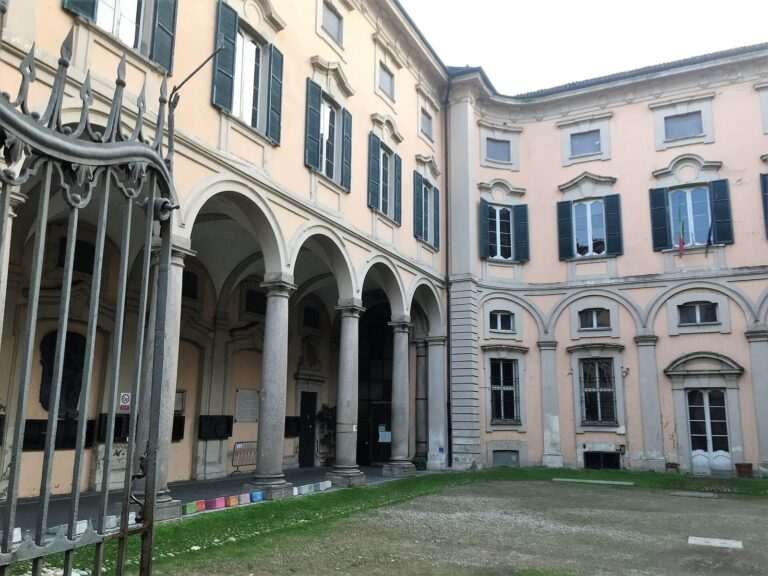
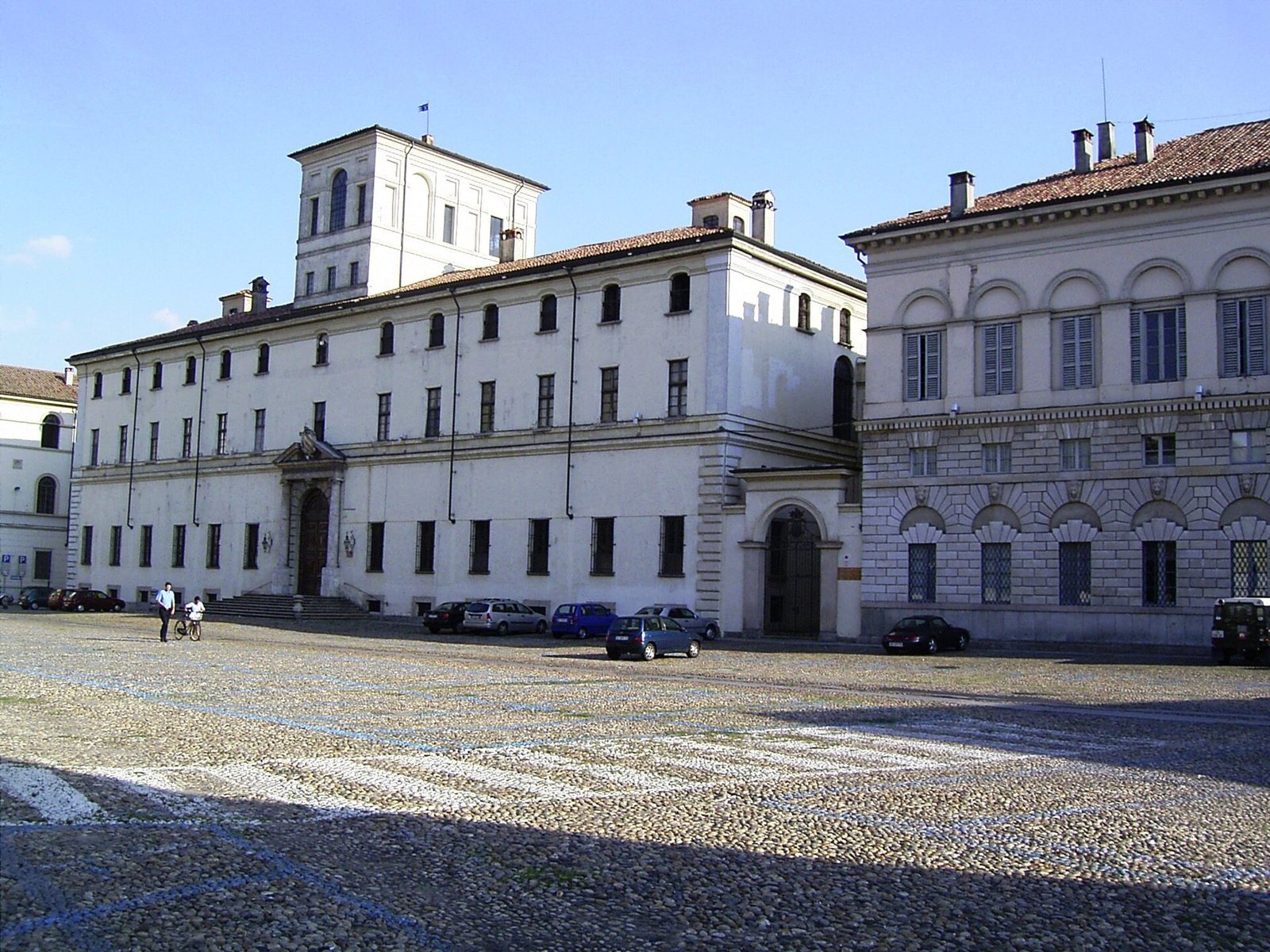
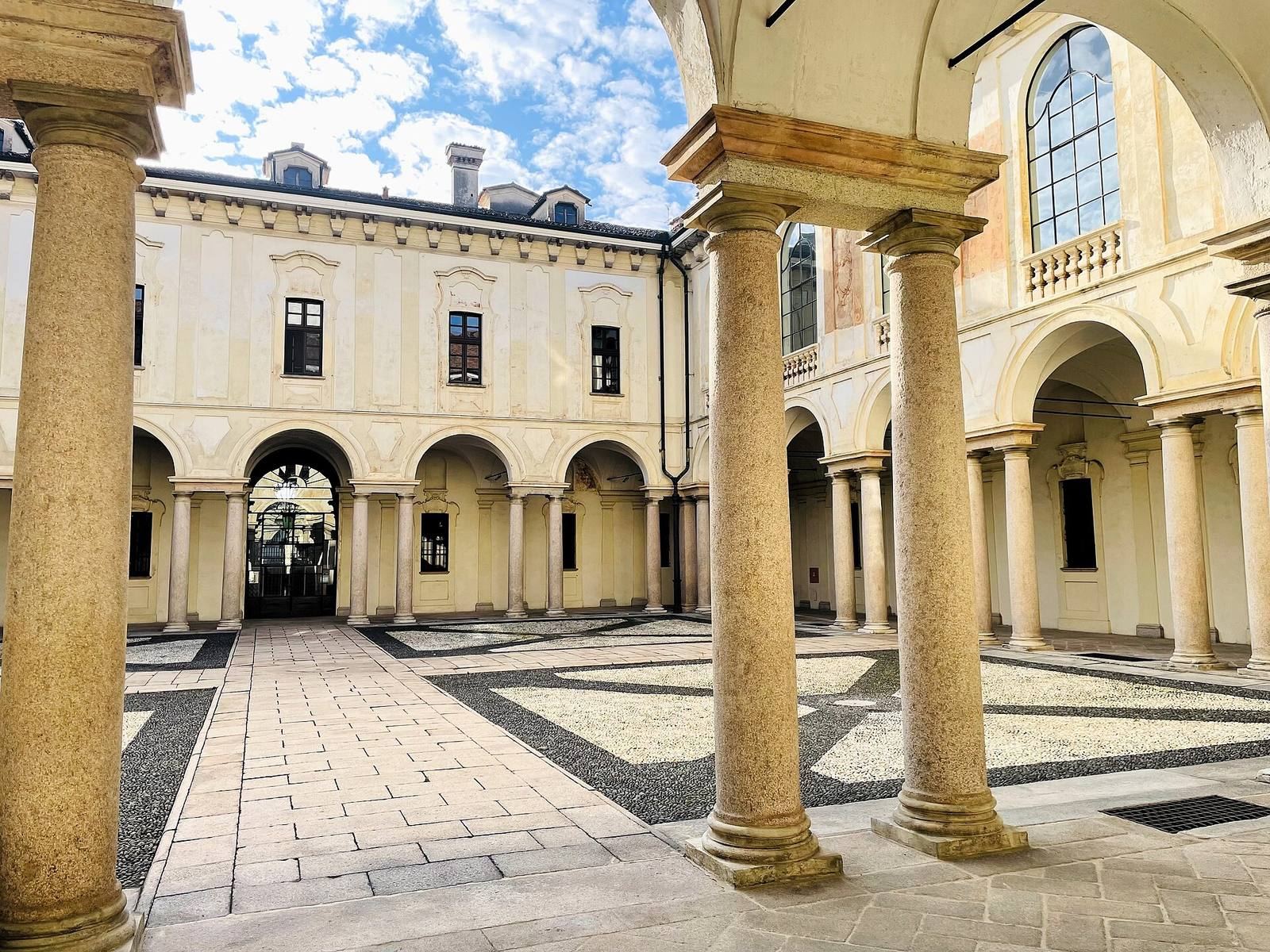
The palace has a severe façade whose principal ornaments are a richly worked portal and a lantern tower. The portal, associated with the Roman artistic tradition, is made of Serizzo and Macchiavecchia di Arzo stone. Within the building, a four-sided portico forms the central space, with paired Baveno granite columns and pillars strengthening its corners. On the main floor, student rooms open onto a broad corridor lit by two large loggias, open-sided galleries.
College chapel
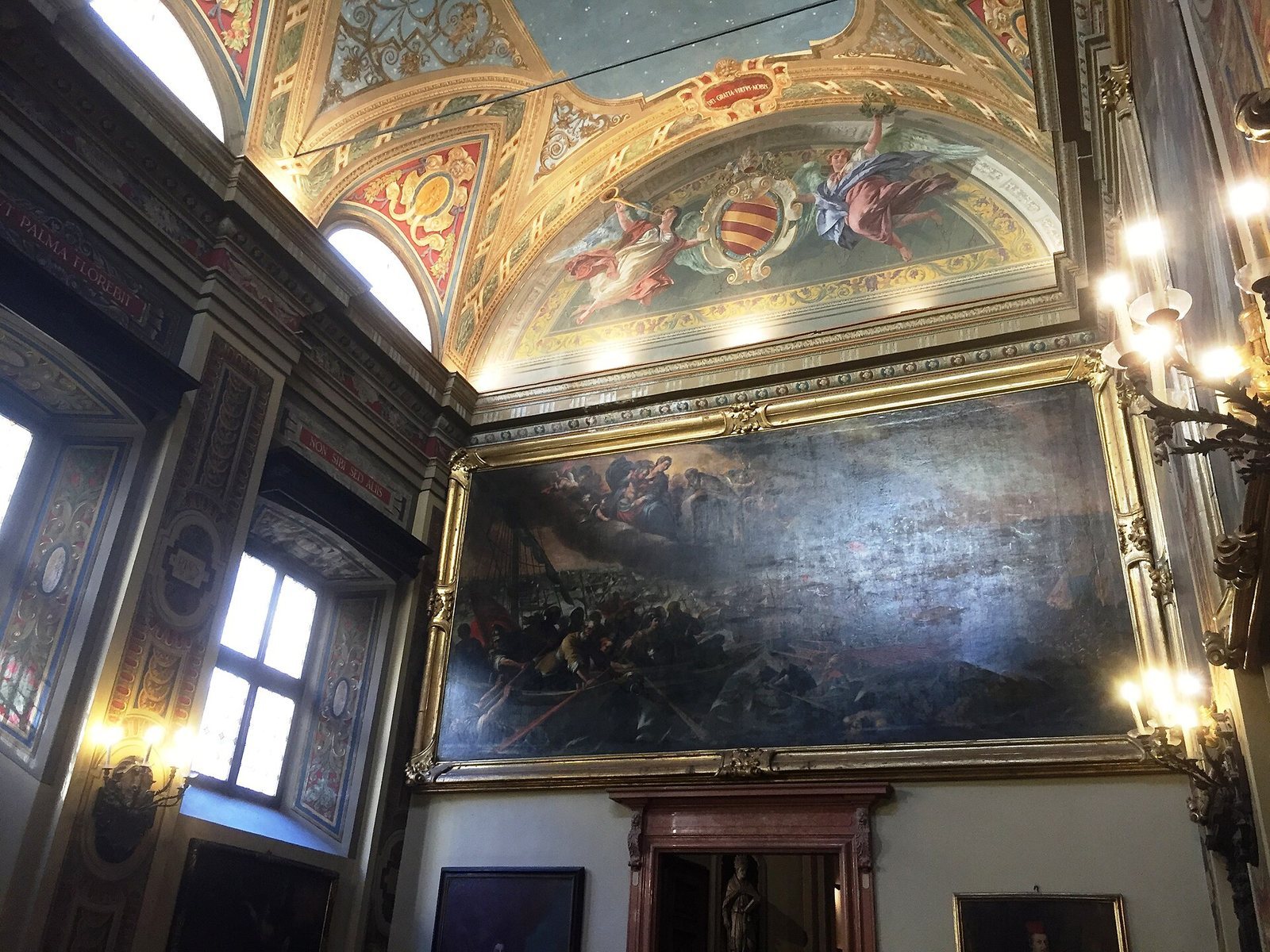
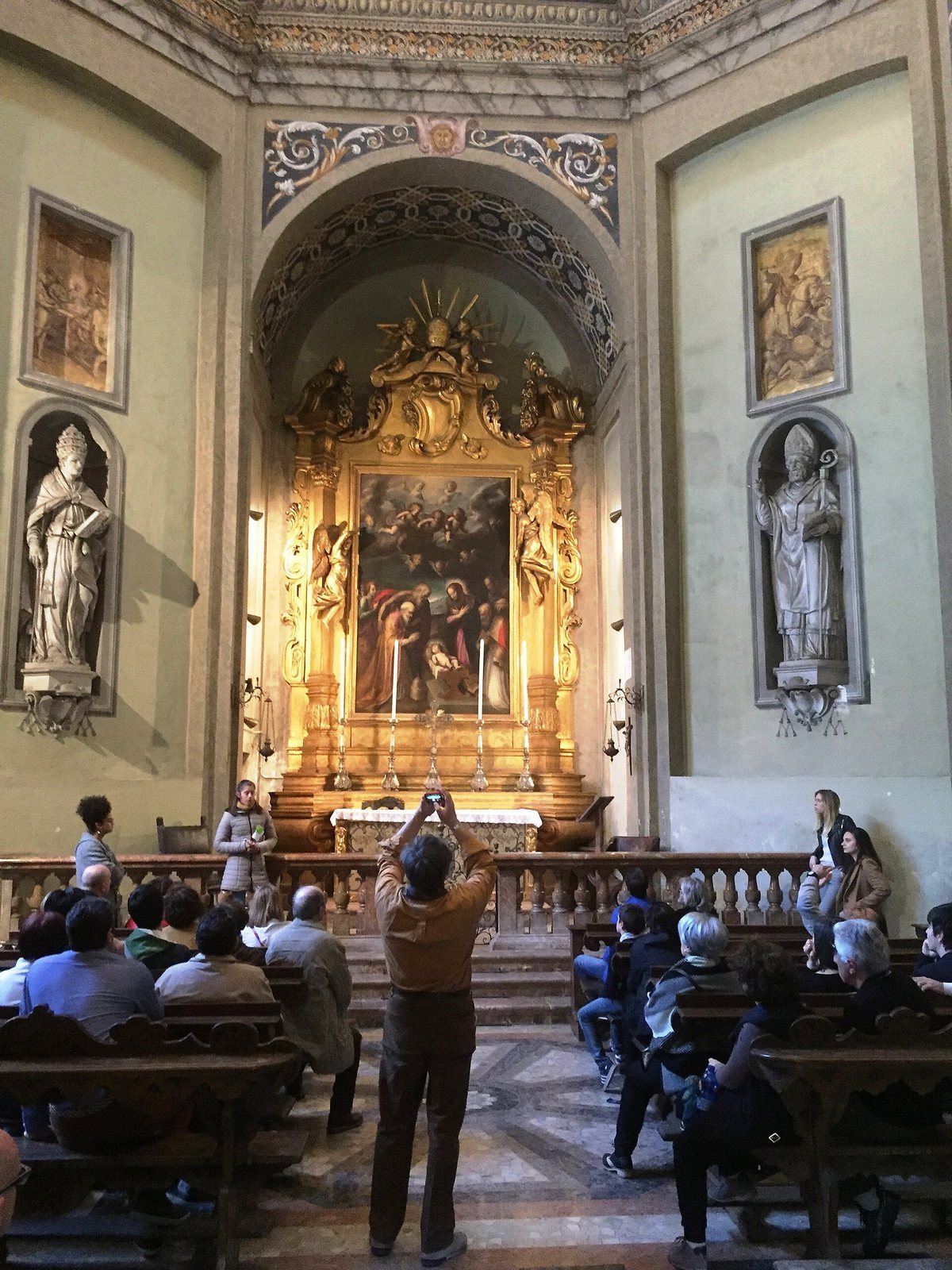
Tibaldi designed the chapel, which was completed in the early seventeenth century with the involvement of Alessandro Mollo. Its entrance atrium, dedicated to Saint Pius, contains paintings including The Miracles of Saint Pius V by Luigi Pellegrini Scaramuccia, Saint Pius Frees the Possessed Woman by Giovanni Peruzzini and Pius V’s Vision of the Battle of Lepanto by Giovanni Battista del Sole.
The chapel’s prayer room has a central plan and a dome divided into eight sections and topped by a lantern. Its altar holds The Nativity, Saint Jerome and Pius V, an altarpiece dating to about 1620 by Guglielmo Caccia, also known as Moncalvo. A portrait of Pius V by Scipione Pulzone is kept in the college’s administrative rooms and the rector’s apartment.
Library and memorial sculpture
Library collection
The college library holds about 130,000 volumes, including religious, philosophical and theological works. Among its early printed books is the 1499 Hypnerotomachia Poliphili, attributed to Francesco Colonna. An incunable is a book printed in Europe before 1501.
Statue of Pius V
A bronze statue of Pius V stands at the centre of Piazza Ghislieri, in front of the college. Signed by Francesco Nuvolone and dated 1692, it was cast in Rome by Francesco Ferreri. Its sculptural style recalls the grandeur of Bernini.
Additional college buildings
Former artillery-school building
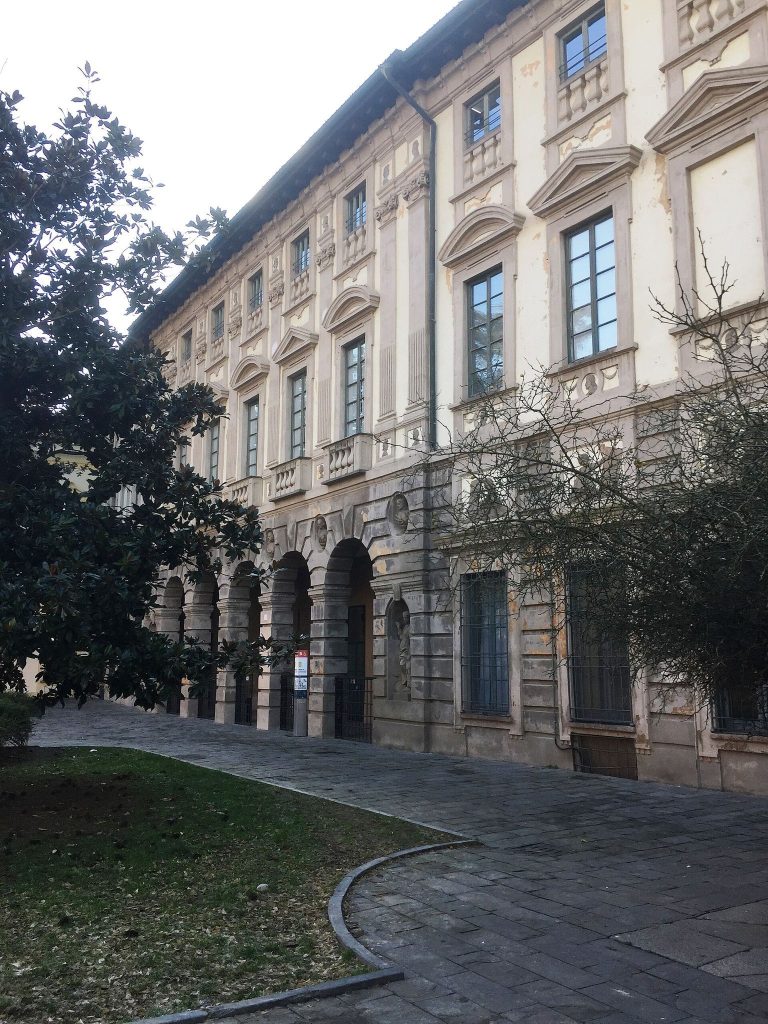
The adjoining drawing-school building has a block-like form above a solid rusticated base, masonry shaped to emphasize its joints and rough surface. A horizontal cornice divides the façade in a way that corresponds to the college palace. Three regular rows of windows are topped by curved panels, or lunettes, decorated with lion heads in Viggiù stone. The upper floor originally opened onto a gallery with broad round arches; Giuseppe Marchesi converted those openings into windows in 1824–25. The building later served as the college’s administrative offices.
South wing and Bosforo
The college’s south wing is known as Crimea. The smaller Bosforo wing, built in 1936, links this part of the complex more closely with the main palace. The Aula Goldoniana, used for conferences and meetings, occupies part of Bosforo.
Women’s section
The buildings of the women’s section were constructed in the mid-1960s on an adjacent site facing Vicolo Sant’Ulderico and Piazzetta della Rosa.
Ca’ della Paglia
Ca’ della Paglia is a separate college facility for advanced-cycle students, including doctoral candidates, students in postgraduate specialization programs, master’s students and international students. It first opened in 1999.
Associated buildings
Aula Magna
The Aula Magna occupies the former church of San Francesco di Paola at the eastern end of Piazza Ghislieri. The church was built beside a monastery of the Minims, a Catholic religious order, to a design by Giovanni Antonio Veneroni. Work began in 1715, the church was consecrated in 1721, and the façade was completed in 1738. Its design was inspired by Francesco Borromini. The restored building recovers its original architectural proportions and serves as a hall with capacity for up to 350 people.
Lardirago Castle
Lardirago Castle began as a defensive structure in the twelfth and thirteenth centuries and later became a residence under the Visconti and Sforza, ruling dynasties of Milan and parts of Lombardy. Its present form took shape in the fourteenth century around an original Romanesque core, the medieval chapel of San Gervasio. That chapel retains frescoes from the eleventh and twelfth centuries.