Visconti Castle: A Fortified Residence in Massino Visconti
Site at a Glance
- Popularity
- Medium
- Country
- Italy
- Primary era
- Early Modern
- Eras represented
- Medieval, Early Modern
- Civilizations
- Duchy of Milan, Habsburg, Holy Roman Empire, Spanish
- Site type
- Military
- Remains
- Castle
On this page9 sections
History
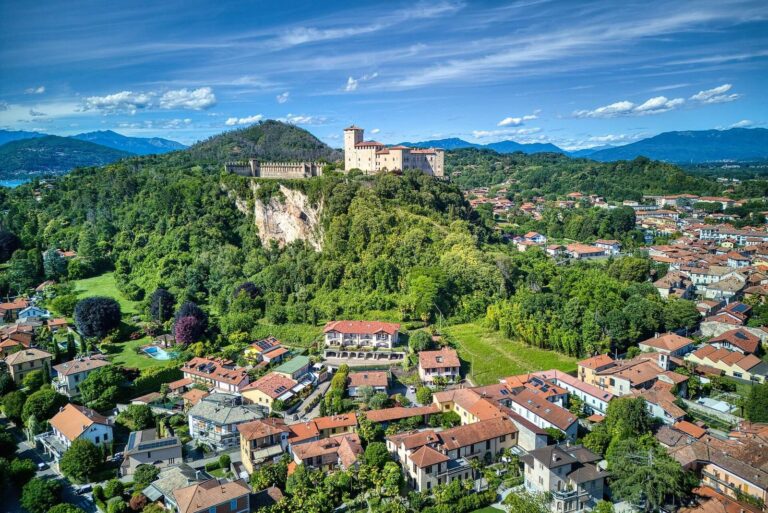
Visconti Castle is a fortified residence at the entrance to Massino Visconti, Italy, whose construction began around the eleventh century. Its history links early medieval monastic landholding with the later power of the Visconti, a noble family that ruled Milan.
Early records and Visconti rule
A fortification at Massino appears in records from the ninth century, when the settlement came into the possession of Engelberga, wife of the Carolingian emperor Louis II, who ruled in Italy. She donated it to the monastery of Saint Sixtus in Piacenza. The property later passed to the monks of Saint Gall, an important abbey in present-day Switzerland.
In 1134, the monks entrusted the site to Guido Visconti, son of Ottone, and King Conrad III of Germany confirmed the grant in 1142. The Visconti took up residence as feudal lords in 1139. The castle became a country home used by the family and by the dukes of Milan. Their interest in Massino may have been encouraged by its broad outlook over Lake Maggiore and the surrounding region.
Conflict, ownership, and local identity
In 1358, during a war with the Marquis of Monferrat, Galeazzo II Visconti partially demolished the castle. He had ordered the destruction of other castles in the Vergante hills, fearing that his enemies might use them.
Filippo Maria Visconti, who later became archbishop of Milan, was born at the castle in 1721. In 1823, the property passed from the Visconti di Massino to the Visconti d’Aragona. Pietro Pallestrini bought it from that branch in 1863, lived there, and restored it before transferring it to the Visconti di San Vito. Some of the Visconti d’Aragona’s furniture and archives were moved to Visconti Castle at Somma Lombardo. In the early twentieth century, the municipality adopted the name Massino Visconti, reflecting the castle’s importance in local history.
Remains
The castle complex
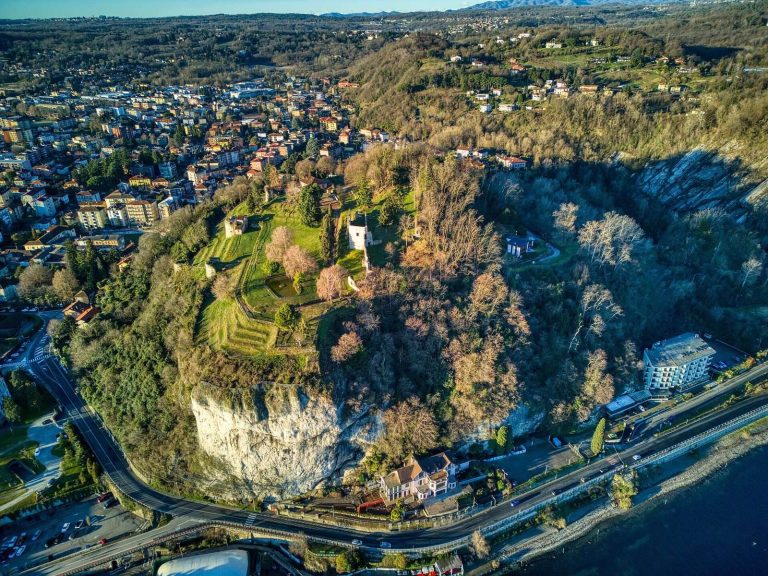
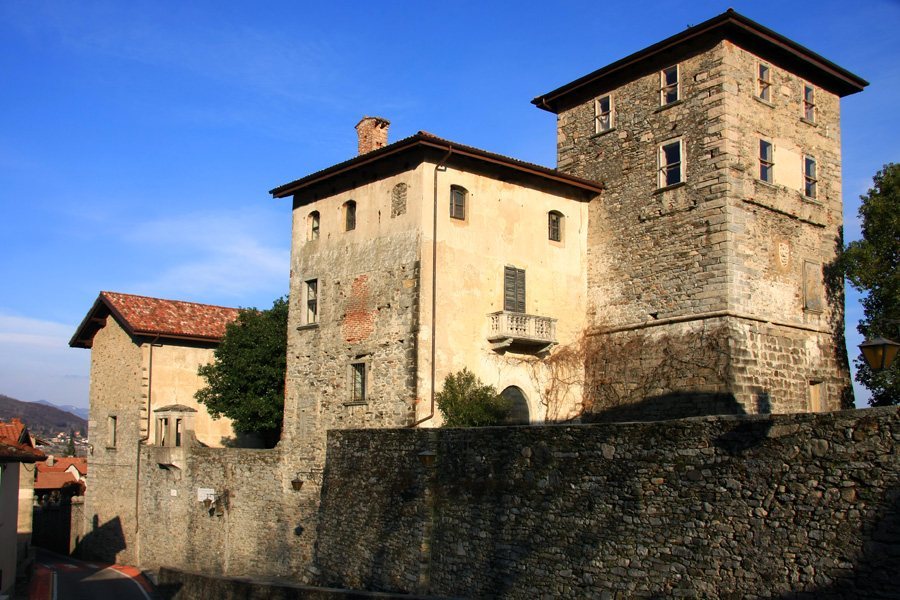
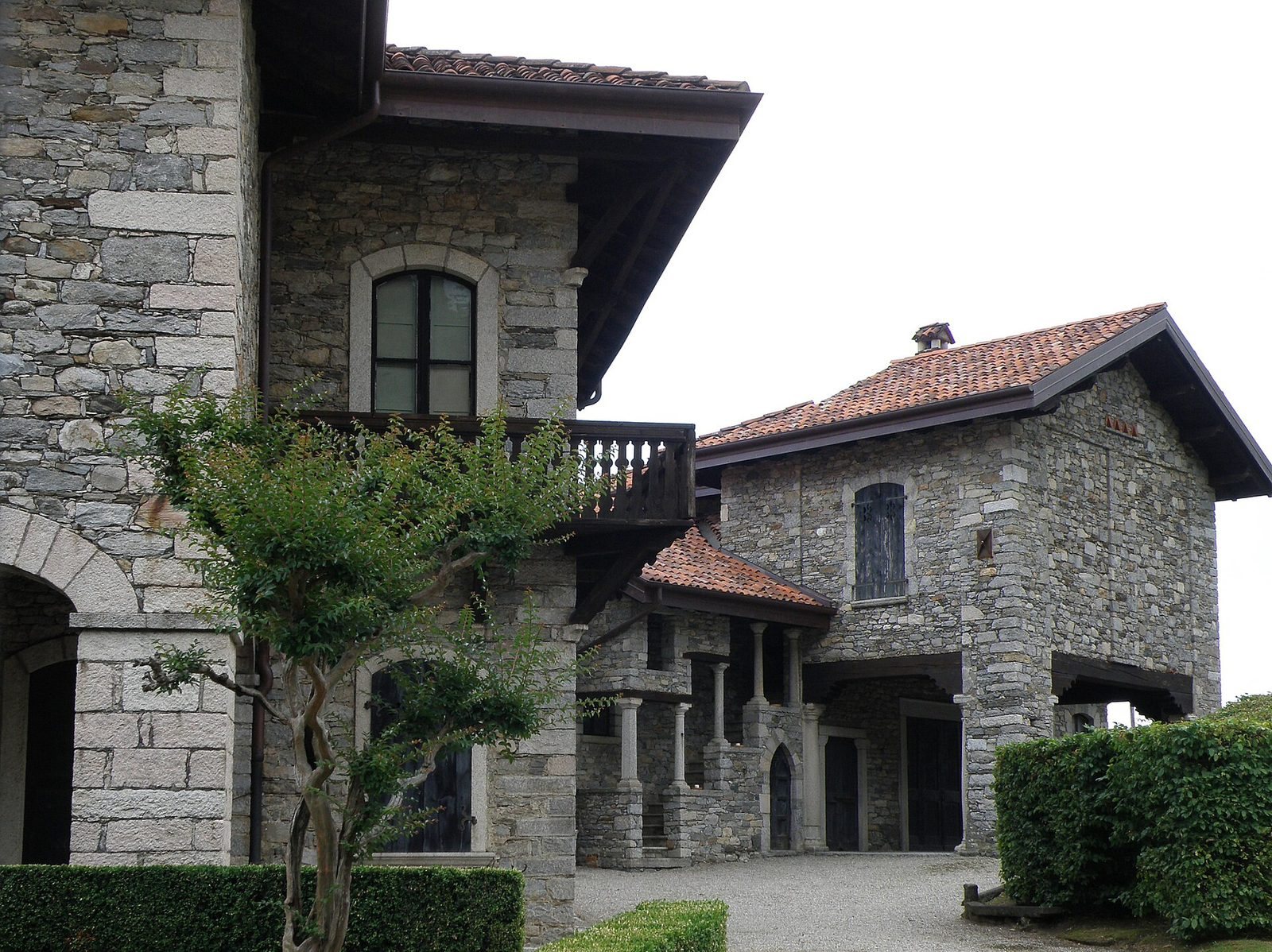
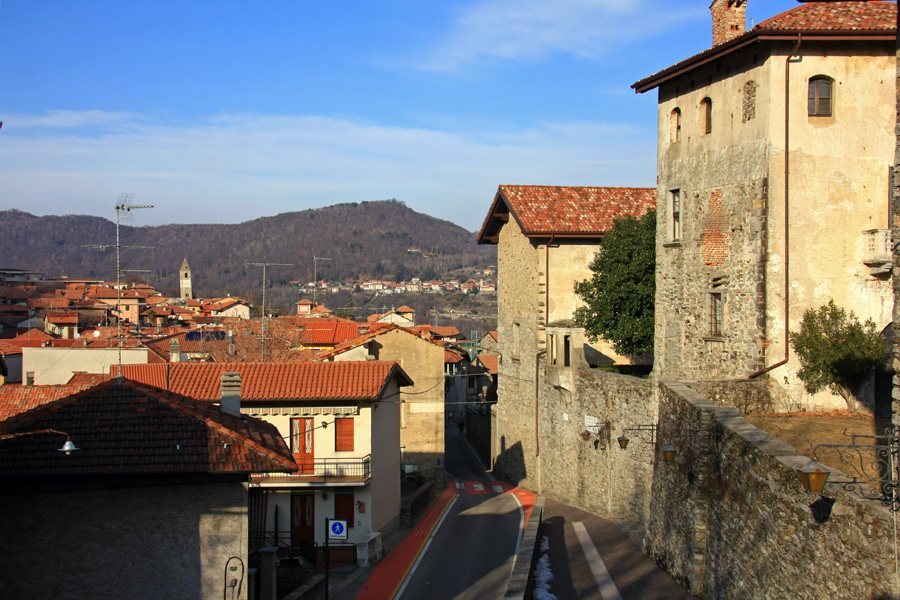
The complex stands on terraced slopes in the Vergante hills, about 435 metres above sea level. Its outlook takes in Lake Maggiore and, beyond it, the lakes of Varese and Monate. The present building has three levels and reflects major rebuilding in the sixteenth century. A central keep, the castle’s principal fortified tower, stands between adjoining buildings dating to the seventeenth and eighteenth centuries. The structure is in good condition and has the appearance of a manor house.
Southern entrance and towers
Three towers survive: the central keep and two towers beside the southern gate, which may have been the original main entrance. The gate bears the Visconti family’s biscione, a serpent-like emblem. Three other towers were removed to make room for a laundry, kitchen, stables, livestock sheds, and a garden.
Courtyard features
A small balcony near the courtyard is associated with addresses by the Visconti to the village’s inhabitants. On the side facing the courtyard terrace, an open-sided gallery served for public announcements and continues to be used for village events.
Former defenses and the well
The castle once had a moat, a drawbridge, prisons, and torture devices. Steel blades from one device, positioned at the edge of a deep well, remain visible.
Wall paintings
Frescoes once covered the castle walls. Repeated epidemics led to their being whitewashed, leaving very little of the painted decoration.