St Adalbert of Prague Church in Bytom: A Franciscan Parish Church
Site at a Glance
- Popularity
- Medium
- Country
- Poland
- Primary era
- Early Modern
- Eras represented
- Medieval, Early Modern
- Civilizations
- Holy Roman Empire, Kingdom of Bohemia
- Site type
- Religious
- Remains
- Church
On this page8 sections
History
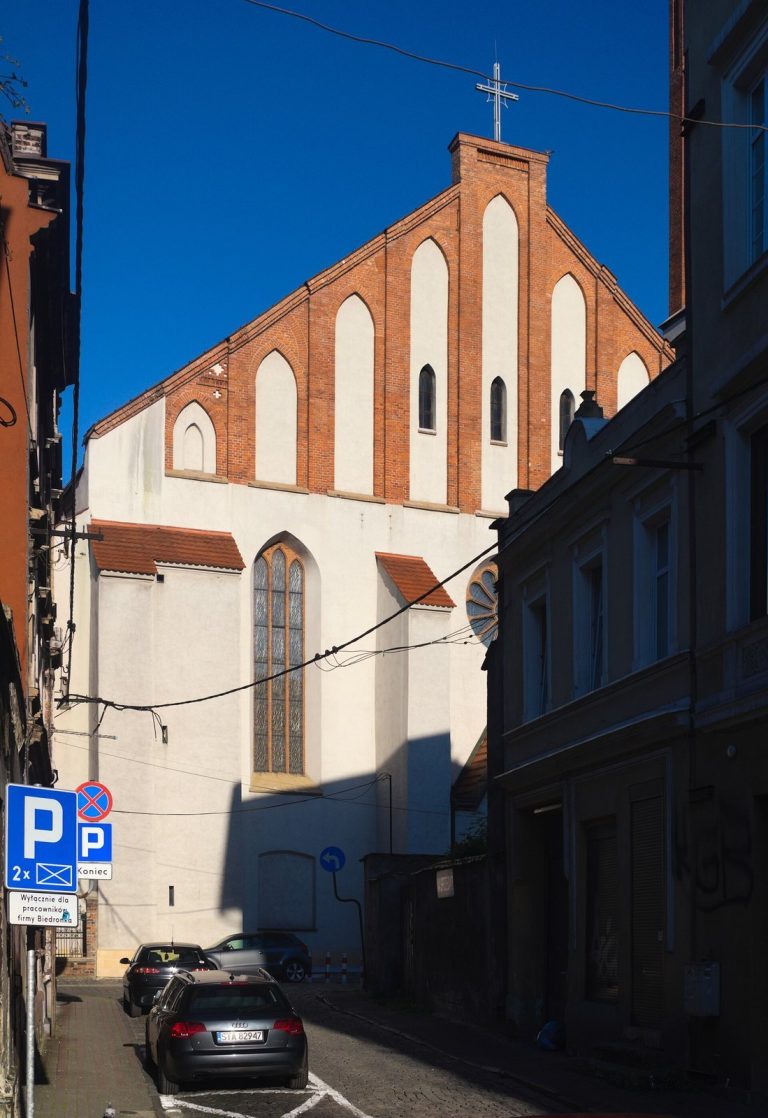
St Adalbert of Prague Church is a Roman Catholic parish church in Bytom, Poland, whose origins lie in a Franciscan church and monastery built in 1257–1258. The original wooden church was dedicated to St Nicholas. The present building reflects an eighteenth-century Baroque remodeling and retains a Gothic chancel.
Franciscan foundation and medieval changes
The church and monastery were built for Franciscan friars brought to Bytom in 1258 by Duke Władysław of Opole. During the Hussite Wars, fifteenth-century conflicts associated with the Hussite religious movement, townspeople sympathetic to the Hussites expelled the Franciscans in 1430. Observant Franciscans, a reform branch known in Poland as Bernardines, arrived in 1440. Before 1450, they replaced the wooden buildings with masonry ones. On 20 May 1454, the Franciscan preacher and reformer John of Capistrano preached in the church.
Reformation, remodeling, and secularization
As the Reformation spread, the Bernardines were forced to leave the monastery in the final years of the sixteenth century. They returned in 1605 amid the Counter-Reformation, the Catholic response to the spread of Protestantism. The church and monastery suffered further damage during the Thirty Years’ War.
An eighteenth-century Baroque remodeling altered the church. In 1810, secularization ended the Bernardine order’s ownership of its property in Prussia. The town took over the monastery for use as a school, while the church became a warehouse. In 1833, the church was sold to an Evangelical parish.
Postwar Catholic parish
After the Second World War, the expulsion of the German population left the church without a congregation. Catholics took it over under the leadership of Zygmunt Staniszewski, a priest forcibly displaced from the Eastern Borderlands, and the church received its present dedication to St Adalbert. In 1947, it was formally transferred to the Catholic Church in exchange for the return of a church in Katowice that had also been taken over.
In 1950, apostolic administrator Bolesław Kominek, an official appointed to govern a church jurisdiction, established an independent curacy, a local pastoral unit that was not yet a parish. The parish of St Adalbert was established in 1952, when the Friars Minor again took charge of the church. Reconstruction was completed in 1964. Franciscan friars of the Order of Friars Minor serve the parish, which belongs to the order’s Province of the Assumption of the Blessed Virgin Mary in Katowice, a regional administrative division.
Remains
Church and associated remains
Church architecture and interior
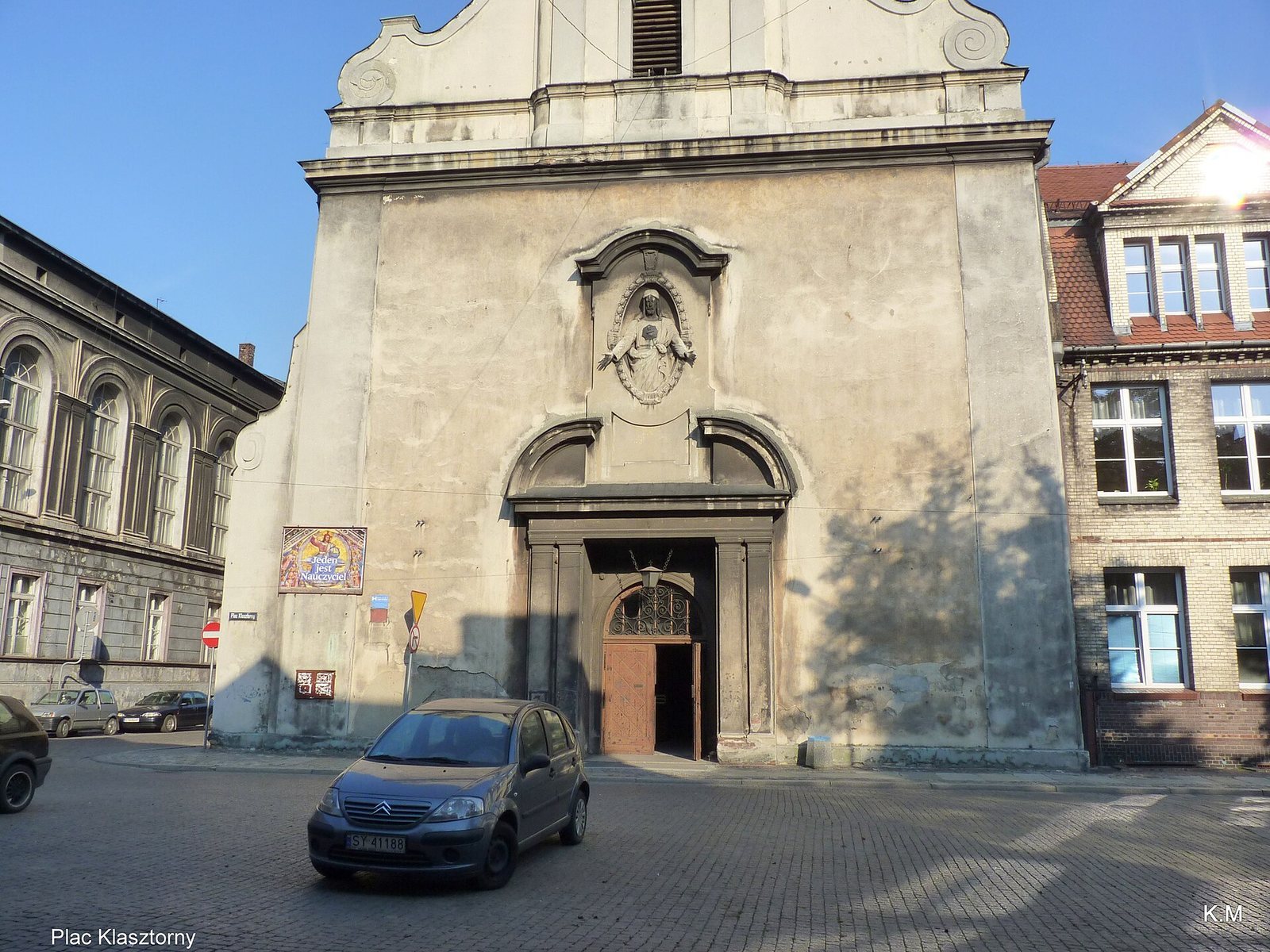
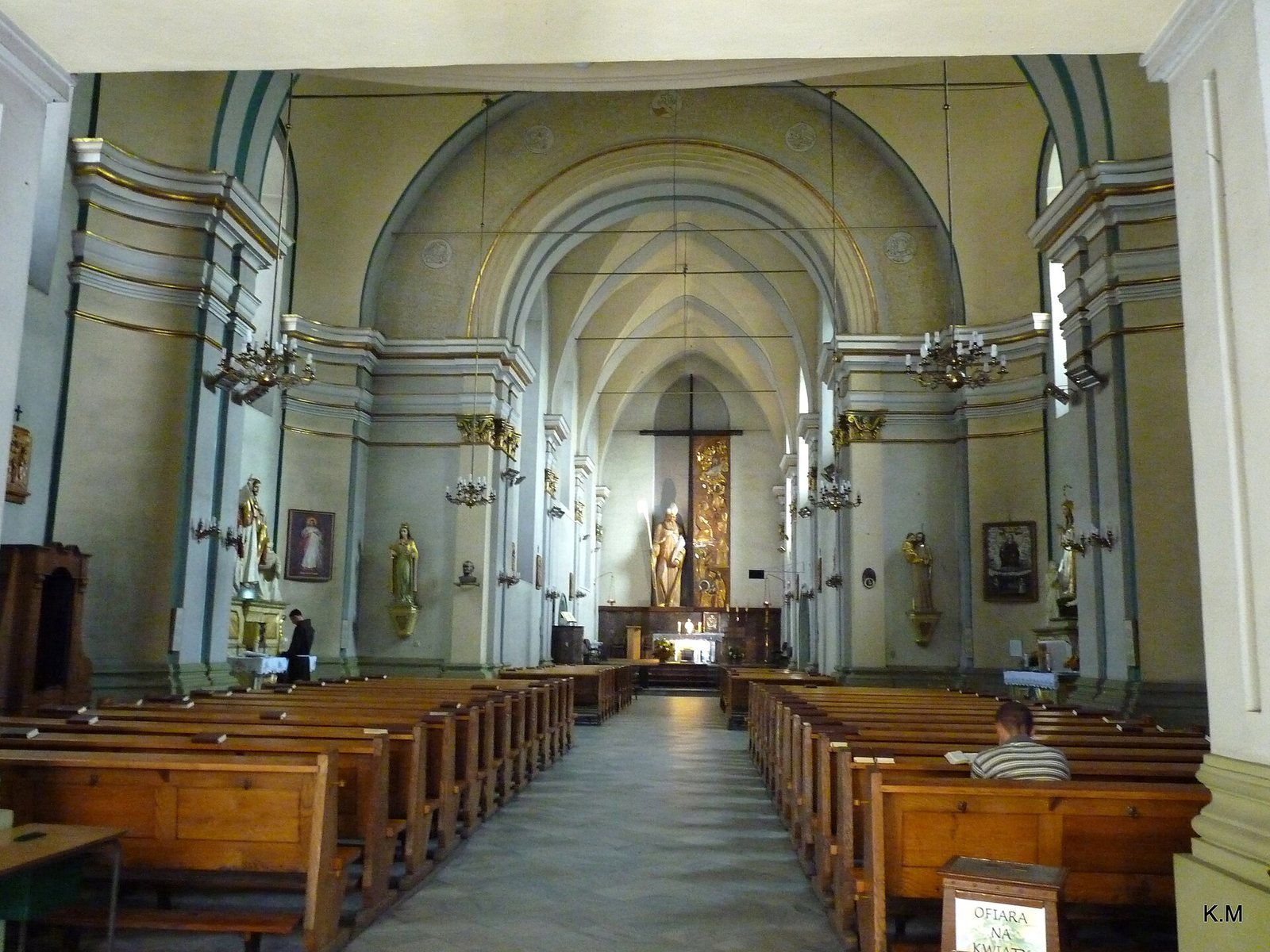
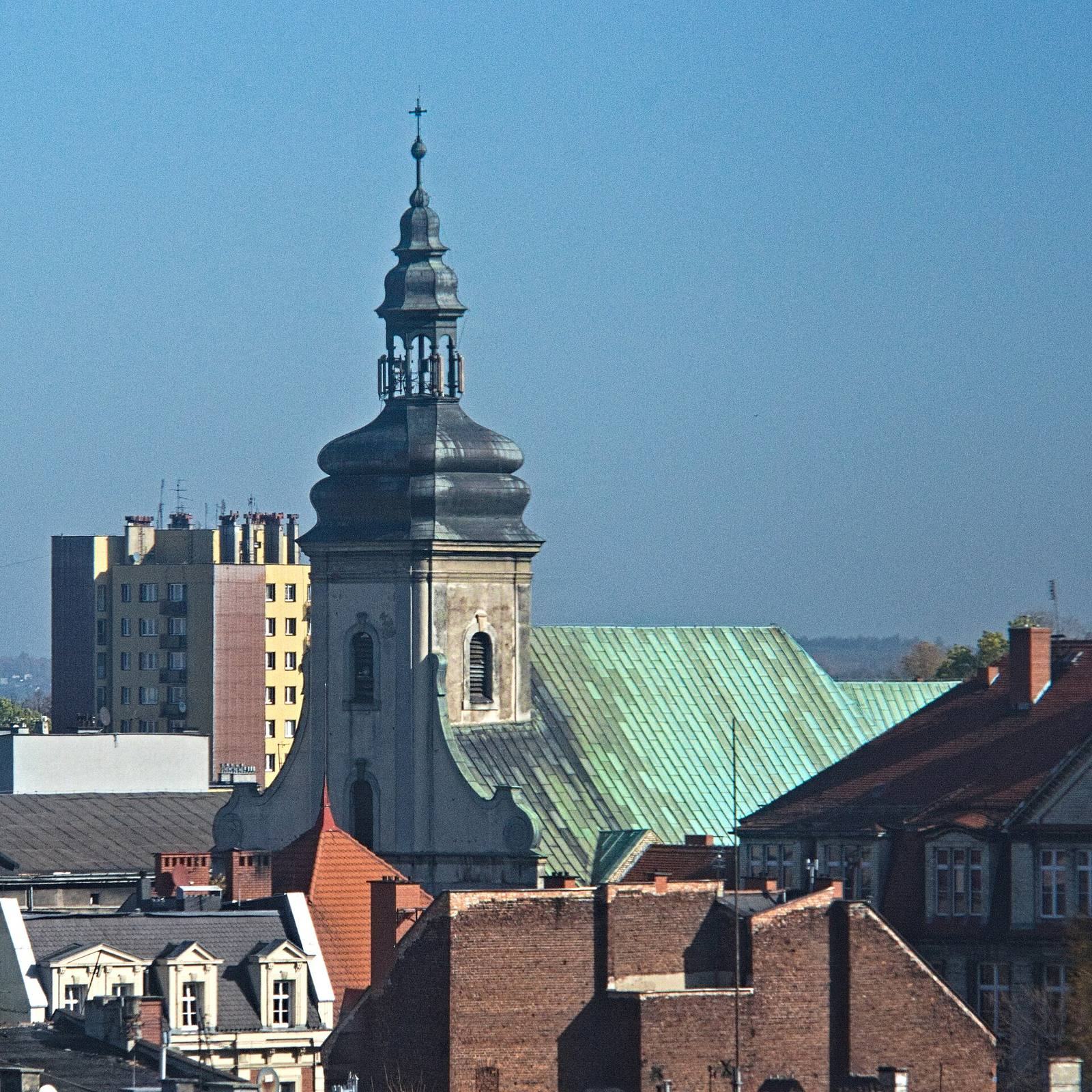
The church is a single-nave hall church, with one main interior space, and has a Gothic chancel, the area around the altar. It is built of brick with stone elements. The eighteenth-century Baroque remodeling added the main nave, a tower with a vestibule, and a new façade. The interior also received a Baroque treatment, and a new organ was installed. Most furnishings are contemporary; two eighteenth-century Baroque figures of Saints Peter and Paul are among the older furnishings that remain.
Relics, physical remains of saints or objects associated with them that are venerated in Christian traditions, are also kept at the church. In 1997, the parish acquired relics of St Adalbert from Prague through the efforts of its parish priest, Bartłomiej Kuźnik. The church is also associated with relics of St Francis of Assisi, St Anthony of Padua, St Albert Chmielowski, St Pio of Pietrelcina, and St John Paul II.
Crypt and former monastery site
A sealed crypt, an underground chamber, lies beneath the chancel and is inaccessible. An Art Nouveau school building, in the international architectural and decorative-arts style prominent around the turn of the twentieth century, was constructed in 1902 on the site of the former monastery. The monastery and parish office stand opposite the church.