Collegiate Church of SS Peter & Paul in Kilmallock, Ireland
Site at a Glance
- Popularity
- Low
- Country
- Ireland
- Primary era
- Medieval
- Eras represented
- Medieval, Early Modern
- Civilizations
- Norman
- Site type
- Religious
- Remains
- Church
On this page10 sections
History
The Collegiate Church of SS Peter & Paul is a medieval church in Kilmallock, Ireland, completed by 1241. It probably stands on the site of a monastery founded around AD 600 by Mocheallóg.
Monastic predecessor and medieval church
The earlier monastery is associated with Mocheallóg, an early Irish religious figure. The church was completed by 1241 and was dedicated to Saints Peter and Paul in 1410.
Collegiate church and later use
In 1420, Maurice Fitzgerald substantially altered the nave and transept. During the 15th century, the church became collegiate, meaning it was served by a community of clergy organized as a college.
Damage and subsequent history
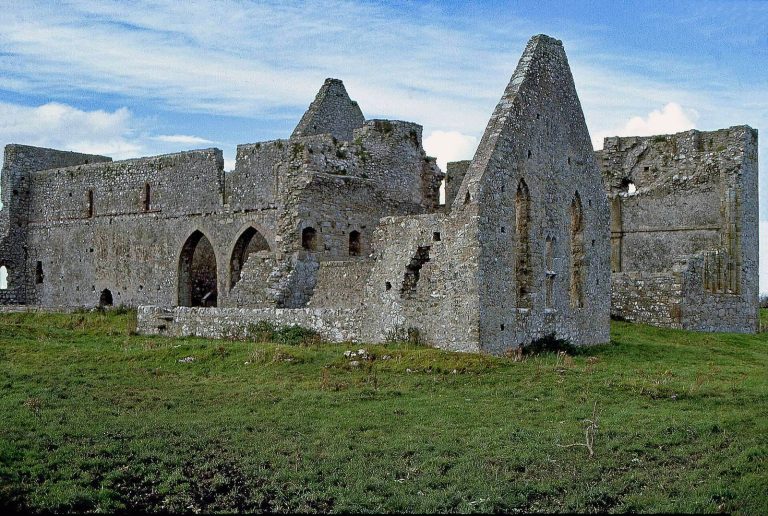
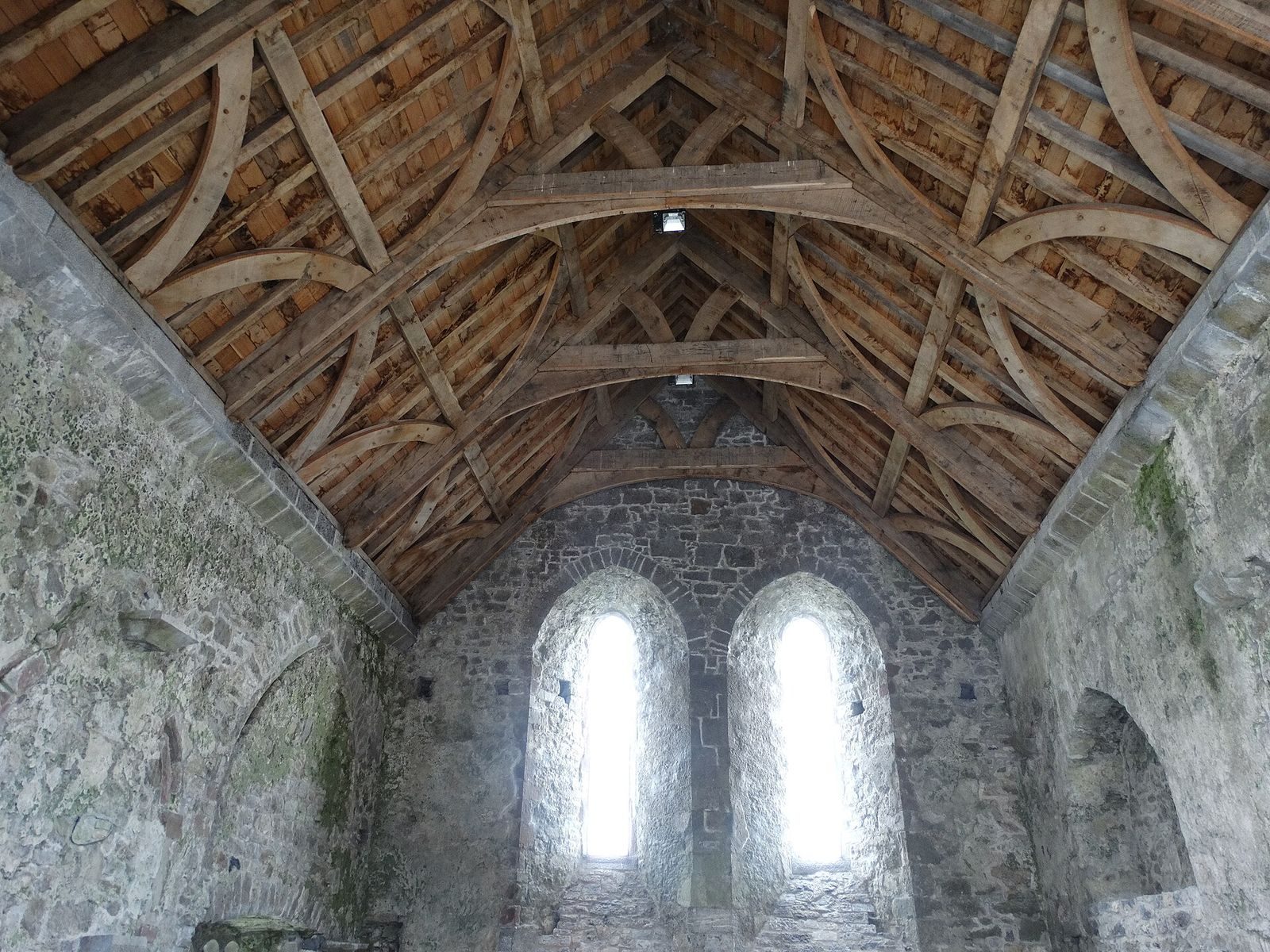
The church was partly destroyed by Oliver Cromwell, an English military and political leader, and it had been without a roof since 1657. It remained in use by the Church of Ireland, an Anglican church, until a fire in 1935; it is now inactive. Its denomination changed from pre-Reformation Catholicism to the Church of Ireland. The church is administered within the Diocese of Limerick, Ardfert and Aghadoe, an ecclesiastical district overseen by a bishop, and is designated a National Monument of Ireland for protection under Irish heritage law.
Remains
Church layout and surviving features
Plan and setting
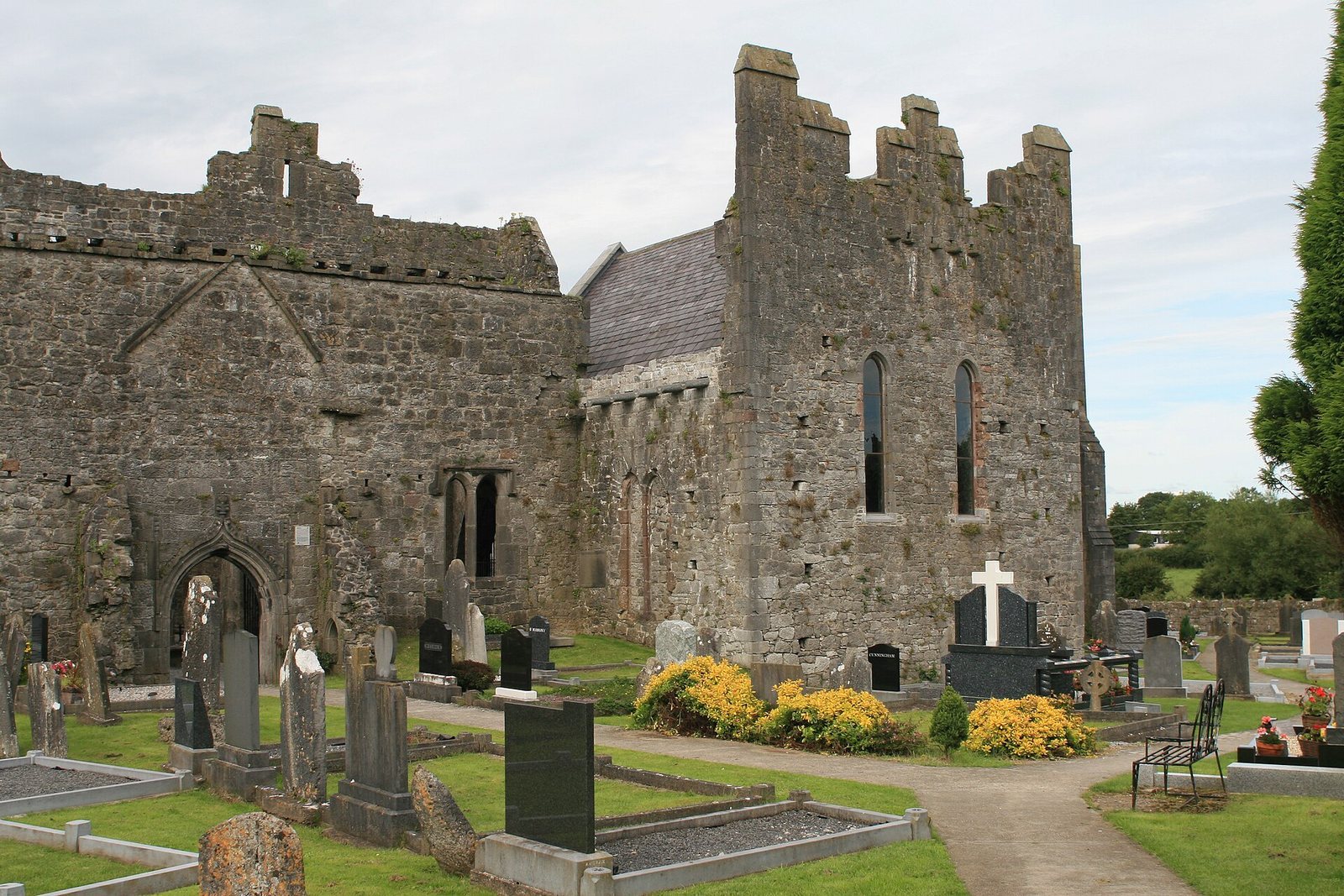
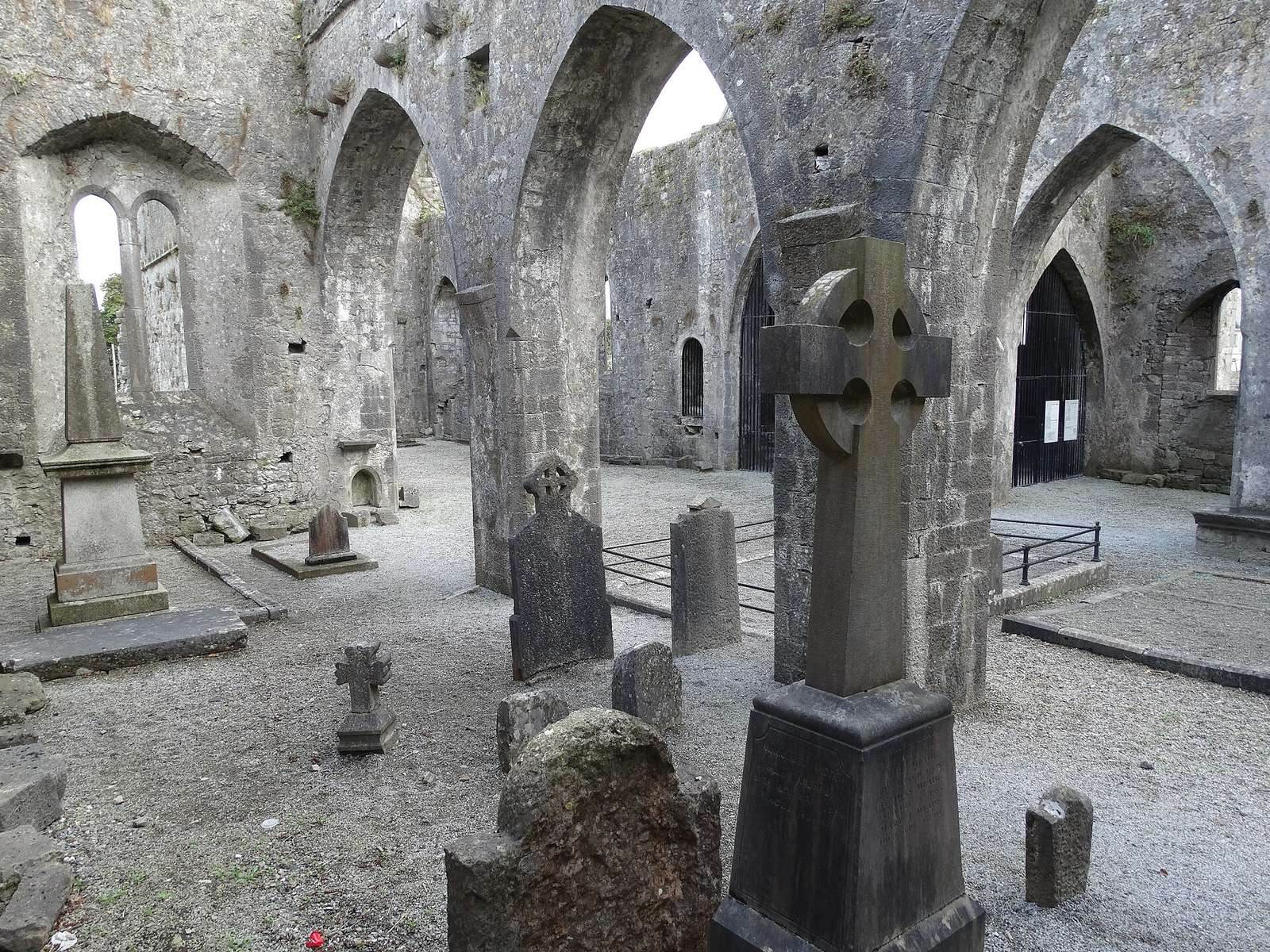
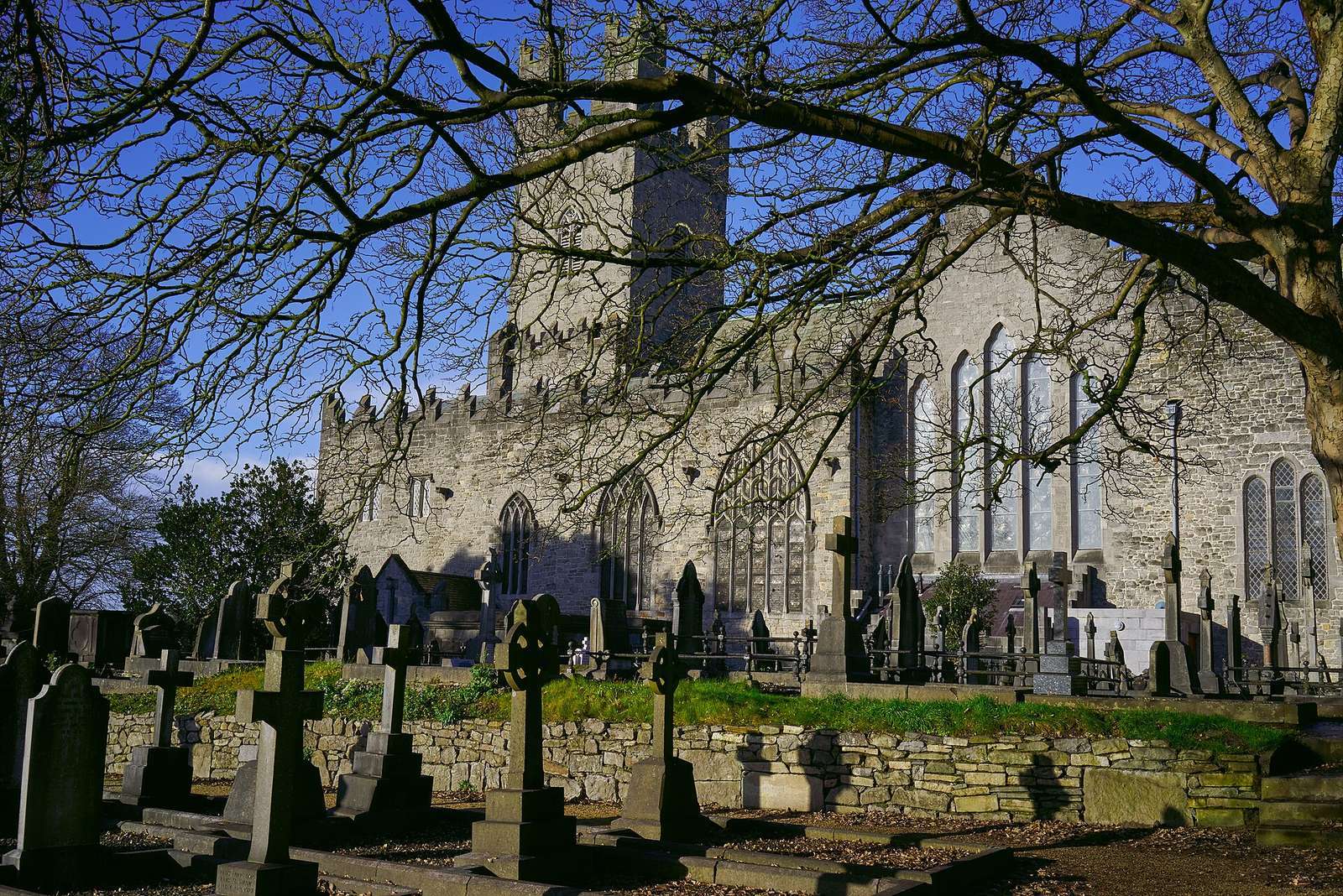
The church is 40 metres long and stands on the south bank of the River Loobagh, north of Kilmallock’s main street. Its plan comprises a nave, a chancel, three aisles, and transepts on both the north and south sides.
Round tower
Foundations of a round tower, a circular stone tower characteristic of early medieval Ireland, lie at the site. A surviving stump associated with the early monastery is incorporated into a tower at the northwest corner of the nave.
South doorway and chancel windows
A doorway in the south wall dates to the 13th century. The chancel has five tall, narrow windows with pointed arches, each set within a recessed opening.
South transept tombs
Carved tombs dating to the 16th century are visible in the south transept.