Castle of Ravarano: A Medieval Fortress and Aristocratic Residence
Site at a Glance
- Popularity
- Low
- Country
- Italy
- Primary era
- Medieval
- Eras represented
- Medieval, Early Modern
- Civilizations
- Duchy of Parma and Piacenza, Holy Roman Empire
- Site type
- Domestic
- Remains
- Castle
On this page8 sections
History
Castle of Ravarano is a medieval fortress in Italy, probably built in the early 11th century at the initiative of the Commune of Parma to guard the Baganza valley against incursions from Lunigiana. Its history was shaped by the Pallavicino family and by conflict among regional powers over control of the fortress and its lands.
The Pallavicino lordship and early conflicts
In 1214, Pelavicino Pallavicino, son of Guglielmo, bought the castle from Baroccio Dal Borgo, Parma’s chief magistrate. In 1249, Pelavicino’s son Oberto II received a feudal investiture from Holy Roman Emperor Frederick II, a formal confirmation of rights over land held under feudal obligations. The castle changed hands by force in 1267, when Parma’s Guelfs, a faction associated with papal loyalties, made an agreement with its castellan, the officer responsible for the castle or its garrison. In exchange for immunity, the castellan surrendered the fortress. It was then razed, and in 1297 Parma prohibited its reconstruction as a fortress.
In the early 14th century, Manfredino Pallavicino, Oberto II’s only heir, recovered Ravarano and rebuilt the castle. Parma approved his appointment of Bonaccorso Draghi as castellan in 1309; Draghi later supported the Ghibellines, a faction associated with imperial loyalties. In 1312, Pelavicino III Pallavicino, allied with Giberto III da Correggio and Parma’s Guelfs, captured the fortress while Draghi was fighting at Berceto. Three years later, after peace between Parma and Borgo San Donnino, Manfredino recovered Ravarano along with Casola and Solignano.
When Manfredino died in 1328, his lands passed to his sons Federico, Oberto, and Donnino. Federico’s death in 1348 led to Oberto receiving Busseto and Solignano, while Donnino received Zibello and Ravarano. Donnino died the following year, and Ravarano later passed from his son Giovanni to Uberto, who founded the family’s Ravarano branch. On 4 June 1360, Emperor Charles IV confirmed Uberto’s rights to the fief.
Rival powers and local rule
In 1395, King Wenceslaus IV confirmed Marquis Niccolò Pallavicino’s privileges over Ravarano and other fiefs, including Busseto, Borgo San Donnino, Solignano, Monte Palerio, Tabiano, Bargone, Serravalle, Pietramogolana, Parola, Castelvecchio di Soragna, and Soragna. In 1417, Niccolò III d’Este, lord of Parma since 1409, accused Uberto Pallavicino of treason and occupied the castle. Pallavicino control returned after the Visconti, a ruling family of Milan, regained authority. After Uberto’s death, his sons Jacopo and Antonio divided the fief equally. In 1432, Duke Filippo Maria Visconti declared Jacopo a rebel, seized his possessions, including his share of Ravarano, and transferred them to Antonio.
After Antonio died, his sons Federico and Giambattista inherited his lands. At their request, jurist Guidantonio Gaiafasi prepared the Valley Statutes in 1444, and Federico promulgated them at the castle. These local rules gave the fief’s vassals, people holding land under obligations to a lord, extensive autonomy in governing their communities for centuries. Ravarano’s fief also included Casola and Casaselvatica. In 1455, Duke Francesco Sforza of Milan formally confirmed the Pallavicino marquises’ rights to Ravarano, a grant reaffirmed in 1470 and 1476. During the War of the Rossi, a regional conflict involving Parma’s Rossi family, Guido de’ Rossi and the Torelli attacked the castle in 1482 but were driven back. Guido then plundered the surrounding valley.
From feudal stronghold to residence
In 1687, after Federico Pallavicino died without heirs while holding half the property, Parma’s Ducal Chamber, the ducal government body responsible for its lands and property, took over his share and granted it to Gian Simone and Lelio Boscoli. The brothers also purchased the other half from Guido and Orazio Pallavicino. In 1707, Marquis Andrea Boscoli exchanged Ravarano with the Ducal Chamber for Berceto. The fief went to Count Paolo Anguissola in 1728, returned to the Ducal Chamber in 1743, and was granted to Count Beltrame Cristiani the next year. Following Cristiani’s death in 1758, it passed to his sons Lorenzo, Gianfrancesco, and Luigi, and later to their sister Carlotta, wife of Marquis Giuseppe Lalatta.
By 1805, the castle had been adapted as an aristocratic hunting residence. That year, Napoleonic decrees abolished feudal rights in the Duchy of Parma and Piacenza. After Carlotta died in 1808, the estate passed to her husband and his heirs. Engineer Francesco Bertè later bought the castle and had it refurbished in 1832 for aristocratic residential use. It subsequently belonged to the Pozzi, Prevedoni, and Forni families. Roberto Fainardi acquired it in 1913 and began restoration work. Ownership later passed from Amelia Fainardi, wife of Antonio Nanni, to the Nanni Fainardi heirs.
Local stories associate two apparitions with the castle and nearby village. One is said to guard treasure concealed inside the building long ago. Another is said to hurry through the village streets carrying gold coins meant for a pot, which was either given to a villager by a Pallavicino marquis or hidden by the devil.
Remains
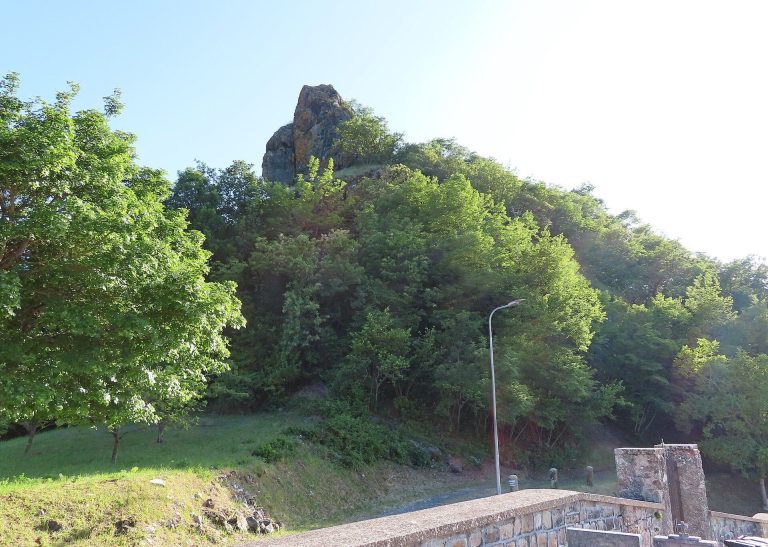
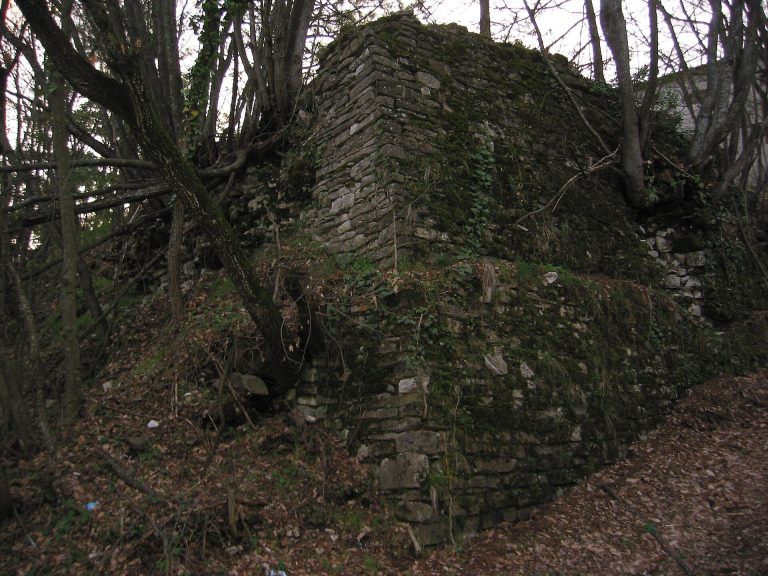
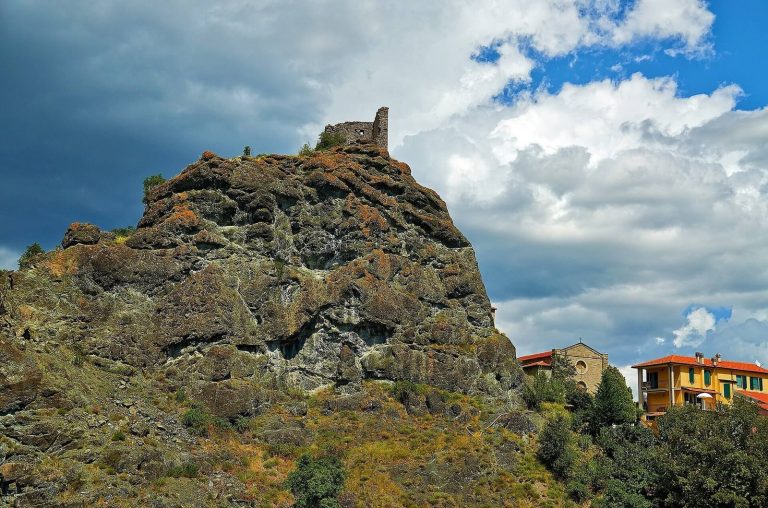
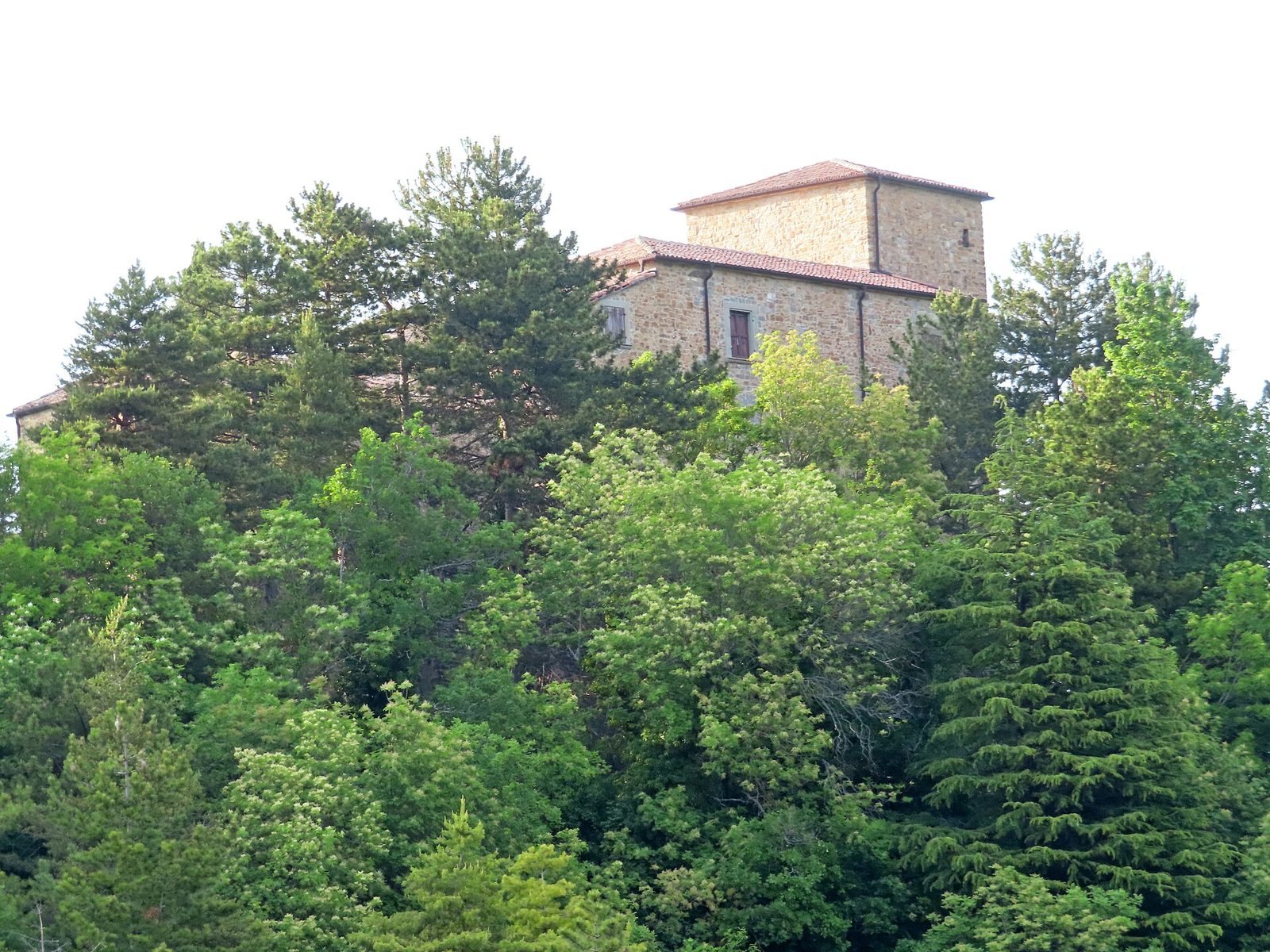
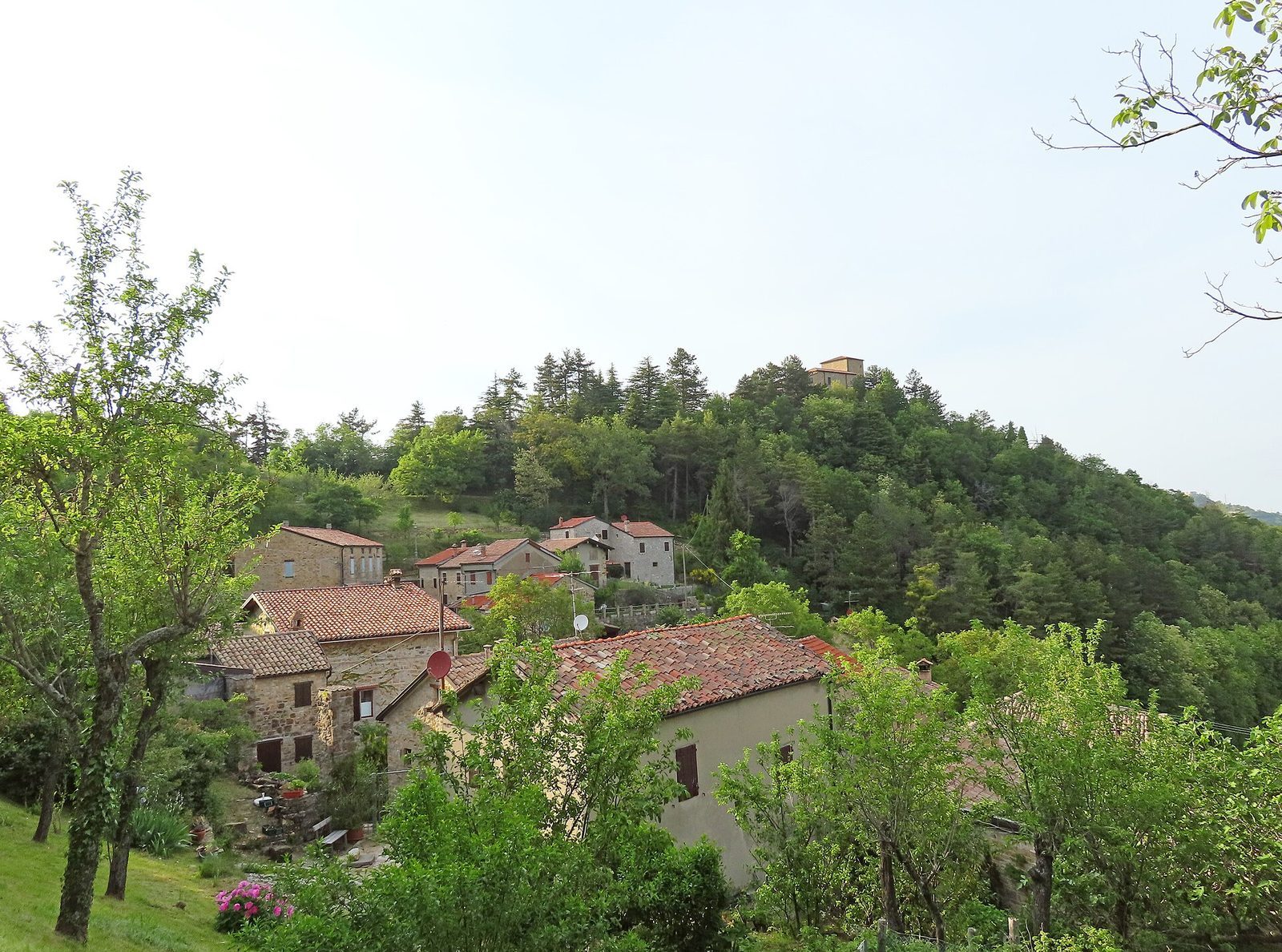
The castle stands on a steep rise extending north over the Baganza valley. Its stone buildings comprise two rectangular blocks aligned along the summit, with alterations made from the 14th through the 18th centuries. The structure rests on a high, sloping base, part of which belongs to the original fortress. The east and north sides face the valley and have a small number of deeply angled windows. Carved sandstone doorways face the courtyard and may have borne coats of arms in the 17th century.
The northern tower
A substantial tower with a square base stands at the northern edge of the castle. It was originally used as a prison.
Courtyard and well
A portal on the south side opens into a courtyard bordered by the castle on two sides. The courtyard dates to the 17th or 18th century. In one corner, a well has a rim decorated with the Pallavicino coat of arms; its date is uncertain.
Interior rooms and furnishings
The interiors contain furnishings and valuable objects, including portraits of the Fainardi family and collections of weapons and ceramics. The salon has a decorated open fireplace.