Southern Monastery: An Orthodox Cave Monastery at Mangup
Site at a Glance
- Popularity
- Low
- Country
- Ukraine
- Primary era
- Medieval
- Eras represented
- Medieval
- Civilizations
- Byzantine
- Site type
- Religious
- Remains
- Monastery
On this page8 sections
History
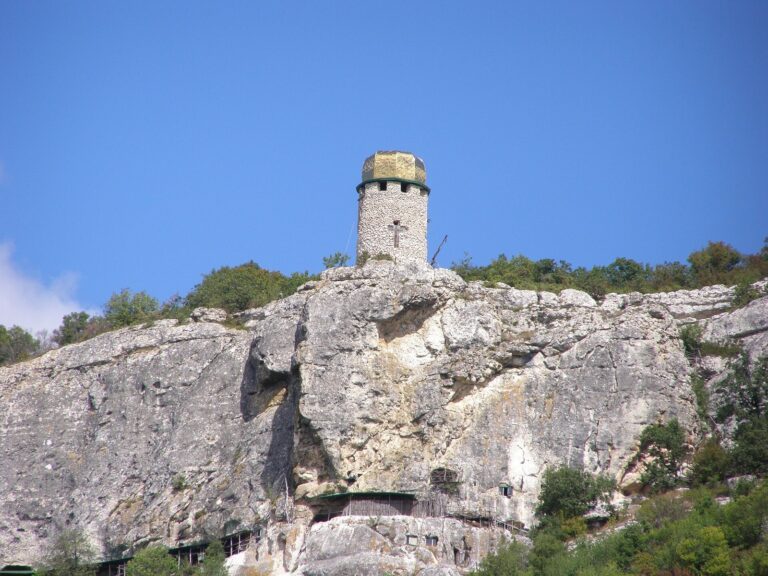
The Southern Monastery, also known as the Annunciation Monastery, is an Orthodox cave monastery at Mangup in Crimea, Ukraine. Its foundation is assigned to the 14th century, and an inscription has been interpreted as pointing to about 1362. The monastery was associated with the dioceses, or territorial church jurisdictions, of Gothia, Taurida, and Simferopol and Crimea. Its alternative name refers to the Annunciation, the Christian feast commemorating the announcement to Mary that she would bear Jesus.
Foundation and medieval record
The monastery’s first known written description dates to 1395. In August that year, Patriarch Anthony IV of Constantinople sent the hieromonk Matthew, a monk ordained as a priest, to Khazaria as an exarch, a church representative exercising delegated authority. During his visit to Mangup, Matthew wrote a poem describing the monastery and its church in a form close to the present one. The city had already been uninhabited for some time.
A. G. Herzen later proposed that the church had served as a burial place for a noble, perhaps princely, family of Theodoro, a medieval polity in Crimea. He associated this possibility with the care and richness of the church’s interior decoration.
Investigation and restoration
In 1853, A. S. Uvarov recorded the monastery and its paintings in an unpublished research manuscript, accompanied by drawings made by M. B. Vebel. In 1889, engineer Ageenko prepared drawings and descriptions of the church for the archaeological commission. An examination by A. Kh. Steven and A. I. Markevich followed, and they dated the church to the 14th or 15th century. An expedition led by R. Kh. Leper cleared the church in 1912 and 1913. In 1966, O. I. Dombrovsky examined its paintings in detail and assigned them to the 14th or 15th century. Yu. M. Mogarichev cautiously placed the monastery’s period of use in those centuries, noting the limited scope of investigation.
Restoration began in 2002 under the name Annunciation Monastery, with the blessing of Lazar, Metropolitan of Simferopol and Crimea. Hegumen Iakinf (Telega), an abbot, served as its first superior and builder. The monastery is designated a cultural heritage site of federal significance in Russia and a monument of national significance in Ukraine.
Remains
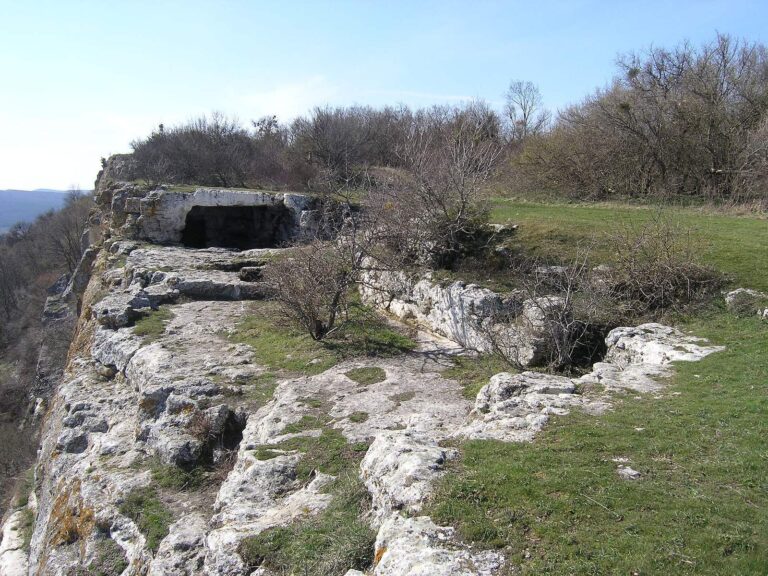
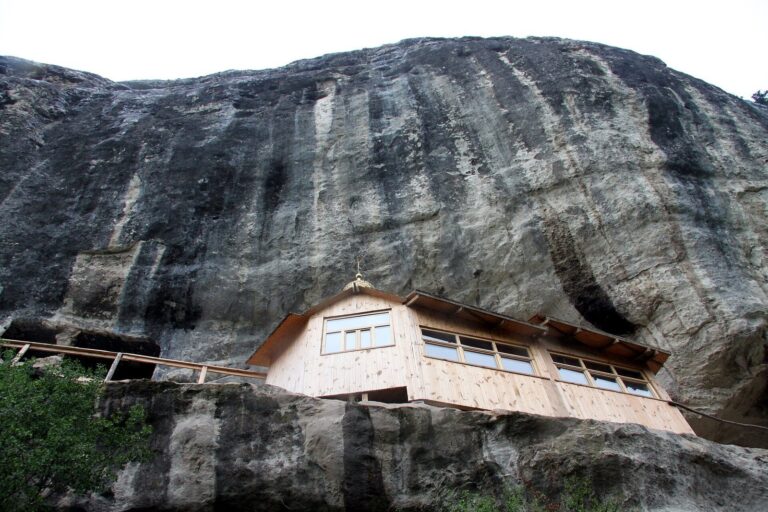
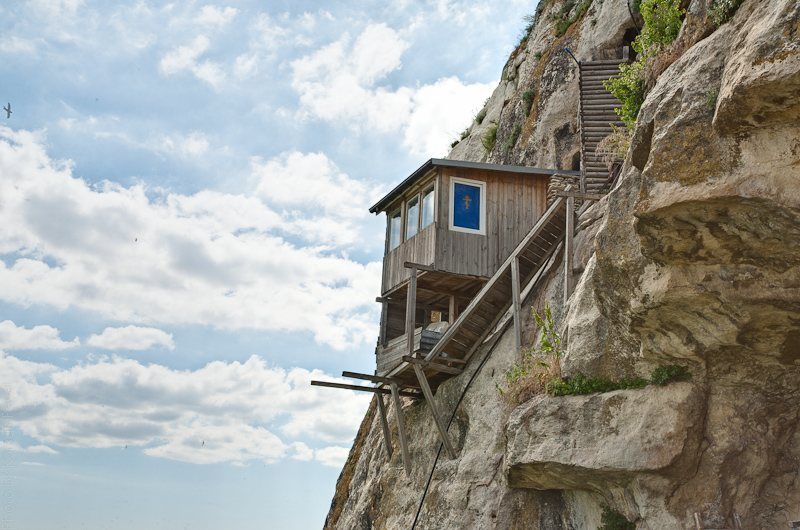
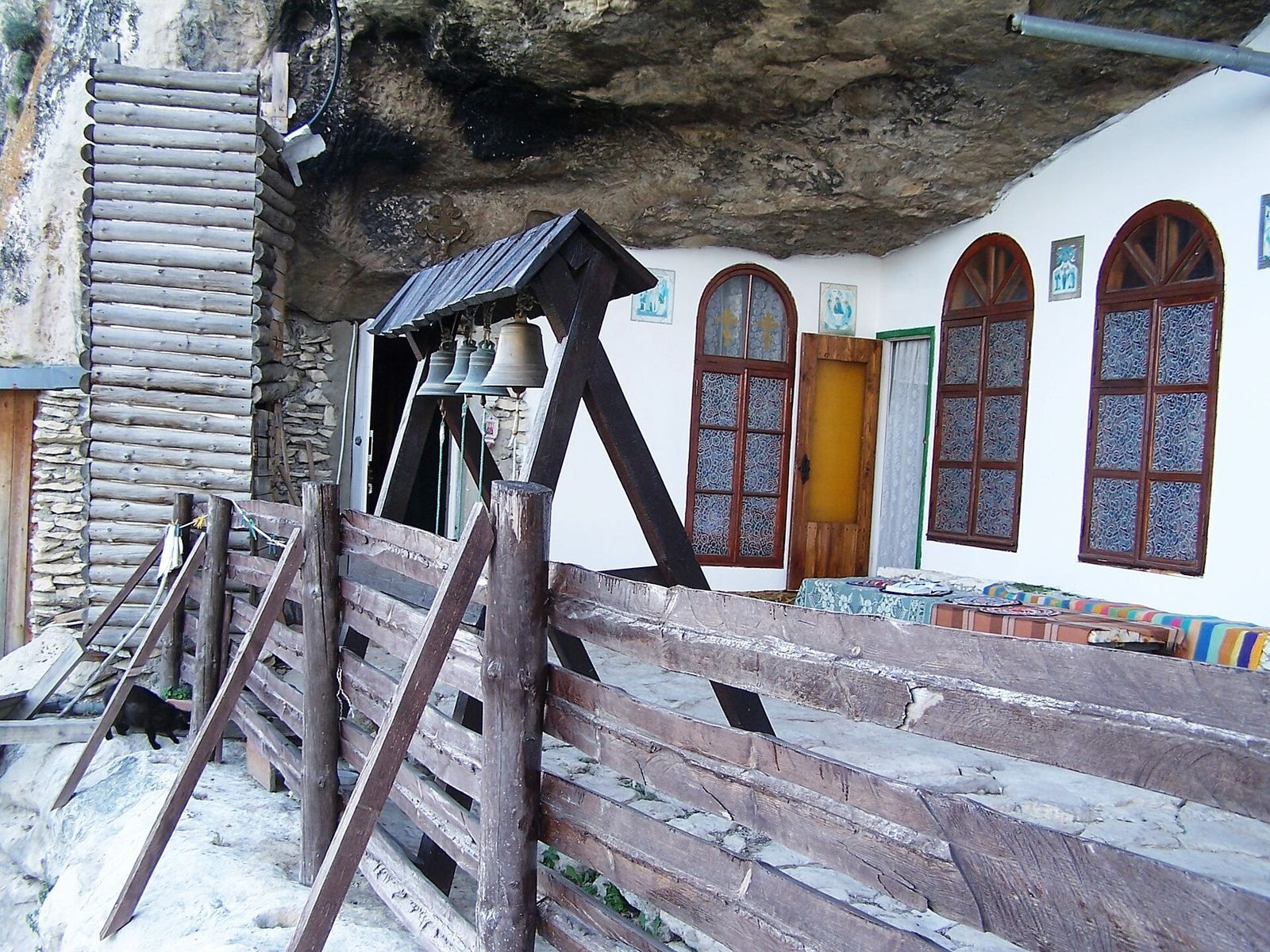
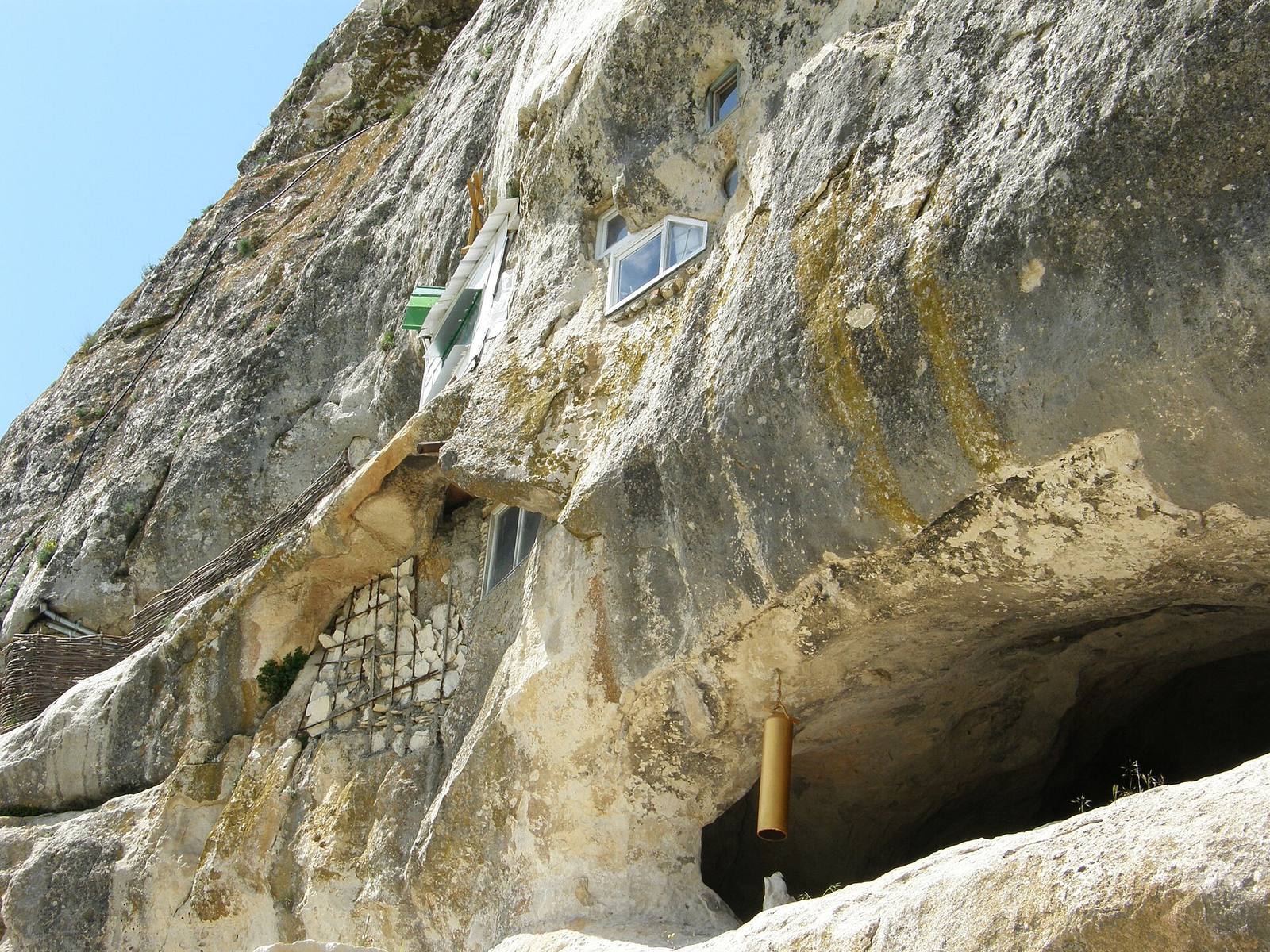
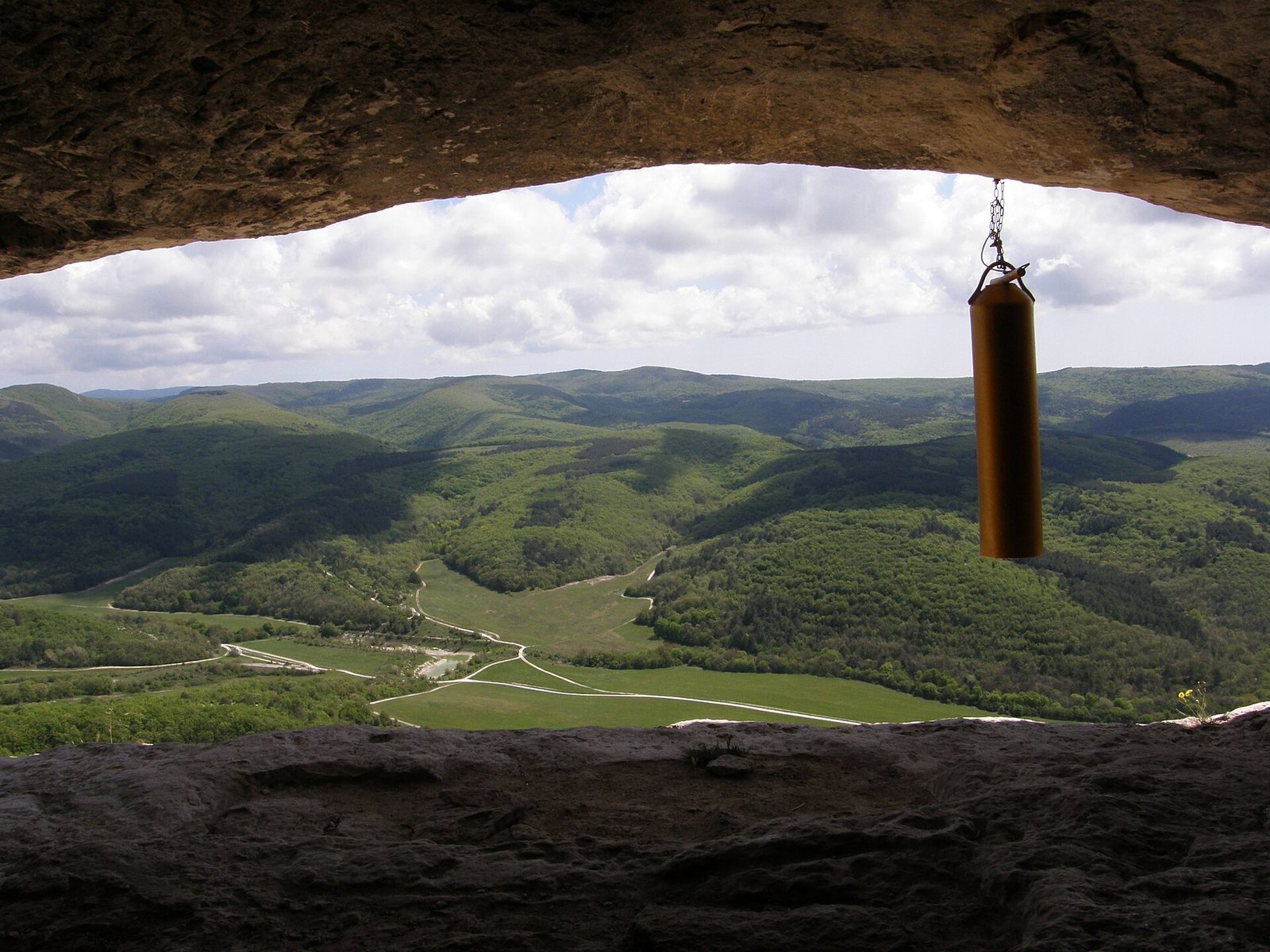
The monastery’s rooms were cut into natural rock within a grotto halfway up the southern escarpment of the Baba-Dag plateau at Mangup. A tunnel connects the main grotto to a smaller natural grotto at the base of the cliff.
Rock-cut complex
Grotto and monastic rooms
Matthew’s 1395 poem describes descending a solid stone stairway into chambers and cells carved from the rock. He mentions windows facing east and colourful decoration. Cells opposite the church were sized to house three or four monks.
Water cistern
Excavations in 2008 exposed the remains of a cistern, a reservoir for collecting or storing water, which had served the monastery while it was active.
Cave church
On the eastern side of the main grotto, the cave church extends eastward. Three tombs are cut into its floor. A shaped projecting band decorates the walls of the nave, the church’s main body. At the end of the hall, a barrier no more than one metre high divides the altar area, which has a deep, arched apse, or recess at the end of a church. A rectangular base for the altar table is cut into the floor at its centre. Fresco paintings, made on wet plaster, covered the apse, including its niche and conch, the semi-dome above the apse, as well as the arch framing the altar and the frieze above it.