Galitzine Estate in Trostianets: A Historic Manor Complex in Ukraine
Site at a Glance
- Popularity
- Medium
- Country
- Ukraine
- Primary era
- Early Modern
- Eras represented
- Early Modern, Modern
- Civilizations
- Russian
- Site type
- Domestic
- Remains
- Manor House
On this page13 sections
History
The Galitzine Estate in Trostianets is a historic manor complex in Ukraine, with a residence built in 1762 under the Nadarjinski family. The estate grew from lands granted in 1720 by Peter I, the Russian tsar later known as Peter the Great, to his confessor Tymofi Nadarjinski, an Orthodox clergyman who provided spiritual counsel. Trostianets became the estate’s principal center, with Slavhorod as a second center. It was among the largest and wealthiest estates in Malorossiya, a historical term for Ukrainian lands, especially those within the Russian Empire.
From the Nadarjinskis to the Golitsyns
The Nadarjinski family held the estate for about a century. In addition to the manor residence, the family built the Annunciation Church and the Round Court in the mid-eighteenth century. After the last of Tymofi Nadarjinski’s grandsons died, the property passed to his granddaughter Sophia Korsakova (1811–1858). She married Prince Vasily Petrovich Golitsyn in 1832. Golitsyn rebuilt the estate and laid out a park; after his death, their son Alexei inherited it.
Tchaikovsky at the Estate
In the summer of 1864, Alexei Golitsyn invited his fellow student Pyotr Ilyich Tchaikovsky to stay at the estate. Tchaikovsky was then 24 and studying at the St Petersburg Conservatory. During his stay, he composed and completed his first symphonic work, the overture The Storm.
Koenig Ownership
First-guild merchant A.A. Mark, a high-ranking category of merchant, bought the estate from Golitsyn in 1868. In late 1874, Mark sold it to sugar entrepreneur Leopold Koenig, who was developing sugar production in the area. Koenig substantially rebuilt the manor residence and later moved his own home to Sharovka. His son Julius was the estate’s last owner before 1917.
Confiscation, Museums, and War
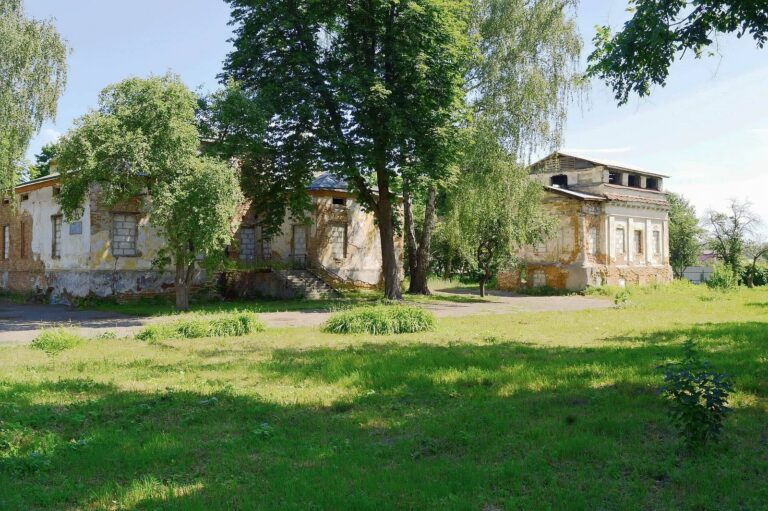
The estate was confiscated during the revolution. In the Soviet period, the former palace served as a kindergarten, then stood vacant and deteriorated. A local-history museum was founded in the building in 1983, and restoration work took place after Ukrainian independence. The estate later housed an art gallery and a chocolate-and-coffee museum; a chocolate museum opened there in 2012.
Russian forces occupied Trostianets in February and March 2022. The estate’s buildings and museum collections were damaged, and computer equipment was stolen. Museum staff hid valuable exhibits before they could be taken. After Trostianets was liberated on 26 March, the museum and exhibition center in the main building resumed work in the summer of 2022.
The estate is a nationally significant monument of history and architecture. On 4 December 2025, it was added to UNESCO’s List of Cultural Property under Enhanced Protection. Established under the Second Protocol to the 1954 Hague Convention, this status provides the highest level of protection for cultural property during armed conflict.
Remains
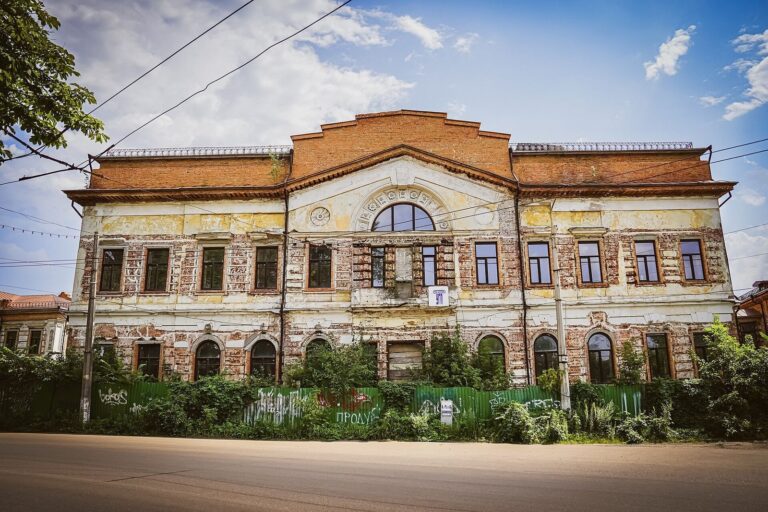
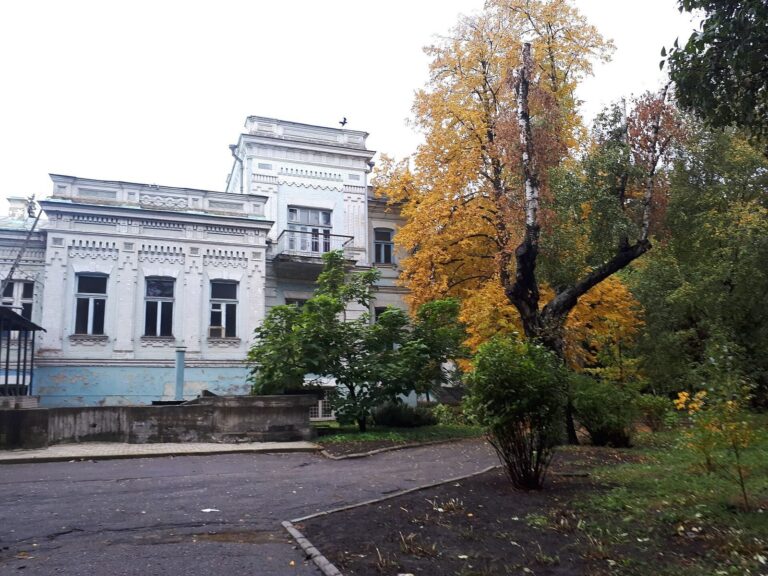
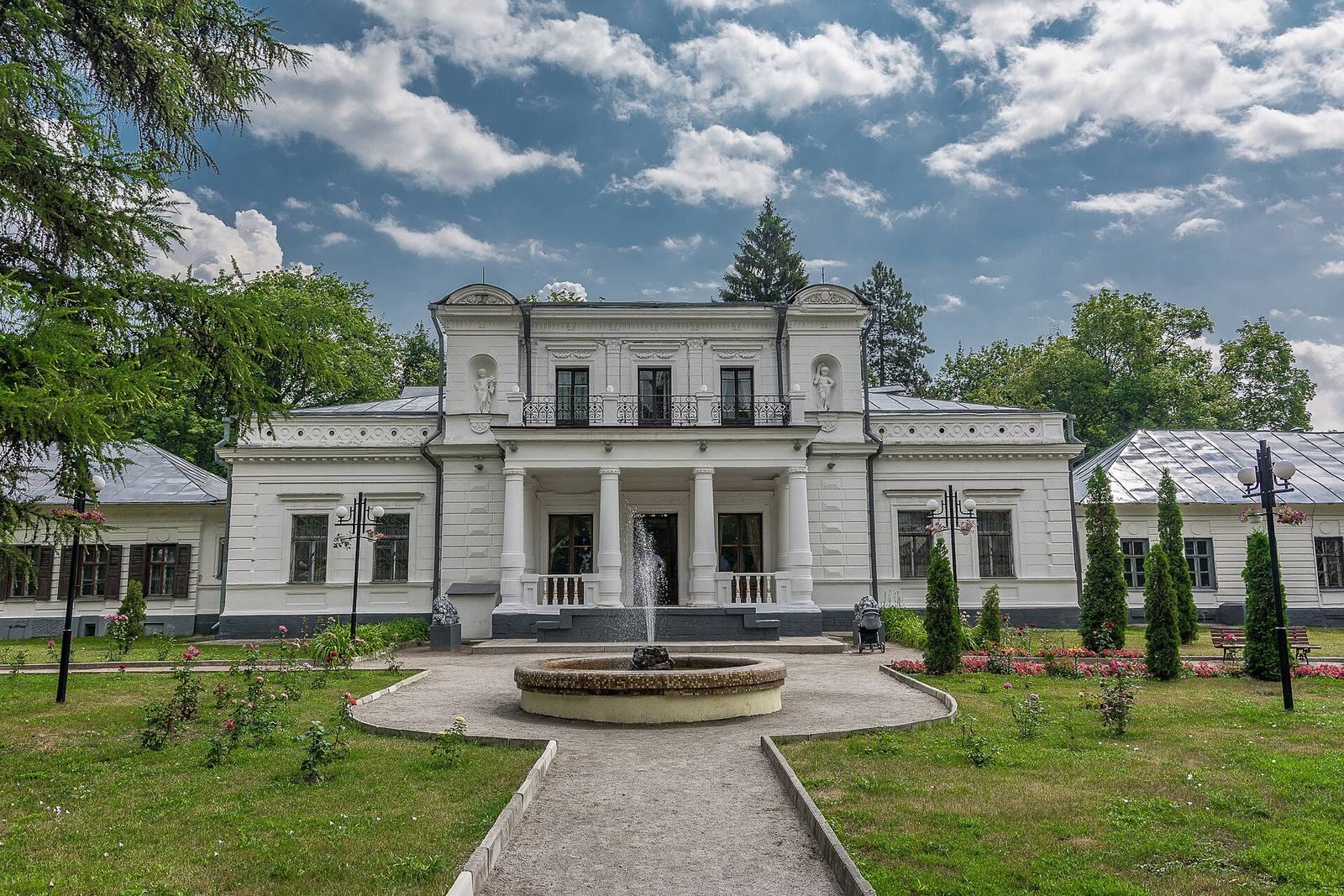
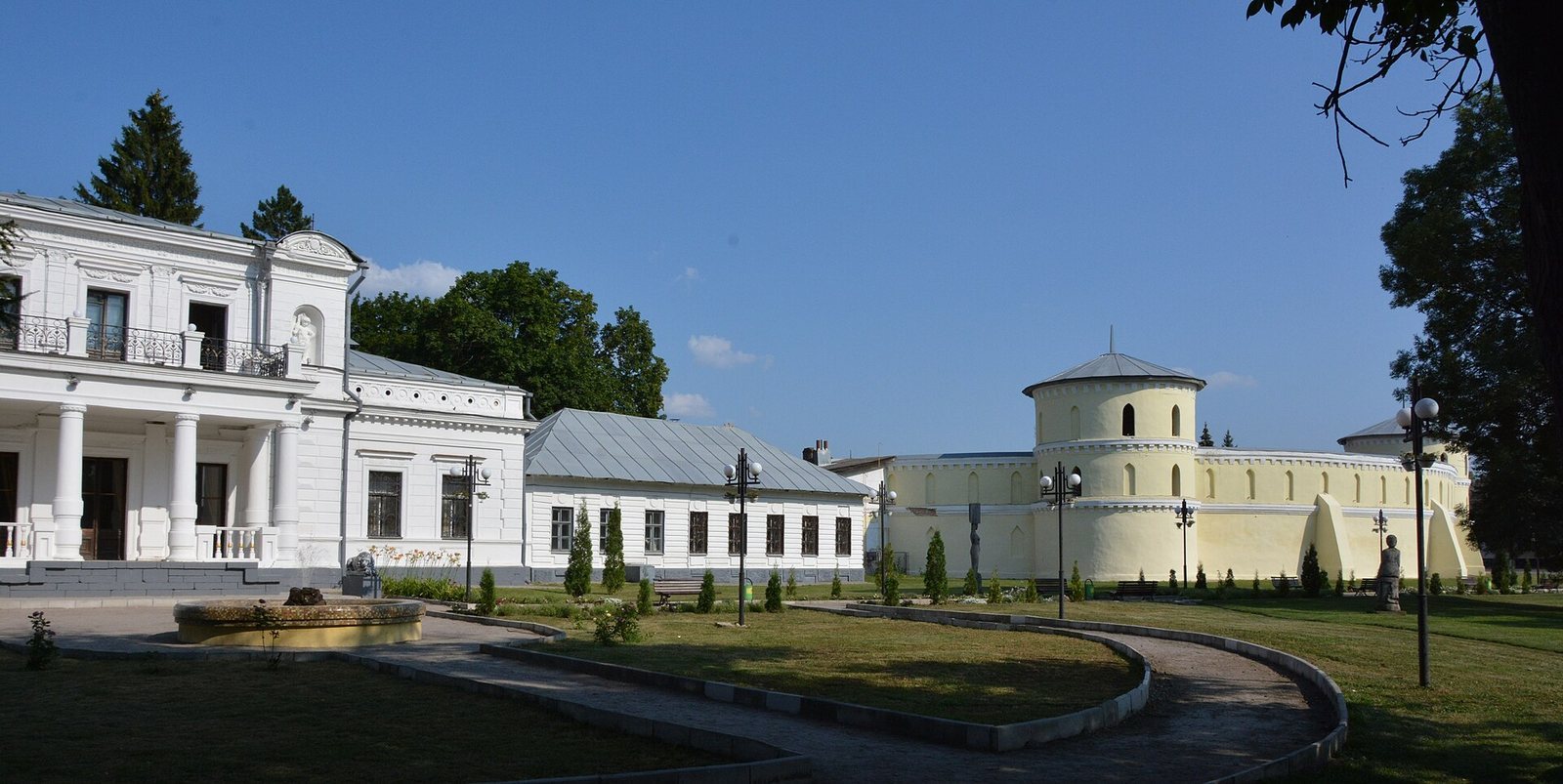
The complex comprises three principal buildings: the main house, the house in which Tchaikovsky lived and worked, and the Round Court. The park also contains the Grotto of the Nymphs and commemorations of the composer. The manor combines earlier Classical forms, drawing on ancient Greek and Roman architecture, with later Baroque ornament. The Round Court brings together Gothic forms, associated with pointed arches and vertical emphasis, and Ukrainian Baroque elements.
Estate Buildings
Main House
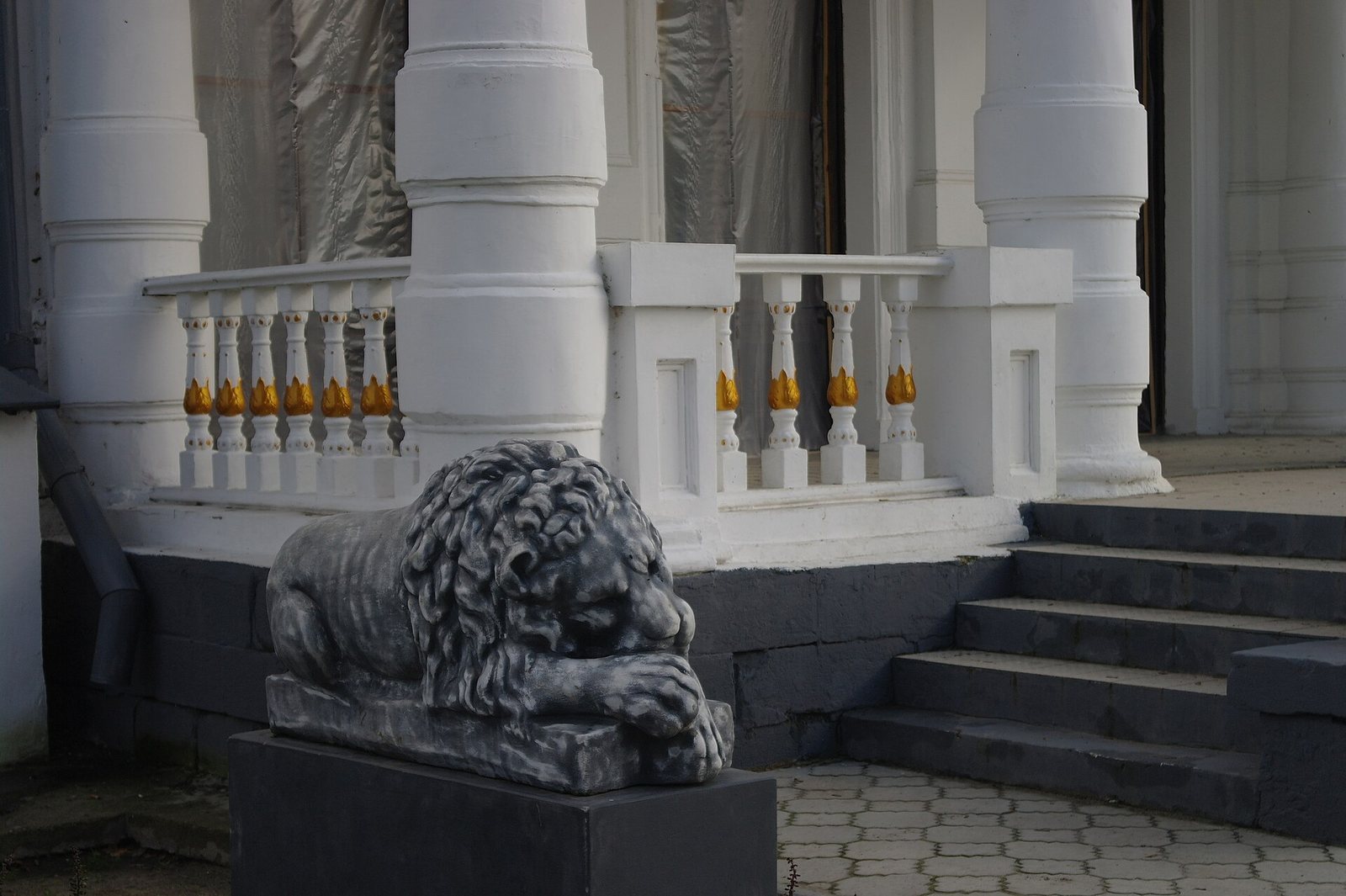
The manor’s central block is two storeys high, and its side wings largely retain their earlier form. Under the Koenigs, a second storey was added, the plan was altered, and curving pediments and sculpture introduced Baroque decoration to the earlier Classical design. The dance hall retains sculptural and stucco decoration, as well as a wooden staircase. During the 2022 occupation, the right wing, which housed the local-history museum, suffered especially severe damage: its windows were broken, and its walls and roof were badly damaged. Emergency roof repairs on this wing began in late November 2025.
Round Court
The Round Court is an oval building with four towers and a mixture of Gothic and Ukrainian Baroque features. It may have been intended as a fortress, but it was never used for military purposes. Instead, it served household and agricultural needs, including the keeping of horses. During Golitsyn ownership, it hosted theatrical and circus performances. Rooms also accommodated household staff and serf-ballet dancers, performers legally bound to the estate. One tower reportedly held a well; another stored food and pitch for possible use during a siege.
Park and Commemorative Features
Grotto of the Nymphs
Built in 1809, the Grotto of the Nymphs is a domed brick pavilion in the park. It was created to mark the centenary of the Battle of Poltava.
Tchaikovsky Memorials
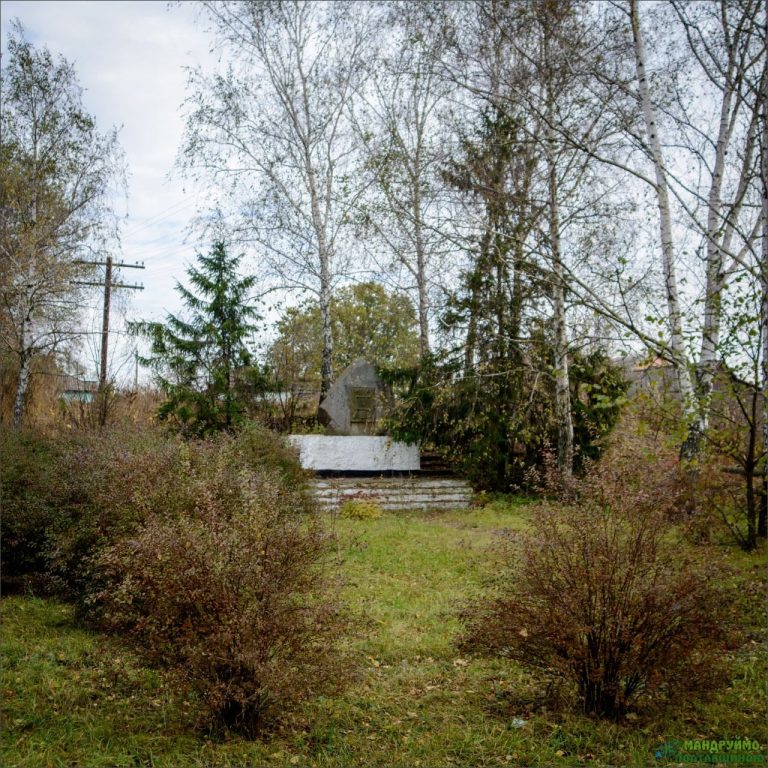
A monument in the park and a memorial plaque commemorate Tchaikovsky’s association with the estate. The site also includes the separate house where he lived and worked during his stay.
Damage to Museum Collections
The occupation damaged objects in the estate’s museums as well as its buildings. Chocolate sculptures in the chocolate-and-coffee museum were affected, including a swan made of milk chocolate. In the Leopold Koenig room-museum, an antique cabinet and chair dating to the second half of the eighteenth century were also damaged.