Church of the Archangel of the Metropolis: A Medieval Orthodox Church in Kastoria
Site at a Glance
- Popularity
- Very Low
- Country
- Greece
- Primary era
- Medieval
- Eras represented
- Medieval
- Civilizations
- Byzantine, Serbian
- Site type
- Religious
- Remains
- Church
On this page10 sections
History
The Church of the Archangel of the Metropolis is an Orthodox church in Kastoria, Greece, generally dated to the ninth or tenth century and counted among the city’s oldest churches. It belongs to the Ecumenical Patriarchate, the Constantinople-based Orthodox patriarchate whose head holds primacy of honor within Eastern Orthodoxy, and the Diocese of Kastoria, a church jurisdiction overseen by a bishop.
Early church
A founder’s inscription on the interior west wall, together with surviving wall paintings, has been used to support a date in the ninth century. The church is also generally dated to the tenth century.
Renovation in 1359/60
The church was renovated in 1359/60 under Simeon Uroš Palaiologos, a fourteenth-century ruler of Epirus and Thessaly. An inscription above the entrance gives the date when the nave’s paintings were made.
Twentieth-century status
The church was designated a cultural monument in 1924 and remains an active place of worship.
Remains
Architecture and layout
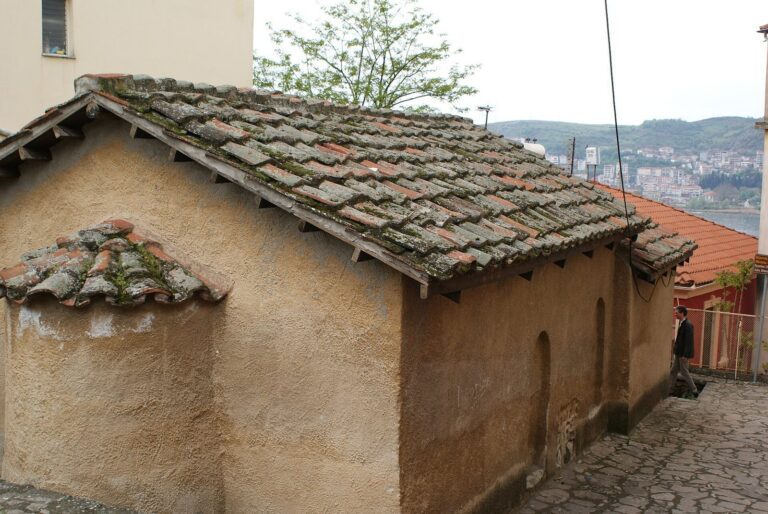
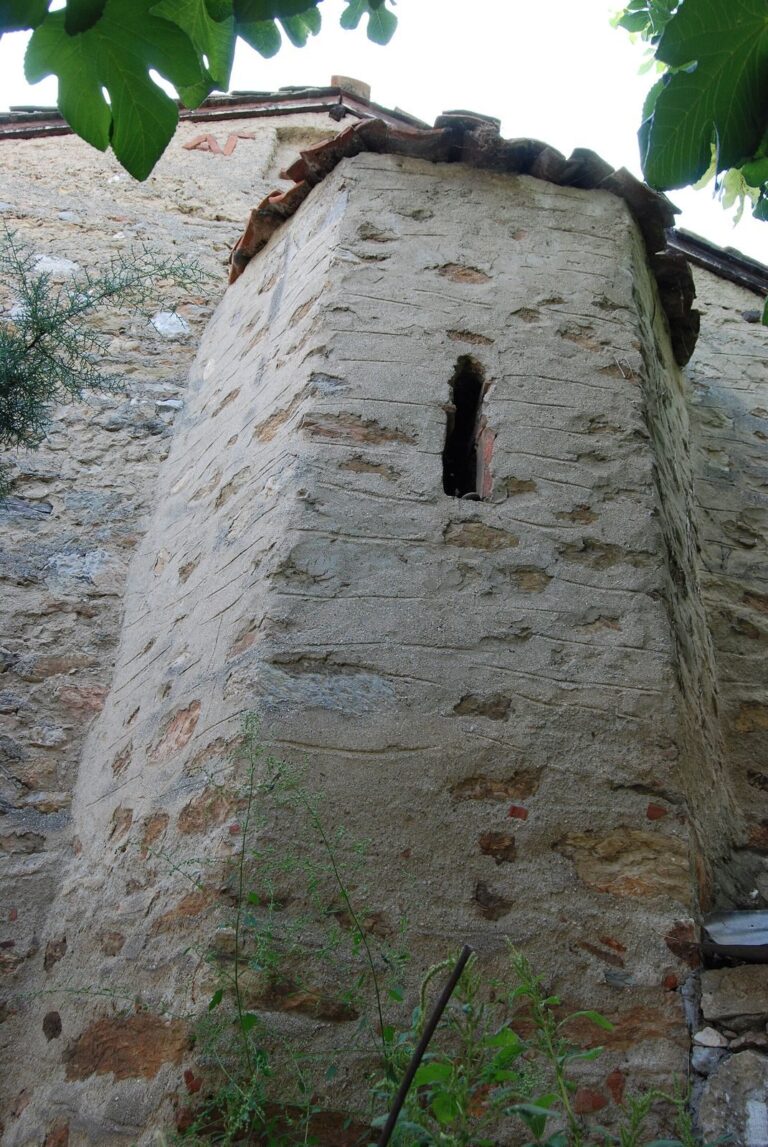
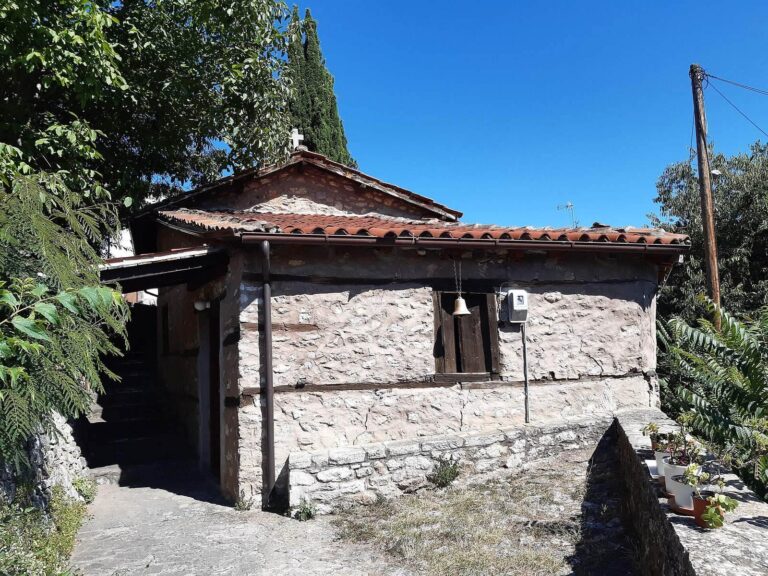
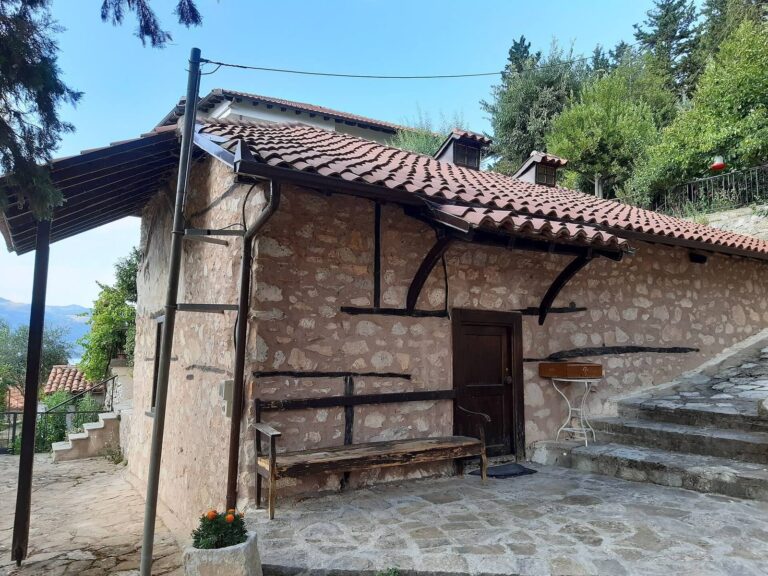
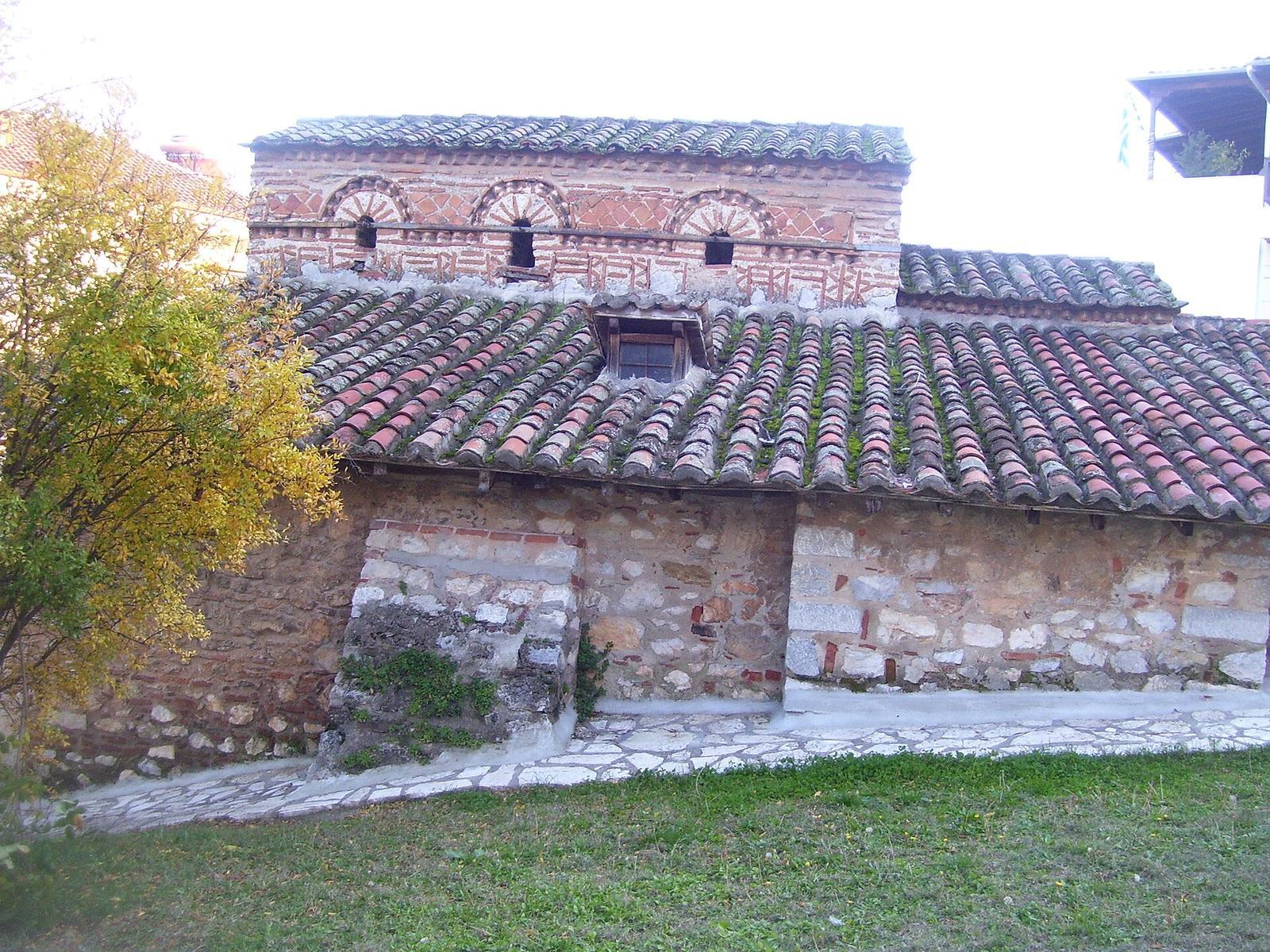
Near the Metropolis, the church faces the southern part of Kastoria. It has a small three-aisled basilica plan, with a central nave, or main hall, higher than the side aisles. A narthex, the entrance space at the western end, completes the plan; the dome was added after the original construction. Columns and arches divide the aisles. Columns and capitals, the upper parts of columns, reused from an ancient pre-Christian temple form part of the building. This reuse suggests that the church may have been built over the remains of an early Christian basilica. Its exterior masonry and ceramic decoration follow an approach also found in other medieval churches in Kastoria. The original masonry on the west side and in the north aisle has collapsed.
Wall paintings
Early paintings
Painted decoration covers the exterior west and south walls. The earliest surviving paintings date to the tenth century and are in the semi-domed recesses, or conches, of the north and south aisles and in the narthex. They are in poor condition. Remaining traces have similarities to Cappadocian art, though their fragmentary state does not allow firm conclusions.
Nave paintings of 1359/60
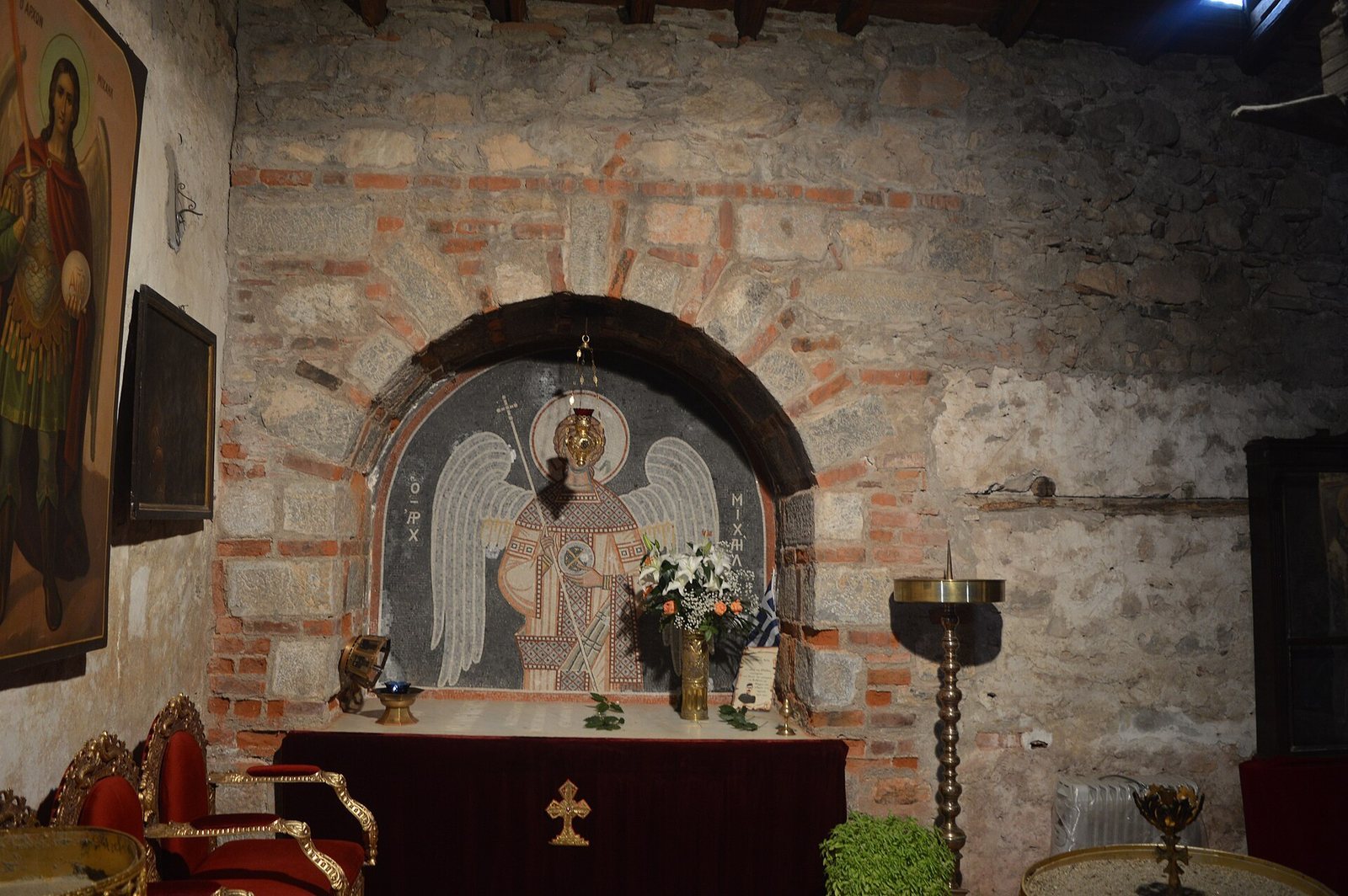
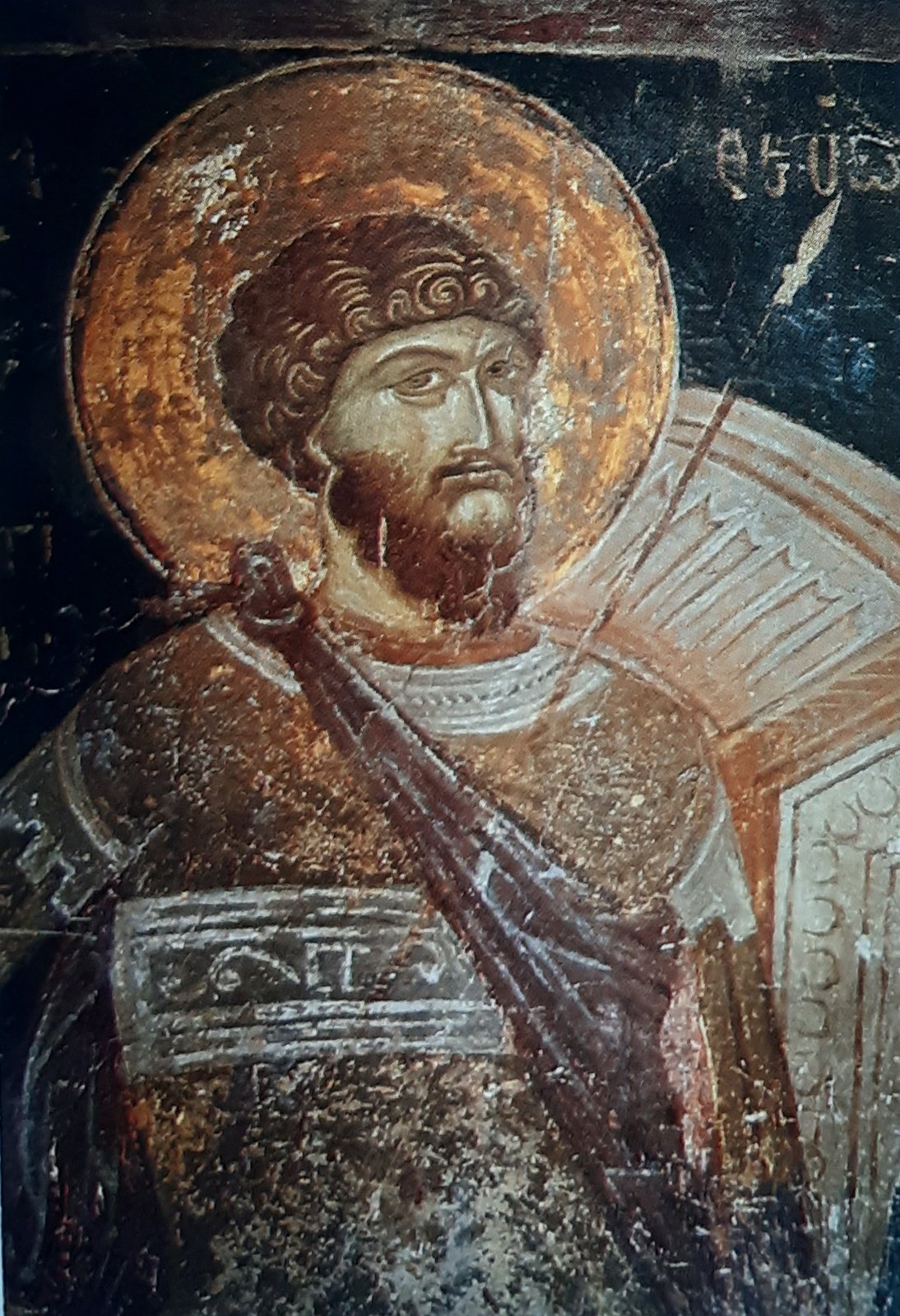
The nave’s paintings belong to the renovation of 1359/60 and share a distinctive regional style with works in churches in Kastoria and Ohrid. The archangel Michael appears to the right of the entrance and Gabriel to the left. Bulgarian Tsar Michael II Asen and his mother, Queen Irene Komnene, are depicted on either side of Michael. The saints in the nave appear within frames, with expressive features and richly modeled forms.
Twentieth-century tomb
A tomb inside the church holds the remains of Pavlos Melas and his wife Natalia, placed there during the twentieth century. Melas was a Greek officer and leading figure in the Macedonian Struggle, a late nineteenth- and early twentieth-century contest over control and national affiliation in Macedonia.