Sant’Urbano: The Roman Catholic Parish Church of Cresole
Site at a Glance
- Popularity
- Very Low
- Country
- Italy
- Primary era
- Modern
- Eras represented
- Medieval, Early Modern, Modern
- Civilizations
- Austrian Empire, Habsburg, Holy Roman Empire, Italian, Venetian
- Site type
- Religious
- Remains
- Church
On this page12 sections
History
Sant’Urbano is the Roman Catholic parish church of Cresole in Caldogno, Italy. Its construction and consecration predate 1185, and the church is predominantly Neoclassical in style. It belongs to the Diocese of Vicenza and the Castelnovo-Malo vicariate, a local grouping of parishes within a diocese.
Medieval origins and parish status
In 1185, Bishop Pistore confirmed that the Canons of Vicenza, clergy belonging to a cathedral or collegiate chapter, were responsible for services at the church. Pope Urban III, who held office from 1185 to 1187, confirmed the arrangement the following year. An earlier grant is thought to have been made by Bishop Girolamo around 1000. Sant’Urbano became a parish in 1444.
Rebuilding and parish development
The church walls were first rebuilt in 1656. An inscription commemorating the work was originally placed above the entrance and rediscovered in 1992. In 1797, the church was renovated and a third altar was added.
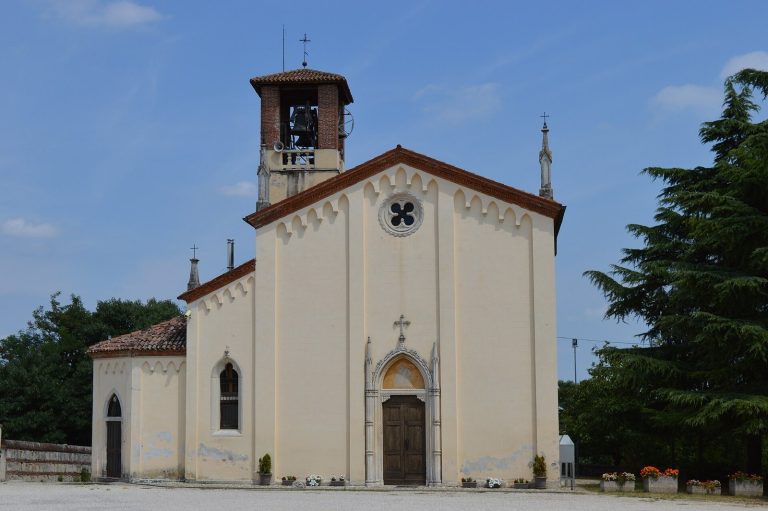
The original bell tower stood on the side opposite the present one. It was demolished in the second half of the nineteenth century, and the current tower was built in 1860. A house donated to the church in 1829 was made available to a chaplain serving alongside the parish priest. In 1840, parish priest Giuseppe Altissimo enlarged and restored the rectory.
Twentieth-century enlargement and restoration
Church accounts began recording enlargement expenses in 1901, and the work took place in 1906 and 1907. The church was inaugurated on 11 August 1907 in the presence of Monsignor De Marchi. Its completion is dated to 1920. A further restoration took place in 1994.
Remains
Exterior and tower
Facade and plan
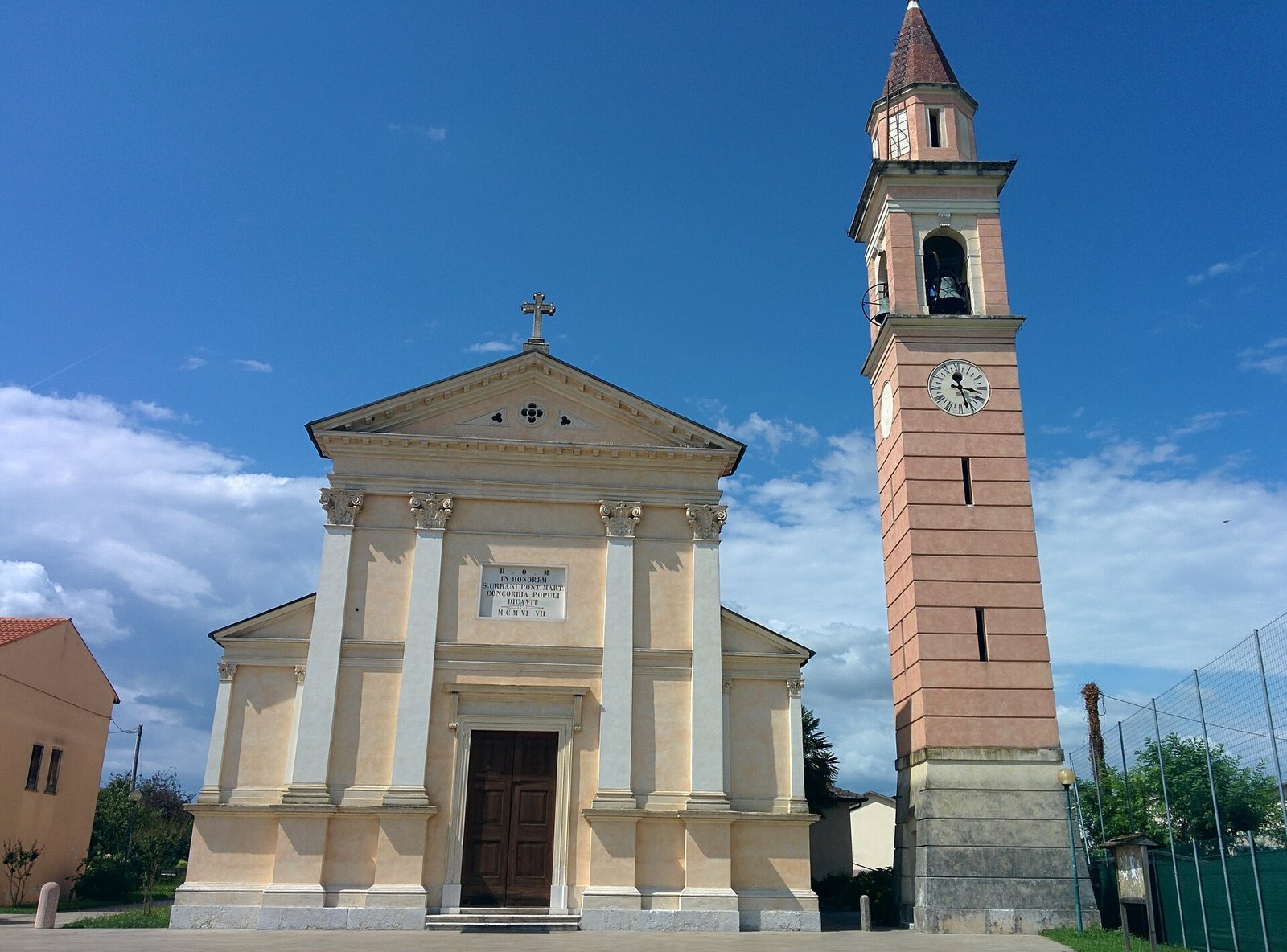
The church has a three-aisled plan, with a central nave flanked by side aisles, and a south-facing facade. Four pilasters, shallow wall projections topped with Corinthian capitals, rise from a high base and support a triangular pediment.
Bell tower and bells
The present tower holds three bells tuned to E3, F-sharp3, and G-sharp3. The Pietro Colbachini foundry of Bassano del Grappa cast them in 1895 with an ultralight profile. They were first mounted on wooden frames and headstocks, the beams to which swinging bells are attached. In the 1970s, an iron installation with cast-iron headstocks replaced that arrangement. A team of bell-ringers continues the local manual ringing tradition. The noon signal is given both by hand and automatically. For the solemn Angelus, a Catholic prayer traditionally marked by bells, the largest bell sounds alone before the other two join a peal one minute later, with the bells turned mouth-up.
Interior
Altars and paintings
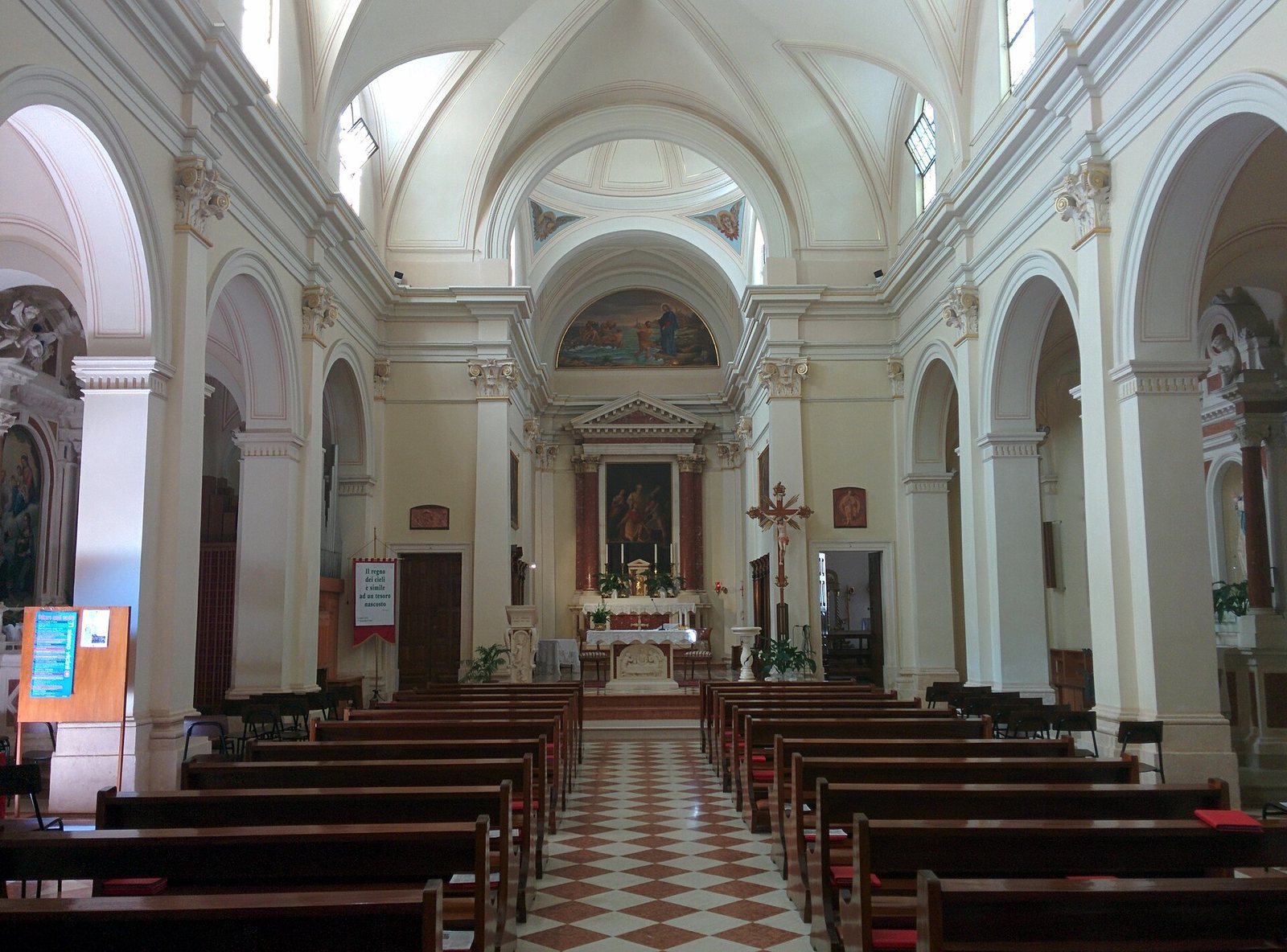
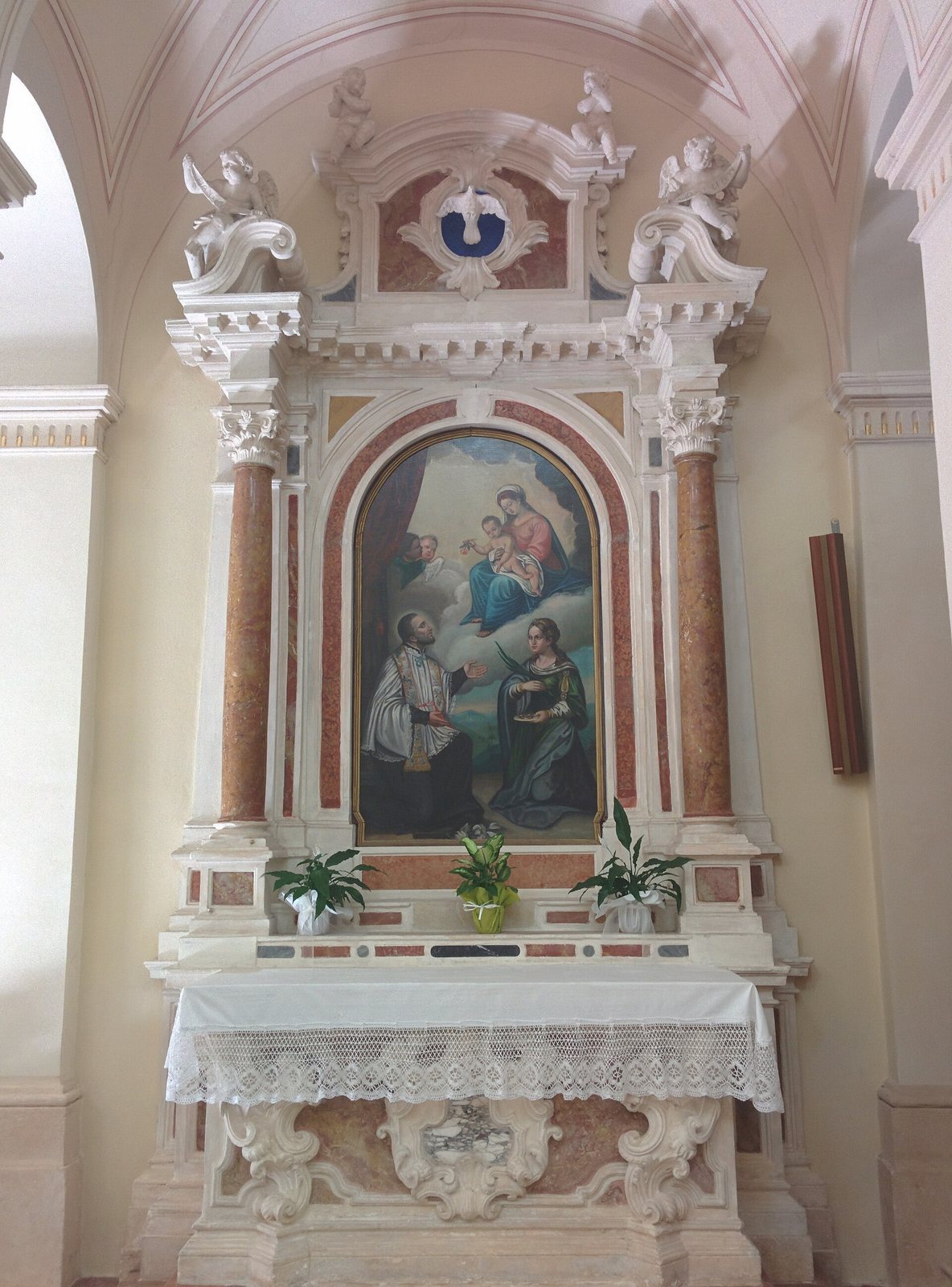
The church has four side altars. One eighteenth-century altar is dedicated to Saints Cajetan and Lucy and bears a canvas painted by Giobatta Stefani in 1843. Another has a marble statue of the Madonna of the Rosary dated 1944. The two altars on the right were built in the 1990s and are dedicated to Saint Anthony and the Madonna. The high altar’s altarpiece is attributed to Agostino Bottazzi and is thought to date from the mid-nineteenth century. It depicts Sant’Urbano dressed as a pope, Saint Lucy, and Sant’Urbano’s soldier brothers Valerian and Maximus in chains.
Presbytery and stained glass
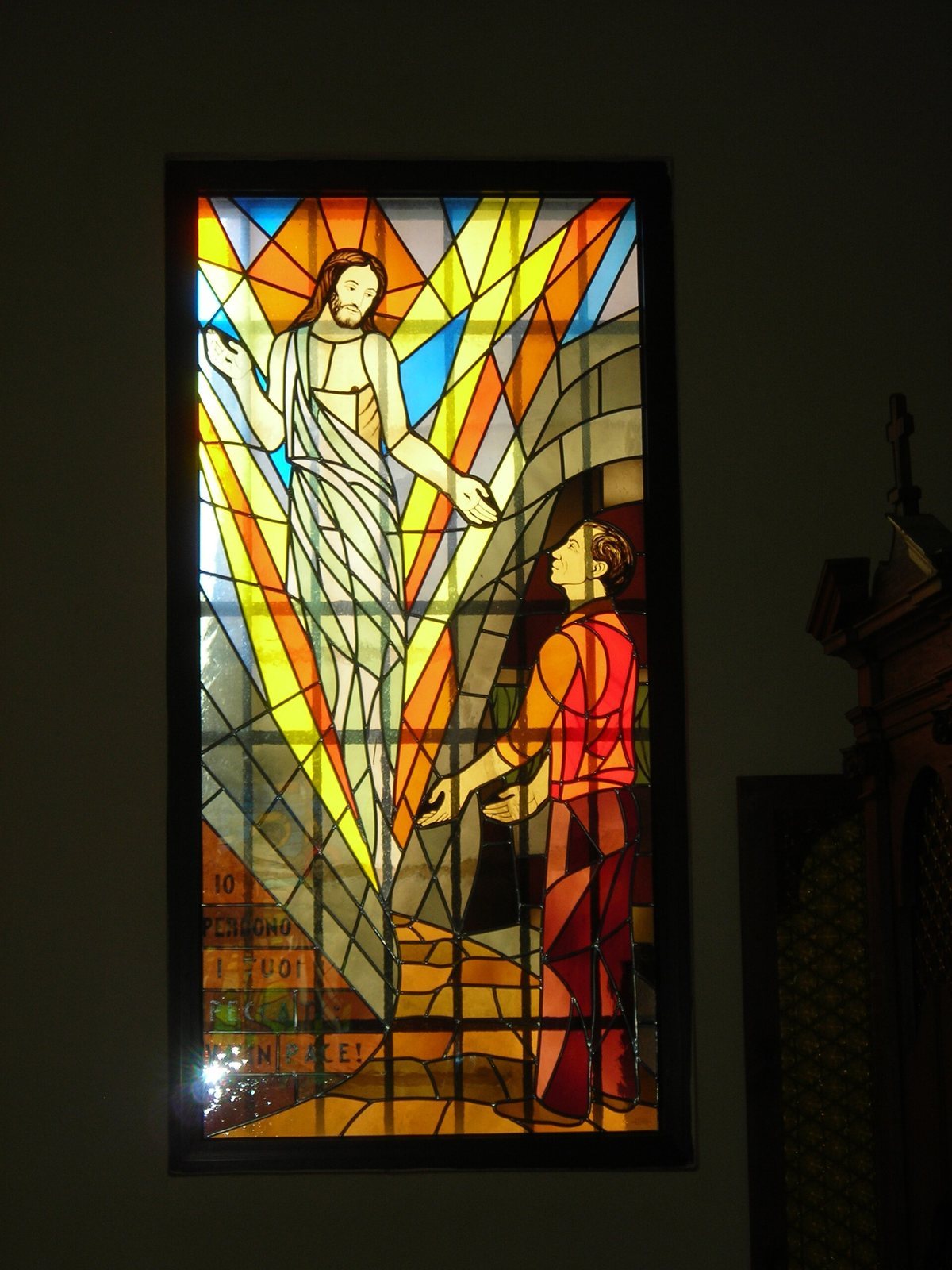
The presbytery, the area around the altar, has a small dome with a central stained-glass window showing the dove of the Holy Spirit. A window on the left depicts a lamb on a book with seven seals, imagery associated with the Book of Revelation; the one on the right shows a basket of loaves resting on a fish. Squinches, supports that carry a dome over a differently shaped space, rise beneath the dome and bear frescoes of the four Evangelists. Two other stained-glass windows face one another. The older is in the first chapel on the left, which serves as the baptistery, a space used for Christian baptism; the other is newer.
Frescoes
Bruno Vedovato painted the Transfiguration of Jesus on the ceiling and the Sermon on the Mount above the entrance.