Kasteel de Marnix de Sainte Aldegonde: A Water Castle and Museum Complex in Belgium

Site at a Glance
- Rating
- 4.2
- Popularity
- Low
- Country
- Belgium
- Primary era
- Modern
- External website
- Open
- Eras represented
- Medieval, Early Modern, Modern
- Civilizations
- Belgian, County of Flanders, Habsburg
- Site type
- Domestic
- Remains
- Castle
On this page18 sections
History
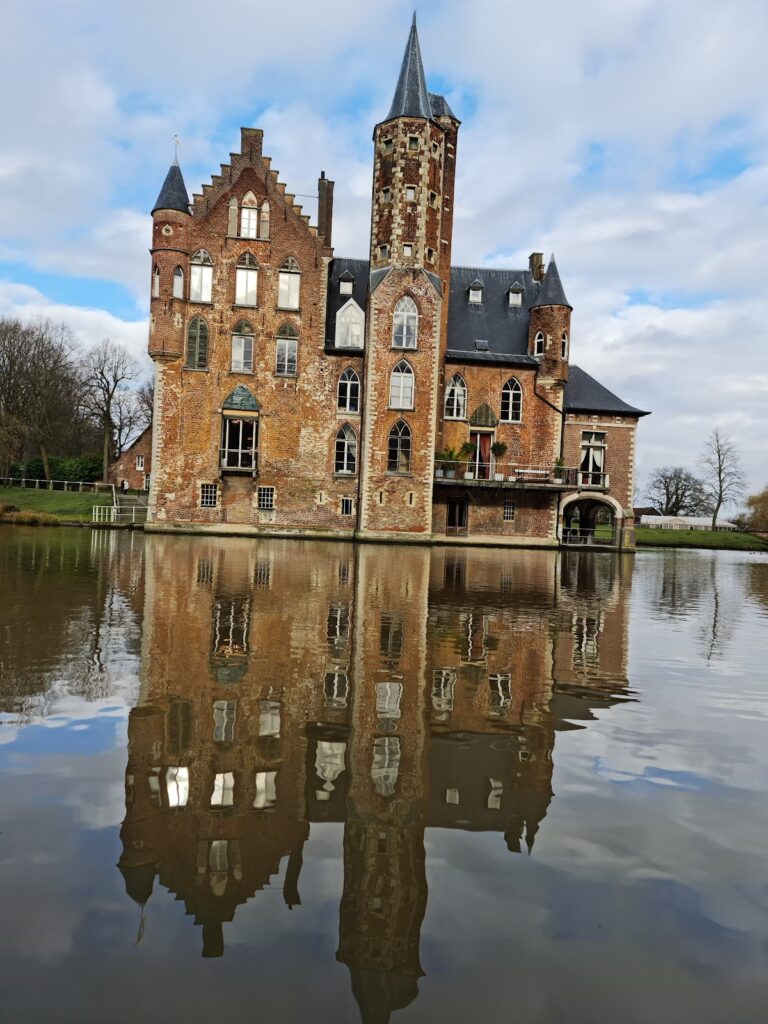
Kasteel de Marnix de Sainte Aldegonde is a water castle in Bornem, Belgium, whose present late nineteenth-century complex combines Neo-Gothic and Neo-Renaissance architecture. It occupies the foundations of a fortress from the tenth or eleventh century and now serves as a private residence and museum complex beside the Oude Schelde.
Medieval fortress and the Oude Schelde
The castle stands on an artificial island created in the thirteenth century, when the Oude Schelde, a former channel of the Schelde, was cut off from the main river. The early fortress probably helped guard the river against Viking incursions. Little is known about its early history, and its military importance may have declined after the raids ended.
The waterway continued to shape the estate’s history. The surrounding domain included farmland, woodland, meadows, and parkland, together with fishing rights on the Oude Schelde and hunting rights for large and small game and waterfowl.
Coloma rule and the county of Bornem
The surrounding land was devastated during the Dutch Revolt, the sixteenth-century conflict between opponents of Spanish rule and the Spanish authorities in the Netherlands. In 1587, Pedro Coloma, a Spanish nobleman who had come to the Netherlands with the army of Alexander Farnese, purchased the abandoned estate. Coloma rebuilt the castle and encouraged the resettlement of the surrounding farmland.
Coloma also began constructing a monastery at Bornem. English Dominican exiles settled there from 1658 and established a school. The monastery buildings have housed Saint Bernard Abbey since 1833.
The lordship of Bornem became a barony on 25 October 1592. In the same year, Coloma ordered the construction of the Bornem sluice to regulate the flow of the Oude Schelde. In 1658, King Philip IV of Spain elevated the extensive Bornem lands to a county, making Jean-François Coloma, Coloma’s grandson, the first Count of Bornem.
Pedro Coloma died on 27 December 1621 and was buried at Bornem. His son Alexandre succeeded him. The documented succession later passed through Pedro II Coloma, Jean-François Coloma, François Coloma, Charles-Coloma, Marie-Florence Coloma, François-Joseph de Corswarem, Bernard de Marbaix, and the Marnix family.
War, reconstruction, and the Marnix family
The castle suffered severe damage during seventeenth-century warfare, and its central tower was demolished in 1687. The Marnix family acquired the estate in 1773. Although the castle bears the name of Filips van Marnix van Sint-Aldegonde, a sixteenth-century Netherlandish statesman and writer associated with William of Orange, he never lived there because the family obtained the domain after his lifetime.
During the French Revolution, Charles de Marnix, the eighth Count of Bornem, fled to the Netherlands with his mother. Republican authorities in France confiscated the castle and estate and sold them publicly in Antwerp in 1799. Charles reacquired the castle and part of the estate in 1802, returned to live there, and served as mayor of Bornem until 1832.
The estate remained with the Marnix family. Their permanent occupation, major alterations, and development of the surrounding park helped shape the present appearance and organization of the domain. Family members have used the name “de Sainte-Aldegonde” since 24 April 1881.
The nineteenth-century rebuilding
In 1880, Count Ferdinand de Marnix de Sainte-Aldegonde ordered the remaining parts of the old castle to be demolished and commissioned a new complex. Hendrik Beyaert prepared the plans, but died before the work was complete. Ernest Janlet then directed its completion. The rebuilding removed the former encircling walls and much of the earlier fabric, while retaining elements of the old castle, including towers.
The current castle is occupied by John II de Marnix de Sainte-Aldegonde, the fourteenth Count of Bornem. It is protected as a monument under monument number 1901, with protection dated 13 March 1979. In April 2013, the owner received an award from Belgium’s Royal Association of Historic Residences and Gardens for his commitment to preserving the castle.
Remains
Island, moat, and approach
Fortified island and bridge
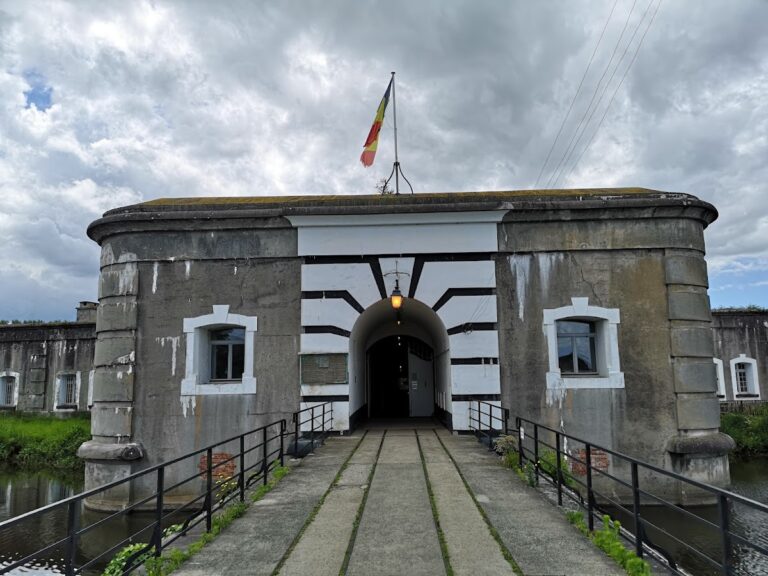
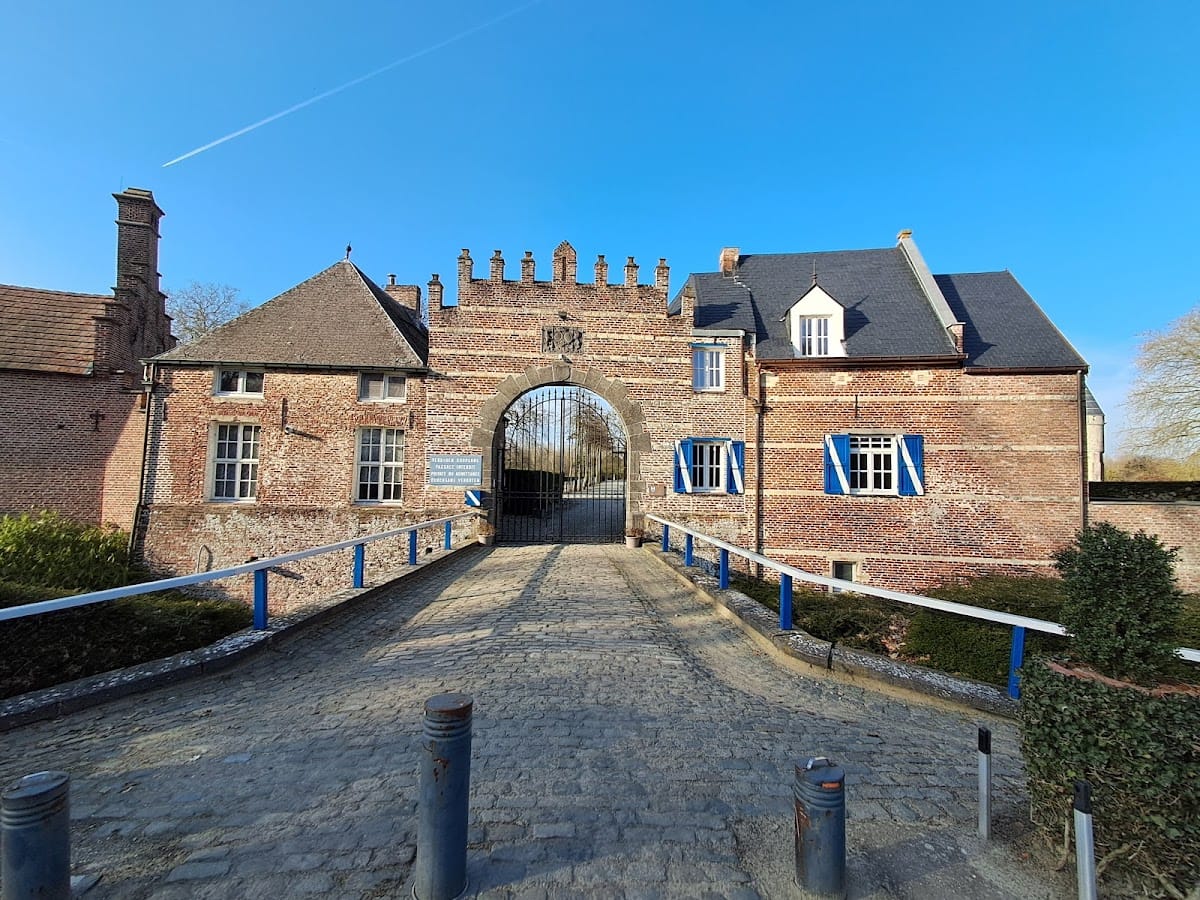
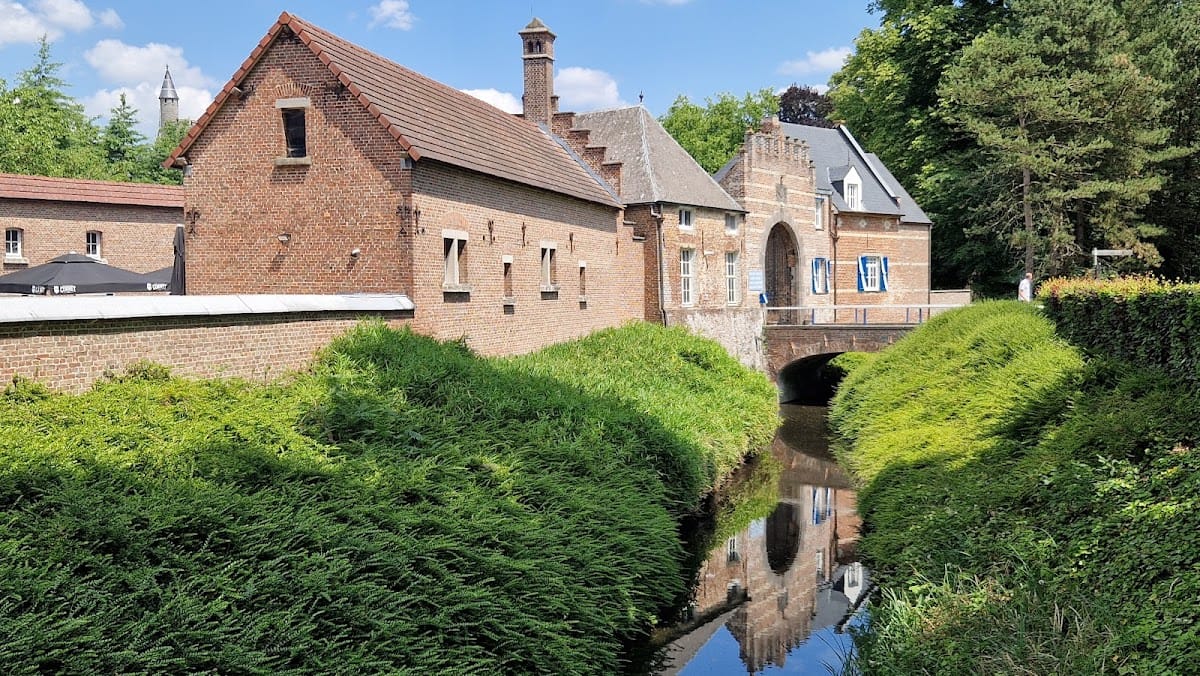
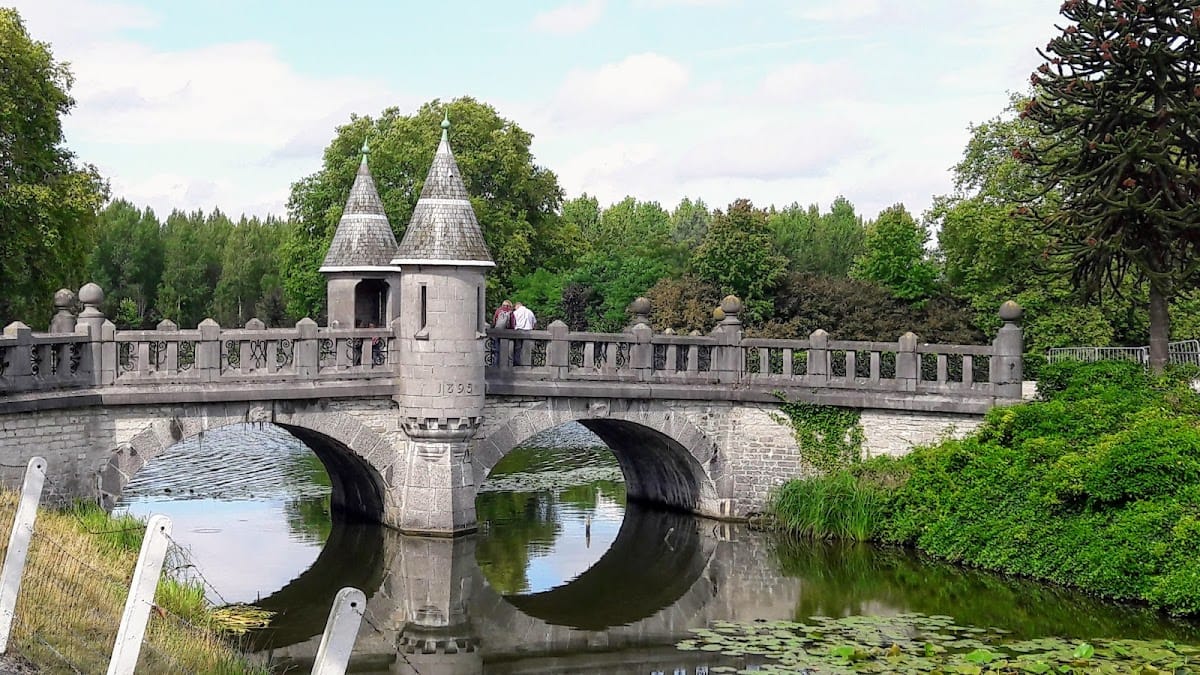
Kasteel de Marnix de Sainte Aldegonde is built on an approximately square artificial island surrounded by a moat. The water castle’s defenses are reinforced by this water barrier, and the estate is described as having two defensive perimeters. Access formerly passed only across a drawbridge on the western side, a bridge that could be raised to restrict entry. It was later replaced by a permanent stone bridge, whose small bluestone watchtowers were added in 1895.
Oude Schelde and parkland
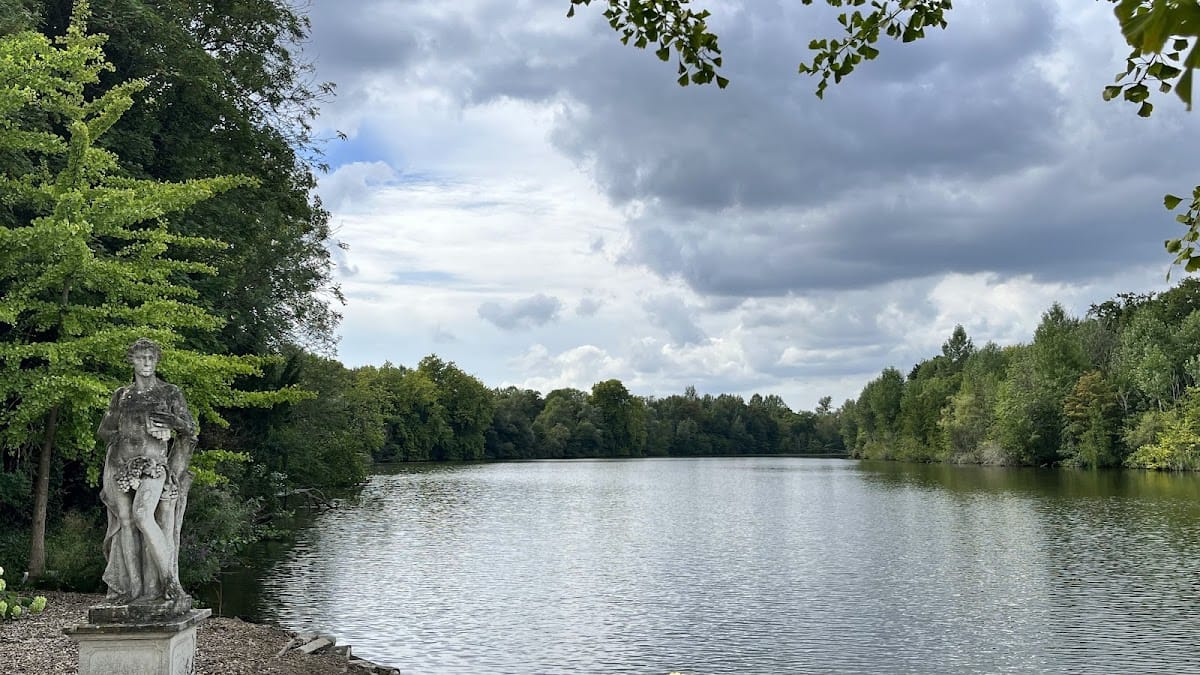
The Oude Schelde borders the castle island. Around it, the historic domain includes meadows, arable land, woodland, and an extensive park landscape. The estate’s relationship with the waterway also survives in the Bornem sluice and in a historic duck decoy beside the river channel.
Water management and hunting features
Bornem sluice
Built in 1592 on Pedro Coloma’s orders, the Bornem sluice regulated the flow of the Oude Schelde. It is described as the second-oldest preserved hydraulic engineering work in Belgium and the oldest in Flanders. Its surviving presence reflects the estate’s long connection with managing the river channel.
Duck decoy
The duck decoy beside the Oude Schelde was first mentioned in 1314 and was modified and improved by Pedro Coloma in 1612. It originally trapped wild ducks for food. Captured ducks are now used exclusively for scientific research, including population monitoring and bird-ringing studies.
Castle architecture
Earlier castle fabric
The nineteenth-century rebuilding replaced much of the earlier castle and demolished its encircling walls, but parts of the old structure, including towers, were retained. These surviving elements belong to the longer architectural history of the site, which began with the medieval fortress beneath the later residence.
Nineteenth-century wings
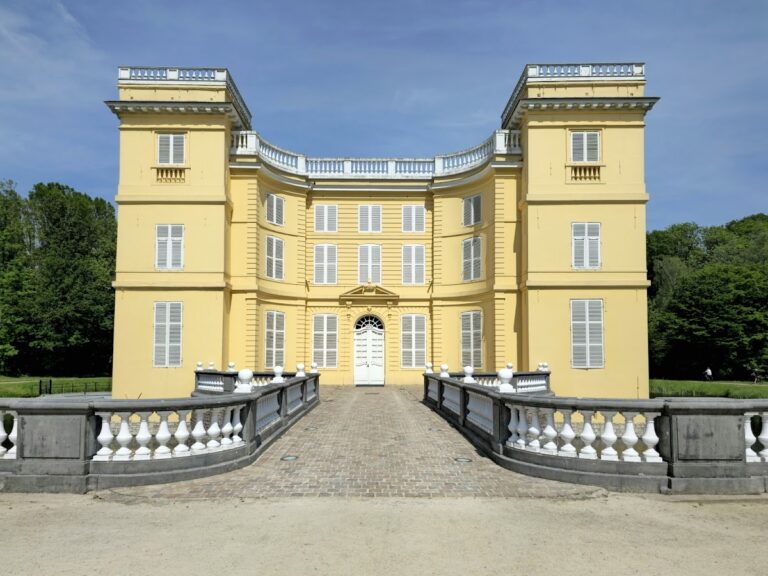
The present complex has three wings, with the western wing as its principal section. Its eclectic design combines Neo-Gothic forms, which revive medieval Gothic architecture, with Neo-Renaissance features based on Renaissance forms. Numerous turrets and small tower structures distinguish the exterior.
Interiors and collections
Historic rooms and libraries
The interior combines Louis XV and Louis XVI decoration with Italian accents. It contains furniture, textiles, paintings, sculptures, and representative collections of seventeenth- and eighteenth-century furniture. A seventeenth-century Flemish cabinet in the vestibule uses tortoiseshell, ivory, and ebony. Paintings of sixteenth-century rulers decorate the ground-floor dining room, while the formerly separate women’s and men’s salons reflect nineteenth-century social conventions. A richly decorated smoking room contains historical paintings and antique furniture.
Two libraries, known as the red and beige libraries, hold approximately 2,000 historical books, including valuable incunabula, books printed in Europe before the beginning of the sixteenth century. The first floor contains a lace room with white and black lace from Alençon, Bruges, Brussels, Chantilly, Lille, and Valenciennes.
Paintings, prints, and carriages
The paintings include portraits of Margaret of Austria, Emperor Charles V, and Philip II of Spain. The collections also include old dolls and a museum of horse-drawn carriages housed in an outbuilding.
The castle preserves 91 prints by Pieter Bruegel the Elder, described as the world’s largest private collection of his engravings. Among the notable works are The Big Fish Eat the Little Fish and an example of the first state, or early form, of The Dirty Bride, also known as The Wedding of Mopsus and Nisa.
Nearby sites